Browsed by
Category: Flowers and Plants

Annual, perennial and interesting flowers with advice on culture, information, tips and recommended varieties

Flowers as a Business

Flowers as a Business

Professional Floristry Techniques from Malcolm Ashwell & Sally Pearson
Book Cover

Opening a florists shop or just selling your excess produce at the garden gate? What ever you chose to do these two books will give you some good ideas and more importantly the confidence to give it a go!

Start Your Own Florist Shop and Other Floral Businesses from Cheryl Kimball

Book Cover

If you are artistic you could start a botanical art company producing and selling your own work. Turn out botanical works of art that display your talents- here are some examples to consider.
This new venture could be for pin money selling at local shows and shops or you could develop a following on the internet.

Growing for Selling needs a good plan and better environmental conditions. Take lots of advice and take it to heart! Read Florists for Gardeners
Top Plant Protection

Top Plant Protection

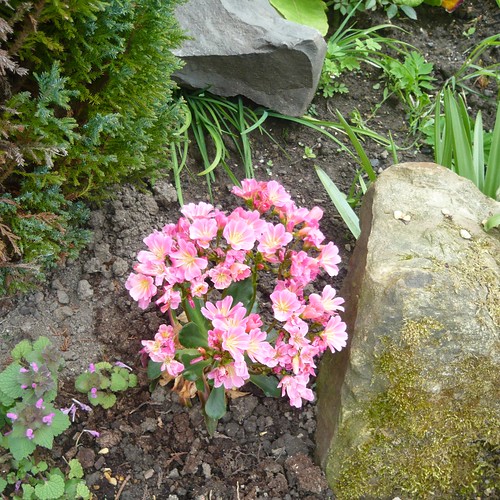
Lewisia

Plants die from too much water more often than any other cause.
Frost and cold damage is the worst winter killer so take precautions.
As a careless gardener I dig up the wrong thing at times and I should protect my plants by taking more care and marking the location of plants that die back.

Keep dormant plants dry

  • Potted plants that become dormant need to be kept dry to avoid root rot.
  • Put a cover of glass or slate over pots of Eucomis and Rhodohypoxis
  • Dahlias and Cannas can be listed or left in pots under the shelter of a house roof

Mulch

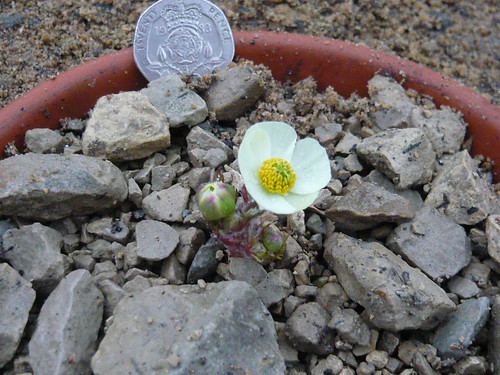
  • Ranunculus  seguieri

  • Cover alpines with a mulch of fine grit. The leaves of Lewisia and other small plants can suffer in the wet.
  • Perennial bulbs of dubious hardiness can be left in the ground if covered with a thick mulch. Hold it down with chicken wire if the area is windy.
  • A thick covering of garden compost protects my hardy Fuchsias, Delphiniums and Peonies through winter.

Wrap and Cosset

  • Tree ferns need to be wrapped in hessian or have a straw blanket wrapped around the crown.
  • Keep the wrapping open for good air circulation or the plant may rot.
  • A wind break can have a surprisingly good effect in protecting some plants.
  • Banana plants should have the trunk well wrapped. The roots will withstand some cold.
  • Fleece is a good blanket for use during inclement conditions.

Shelter

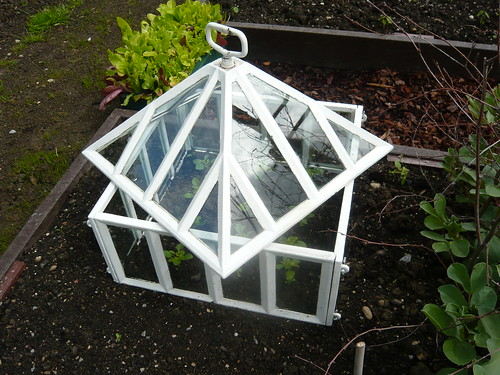
  • Cloche

  • It may seem obvious that a greenhouse can offer winter shelter to tender plants.
  • Agave and Agapanthus will benefit from being under cover during winter.
  • Indoor plants should stay indoors, that is why they are called houseplants. Keep them off cold window sills in winter.
  • Fuchsias and Pelargoniums should be lifted and brought in to a frost free area.
Carnivorous Plant Growing Kit

Carnivorous Plant Growing Kit

Book Cover

Reduced from over £12 to under £6 this kit will help you try to grow Carnivorous plants.

Caveat emptor – watch out all that is packaged is not good!

  • The reviews of this product are dire.
  • Minimal number of seeds that do not germinate.
  • Parts are missing from the kit
  • For these reasons we have not provided a link to Amazon to buy this product

Contents of the Kit

  • Starter growing pots
  • Compost discs
  • Venus fly trap seeds
  • Pitcher plant seeds
  • Markers
  • How too Guide

You should do far better with the professional ‘Carnivorous Plant Society’ try this link

Cure Damping Off?

Cure Damping Off?

As gardeners old and young contemplate a new season of growing plants from seed we look at ‘Damping Off’

What is Damping Off

  • The number 1 enemy of gardeners raising plants from seed.
  • It is a disease that kills young seedlings at or just below soil level.  Affected plants wilt and die.
  • It is caused by fungal activity.
  • Some species are more prone than others.
  • It seems to attack my seedlings in a humid atmosphere when sown indoors or in a cold frame.

What are the Cures for Damping Off

  • Good hygiene is very important. Disinfect seed trays and use fresh compost.
  • Keep part used compost in sealed bags.
  • Use new pots on seeds that are prone to the problem like begonias and brassicas.
  • A copper based fungicide watered on to the compost was the traditional cure or prevention.
  • Cheshunts compound or products specifically for the purpose are sold at garden centres.
  • Can be used on all seedlings whether edible or non-edible.
  • Easy to use, dilute and water the solution onto compost before sowing.

    Read More Read More

Autumn Gardeners Tips for the Disorganised

Autumn Gardeners Tips for the Disorganised

I am the disorganised gardener in this situation. This is a series of unconnected tips that I have wanted to get off my chest but have not turned into a full post.

  • Sweet peas can be sown in autumn or spring. Brown or white seeds will germinate without help. Black, dark brown or mottled seeds have tough coats and water is taken up more easily if the hard coat is nicked gently with a knife or abraded on sandpaper.
  • Clay soil is fertile but is cold, heavy and hard on plant roots. Dig in bulky organic material. Then spread 6″ of garden compost or manure on the surface in autumn and let the worms drag the humus down into the soil over winter.
  • I store and grow plants under the eaves of my house. Take care as the house creates a rain shadow and pots occasionally need watering even in winter.
  • Try growing some Aconitum like the plant above. They flower late, like shade, do not need staking and look great.
  • Young and newly planted trees and shrubs are more delicate than established plants. Give them extra protection against a hard winter with mulch, wind breaks or even wrapping in hessian.
  • Stored apples need to be kept at 2-5degrees centigrade and checked occasionally for rot. One bad apple in a barrel as the saying goes.
Autumn Colour – Photos

Autumn Colour – Photos

autumn

Oxford Botanic Gardens

Sometimes as a gardener, it’s just hard to beat Mother Nature. Especially like a time in Autumn, when the colour of trees says it all. These are a few shots of autumn colour.

autumn

South Parks, amidst the dreaming spires

autumn

Bolton Abbey through the November Sun.

autumn

Radcliffe Camera through Christ Church Meadow

autumn

Wychwood Forest near Cotswolds.

autumn

Growing Tigridia or Tiger Plants

Growing Tigridia or Tiger Plants

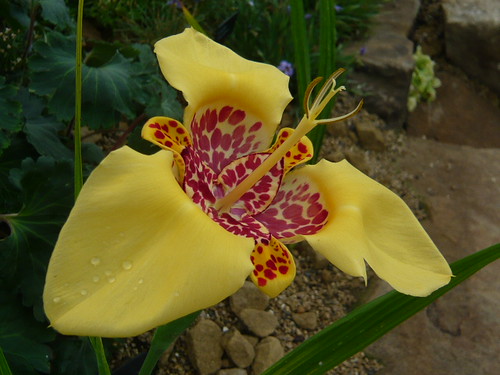
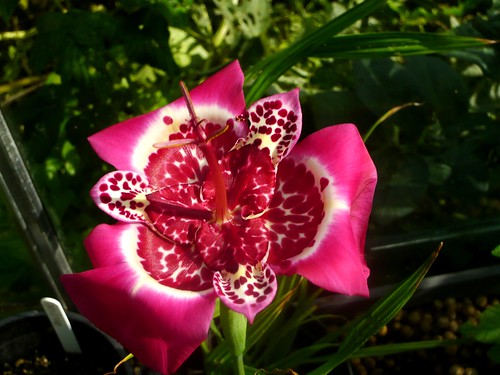
Tigridia is also called the Mexican shell flower or the Tiger Flower due to its shape and spotted petals.

Facts about Tigridia

  • This exotic Mexican bulb is also sometimes called the Peacock flower, an appropriate name in view of its quite startling colour combinations.
  • Tigridia Pavonia flowers are short lived but often several flowers will bloom from the same stalk.
  • Many colour combinations are available including scarlet, orange, pink, yellow, mauve and white, usually with contrasting markings.
  • Tigridia is not very hardy and is grown as a tender summer bulb planted in spring and dug up again in autumn for storing in a dry frost-free place.
  • Tigridia needs all the sun it can get to encourage flowering and ripen the bulb to ensure a similar display the following year.
  • Tigridia makes a good greenhouse potted bulb.
  • Leaves are long and pointe with colour variation that looks like stripes.

The leaves are long and pleated, tapering to a point

More coloured Tigridia photographs.

039

Read More Read More

Growing Tagetes and Seed Collecting

Growing Tagetes and Seed Collecting

taggetee

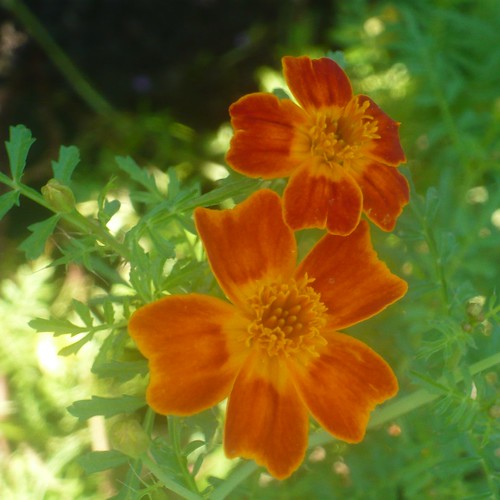
Tagete tenuifolia is one of my favourites of the marigold family. It generally has many small single flowers over a long period. Whilst the red,orange and yellow colour combinations are striking the French, African and Mexican Marigolds cousins are blousy and brash by comparison.

Growing Tagetes

  • The foliage has a musky, pungent scent. The smell deters some common insect pests and I grow them alongside my greenhouse tomatoes.
  • Tagetes are often used in companion planting for eggplant, chili pepper and potato.
  • Tagetes grow well in fertile heavy clay soils and in sandy soils
  • Plants are not  frost resistant and need to be grown as half hardy annuals.

Seed Collecting

  • Tagetes need a long growing season  to set seed in Britain. Sow  in March for flowering in  autumn
  • Removing dead flowers before the seed is formed will extend the flowering season but reduce seed production.
  • Each of the multitude of flowers will produce a clutch of seeds trapped in the soft semi open seedhead.
  • The seeds are like small, fine quills with a black section and an off white feathery end that protrudes from the clutch.
  • Collect when dry with the seedhead turning brown. The neck bends down prior to dispersing seeds.
  • Store in an old envelope and avoid trapped moisture that can cause rot.
  • I do not have any success with self-sown seeds so I collect my own seeds from the many produced.

Read More Read More

Backgrounds for Flower Pictures

Backgrounds for Flower Pictures

When looking at flowers you need to consider the background. Honeysuckle is a good rambling climber that often allows you to see the flower against the clear blue sky (or cloudy one for that matter).

The pollen bearing, male anthers,  (stamen and filaments)   are clearly visible on this picture as is the female carpel in the centre and as a seed pod on the right.

Many  flowers are best inspected against a mass of greenery that forms the pattern of leaves and stems.

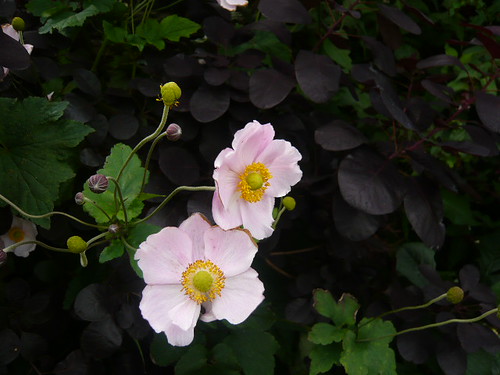
Careful planning can balance two or more colours such as pink flowering Japanese anemones with the purple leaved Cotinus. Grey leaved plants look good with dark flowers in the same way light flowers look good with dark leaves.

Rose anemony