Browsed by
Category: Flowers and Plants

Annual, perennial and interesting flowers with advice on culture, information, tips and recommended varieties

Magic and Green Simmia
Magic and Green Simmia

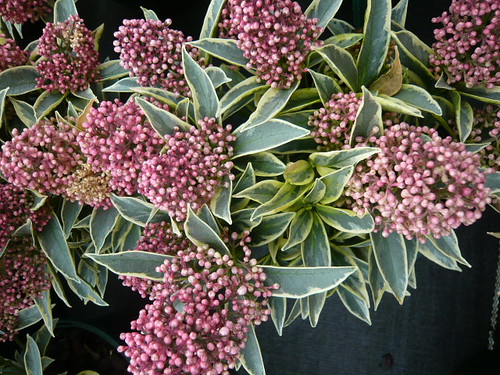
Magic Marlot Skimmia

‘Magic Marlot’

  • Compact evergreen shrub grows perfectly in containers to give a wonderful display. Forms a  mounded, upright, evergreen that works for the border, garden bed or large containers.
  • The variegated foliage is medium green with a cream edge.
  • Autumn produces green-white buds that turn wine red as the temperature drops.
  • Spring brings rich-flowering, pink tinged white blooms.
  • Tolerant of heat, frost, shade and dry soils.
  • Spacing   24 – 36″,  Height : 12 – 18″,  Width : 12 – 24″
 

Kew Green Skimmia

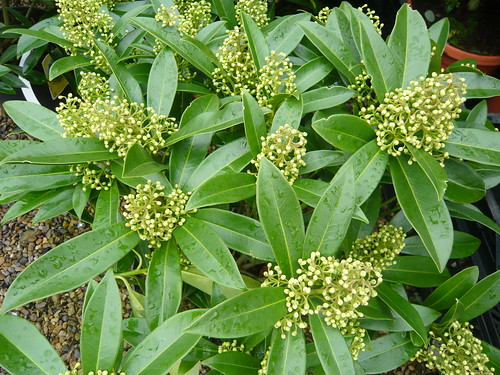
Skimmia ‘Kew Green’

  • This low to medium sized shade tolerant shrub provides much needed winter blossom.
  • Scent from male plants  is followed by attractive berries on the female form.
  • Attractive foliage and makes Skimmias ideal as ground cover in problematic shady areas.
  • Skimmia ‘Kew Green’ prefers a well drained neutral to acidic soil that is reasonably fertile yet well drained,
  • Skimmia flourishes in full or partial shade.
  • Trim to shape after flowering and mulch occasionally.
  • Ideal flowering shrub for problem clay soils.
Rubella Skimmia


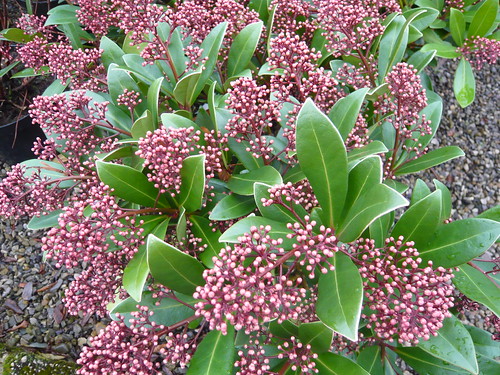
Rubella’  Award of Garden Merit (AGM)

  • There are numerous lovely skimmias, generally from the Himalayas and the Far East. Skimmias form evergreen shrubs of varying heights.
  • Most are ‘dioecious’, meaning they have male and female flowers on different plants, and both sexes must be planted to ensure a crop of fruits.
  • ‘Rubella’ is a compact male variety with attractive red-margined, dark green leaves.
  • The flower buds, which appear in autumn and winter, are a prominent feature of the plant, as are the scented flowers which open in spring.
  • It is perfect for growing in containers and provides good all year round colour.


Read about other Skimmia species and Skimmia for buds and berries.
Tulips in Containers

Tulips in Containers

Tulip display

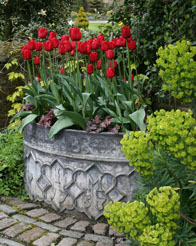
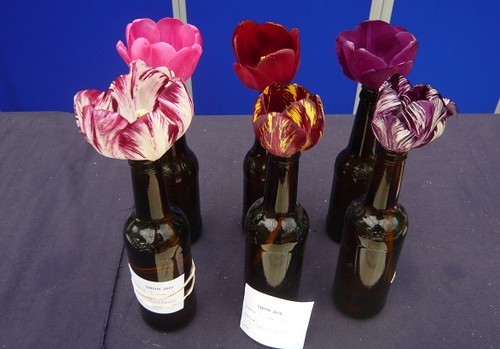
My Tulips in pots, barrels and all sorts of containers are in fine health at the start of March. The pointed shoots are looking particularly good with red and lime green sprouting varieties showing through. You may remember, I planted some tulips in pots that I then buried in the garden so when they are finished flowering they can be dug up, put to one side and allowed to die back, whilst other plants go in the space. So far these pots look the part keeping the plants in a neater circle than I would have achieved with normal planting.

Tulips in Container with Euphorbia

Container Tulip Problems

    • Tulips do not like small containers. They like the right conditions for roots and bulbs and containers do not do the business
    • Two other problems have arisen firstly with mice eating some bulbs in greenhouse pots. They also took many of my broad bean seeds. I didn’t try the old trick of soaking them in paraffin, perhaps next year but my losses aren’t too serious.
    • The other problem may be worse with Tulip Fire damaging one pot and disfiguring most of the leaves. see below

Tulip Fire

  • Tulip fire is caused by a fungus Tulip Botrytis
  • All diseased plants must be removed immediately to prevent rapid spread of the disease.
  • Do not replant infested soil with tulips for at least two years.
  • When planting, reject and dispose of bulbs showing any signs of decay, or bearing sclerotia.
  • At the end of every season lift bulbs and discard, or treat with yellow sulphur  and dry before storing.

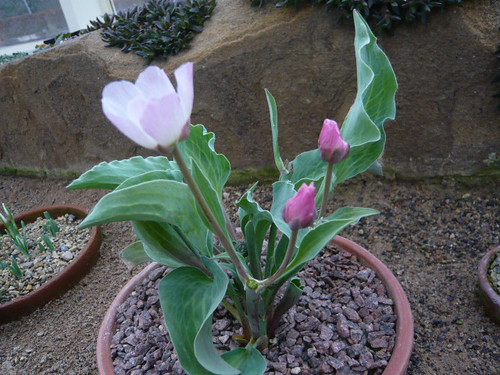
Botanic Tulips in pots
botanic tulip

Growing Phragmipedium Slipper Orchids

Growing Phragmipedium Slipper Orchids

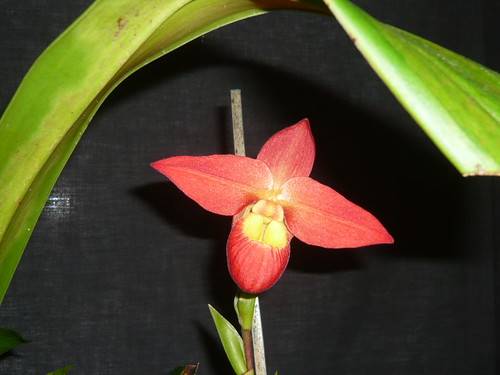
Phragmipedium Dom Wimber

Phragmipedium

  • Phragmipediums are ladyslipper orchids that originate from Mexico and northern parts of South America.
  • Their flowering season is heaviest in the spring but some species can bloom for 6-10 months at a time.
  • Phragmipedium Don Wimber (shown) is a cross between a the orange flowering starburst Eric Young ‘Rocket Fire’ and the red flowering besseae.
  • They are strong, fast growers producing large handsome leaves (Eh? not here ed.) with tall flower spikes.
  • The 3 petals are 3 to 4 inches across and are colored in a medium orange with a deep pouch or slipper.
  • Phragmipedium are easy to grow in good strong light given plenty of water and moderate temperatures.
  • Slipper Orchids can bloom for several months and will flower on a single growth .

See Orchids at the shows

Snake Bark Maple – Acer Varieties

Snake Bark Maple – Acer Varieties

Burnby Hall Pocklington

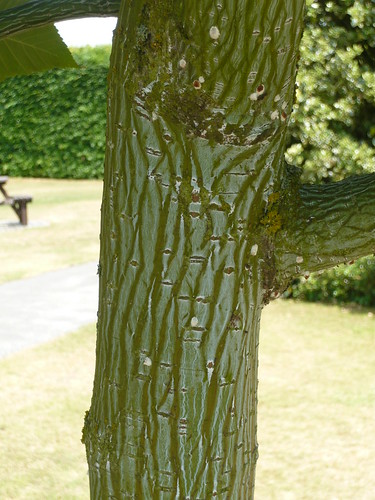
Acer rufinerve is the tree I have always believed to be the Snake Bark Maple shown above. It has red autumn leaves and the distinctive bark. However there are other Maples with a snake bark and they tend to cross pollinate.

Acer grosseri var. hersii

  • A popular snakebark maple for small gardens, since it grows rapidly in its early years and then settles down.
  • Can be pruned in winter to control final size.
  • An established tree is unmistakable with its upright branches with green bark striped conspicuously with white.
  • The seeds in pairs of broad wings are clustered on long strings.
  • In autumn the thick, rubbery leaves turn yellow, orange and red shades.

Acer capillipes

  • The background colours may be green, dark purplish-brown or red overlayed by a vertical lattice of fine white lines giving a snake skin effect.

    Read More Read More

Apple Spray Programme

Apple Spray Programme

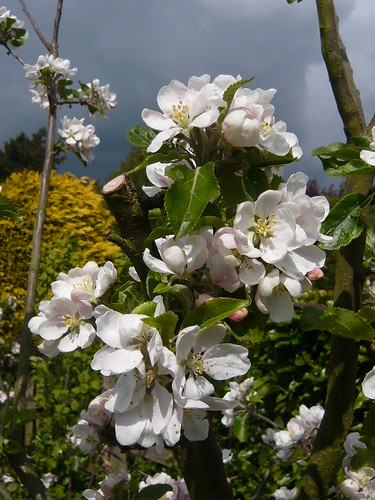
Apple blossom

Apple trees can fall prey to a variety of problems.  Start spraying now!
This programme will control capsid, sawfly, wooly aphid, winter moth and codling moth insects. It also should help prevent or treat scab and mildew.

When to Spray

  • When dormant in winter I sprayed with Mortegg tar oil until it was banned by the EU. Now you need to buy a winter wash.
  • At bud burst spray a combination of Tumblebug and a fungicide like Systhane.
  • Again as green buds then pink buds appear a similar spray is needed.
  • At petal fall the worry is aphids so another spray may be needed.
  • For codling moth infestations spray Tumblebug once a month from mid June.
  • I do not spray once the fruitlets have set.
  • Savona is a fatty acid based non-toxic spray that kills by contact and leaves no residue

Organic Spraying

  • ehow have a list of spray methods that use such organic products as oil, copper sulphate, sulphur, Bacillus thuringiensis, and pyrethrin. Only nthe last of these would I think of as organic. see link
  • Best solution is no solution to be sprayed. Grow resistant varieties and wrap fruit in paperbags to keep insects off.
  • Make your own solution from garlic water or one of these recipies
  • Grease bands are worth placing on the trunks of trees each autumn.
I’m just Mad about Saffron

I’m just Mad about Saffron

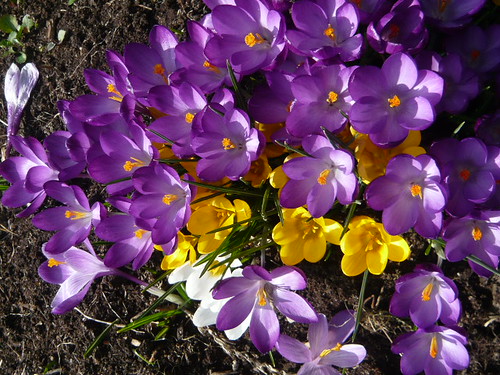
Crocus

A costly spice Saffron is made from the stamen of Crocus sativus. Used as a Chinese medicine, in food and as a dye, saffron has been used since medieval times. It has been cultivated by Greeks, Romans and Chinese for 3500 years and is now a cash crop in Afghanistan, Kashmir and Spain.

Description of Saffron

  • Crocus sativus throws up a spear of green leaves only after flowering.
  • The fiery red-yellow, orange stamen are collected and dried to make saffron.
  • There are only 3 stigma to a flower so it takes 100,000 blooms to make a pound of saffron.
  • ‘The saffron flowers blow in September; but leaves come not forth till the spring’  from Culpeper’s Complete Herbal 1653.

Uses of Saffron

  • Saffron was used as a medicine for digestion, circulation and heart problems but overdoses could lead to death.
  • Saffron is bitter sweet and has a pungent aroma and can be used whole, as a powder or in an infusion.
  • Saffrons main culinary uses are in colouring rice, fish stew and paella.
  • Saffron Walden was the centre of the UK production even changing the name of the town to recognise the fact.

The photograph is of a hybrid crocus not a sativus. The video is not of sativus but Donovan.

Mini Veg for Growing from Seed

Mini Veg for Growing from Seed

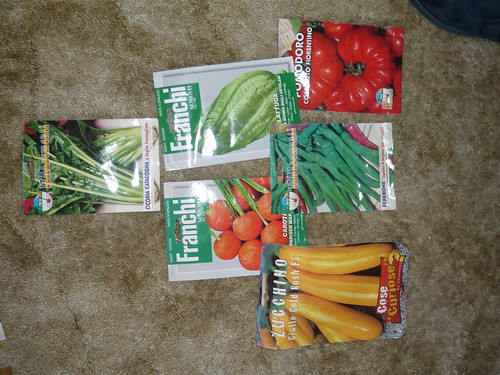
seeds 004

Some Mini Veg varieties are naturally suitable for growing in pots or small spaces.
Some are best when picked young and small.
Planting close together and picking or pulling as they develop produces tender mini veg.

Thompson & Morgan sell a mini veg collection or a range of these and other varieties to select from.

Cherry Tomatoes

  • Gardener’s Delight a national favourite
  • Sun Gold- orange fruit
  • Sun Baby -yellow fruit
  • Tumbler for hanging baskets
  • Gartenperle for containers and baskets

Lettuce

  • Minigreen an iceberg variety
  • Little Gem and Jewel are cos varieties
  • Tom Thumb – butterhead type

Peppers

  • Redskin F1 sweet pepper
  • Mohawk F1 sweet pepper
  • Friggitello sweet pepper
  • Etna – chilli pepper
  • Thai Dragon- chilli pepper
  • Fiesta- chilli pepper
  • Apache- chilli pepper

Brassicas

  • Dutchy and minicole Cabbages
  • Fribor and Showbor – Kales
  • Frostie and Pixie – Spring cabbages
  • Freedom and Graffiti – Cauliflowers

Leeks

  • Carlton F1
  • Flextan
  • Volta
  • Oarsman  our finger thick pick

Carrots

  • Adelaide – F1 finger
  • Nelson- F1 finger
  • Rocket- F1 finger
  • Carson – conical

Growing Tips

  • Try to maintain even and consistent watering
  • Grow in the sun and give week soluble feed
  • Pick young, what you need to eat and leave the rest growing on
  • Careful cropping will provide m9ini veg for sometime
  • Try a similar formula for growing mini veg such as Courgettes, Beetroot, Aubergines and Turnips.

Thompson & Morgan sell a mini veg collection or a range of these and other varieties to select from.

Growing Indoor Climbing Plants

Growing Indoor Climbing Plants

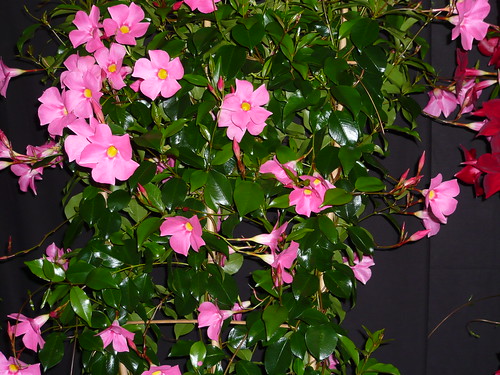
Mandevilla Brazilian Jasmine

Most conservatories have large glass areas and side walls that can be ideal for climbers. Clothing the sides with climbers helps raise the humidity levels and provide shade.

Frost Free Conservatory Plants

  • Passion flowers like Passiflora Amethyist or Passiflora Constance Elliott are nearly hardy even outside.
  • Lapegeria rosea has pink-red bell-shaped blooms from autumn through winter. Use ericaceus compost and train it up a trellis.
  • Annual colour can be provided by morning glories Ipomea lobata.
  • Also an annual Thunbergia Black-eyed Susan are worth considering
  • Evergreen climbers including Ficus and ivies, Rhoicissus rhomboidea Grape ivy, Philodendron scandens Sweetheart vine and Scindapsus aureus Devil’s ivy.

Warmer areas 7º C Plus

  • Bougainvilliea with thrive if given enough space. They grow up to 10′ in a season so beware.
  • Mandevilla Brazilian Jasmine like the one above and Lophopermum are other choices.
  • In smaller conservatories Jamine, Plumbago and Rhodochiton can be kept under control with a bit of trimming.
  • Hoya is a tropical climbing plant with thick leaves and fragrant, waxy flowers.

Supporting Climbers

  • Fix a series of horizontal wires to walls to give the climbers support.
  • On the glass sides fix wires to wooden supports.
  • Alternatively push long canes or trellis into containers for support.
  • Tie twinning stems and tendrils to the supports.
  • Non-clinging plants need more regular tying.