Browsed by
Category: Articles

Gardening articles that may not include tips

Skunk Cabbage for the Waterside Lysichiton americanus

Skunk Cabbage for the Waterside Lysichiton americanus

skunk-cabbage

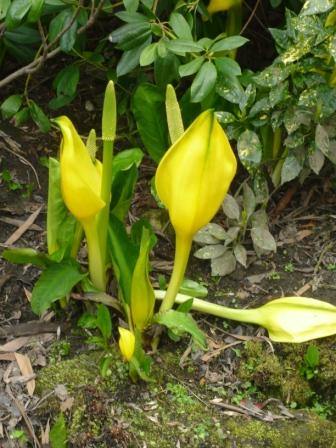
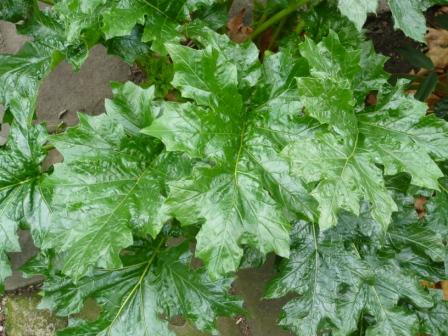
American Skunk Cabbage Lysichiton americanus is planted in groups along the streamside at the Valley Garden Harrogate. Over the years the plants have seeded themselves freely and now make a fantastic display covering the full length of the stream and beyond. The yellow flame-shaped flowers really called spathes, are 18 inches high and look magnificent reflected in the water in April and May. Then the flowers are followed by enormous paddle-shaped, leathery green leaves which remain until dieing back in autumn.
Lysichiton camschatcensis has a hypnotic white spathe and lime green flowering head and a cross between the two species produces a cream spathe (I like to call a spathe a spathe). This spathe surrounds a cigar shaped stem called the spadix which bears many small, bisexual green flowers.

Read More Read More

Garden with a Bird Bath

Garden with a Bird Bath

bird-bathsource

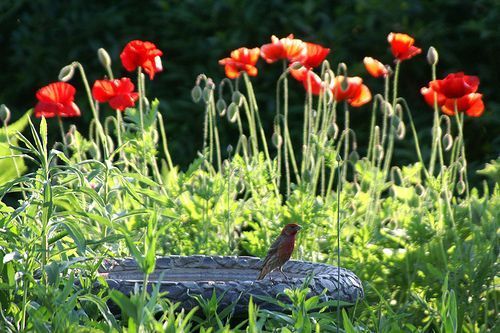
A bird bath can be popular with our feathered friends and be a focal point in the garden. If creating a new bed, for plantings, that will have a bird bath as a centre piece locate the bath just off centre. Work into the soil suitable compost  about 4 inches of garden compost will give the bed a good start.

Plant suggestions

  • Use plants of varied heights and colours and bear in mind you are trying to attract native bird species.
  • For the back of the bed try a Persian lilac growing upto 10 feet. Syringia Persica has fragrant mauve flowers.
  • If there is a wall or sturdy fence try Virginia creeper Parthenocissus tricuspidata with it’s red autumn leaves and hiding place for the birds.
  • Read More Read More

Tips for Growing Acer – Japanese Maples

Tips for Growing Acer – Japanese Maples

acer

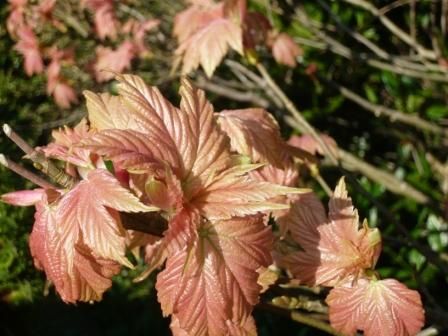
Acer trees and shrubs can be spectacular from Spring through Autumn due to the leaf colours and patterns.  This Acer Palmatum Taylor’s leaves with pink foliage will last through summer turning into rich Autumn colours at the backend. It will grow to about 10 feet in 10 years and is suitable for even a small garden.

Top Low Growing Acers

  • The cut leaf  maple Acer Palmatum Dissectum is an umberella shaped shrub with unusually shaped fresh green leaves. The leaves develop a red stripe in the Autumn. The name gives away a description of the shrub – Palmatum refers to the 5 segments of the leaf like the palm of your hand. Disscetum indicates that the leaves are disected into thin often feathery shapes.
  • Acer Pamatum Orange Dream is a slow growing Japanese maple with vivid orange spray foliage which turns golden yellow in Autumn.
  • Acer Palmatum Atropurpureum is a slow growing purple leaved variety grown for both the colour and the attractive shape of the tree. There is a Dissectum variety Garnet which combines the leaf colour with the feathery foliage.
  • Beni Maiko is a dwarf Acer Palmatum growing to  2-3 feet in 10 years and can be kept in a large pot or used in even a small garden. The scarlet leaves progressively turn dark red and green.

Top Tips for Acers

Read More Read More

Fuchsia from Cutting to Show

Fuchsia from Cutting to Show

micro-greenhouse

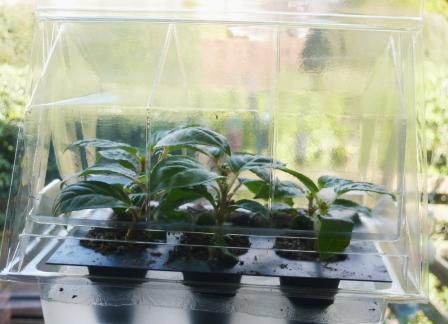
My Fuchsias didn’t over winter very well so I wanted some new ‘cheap’ stock. My first attempt was to buy strong looking plants from a nursery but foolishly left them to get frosted in a very cold greenhouse. These cuttings were on sale in there own nifty mini greenhouse with the roots in a water-gel to sustain then through the retail lifecycle.

I got 12 plants for less than £3 and I have potted them on on a window ledge and 4 days later the largest is already for ‘stopping’. I will pinch it and then others out at the growing tip to encourage branching.  If you are wanting a ‘standard’  shape ie a single bare stem topped with a globe of flowers, then do not pinch out the top but remove all the side shoots and main leaves on the stem until the stem is 12 inches tall and the head has been formed.

Training Fuchsias

  • Standards have already been discussed and they follow the training of a bush fuchsia. The bush fuchsia will be trained to have a stem of about 1.5 inches without branches and all growth then eminated from a selected number of laterals.
  • A shrub has multiple growths from below soil level. training starts ater 2 or 3 pairs of leaves have formed by pinching out the growing tip. this process is repeated until the plant is the size and shape required.
  • After every stop give the plants a nitrogenous feed to promote new branches. Plants flower 6-8 weeks after the last stop and in that time the feed can be changed to a 1:1:2 ratio with more potassium to encourage flowering.

Read More Read More

Combinations of Plants

Combinations of Plants

plant-combinations

Some plants look right together because the gardener planned it that way. In my case happy accidents are often the cause of plant combinations that work well. In yet other gardens it is the growing conditions that are the over riding factor that create the overall effect.

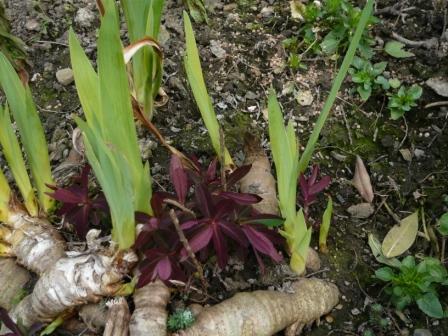
The Flag Iris above are in the process of being colonised by the small Euphorbia which spreads rapidly by creeping roots. In spring I am happy that the red shoots contrast with the lime-green, sword shaped leaves of the Iris so I plan to leave them until the Iris flower. By then the dark blue flowers will not need a red leaved under planting so they may have to come out. These Iris also need to be split as the rhizomes are old and each piece only produces one stem. I will do this splitting a few weeks after flowering and plant pieces of root and throw away the old woody center.

Read More Read More

The Garden Museum formerly Museum of Garden History

The Garden Museum formerly Museum of Garden History

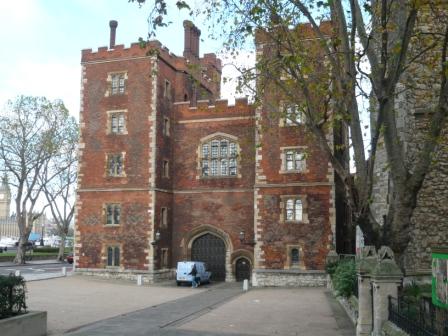
The museum of garden history in St Marys Church at Lambeth Palace London reopens after refurbishment on the 18th November 2008. Renamed The Garden Museum, extra space has been created inside the medieval church to display paintings, drawings and ephemera related to gardening.

Visit to The Garden Museum (Garden)

  • I arrived a week too soon expecting the refurbishment to be completed ( I should have checked). It had been several years since my last visit when it was still called the museum of garden history.
  • The Cafe and garden were still open and the graveyard was planted up with lots of plants including some strong growing Acanthus.
  • The knot garden contained a large spirally pruned Ilex altaclariensis Golden King as a center piece.
  • Evidence of the links to the Tradescant family were all over the small garden and for the most part the plants were well labeled.
  • My favourite feature was an old stone seat that had been surrounded by a small hedge clipped to make it look like a sofa.

See more pictures

Read More Read More

Confessions of a Gardening Gourmand

Confessions of a Gardening Gourmand

A gourmet is a connoisseur of delicacies and a judge of good food. Therefore a ‘gardening gourmet’ is a connoisseur of the garden and its impact on all your senses.

A gourmand is more like a gluttonous and greedy feeder who is hard to satiate. A ‘gardening gourmand ‘ acquires more plants,  grows more seedlings, takes more cuttings than needed and crams everything into a tight garden space.

I am a repenting garden gourmand at least until next spring.

Avoid the worst of Gardening Gourmandishness.

Read More Read More

Rhus typhina, Stag Horn Sumach

Rhus typhina, Stag Horn Sumach

This tree in my neighbours garden is about 9 foot tall. The panticles looks spectacular in the evening sunlight but overall the plant is prone to suckers and consumes a lot of space.

Growing Rhus

  • If you get sucker problems try cut out at the root. They can become invasive.
  • As part of a large family select your Rhus from a reputable nursery avoiding the Poison Ivy ‘Rhus toxicodendron’ (several species have irritating sap)
  • Autumn leaf colouring of yellow, orange, red and purple can be spectacular. It is one of the main reasons for giving these plants garden-room.
  • I am happy to admire these plants in other gardens, at least until I have a lot more space to fill.
Gardening For Climate Change

Gardening For Climate Change

After this wet summer what has happened to Global Warming? Are there any advantages of Global Warming and how should gardeners design for such changes.

What is Global Warming

‘Climate change’ is used as a catch-all phrase to encompass the effects of global warming, the increase in temperature caused by greenhouse gases and the Northerly drift of hotter climates.

Read More Read More

Plan Autumn Flower Colours

Plan Autumn Flower Colours

Harrogate-penhill-autumn-shades

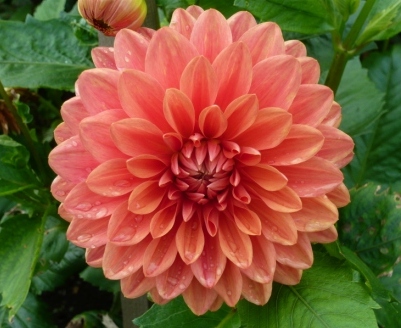
Decorative Dahlias provide colour through to the first frost. This dahlia was snapped in the rain at Harrogate Valley Gardens which has a great show of Dahlias in their own raised bed. That may account for the six foot specimens that were on display.

I was taken with the two tone effect of this flower. Many of the other flowers at this time of year are the brash purples, striking pinks or strong yellows. Check now in parks and public place to see what colour schemes work. Then plan your own scheme for next year.

Begonia and  Sweet Alysum