Browsed by
Category: Articles

Gardening articles that may not include tips

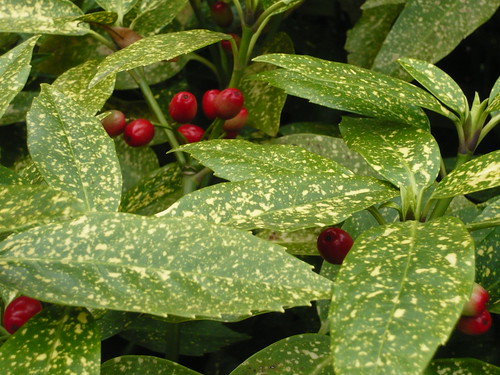
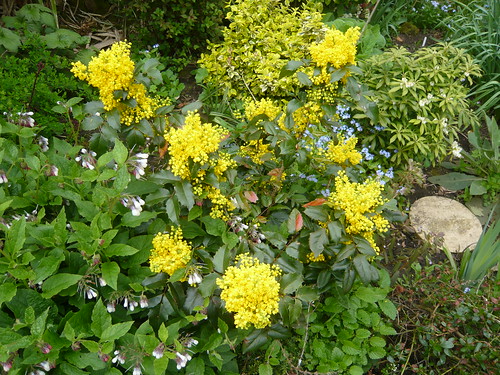
Spotted Laurel Acuba Japonica Crotonifolia

Spotted Laurel Acuba Japonica Crotonifolia

Spotted Laurel

A good sized shrub the Laurels are sold under several family names.

The Spotted Laurel Acuba is an evergreen shrub for almost anywhere in the garden.

  • I grow mine 5 feet tall in quite dark shade.
  • It is quite slow growing but very hardy.
  • Shade helps the yellow spots – strong sun encourages green chlorophyll
  • The soil is moist and rich but it would also do as a hedge plant in ground.
  • Shrubs may be strictly pruned as hedges, left to grow unchecked, or lightly trimmed to shape once annually, always using secateurs to avoid cutting the large leaves.
  • All parts of the plant are poisonous, take care with the seeds.
  • Propagate by softwood cuttings in spring/summer or less reliably by seed.
  • Crotonifolia and Variegata are the best varieties. Both are female so they produce red berries which usually last from the autumn  through to spring.


More images

Magic and Green Simmia

Magic and Green Simmia

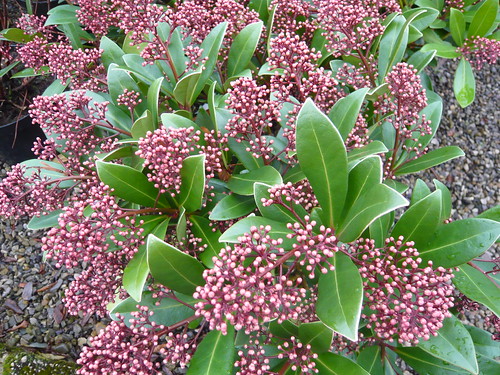
Magic Marlot Skimmia

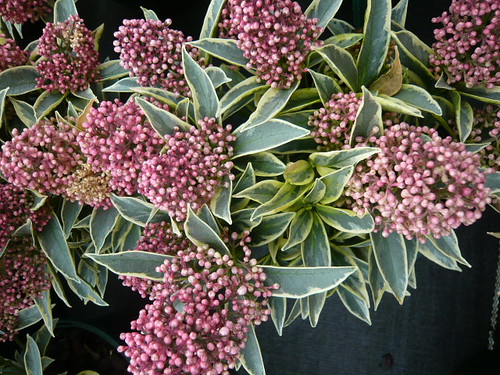
‘Magic Marlot’

  • Compact evergreen shrub grows perfectly in containers to give a wonderful display. Forms a  mounded, upright, evergreen that works for the border, garden bed or large containers.
  • The variegated foliage is medium green with a cream edge.
  • Autumn produces green-white buds that turn wine red as the temperature drops.
  • Spring brings rich-flowering, pink tinged white blooms.
  • Tolerant of heat, frost, shade and dry soils.
  • Spacing   24 – 36″,  Height : 12 – 18″,  Width : 12 – 24″


Kew Green Skimmia

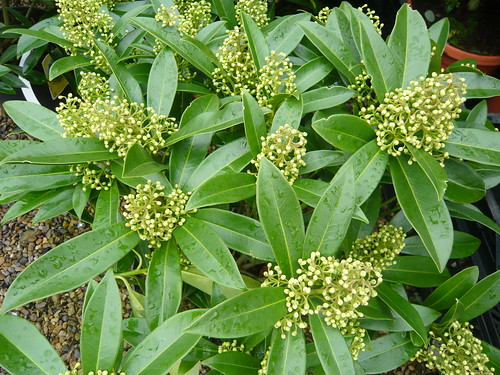
Skimmia ‘Kew Green’

  • This low to medium sized shade tolerant shrub provides much needed winter blossom.
  • Scent from male plants  is followed by attractive berries on the female form.
  • Attractive foliage and makes Skimmias ideal as ground cover in problematic shady areas.
  • Skimmia ‘Kew Green’ prefers a well drained neutral to acidic soil that is reasonably fertile yet well drained,
  • Skimmia flourishes in full or partial shade.
  • Trim to shape after flowering and mulch occasionally.
  • Ideal flowering shrub for problem clay soils.

Rubella Skimmia


Rubella’  Award of Garden Merit (AGM)

  • There are numerous lovely skimmias, generally from the Himalayas and the Far East. Skimmias form evergreen shrubs of varying heights.
  • Most are ‘dioecious’, meaning they have male and female flowers on different plants, and both sexes must be planted to ensure a crop of fruits.
  • ‘Rubella’ is a compact male variety with attractive red-margined, dark green leaves.
  • The flower buds, which appear in autumn and winter, are a prominent feature of the plant, as are the scented flowers which open in spring.
  • It is perfect for growing in containers and provides good all year round colour.


Read about other Skimmia species and Skimmia for buds and berries.

Be Witch Hazels Hamamelis in Bloom

Be Witch Hazels Hamamelis in Bloom

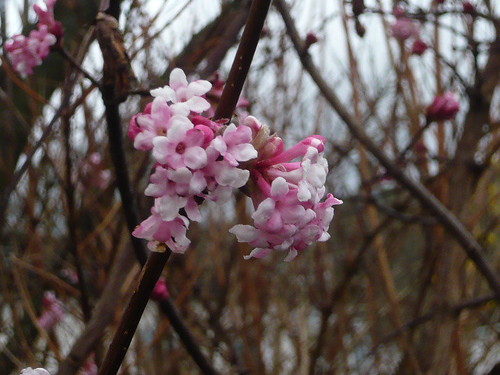
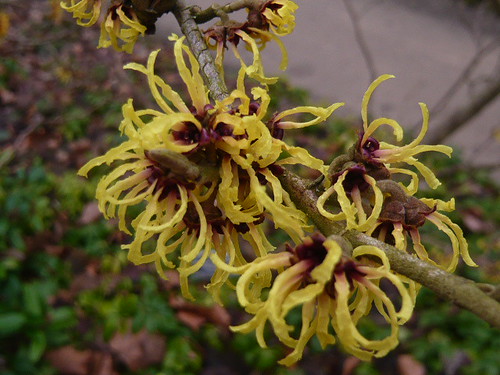
Hamamelis x intermedia primavera
Hamamelis x intermedia primavera was flowering on an open shrub. It was about 5 feet high and had a 7-9 feet circumference.

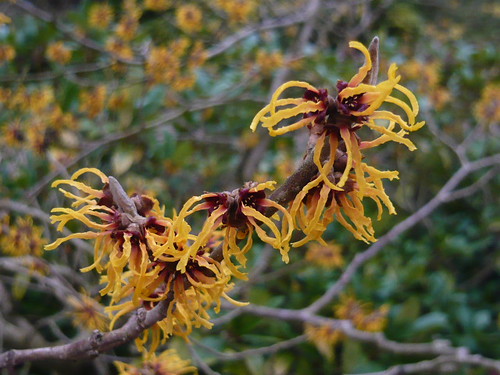
Hamamelis x intermedia Orange Beauty

Hamamelis x intermedia ‘Orange Beauty’ was 8 feet tall and well furnished with scented blossom.

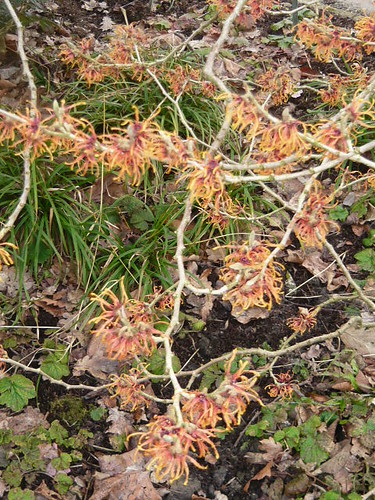
Hamamelis x intermedia Jelena
Hamamelis x intermedia Jelena was the star of the display at Harlow Carr gardens on the 1st February. They obviously like the acid soil conditions and showed no sign of the cold December spell we all suffered.

Read More Read More

Gardeners Charities

Gardeners Charities

Charity begins not at home but in the garden!

Greenfingers is a small charity which is dedicated to creating magical gardens for children’s hospices around the UK.

Thrive’s aim is to enable positive change in the lives of disabled and disadvantaged people through the use of gardening.

Trellis is the national Scottish charity that supports, promotes, and develops the use of horticulture to improve health

Perennial is a UK charity dedicated to helping current and retired horticulturists in need.

Horticap is a Yorkshire based handicapped organisation where Alan Titchmarsh is a wonderful ambassador and is incredibly generous with his time and fundraising capabilities.

RHS, Chelsea Physic Garden and the AGS are also charities based on the educational work they do and doubtless for tax reasons.

If you want a garden charity mentioning on these pages send us a comment below.

Avoid Tree Damage to Buildings

Avoid Tree Damage to Buildings

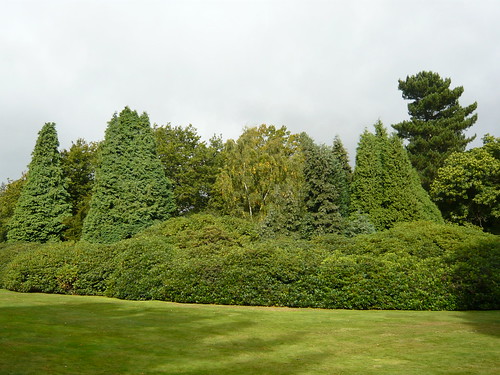
Far away tree

Trees are great natural features in our British landscape. It is no surprise that gardeners want to grow them in their gardens.
In addition to the horticultural problems trees can cause damage that other plants do not.  Broken branches and flying debris can break glass or knock down fences, roots can damage drains, trees take up water from the soil leaving it prone to subsidence and, rarely trees cause damage to foundations .

How to Avoid Tree Damage.

  • Only plant trees where they are unlikely to cause direct damage or subsidence.
  • Do not allow trees to overhang buildings.
  • Plant trees 6 feet  or 2 m   away from boundary walls.
  • Subsidence depends on many factors chiefly soil type, foundations, weather, and vegetation. Trees can increase the risk of subsidence because they take  water up from the soil. Clay soils are often worst.
  • Don’t plant trees anywhere near overhead electricity lines or telephone wires.
  • Ensure trees do not grow over greenhouses, conservatories or roofs.
  • Prune dead wood to avoid or reduce branches breaking off.
  • Keep the height of your trees below the distance to your buildings.
  • Root damage to buildings is rare and subsidence is the more likely cause
  • Leaking drains will get clogged up with tree roots (roots cannot get into sound unbroken drains). Maintain your drains.

    Read More Read More

Gardeners Bed and Breakfast Trips Tips

Gardeners Bed and Breakfast Trips Tips

Book Cover

The king of books about Bed & Breakfast has to be Alastair Sawday. His paperback ‘Garden Lovers Bed & Breakfast Special Places to Stay British Bed & Breakfast for Garden Lovers’ is a treasure trove of information for garden vistors.

The editorial team have tracked down hundreds of beautiful, eccentric, unique places to stay with gardens. ‘Several of the properties in this book are quite wonderful little corners of the UK that until now have been extremely well-kept secrets. A fantastic guide’.

What Others are Saying

  • ‘The ideal all-round publication for a gardener’s weekend away’ The Times
  • ‘Garden Fanatics will love this book.’ BBC Gardeners World
  • ‘In these places you will meet owners with hugely different gardens..’ Telegraph

Read More Read More

‘I name this plant and all who sail in her’

‘I name this plant and all who sail in her’

Burton Agnes Pocklington

‘A Rose by any other name would smell as sweet.’

You can name a plant just for fun!
Common or vernacular or homemade names are completely unregulated. Obviously they do not get wide acclaim and may be replicas of other plants. Still if it amuses you or the family there is no harm done.

At the other end of the scale there are International Code of Nomenclature for Botanical and Cultivated Plants, governing the naming of cultivars and cultivar-groups. If you want to commercialise the plants you can apply for Plant Breeders Rights PBR. see below

For most varieties there are ‘Authorities’ or International Registers responsible for recording or controlling names, varietals, sub species and hybrids. The International Daffodil Registrar and the International Orchid Registrar are both maintained by the RHS. Other societies maintain registers like the national chrysanthemum society.

Plant Breeders Rights

Read More Read More