Browsed by
Category: Articles

Gardening articles that may not include tips

Growing Good Snowdrops

Growing Good Snowdrops

If snowdrop leaves are showing can the delicate white flowers be far behind?

IMG_3667

Snowdrops for me signify the end of Winter rather than the coming of Spring. Tucked under this hedge row the snowdrop is left to multiply naturally by seed and by division.

Tips for Growing Snowdrops

  • Transplant snowdrops as soon as they finish flowering and have visible leaves. This is when they are ‘in the green’ and is the safest time to plant snowdrops. Many bulb suppliers sell them in the green.
  • The small bulbs are prone to dry out and these dry bulbs do not grow on as successfully as snowdrops in the green.
  • Read More Read More

Perennial Garden York Gate Adel

Perennial Garden York Gate Adel

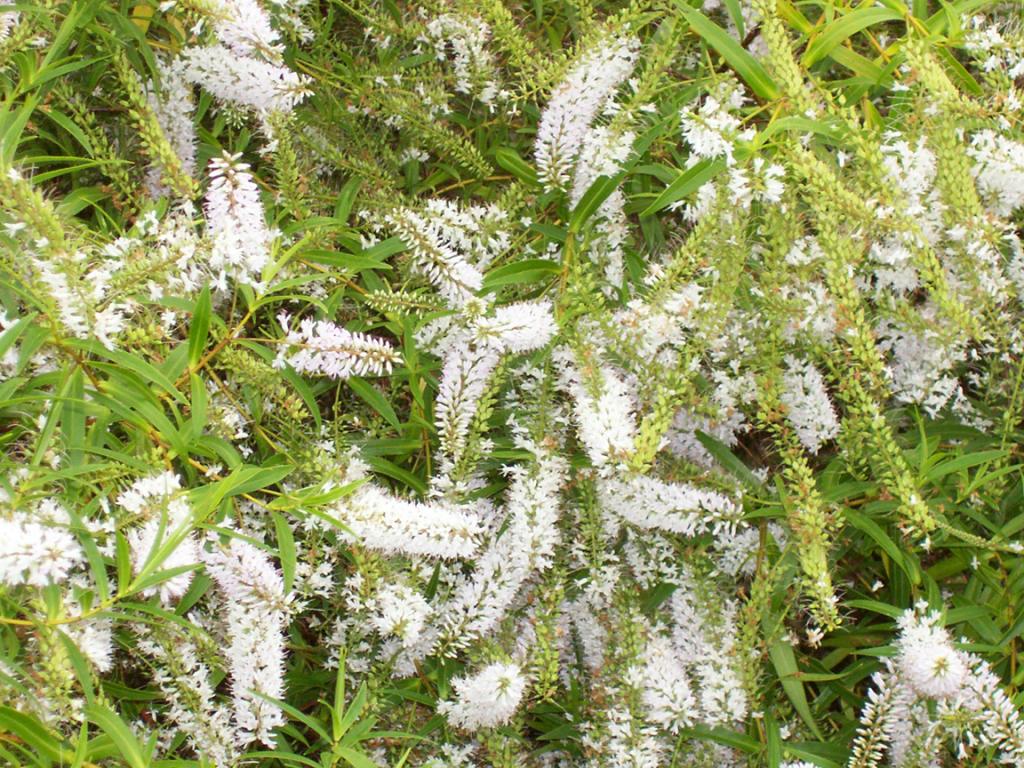
white-hebe

Perennial is the name of the Gardeners Royal Benevolent Society the charity for ‘Helping Horticulturists in Need Since 1839’. They have an interesting programme of events for 2009 and a selection of garden related gifts to support the charity. Last summer I visited Perennial’s own garden near Leeds called York Gate and found the volunteers very attentive and helpful. Best of all was the plants propagated from within the garden that were available for sale at economic prices.

York Gate

Approaching the garden through an old church yard in Adel and straight down a short lane you cross the narrow road into the one acre garden.

Read More Read More

25 Rose Types From a Possible 150 Species

25 Rose Types From a Possible 150 Species

We have got over the season of Christmas Roses in boxes of chocolates at least! Passing over Helebores we consider many types of rose that can be grown in an ordinary English garden.
Rose

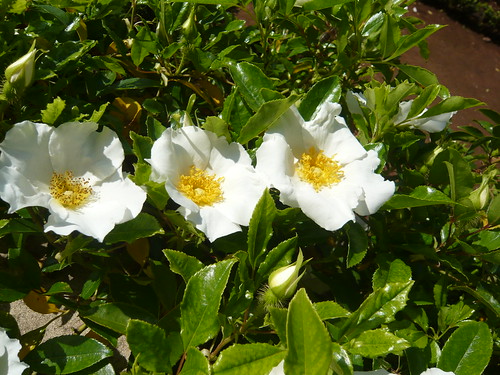
Wild Roses

These roses have 5 petals, a mass of stamens and produce large hips. There is a large range of size, scent and flower colour. There are approximately 150 species of wild roses.
Rose

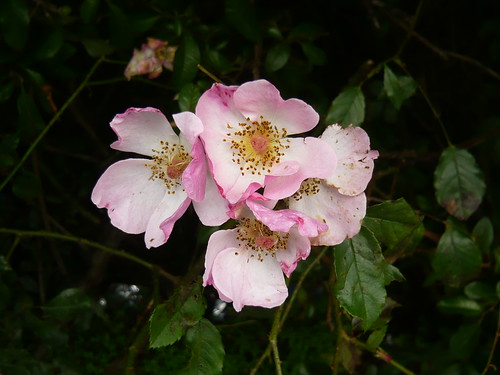
Gallicia Roses

Amongst the oldest cultivated roses for the scent and medicinal properties. The plants are suckering with dark green leaves and bristly stems.

Damask Roses

The petals are distilled to make Attar of Roses perfume. Summer Damask flower once whilst autumn damask flower twice a year. The colour is generally purple fading to washy pink. They are grown in Turkey and Bulgaria for commercial perfume manufacture.

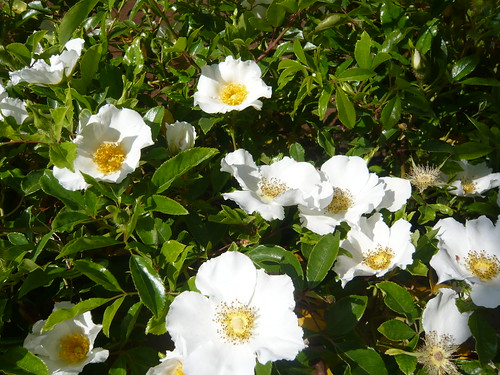
Alba Roses

Alba roses may have been cultivated since Roman times to form large shrubs with arching stems. The plants are very tough and can survive in neglected gardens for many years. Large volumes of white flowers show over a short flowering period.
Rose

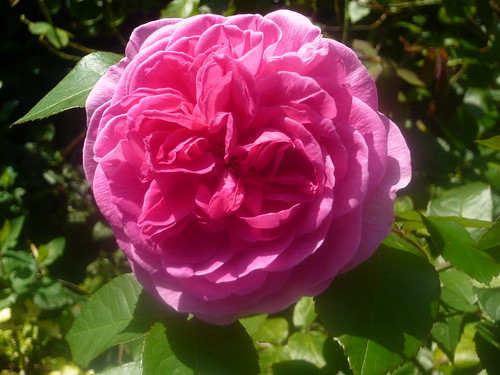
Centifolia Roses

Dutch paintings of the 16th century often features these rounded double pink roses.

Moss Roses

Often depicted on crockery in the 19th century these roses have stems and sepals with a dense mossy cover in green or brown.Little or no pruning is required.

Portland Roses

A small group similar to Gallicias but with repeat flowering in bright red or pink. A tough and hardy rose.

China Roses

China roses have smooth leaves and less scent but the flowers have thick petals and smooth shiny leaves.

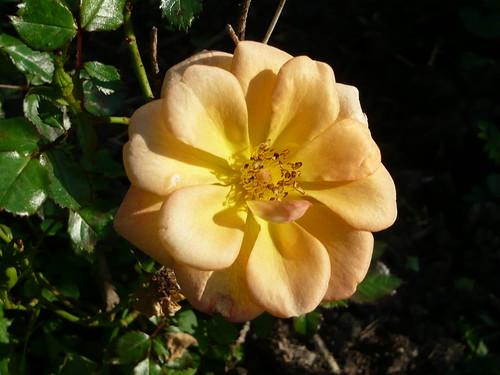
Tea Roses

With few thorns and smooth shiny leaves the yellow, apricot and pink flowers are graceful plants in a warm climate.
Rose

Noisette Roses

Originating from North America these plants combine the good scent and late flowering of Musk roses with the larger flowers of China and Tea roses.

Bourbon Roses

The rounded flowers in sprays are usually well scented were popular in the 19th century. See also
Rose Rose

Hybrid Perpetual Roses

Coarser and leafier than teas these plants are prone to mildew but with strong colours and good scent they are popular for late flowers.

Climbing Roses

These roses are bred for climbing and need plenty of water to excel. Varieties may flower only once or twice per year depending on the parentage. They need support and pruning to get the best flower display.

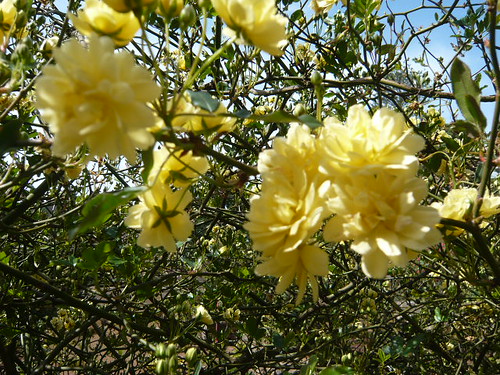
Ramblers

Distinguished from climbers by the masses of small flowers in one flush. Generally they are originally a cross from a white climbing wild rose.
Rose

Ground Cover Roses

Developed to fill the need for trouble free spreading and weed suppressing with long flowering periods. Try Flower Carpet, Grouse or Nozomi.

Hybrid Musk Roses

One of the best small groups producing scented flowers in white, cream or pale pink.

Rugarosa Roses

Grows well and relatively trouble free in poor soil to produce single flowers and large decorative hips.
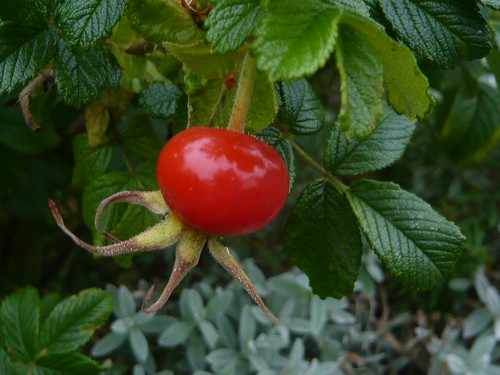
Rose hip

Shrub Roses

This is a catch-all grouping of wild crosses that do not fit other rose categories.

Hybrid Tea Roses

The traditional and popular type of cultivated rose bred for the tall bud and larger blooms.

Rose buds

Polyantha Roses

Repeat flowering small plants that have been bred to produce the floribunda varieties. They are often confused as miniature hybrid teas.
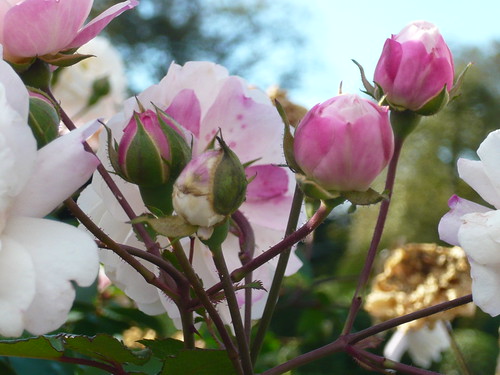
Rose

Floribunda

Masses of coloured flowers throughout the season they became a dominant type of rose through the last century.

English Roses

David Austin inspired old roses crossed with disease resistant modern varieties have produced some stunning plants.

Romantica and Generosa Roses

Meilland branded roses with scented double old fashioned, HT or climbing roses. Generosa are branded from roses developed by Guillot in France

Miniature Roses

All parts of these original roses are small and they are now grown as dwarf pot plants. I am trying several miniature roses in my rockery to add colour and interest.
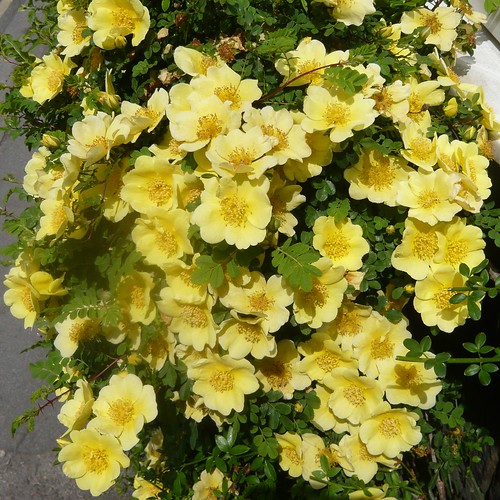
Canary Rose

Whilst you decide which roses to grow why not eat a Roses chocolate or two?
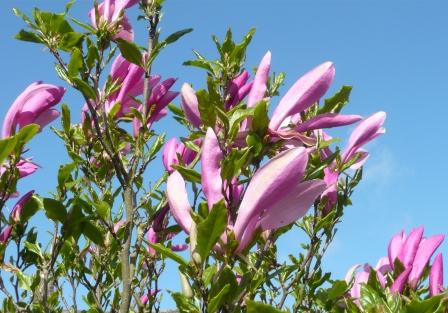
Growing Chusan Palm

Growing Chusan Palm

Do not get palmed off with an inferior plant. Nor do you need a desert oasis as even in your conservatory or garden this Chusan Palm will spread umbrella like shredded leaves over a fair sized area.

Adle

Trachycarpus fortunei or the Chusan palm can grow and flower in the UK.  They are hardy down to -10° C and tolerate our cool summers. For this reason they are popular plants even growing  as far north as Scotland.

Growing Chusan Palm

  • Chusan Palm, Trachycarpus fortunei is also called Chinese Windmill Palm or Chamaerops fortunei. You may find them for sale as Takil or Nanus varieties.
  • These palms have been cultivated for centuries in China and true varieties vary considerably.
  • The leaves are fan shaped and so strong they are used for making ropes, sacks, and other coarse cloth in Japan and China.
  • Chusan Palm grow 6-10″ a year under optimum conditions.
  • Chusan Palm grow to 35′ tall, flower yellow and the fruit is a red to blue-black.
  • Individual trunks are slim and covered with old leaf stumps and dark-brown fibres. Cut off leaves to give a more attractive smooth-stemmed palm.
  • AGM status has been awarded to Trachycarpus fortunei

I am looking for a photograph of the kidney shaped fruit .

Currently we will have to settle for this alternative photograph.

Madiera mch11 479

Chamaerops fortunei

Economic Christmas – Garden Stuff For Free

Economic Christmas – Garden Stuff For Free

When times are hard you need to use your imagination to enjoy a cheaper Christmas. Whilst these ideas are focused on the gardeners amongst us it is possible to invent garden themed ideas for children. Try word games with a floral theme or a winter wild flower walk (what can be found in the Christmas hedgerows?)

Low Cost Christmas for Gardeners

No one wants to be reminded of current economic woes and gardens are a great place to put such troubles behind us. Here are ideas for cheap presents and cost saving activities centred around gardening.

Free Stuff.

  1. Many local horse riding schools and stables have more manure than they can cope with. Many stables give it away free if you are willing to bag it up yourself. Look for the well rotted section often at the bottom and back of the pile. My family always thought it strange that Dad asked for ‘muck’ for birthdays and Christmas but it saved on presents and fertiliser cost.
  2. Seed catalogues make interesting reading in the cold, dark evenings and they will be sent out free by many companies.
  3. Take a trip to see public gardens or winter displays like these London Christmas Lights
  4. Gardeners are usually happy to give cuttings, seeds or plant offsets to friends and neighbours. As herbaceous plants are divided at this time of year look out for plants to scrounge. Public beds are often cleared of viable plants to make room for the next season and I have scrounged bulbs and plants that were destined for the council compost heap.
  5. A home made present can be treasured beyond price. Richard made me a pair of compost heaps on an E shape with moveable slats in the front from old fencing and some bought posts. Rustic tepees can be made from Hazel twigs and a willow screen could be fashioned depending on available material.
  6. Many wild life habitats can be made for free. Build something that will attract useful creatures. I buried an old dustbin as a pond which is now full of frogs. Tie hollow tubes together to make a bees nest or just pile up leaves and twigs for hibernating hedgehogs.
  7. Read internet blog sites like gardenerstips and think of them as free gardening magazines. You could set up RSS feeds and add them to favourites for a relative who was less confident about using the internet.

poinsettia

Good Value Presents

Membership of gardening related clubs can be very economic. See the list of great offers Garden society memberships or check with your local society.

  1. National garden centre gift vouchers and commercial garden centres like Wyvale vouchers allow gardeners to choose what they want, when they want it.
  2. Gardening books are available in great variety & quantity with most Charity shops also have cheap selection. There are only so many general gardening books that anyone needs. Monographs about a plant species or a good reference like Hilliers manual of Trees & Shrubs, the RHS plant or gardenfinder are a fair choice. Libraries are free and you can usually get them to order specific books on  youe behalf.
  3. As garden centres fill up their shelves with Christmas baubles they often put gardening dry goods on sale at a discount. Buy now for next season and wrap it as a present.
  4. Fruit trees and bushes are long term good presents as they will produce a valuable crop for many years. I name my fruit trees after relative as a memorial or to remember the gift.
  5. Split your perennial plants to make gifts and pot up strawberry runners for the same reason.
  6. Use conifer and holly branches for trimmings and a wreath.

Merry Christmas

What will you be buying for the gardeners in your family this Christmas apart from National Garden tokens? On the basis that it is the thought that counts, here are a few ideas to help with the thinking process.

Organic Matter
This covers seeds, plants, tubers and bulbs but also a prized gift like manure and compost.
Seed catalogues and web sites have a vast array of new and trusty old favourites but gardeners who specialise may want a say in the variety, size or appropriateness of a particular plant. Since most gardens can only cope with a limited number of varieties it is best to ask for a wish list or select something else.
Despite the comment above most gardeners would be happy to receive some summer flowering Lilies or other bulbs that can always be planted in a pot.

Equipment
Good quality tools make the jobs in the garden far more pleasurable. Better a good trowel than a cheap spade although a stainless steel spade would suit me down to the ground (literally).
Watering in the summer garden can be an issue and there are many watering devices for collecting and distributing the water to where needed. Strangely I don’t think you can have too many bits of kit to help you do this job so a gift from this range may be useful.
Just because a tool in the garden shed looks old, worn or damaged it doesn’t follow that a new one is wanted as it may be fun making do and mending.
Artistic gifts are a matter of taste and sculptures, garden features and ornaments need to chime with the recipient, the garden and the other stakeholders, so choose with care.

Media
Below are some gardening books to consider. All are available from Amazon by clickingh on the image.
membership of a society like the RHS, Alpine Gardens Socy, or Royal National Rose Society for example may be appropriate. Most offer year round benefits and even free seeds from some clubs.
Gardeners World subscriptions to the monthly magazine or Gardens Illustrated are other potential ideas click on the right.

Book Cover

Book Cover

Read More Read More

Alpine House at Harlow Carr

Alpine House at Harlow Carr

standing-stones

Outside the 2009 Alpine House at the RHS garden in Harrogate are these new ‘Standing Stones’. I am interested to see if the planting links the new building to the sculptures but some how I doubt it. Possibly they are meant to represent the Alps or just be the start of a new part of the garden.

2012 update shows the stones front the much improved vegetable plots.

The new building, opened in May 2009 for the first time.  Is a tour de force and shows what finance and labour has been put in by the RHS and particularly the local Alpine and Rock Garden Group.

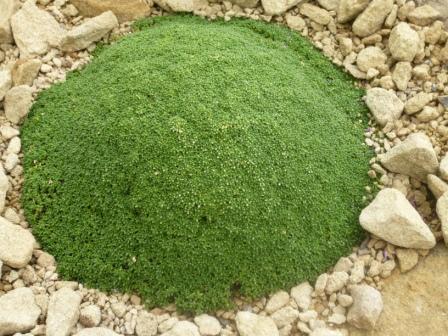
Gypsophila aretiodes
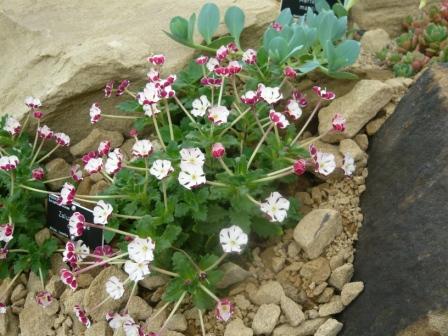
Zaluzianskya ovata
Zaluzianskya ovata

alpine-s

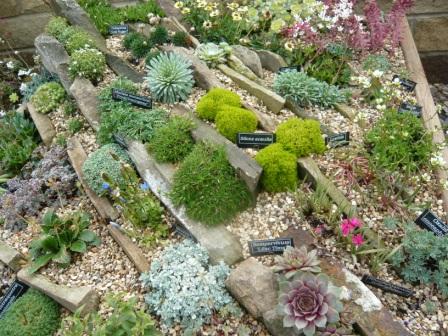
A mixed selection in a 2 meter square raised frame-bed. The sort of thing I want to try in my own garden as it is raised to working height and helps the inspection of small plants.

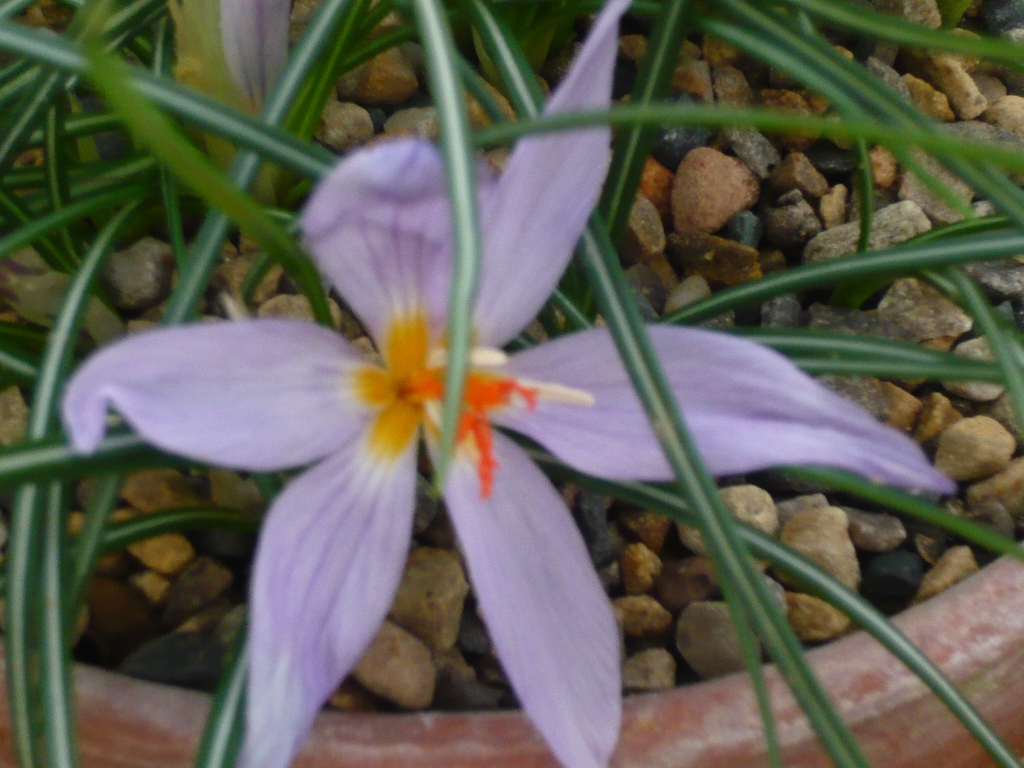
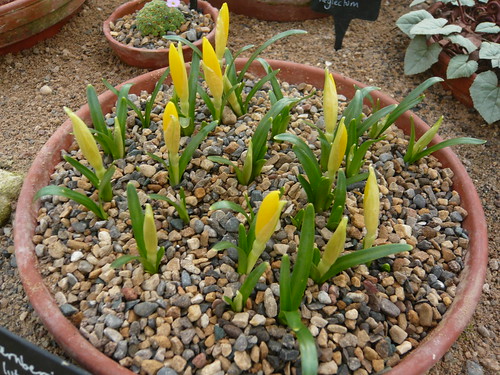
Sternbergia lutea
Sternbergia lutea

2012 updates

Tufa walls and more mature sink planters are now paying dividends.
The plant displays always include a good selection of alpines in flower.  Crocus and cyclamen were in profusion during November but below are some that took my fancy.

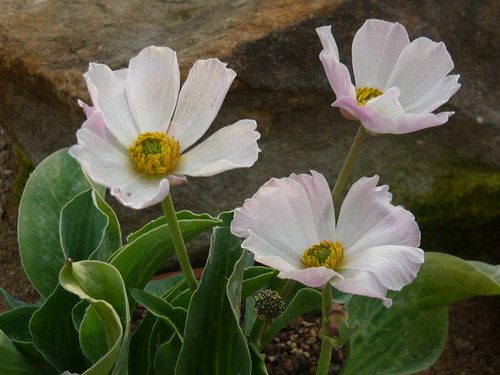
Ranunculus calandrinioides

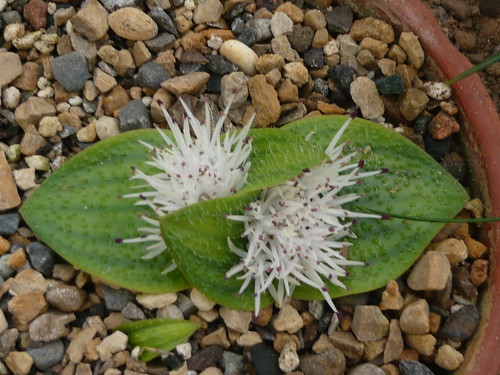
Massonia pygmaea
Scented Massonia pygmaea

Sarcococca Growing Tips

Sarcococca Growing Tips

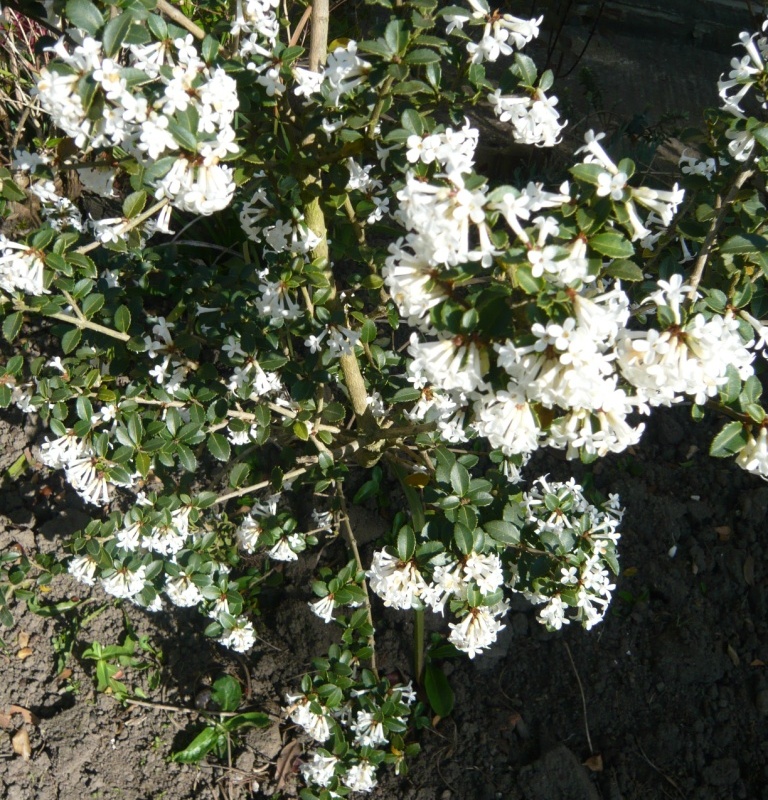
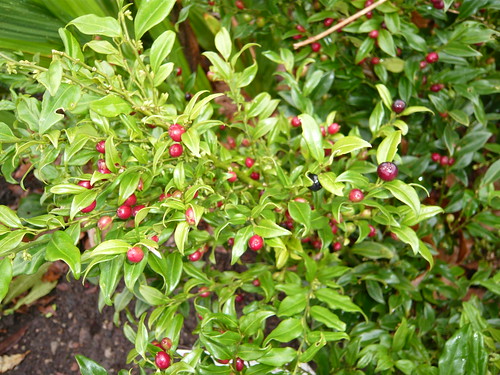
I have grown this sweet smelling plant for several years thinking it was a Sarcococca but comparing this photo to others on Google images I am now having doubts.

saroccoa

Sarcococca Hookeriana aka “Himalayan Sweet Box” is evergreen growing and flowering in light shade.

Sarcococca confusa

Sarcococca Confusa aka Christmas Box or Sweet Box are evergreen shrubs with simple, leathery leaves and tiny, fragrant creamy-white flowers in winter or spring, followed by red, purple or black berries.

According to Thompson & Morgan ‘The winter blooms of Sarcococca hookeriana humilis emerge against a backdrop of lustrous, dark green leaves, with a powerful honey scent that will stop you in your tracks. The white, spidery flowers are followed by spherical, glossy black berries. Once established, this versatile, evergreen shrub needs little maintenance and tolerates a wide range of conditions – even difficult spots in dry, shade. A useful plant for borders, shady woodlands, and containers, or grown as a low, informal hedge. Height: 60cm (24”). Spread: 100cm (40”).’

Growing Cotoneaster as Small Trees

Growing Cotoneaster as Small Trees

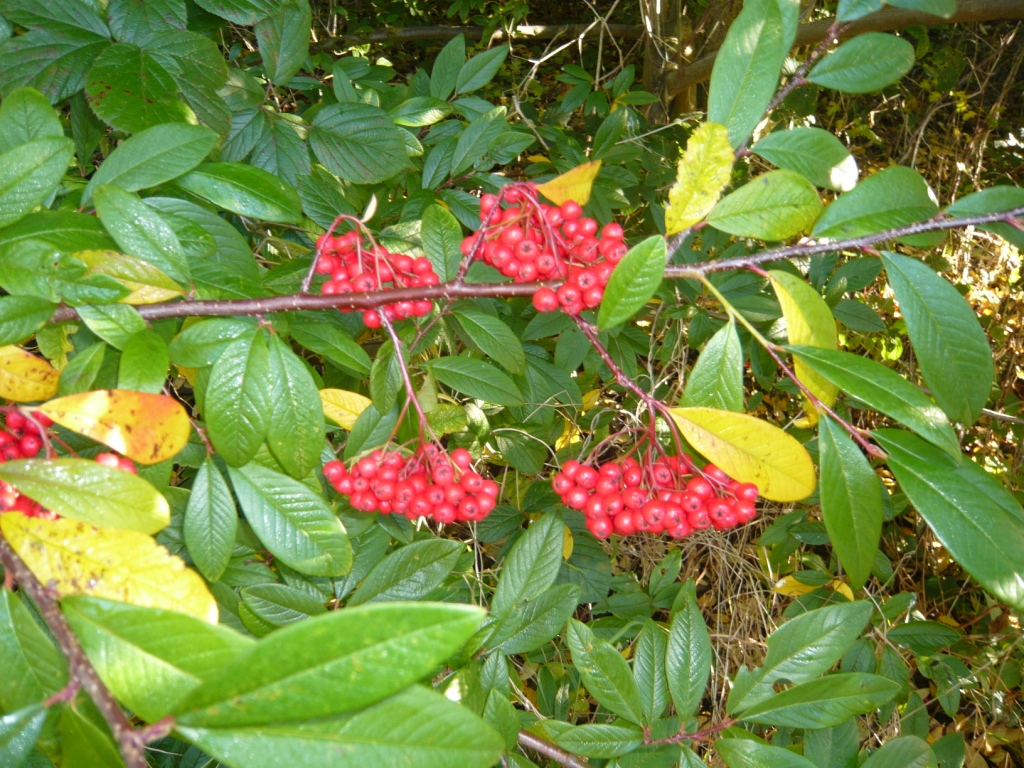
We are familiar with Cotoneaster horizontalis in urban gardens producing masses of berries to feed the birds in late winter.
The larger shrubs and trees also provide a similar avian food supply and look very good in a larger garden.

Cotonester

Cotoneaster species number over 250 and the section devoted to larger trees and shrubs is called Chaenopetalum.
The flowers are produced in corymbs (flower clusters whose lower stalks are proportionally longer so that the flowers form a flat or slightly convex head.) The blossom has more than 20 floweras together. The creamy white petals open flat.
Many species are evergreen and generally larger shrubs but Cotoneaster frigidus are small trees up to 50 ft tall.

Small Tree Species
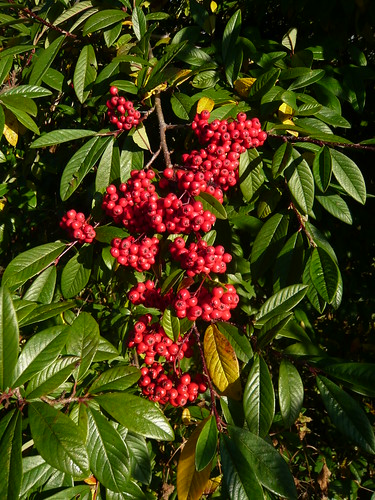
Cotoneaster Cornubia watereri group has red fruit that can weigh down the branches
Cotoneaster hybridius pendulus with glossy leaves
Cotoneaster watereri are a group of strong growing plants with orange – red berries loved by birds.
Cotoneaster ‘Exburiensis’ like many other species have leaves that turn red in winter.

Sourcing Plants that are ‘Good to Grow’

Sourcing Plants that are ‘Good to Grow’

The horticultural trades association (HTA) has over 2700 member locations, many of which are one site nurseries often specialising in a small quality range of own locally produced plants.
The UK gardening industry has a retail turnover of over £5 billion a year and according to the HTA it is a buoyant and growing market. (well it would be growing!)
Rose garden

Garden Centres

  • Like supermarkets the modern garden centres now sell more than plants and garden accessories, they even provide cafes and coffee shops.
  • Much of the stock has been grow abroad and brought to you at the cost of many ‘garden miles’.
  • Garden centres often have special offers and vouchers often designed to get you to spend in a way that extends their selling season. Not quite BOGOFF’s but 4 for 3 at Hayes or 20% off in November on selected items are examples.
  • Stock that is past the retailers sell by date may be reduced. You need to understand why the reduction is offered – if the stock is weak, damaged or unfit then stay well clear.
  • If Tulips, say are reduced in October to make way for Santa and the Christmas stock (that is so important to us gardeners) then fill your gardening boots because Tulips can be planted in November.
  • Normally look these gift horses in the mouth – a cheap wilted plant may never recover
  • There seem to be as many chains of garden centre as there are plants nowadays. Hayes, Dobbies, Strikes, Wyevale, Nocutts, Webbs, Klondyke and RHS are just some of the 130 members of the Garden Centre Association. http://www.gca.org.uk/
  • You may get a money back guarantee but will you return in 12 months to be told you killed the poor little plant.
  • Many large perennial plants can be split before you plant them to make several smaller plants that rapidly grow on. I have just bought and split a robust aster that I bought pot bound from a nursery and got 3 good and several smaller plants that will grow in the next couple of months.

Mail Order Companies

  • I like Thompson & Morgan for seeds and Jersey Direct often have good offers for annuals that provide bulk colour.
  • Buy-in seedlings and grow on yourself. Kinder pots and seedlings at the cost of a seed packet can be an economic way of getting a lot of stock for your garden.
  • Mini mail order plug plants are the next level of cost up but can be good value particularly for seeds that are difficult to germinate like begonias.
  • I like buying seedlings as a way of getting several vegetable varieties that will crop at different times and provide variety and insure against one crop failure.
  • In Praise of the Nursery

  • Of the retail choices available to gardeners my preference is to buy from Nurseries. The stock is likely to be local, hardy and ‘good to grow’.
  • The choice and selection of many varieties may be better although the overall range will be tighter.
  • The knowledge is often detailed and willingly imparted.
  • Many nurseries specialise and offer something different.
  • Owner managed business units need or help it is unnecessary for big business to cream off the profits made from hard working gardeners.
  • Nurserymen and women are some of the most knowledgeable gardeners I know.
Yew Can Outlive You

Yew Can Outlive You

The worlds oldest living thing is a tree. Which tree is the question and where is it growing is a supplementary that causes regular discussion. Yewrica is not the answer unfortunately.

Is it the recently discovered Scandinavian Spruce 9000 years old? Or is it the Australian Wollemi or Huon Pine or the Californian Bristlecone Pine. At the moment the general assumption is that it is the pine recently found and dated in Sweden but may be there is an old Yew lurking somewhere.

Yew

According to Fred Hageneder in his book Yew a History ‘It was under the great Ankerwyke yew at Runnymede in Buckinghamshire that Magna Carta is believed to have been sworn by the barons in 1215. In 1803 Wordsworth celebrated the great yew in Lorton Vale, ‘single, in the midst of its own darkness’, a tree under which both the great Quaker George Fox and John Wesley preached. In many cultures it is the Tree of Life, and its association with churchyards in Britain and Europe has given it a particular claim on the popular imagination as a living link between our landscapes and those of the distant past.
Fred Hageneder’s fascinating book is the first to cover all aspects of the botany as well as the cultural history and remarkable mythology of the genus Taxus or Yew to you and me.’

How can you compete

Unless you own a forest in a suitably protected climatic environment you can’t compete.The next best thing might be to plant a Yew Tree but rather than the green Yew (‘Common Yew’) seen in church yards I recommend the Golden Yew ‘Taxus baccata Semperaurea’ (AGM). These are very slow growing and long lived like their cousins. .

Golden Irish Yew male trees have the same upright form as green Irish Yew. It was first cultivated in 1880. Unless planted in a particularly moist fertile site it is slow to establish itself. In the south golden Irish Yew benefits from some shade from hot sunshine and drying winds.

Irish Yew

Tips for Yew and You

  • Use Yew in hedges – they are evergreen.
  • Only Female trees set berries and some varieties only come in male form
  • The berries are poisonous but are now collected and used in cancer medicines
  • They can be used as wind breaks but only grow slowly 4” a year when young
  • They like slightly damp shade
  • The Dutchy of Cornwall list 14 varieties for sale from the plant shop
  • Yew is a good subject for Topiary
  • Plants are available from nurseries or look for seedlings near a friends tree
  • Be patient with cuttings and even more patient with seeds that need 18months to break dormancy
  • Plants like chalky and limestone areas but I have a healthy specimen in slightly acid soil.

yew Mont Gardon
yew Mont Gardon by Jos van Wunnik CC BY-NC-ND 2.0 “I feel tired…after thousand years…do I have to start again, receiving starlight for a new period?” I can imagine this old yew feels like this, not getting the attention it needs, leaning on a Gallic tombstone on top of a hill, next to the church of Mont Gardon.

See Yew Root and Branch review