Easter Pictures
Happy Easter 
No (snow) platforming this Easter

Moving in to Spring

Gardening articles that may not include tips
No (snow) platforming this Easter
Moving in to Spring
The 18th century Union Jack Gardens at Wentworth Castle were originally called the ‘wilderness’. It was dense with shapes, texture and contrasts of shade and light. Now it may be a suitable place to take a seat in the garden and see the original Yew trees and the variegated ‘creamed’ Hollies.

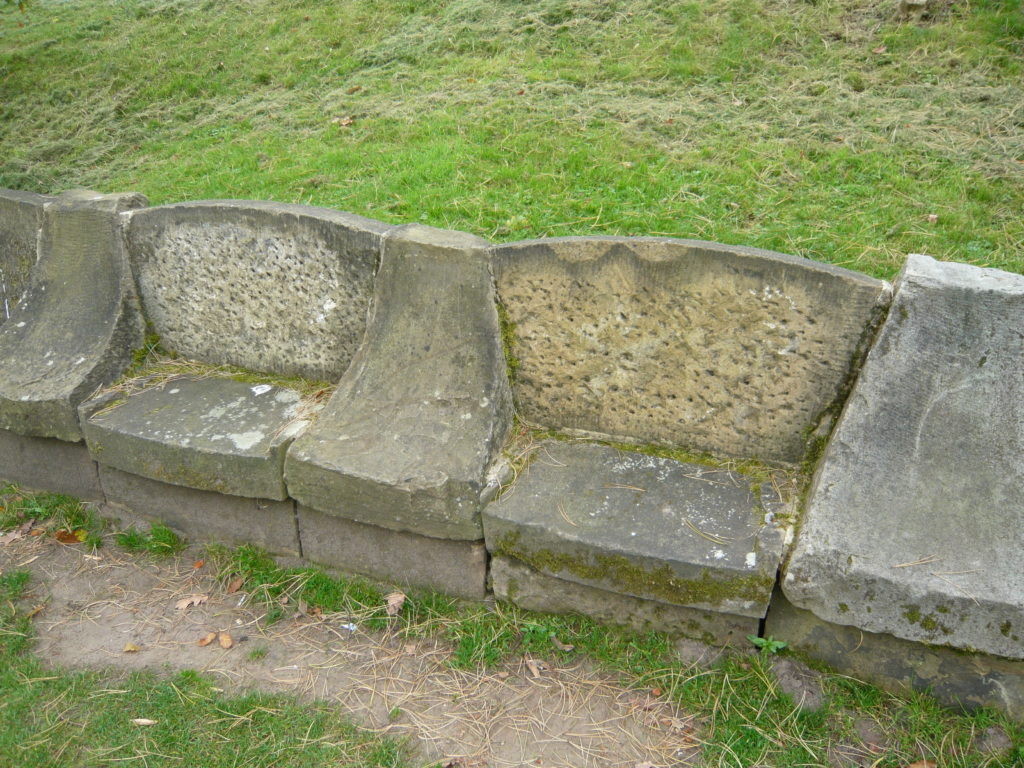
Wentworth Castle starts with an invitation to take a seat while you admire the unusual grounds. The seats are unusual too!
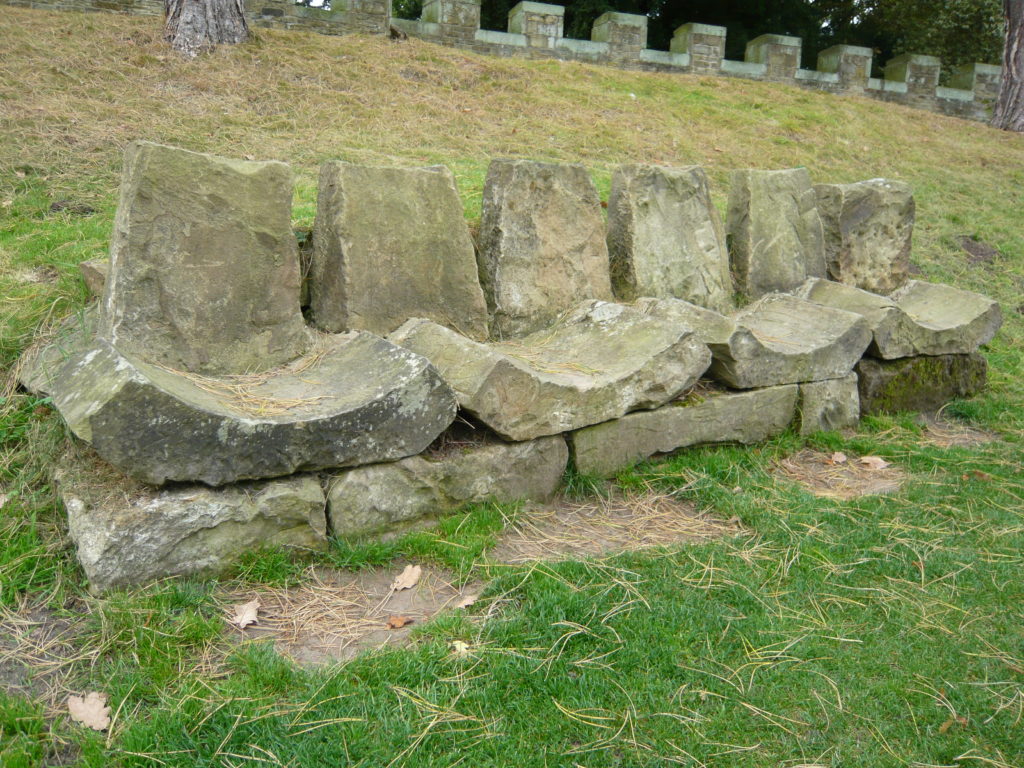
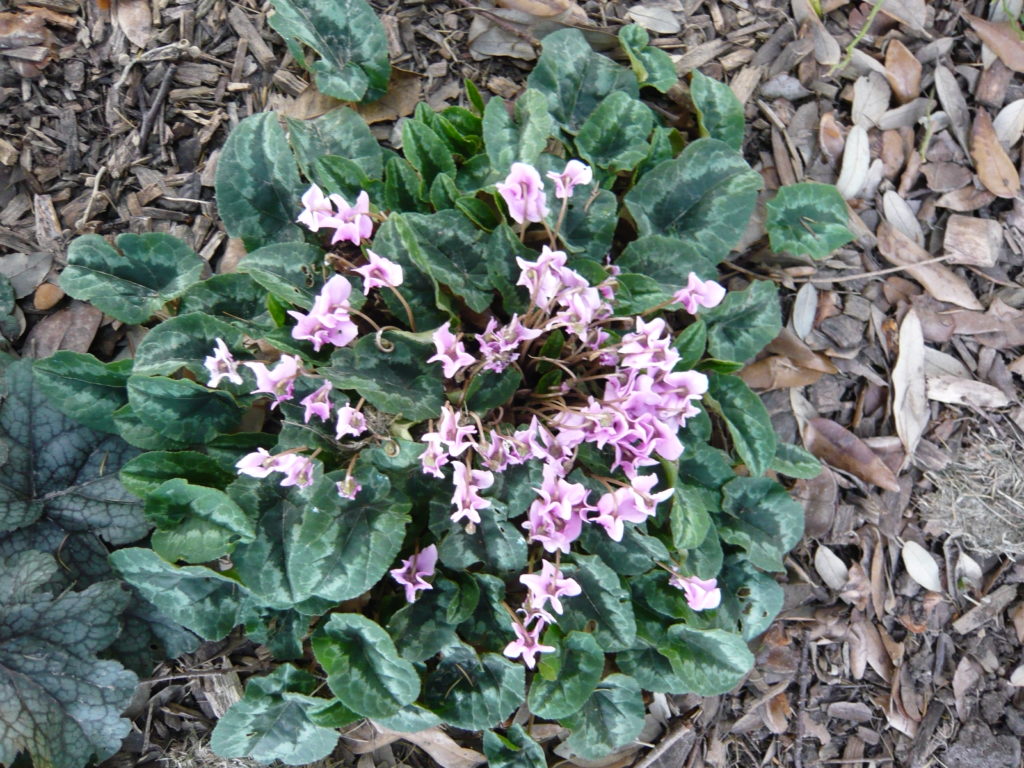
The living plants are less unusual but in the stumpery there are shaped tree roots riven from the soil and replanted upside down. This fails to affect the well mulched cyclamen growing from what must be substantial corms.

Gardeners can be a hardy lot but you need a hard bottom for this type of seating.
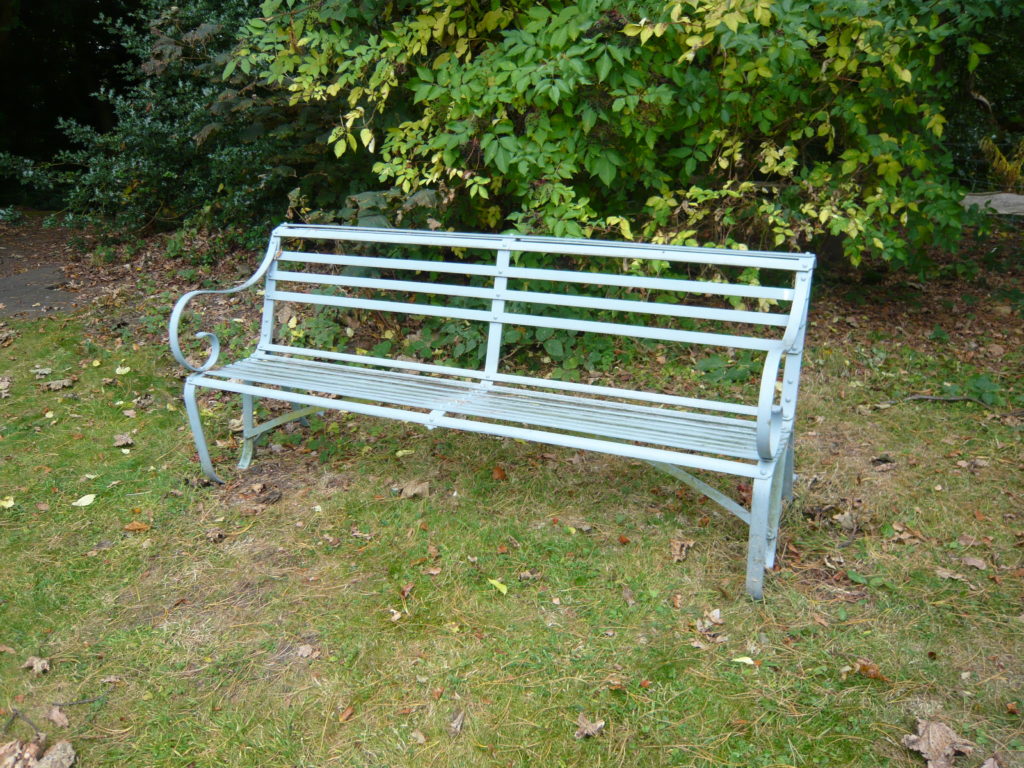
More traditional cast iron seat. Why do we paint them and other garden items in Wedgewood Blue?
Cyclamen mulch is made from coarse wood and bark chippings
In the last year the renovated garden originally designed in 1707 was forced to close. The Yorkshire Post reports ‘Talks are underway to secure the future of the only Grade I-listed landscape in South Yorkshire, which is said to be “nationally significant†for its extensive monuments including some of the earliest follies in the country. In an irony which would not have been lost on its founder Thomas Wentworth, who only built the estate due to a bitter dispute over the inheritance of the family seat at Wentworth Woodhouse …’ Sadly there has been no progress and I have to rely on my old photographs.
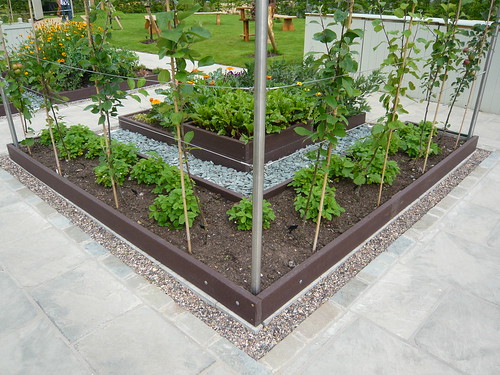
Several companies manufacturers produce raised beds kits for gardens. Marmax products make their raised beds from recycled High Density Polyethylene (HDPE) and donated this set to the library and learning centre at RHS Harlow Carr when it was new. Hard wearing, long lasting and doing its bit for recycling this use of plastic in the garden is to be admired.
Supplied in flat pack, kit form the sides are in depths of 140mm so you can also make 280 or 420 deep beds by using 1-3 levels screwed together. In old money I make that five and a half inches 11″ and 17″ or thereabouts.
Other Methods.
Uses of Raised Beds
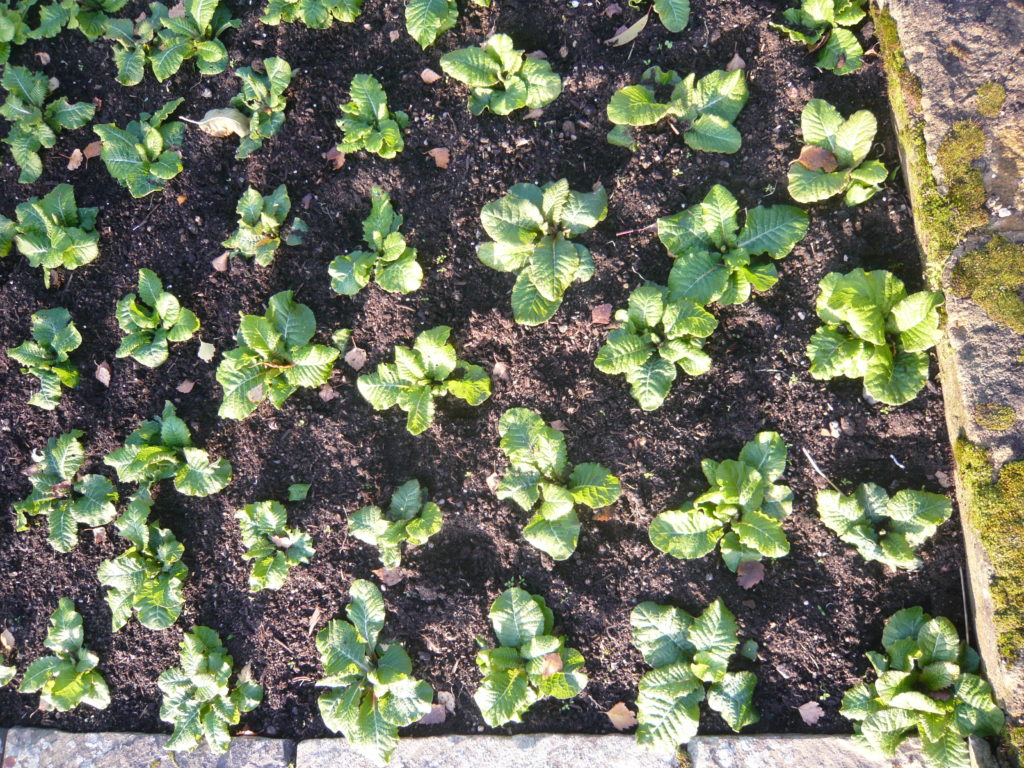
Retaining wall filled with good clean compost a raised bed for primula

A brick wall to allow a slope alongside a raised bed of spring Daffodils
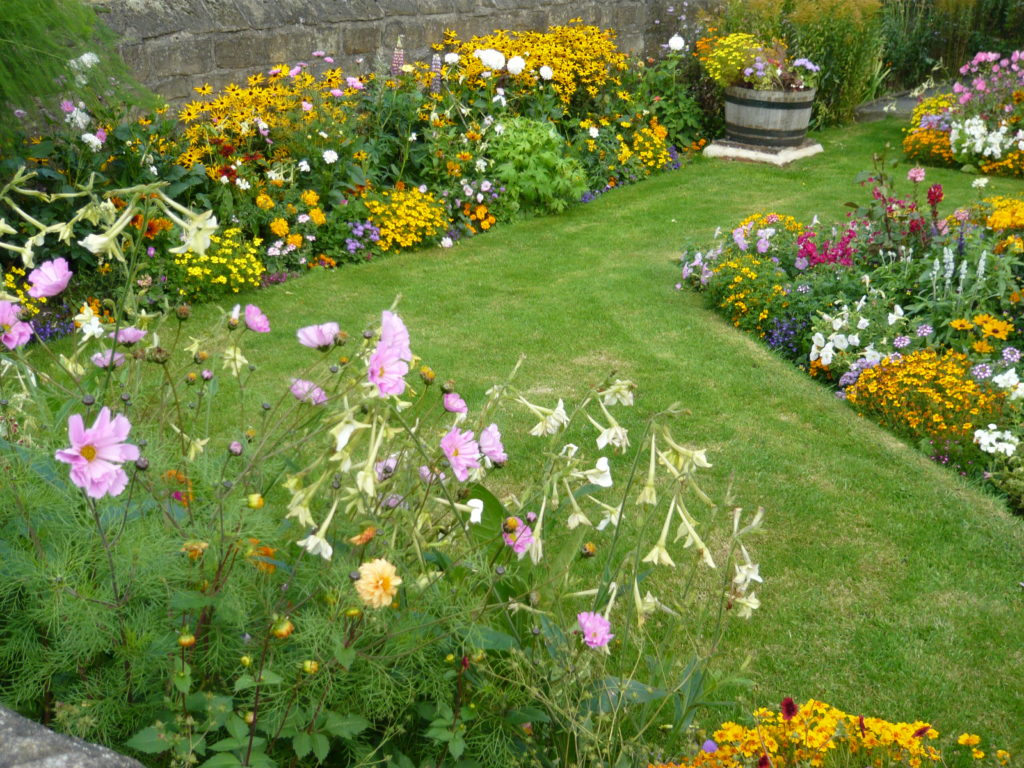
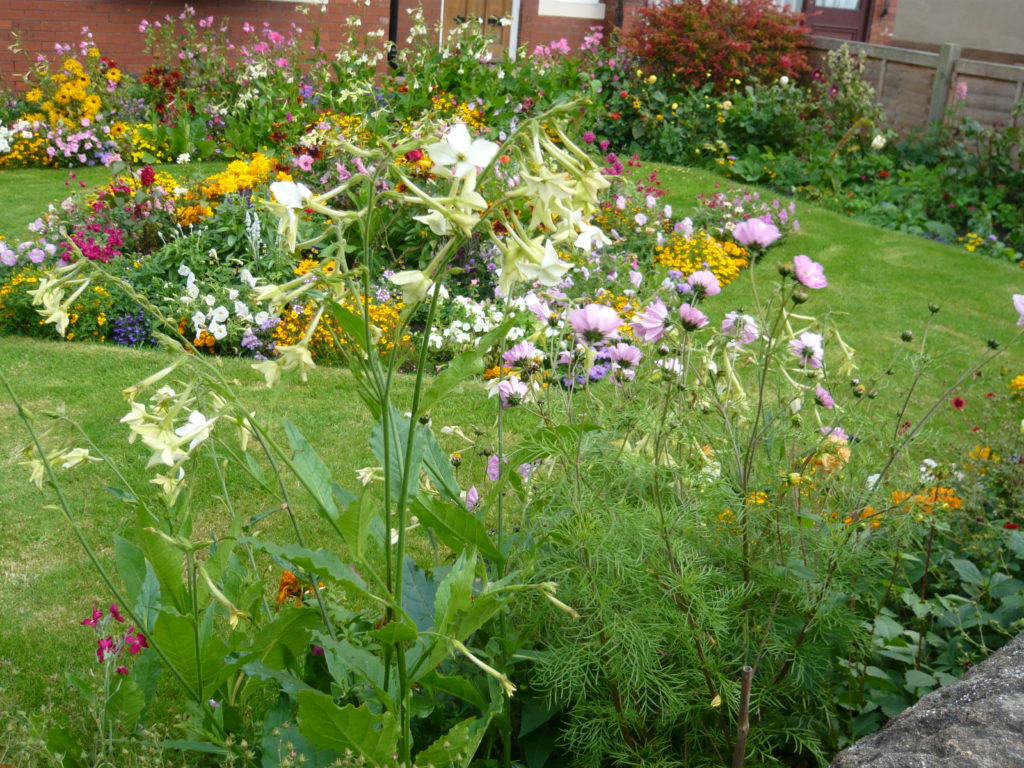

This is a series of 3 photographs of my favourite cottage garden on Main Street Menston. Late summer each year will see me leaning over the Yorkshire stone wall to admire the ‘gaudy’ collection of flowers that create one enormous display.
I like a good strong blue in the garden and not because Chelsea FC play in a blue soccer strip. With the 2018 Chelsea flower show on the RHS calendar I have selected a few photographs to highlight my favourite colour.

Hydrangea Macrophylla

The faceless pansy can be a substitute for a viola it plays well as a center forward or in midfield.

In goal we must have the African with the furry edged petals in Violet
 The B team Allium is just getting back into form after a long layoff. A mid season injury saw a 4 week metatarsal break disrupt his training.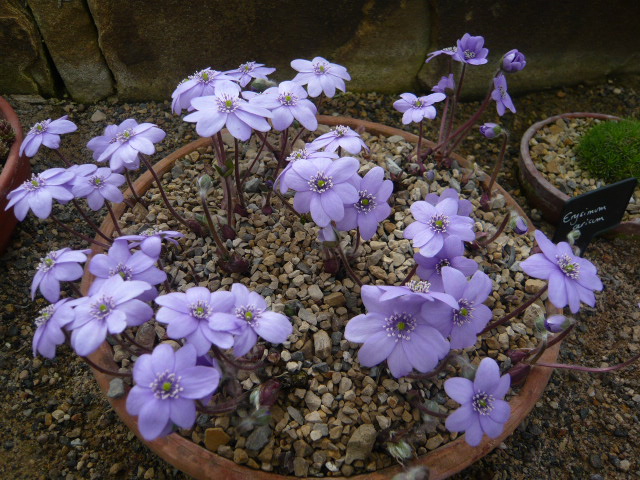
Anemone and Ranunculus in defense occasionally charging down the wings


Moon pond water feature with pheasant – early spring at Studley Royal Ripon
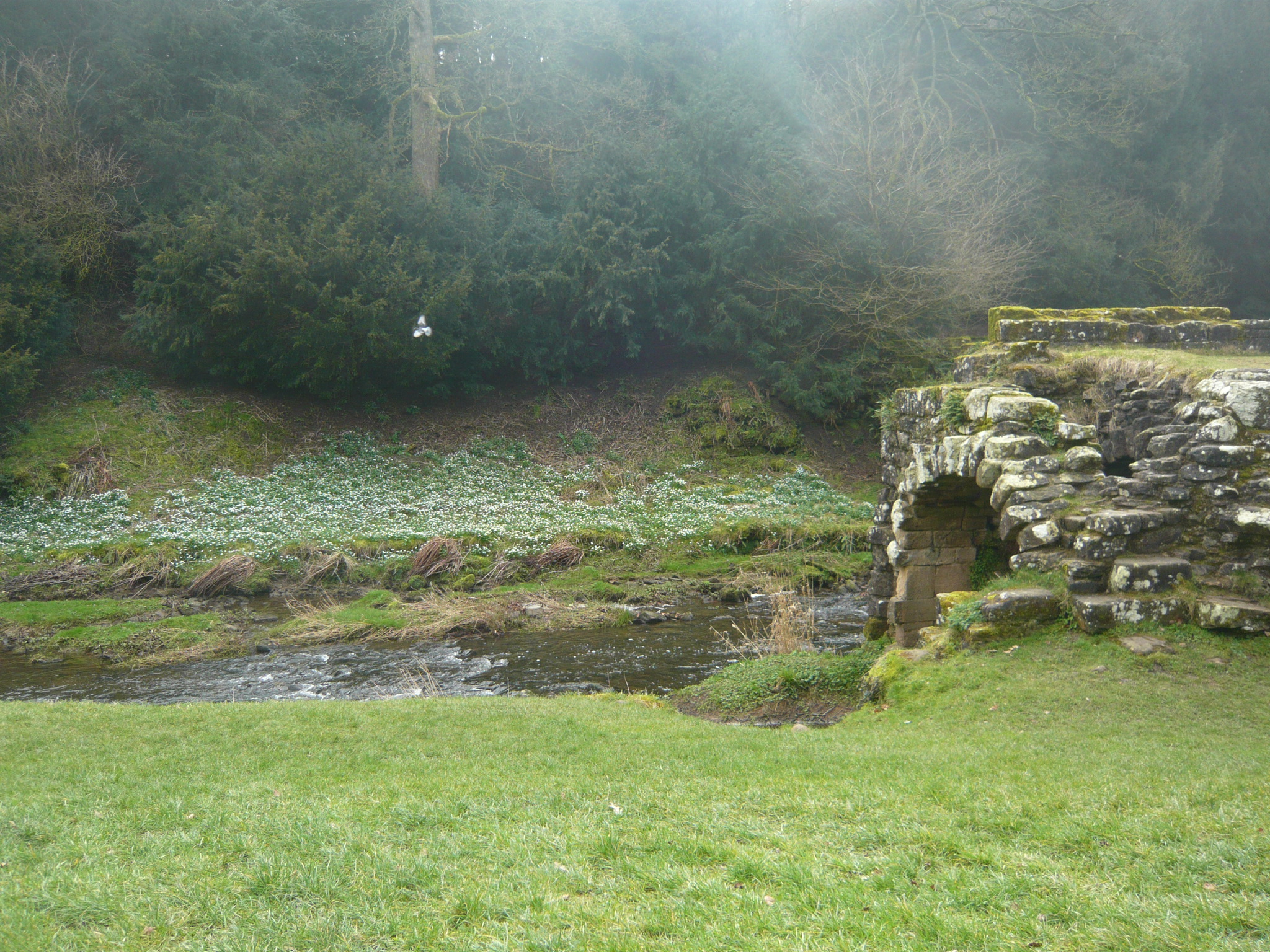 Probably a bridge over a thousand years old at Fountains Abbey Nr Ripon. The Snowdrops set off another far older water feature with a bridge that was destroyed in the reformation in the 16th century. The snowdrops are probably related to the first known cultivation in 1597.

Posidon or ‘Neptune’ by Oliver Andrews standing in the middle of the Moon Pond after the restoration of the 18th century pond that had fallen into disrepair.

This week I revisited RHS Harlow Carr library for the first time in several years. I previously volunteered in the ‘old potting shed’Â library before the new building was completed. Then I was part of the team that moved and reshelved all the books from one part of the garden to the ecofriendly new premises.
At the time of our relocation there had been a spate of thefts from the Lindley Library and some very valuable tomes had been taken. Good old artistic books with frameable prints were also susceptible to loosing pages to the ner-do-wells. So the powers that be decided to install anti theft devices in the spine of all the books at Harlow Carr. After much painstaking work we volunteers were told the exit was not compatible with the spine tags and another exit system had been purchased. As a consequence new RFID tags a couple of centimeters square had to be fixed inside all the books that already had a metal spine. Several good looking end papers were damaged or covered in this process. Imagine my ‘surprise’ (not) when the 3 books I borrowed this week were passed to my by the librarian in a way that circumvented the exit alarm because it wasn’t working properly.
The harlow-carr-library-learning-centre-is-eco-friendly as reported here eight years ago see’ library’
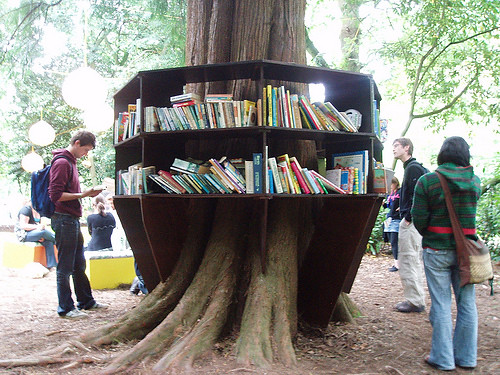
Orville Lyttle   A Tree of Knowledge?


I am almost as keen on books as I am on gardening so it is natural that I should combine the two by collecting books related to gardens and gardening. The attached pdf is a cold list of my current collection by title, authors, publisher and date of publication. The extra columns were for my amusement showing the number of pages ( over 100,000) and a score that I attributed when I first browsed the book. The collection is a bit eclectic as a result of acquiring what was available and affordable at the time augmented by family gifts.
 Anecdotally biodynamic gardening increases yields with quality, edible crops with a good depth of flavour. Science has not yet proved how this can be measured

These guides have been published annually for over 50 years to help gardeners choose the optimum days for sowing, pruning and harvesting various plants and crops.

Get help from nature – my garden needs all the help it can get and maybe just the sun is not quite enough so I’ll give the moon a go as well.

The moon garden is planted and tended in harmony with phases of the moon to take advantage of gravitational pull on the earth’s water table. Sow when the moon is waxing never plant anything when the moon is waning.
 Expanding into growing beyond the garden is a book that includes tips and ideas on large-scale farming, livestock market gardening. cereal cultivation and commercial vegetable growing.
Foliar feeding does at least some good. First and foremost it makes me, the putative garden expert, think I am doing some good for the plants in my care. If the fertilised plants pick up any extra nutrients so much the better. If they also repay me with a better crop or display then wow!
Foliar feeding is the method of supplying nutrients to plants through their foliage. It involves spraying water-dissolved fertilizers directly on the leaves. Many believe that foliar feeding is preferable to soil application and that it is associated with higher yields and better quality. However I am firmly of the belief that both forms of fertiliser application is best.
Foliar feed can involve the drenching of leaves and stems with suitably diluted liquid fertilizers. This allows nutrients and trace elements to pass into the plants system through direct leaf and stem absorption.
Greenhouse spraying helps humidity and the removal of dust from leaves so why not add some weak feed to the spray and add nutrients to plants through their foliage.
I personally believe this method is a supplement to normal root based feeding which is naturally derived from water uptake.

Mix up your chosen feed by diluting concentrated liquid feed or dissolving fertiliser salts in warm water. Using a very fine spray apply the solution on top and under all the leaves.
Evening is the best time for plants to be treated with a foliar spray without jeopardizing the plants other root based feeding schedule and risking burn from strong sun.
Small amounts of nutrients should be applied little and often. I find foliar feeding useful for specific situations such as ailing plants in need of a ‘pick them up’. I spray the leaves of tomato plants all over.
To increases the retention of the spray solution, by reducing the surface tension of the droplets, add a surfactant like a couple of drops of vegetable oil in the spray. This will contribute to a more uniform coverage of the foliage.

Attribution-NonCommercial-NoDerivs 2.0 Generic (CC BY-NC-ND 2.0)
Fiona Weir, has been supported by the Freedom board and was invited to take the creation – a traditional black cab festooned with hundreds of colourful bee-friendly plants to the fringe festival at the Horniman Museum in Forest Hill.
I regularly fill the boot of my car with large bulky garden waste that would take more than 2 years to rot down. I have never tried using under the bonnet for extra space but console myself with rear seats that lay flat hatchback style. If I still had my chipper it may be a different story. I would still have my chipper it it didn’t clog or rust! Perhaps Santa can beam me up to an intergalactic compost heap that will do away with roots, weed seeds and compost undesirables.

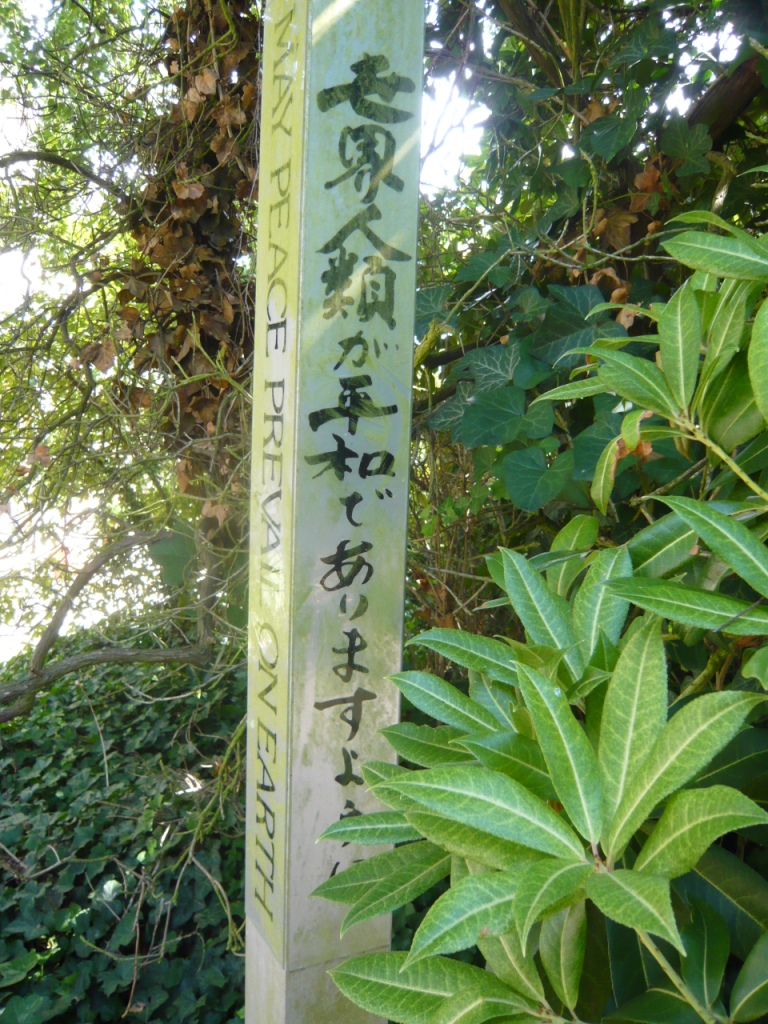
Klingons on the starboard bow, starboard bow, starboard bow there’s Klingons on the starboard bow, starboard bow, starboard bow – not quite Klingon language.
 Roylan