Browsed by
Category: Articles

Gardening articles that may not include tips

Five Trees & Shrubs for Chalk Soil

Five Trees & Shrubs for Chalk Soil

The best trees for chalk soil conditions tend to be locally grown and not be Dutch imports. In fact they resemble shrubs more than trees but there are the odd exception that are tree like.

Syringia
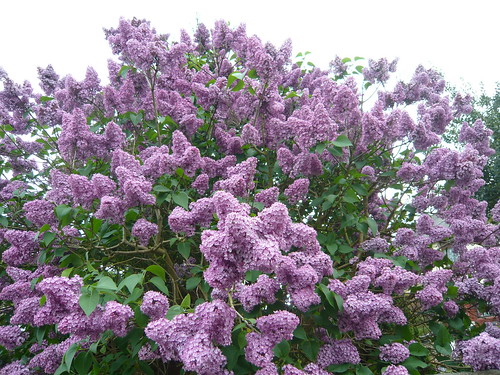
Lilac

Lilac trees will tolerate limey chalk or clay soils. They are grown for the wonderful scent of the lilac blossom in spring and other than that they are not much of a feature. Syringia vulgaris Primrose is a white flowered variety and Syringia vulgaris Sensation has purple flowers with white edges. The flowers of the lilac make conical panticles which are useful in large flower arrangements.

Crataegus
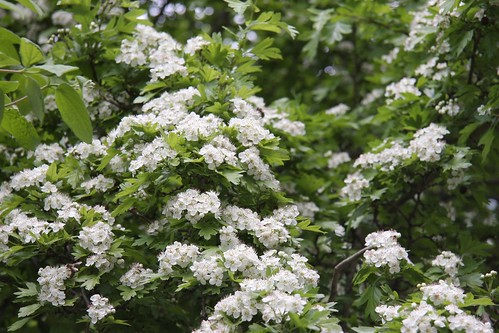
Großkelchiger Weißdorn (Crataegus rhipidophylla)
Generically called the thorn these small trees have a variety of flowers and berries depending on the species including the Hawthorn. All species seem to do well in chalk soil. Crataegus laevigata Crimson Cloud has bright red flowers whilst Pauls Scarlet is a round-headed tree with red haws in autumn.
They are hardy and will tolerate pollution and some shade but perform best in full sun.

Aesculus
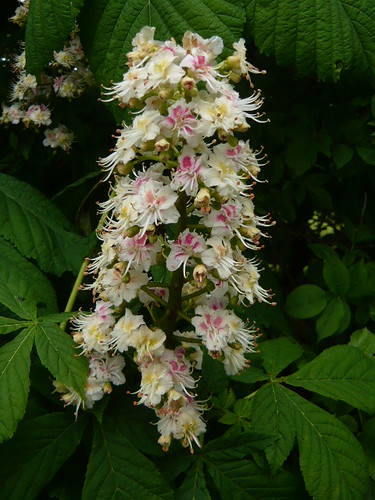
Conker
Horse Chestnuts produce conkers not edible chestnuts. They are stately trees needing room to grow to over 16 feet.
Aesculus parviflora is one of the smaller growing varieties that will suit a garden with chalk soil.

Carpinus betulus
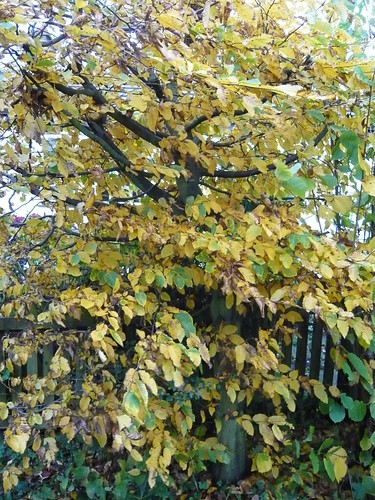
Hornbeam
Hornbeams are a small genus of medium sized trees for chalk soil. Carpinus betulus Frans Fontaine is a slender fastigate form retaining its narrow habit with age. Carpinus japonica has many catkins, corrugated leaves and grows in a wide spread suitable for garden use.

Sambucus
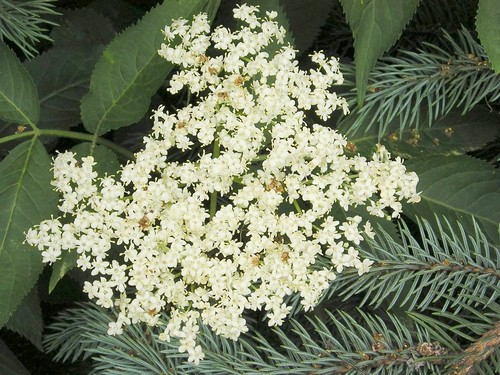
Schwarzer Holunder (Sambucus nigra)

Sambucus is a hardy shrub or small ornamental tree for chalk soil or many other conditions. Sambucus nigra has black leaves and light pink to white flower bracts.

Cotoneaster
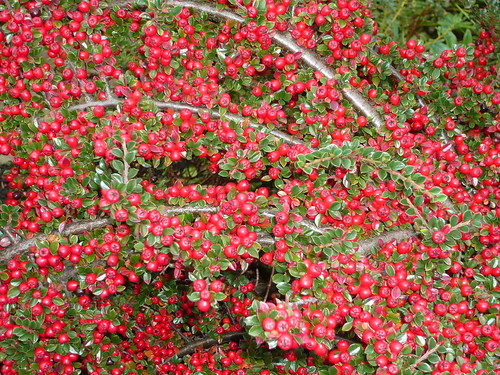
cotoneaster berries

Cotoneasters will grow in most soil conditions. They are invaluable for attracting hoverflies to the white flowers, birds to the red berries and gardeners to the shape and form of a good all-rounder.
Cotoneaster hybrid pendulus can be grown as a small weeping tree with arching branches. Cotoneaster horizontalis is commonly referred to as the Fish Bone cotoneaster

Read about our review of British trees with a bakers dozen links to our favourites.

Credits
Großkelchiger Weißdorn (Crataegus rhipidophylla) by blumenbiene CC BY 2.0
Schwarzer Holunder (Sambucus nigra) by blumenbiene CC BY 2.0

Roots Root For National Tree Week

Roots Root For National Tree Week

Lets get to the root of the problem, we seldom get to see roots in action but they are crucial to most plants and trees.

When it comes to trees their roots have two critical functions. Firstly they take up water and minerals. Secondly they help to anchor the tree often utilising a longer tap root. The solid root plate near the trunk normally extends as far as the leaf canopy. Thinner finer lateral roots can extend twice as far in search of water and nutrients. Other root functions for some species include storage of food or nutrients and  as part of a reproduction or regeneration system.

Book Cover

Even today, few places can rival an English oak wood in early summer for peace and beauty with its carpet of primroses and bluebells. Or the cathedral-like majesty of the autumn beech wood with the sun’s light filtering through the leaves. Or the brooding quiet of the ancient holly wood. Perhaps it is not surprising that our remote ancestors performed their acts of worship in forest clearings and woodland glades, for this is where they came face to face with ‘Nature’ – however they close to see it.

Myths About Tree Roots

  • Trees have long been held as part of the superstitions about witches
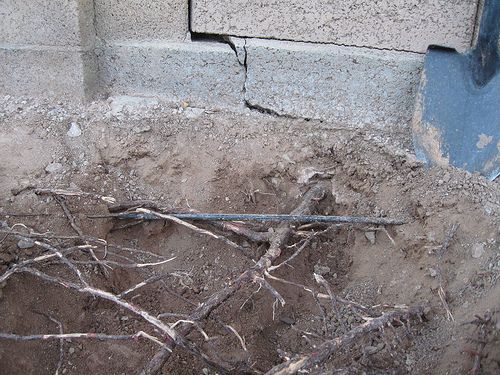
  • Roots do not penetrate solid objects like wall of drainage pipes that are in good condition.
  • Roots wont affect foundations except on clay soil where they help take away moisture and cause shrinkage.
  • After planting roots are not always keen to extend into surrounding soil unless it is broken up and loosened before hand.
  • Trees need watering even after the first year. Roots take time to establish and be able to supply the needs of of a growing tree. Make sure it is watered for the first 3 years and seldom allowed to dry out completely.
  • Not surprisingly roots will take the easy route if they find cracks in pavements or leaking drains.

Book Cover‘Throughout our long history, forests have been places of shelter, providing food for man and fodder for the animals; the wood for fuel (i.e. warmth and cooking) and for making weapons and other utensils. At the same time they have also been places of fear, where the temperamental Faere Folk, wood sprites and elementals lurked in the dappled shadows.’

Roots Near Buildings further reading

Roots in Pots

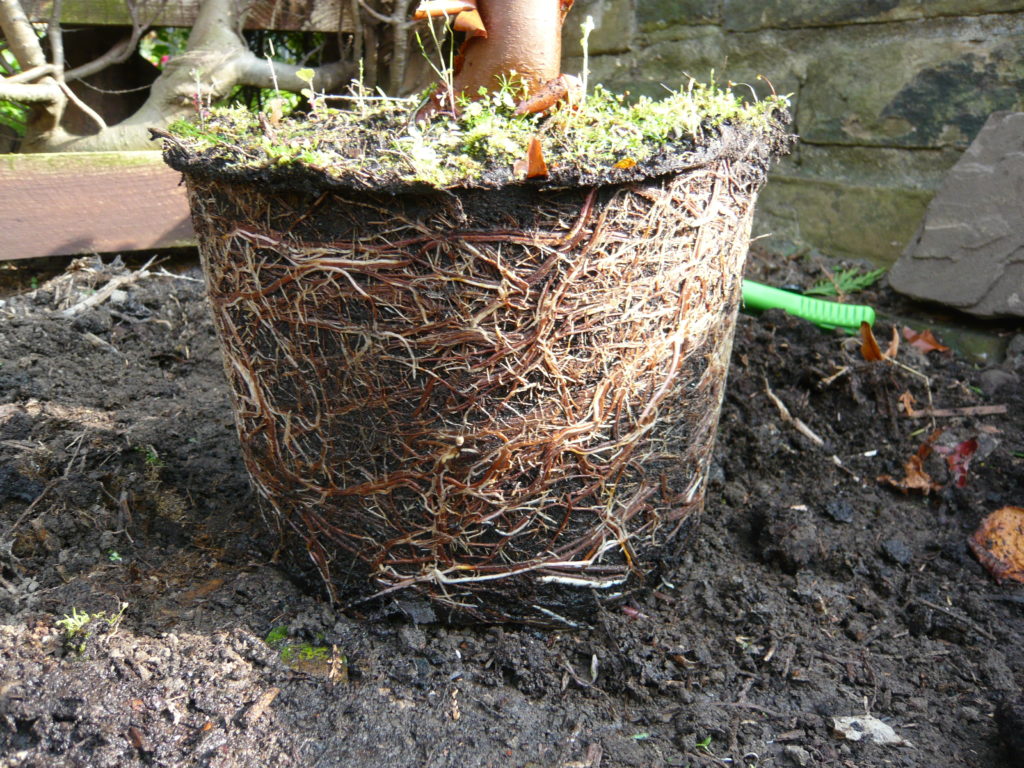
  • Pot bound’ is the phrase used when a containerised plant has roots that fill or over fill the pot and satrt going round and round in search of new soil. The pot below has not quite reached a critical stage as the rooot ball can be teased out.
  • If roots are left in a tight circle that is how they will stay and the plant will not thrive. I have occasionally dug out a poor plant to find the original compost is all that is feeding the plant and it is often bone dry. It is hard to rewet plants grown in peat coir and other similar substances.

Best Trees for Toughness

Best Trees for Toughness

Avoiding early onset of death caused by disease or climate change will affect the trees we plant in the future. Gardeners must consider tree selection carefully bearing in mind more than aesthetics and utility. Economics of forestry have increased there relevance to Britain as (the dreaded by some) Brexit nears. We import and export more wood than in previous years but with those extra tree miles comes risks. Toxins pests and disease are to readily spread from one country to another. CITES (Convention on International Trade in Endangered Species of Wild Fauna and Flora) is designed to protect over-exploitation and endangerment  through international trade.

Some of the most reliable trees to plant with a view to them reaching maturity even if not in my life time include:

Tulip Tree Liriodendron tulipifera

American Sweetgum Liquidambar stryraciflua

Evergreen Oak Quercus ilex also Pin Oak and Chestnut leaved oak

Silver Lime Tilia tomentosa

Sweet Chestnut Castaneasativa

Hornbeam Carpinus

Dawn Redwood Metasequoia

Wedding cake tree Cornus controversa

Book Cover

Trees That Produce Hard Tough Wood

  • Janka is the basic measure of hardness for a sample of wood. The toughest tree is  an ironwood tree which is native to Australia.
  • Lignum vitae is so hard it was used to make policemen’s truncheons
  • Ebony and Brazilian Olivewood have tightly packed grain making up the hardness.
  • Snakewood is an exotic hardwood which is particularly prized for it’s decorative grain
  • Other hard woods common in Britain include mahogany, maple, oak, and teak.
  • Tropical pear, cashew and walnut are hard hardwoods.
Trees for Carbon Capture and Global Warming

Trees for Carbon Capture and Global Warming

Church Lane

I am  unsure about all the fuss over carbon emissions and the impact of humans on the environment. There is a finite amount of carbon in our world and it cycles around in solids, dissolved in water or in gaseous forms. Plants helped convert the primordial carbon gasses and  volcanoes eruptions into solid carbons. Trees capture carbon and hold as wood for long periods and historically many trees fossilised into coal.

Other key examples of carbon capture include the stores of hydrocarbons in the form of tar, oil deposits and shale from which gas is now fracked. Less related to tree carbon capture is the vast quantities of limestone deposited from crustaceans and coral.

Many ecologists and scientist now believe we should invent mechanical ways of storing carbon as there is a perceived imbalance in the carbon cycle caused by human activity. I am amused by the idea of sending carbon dioxide down the mines and oil wells to be retained for some future ill defined purpose.

Personal View on Global Warming

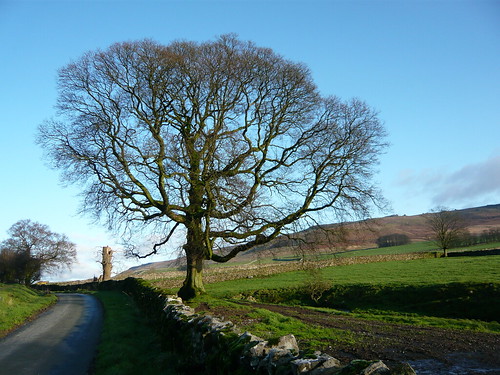
  • The above photograph of the Yorkshire Dales including a tree and dry limestone wall contains a substantial amount of captured carbon as does the peat up on the moor.
  • All Yorkshire can’t compare to the Amazon rainforest or the dissolved carbon in the sea. Since I first wrote about carbon capture major advances with shale gas exploration have highlighted again the plants of eons ago that were converted into captured carbon and are now giving up their bounty to modern man.
  • All the hot air about global warming and political influence isn’t going to change me or my gardening approach.
  • I will garden responsibly but I do not think I will take my gardening to extremes. However, I am going to plant some trees, grow some hard carbon and hope these trees have a long and hard carbon producing life, I just regret I won’t be around to carbon date them.

Amazon Rain Forest

  • This resource is often quoted as a shorthand for the ills of global warming. Is it better to use the land freed up by deforestation for human or animal food production? I don’t think there is a perfect answer but avarice and vested interest is a poor driver of policy.
  • If a tree grows 10% each and every year ( at least until adult maturity) then if follows that small young trees will capture less carbon than stately relatives. There is also a potential amenity benefit from large well managed forests so lets encourage the big and beautiful.
  • In National Tree Week we should be celebrating our British heritage of trees and those organisationst and woodland charities that help manage them.
Herbs and Herbals

Herbs and Herbals

If you feel Herbie, the plants not the films, then sniff out the comments below:

Herbie the Love Bug
Herbie the Love Bug

Herb & Herbal Groupings

  • Culinary herbs for use in kitchens
  • Medicinal herbs, ancient and modern the basis of many drugs and remedies.
  • Vegetable herbs like onions and garlic.
  • Flowering and decorative herbs.
  • Spices and other plants at home in a herb bed.

    Read More Read More

National Tree Week Tribute 2018

National Tree Week Tribute 2018

Gardeners tips would like to pay tribute to the nation’s trees, past and present and all those that use or care for them. The time to pay this tribute must be during National Tree Week which runs from 24th November to 2nd December 2018.

Where to Start the Tribute

  • I have ordered 3 bare rooted fruit trees to be delivered on the 24th November. These will be planted in my mini orchard to augment the apple and plum varieties I already grow. I don’t really need any more trees for fruit production as the family can’t eat a good years crop even when taking jam into account. Still another tree will be a good backstop should one of my current trees start to fail.
  • It may be a bit early for Christmas but I have agreed to give and have sourced a Kilmarnock Willow tree for my sister’s present. This is to replace a dead willow tree that used to provide a place for garden birds to congregate.
  • Whilst learning oil painting and watercolour I have set aside 2 books on how to draw and paint trees. It will make me look closely at all trees (during cold winter months that will probably be through a window.)
  • Historically gardeners tips have published 443 articles about trees. I will re-post and update one of these pages on each day during National Tree Week

Quirky Tree Facts

  • An 80,000 year old Quaking Aspen in Colorado formed a clonal colony linked to a single massive subterranean root system with all the trunks above ground remaining connected to each other.
  • Against all odds trees can have great survival instincts

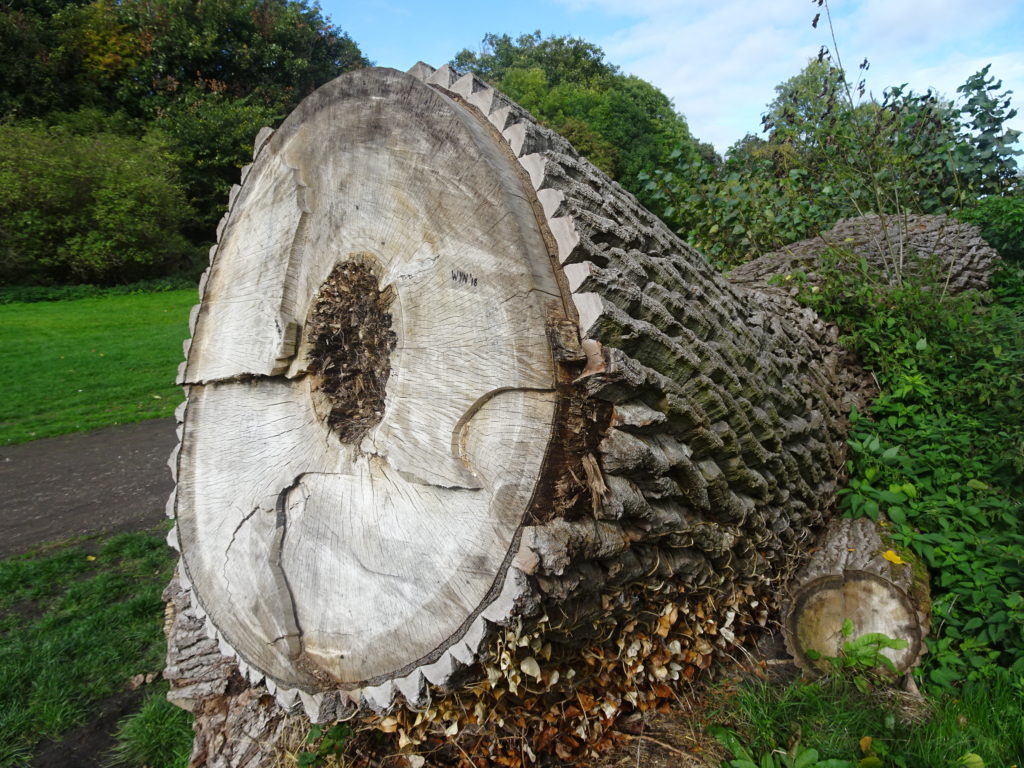
  •  The process known as dendrochronology involves counting the rings of a tree trunk.
  • If a birdhouse is hung on a tree branch, it does not move up the tree as the tree grows.
  • There are over 50,000 tree species and some large specimens can drink 100 gallons of water a day.
  • There are numerous uses of trees including food production, energy creation from burning, construction of buildings and ships, decoration and furniture. Best of all I like the idea of a tree house.

Raise a toast including a tree botanical to the UK National Tree Week and all the great trees in the world

A Gardener’s Christmas Present List

A Gardener’s Christmas Present List

There are all sorts of presents you can give an avid gardener for Christmas. A concept present may be a small collection of garden ornaments or some funny sayings. More seriously garden tokens are always useful but I like to select my own tools.

Another present could be a subscription to the Royal Horticultural Society or a specialist plant or society or charity such as one of the following (other clubs are available):

I hope you aren’t spoilt for choice but if so there is still:

The First ‘Lawn Arranger’

The First ‘Lawn Arranger’

I only have a garden to keep the weeds happy. In it trespassers will be composted and slugs treated to a grizzly end. However  the lawn deserves some reverence hence the following, first posted in 2011 and  based on an Original by Debbie, of Middletown – My Little Sister’s Humourous sayings

Imagine the conversation The Creator might have with St. Francis about lawns:
“Frank you know all about gardens and nature. What in the world is going on down there? What happened to the dandelions, violets, thistle and stuff I started eons ago? I had a perfect, no maintenance garden plan. Those plants grow in any type of soil, withstand drought and multiply with abandon. The nectar from the long-lasting blossoms attracted butterflies, honey bees and flocks of birds. I expected to see a vast garden of colors by now. But all I see are these green rectangles.”

“It’s the tribes that settled there, Lord. The Suburbanites. They started calling your flowers ‘weeds’ and went to great extent to kill them and replace them with grass.”

“Grass? But it’s so boring. It’s not colorful. It doesn’t attract butterflies, birds and bees, only grubs and sod worms. It’s temperamental with temperatures. Do these suburbanites really want all that grass growing there?”

“Apparently so, Lord. They go to great pains to grow it and keep it green. They begin each spring by fertilizing grass and poisoning any other plant that crops up in the lawn.”

“The spring rains and cool weather probably make grass grow really fast. That must make the Suburbanites happy.”

“Apparently not, Lord. As soon as it grows a little, they cut it, sometimes twice a week.”

“They cut it? Do they then bale it like hay?”

“Not exactly, Lord. Most of them rake it up and put it in bags.”

“They bag it? Why? Is it a cash crop? Do they sell it?”

“No, sir. Just the opposite. They pay to throw it away.”

“Now let me get this straight. They fertilize grass so it will grow. And when it does grow, they cut it off and pay to throw it away?”

“Yes, sir.”

“These Suburbanites must be relieved in the summer when we cut back on the rain and turn up the heat. That surely slows the growth and saves them a lot of work.”

“You aren’t going believe this Lord. When the grass stops growing so fast, they drag out hoses and pay more money to water it so they can continue to mow it and pay to get rid of it.”

“What nonsense! At least they kept some of the trees. That was a sheer stroke of genius, if I do say so myself. The trees grow leaves in the spring to provide beauty and shade in the summer. In the autumn they fall to the ground and form a natural blanket to keep moisture in the soil and protect the trees and bushes. Plus, as they rot, the leaves form compost to enhance the soil. It’s a natural circle of life.”

“You better sit down, Lord. The Suburbanites have drawn a new circle. As soon as the leaves fall, they rake them into great piles and have them hauled away.”

“No! What do they do to protect the shrub and tree roots in the winter and keep the soil moist and loose?”

“After throwing away your leaves, they go out and buy something they call mulch. They haul it home and spread it around in place of the leaves.”

“And where do they get this mulch?”

“They cut down trees and grind them up.”

“Enough! I don’t want to think about this anymore. Saint Catherine, you’re in charge of the arts. What movie have you scheduled for us tonight?”
“Dumb and Dumber, Lord. It’s a real stupid movie about…”
“Never mind I think I just heard the whole story.”

Trees for Burning

Trees for Burning

I am indebted to Lars Mytting for the inspiration to write a post about ‘trees for burning’ that would fit with our gardeners tips. Trees are a good source of green energy that can often  be used for various constructions including boats and furniture instead of reaching a fiery end.

Book Cover

Odd Facts about Wood and Trees for Burning.

  • All timber has pound for pound the same calorific value. Some burn hot and fast whilst other yield their heat treasure more slowly. The heating values per cubic meter vary with the weight.
  • Virtually all trees will burn once they have dried. They will dry quicker if they are split as the bark retains moisture.
  • Wounded Pine trees produce a lot of resin which produces ‘fatwood’ that burns strongly.
  • Rowan and Birch make great glowing embers with which to rekindle a fire.
  • Stacked would is measured in cords (not music to my ears).

Different Trees

  • Ash contains less moisture than many common trees and the wood is prized for burning, furniture making and its ability to be coppiced.
  • Beech grows slowly but can be long lived reaching 5 feet in diameter.It has a fine texture and can be steamed and used in furniture making.
  • Birch grows tall, knot free and straight a virtue in wood that needs drying, chopping or using for furniture making. It rots quickly if left on the ground.
  • Spruce and other conifers are prone to spitting and crackling when burnt but provides quick heat.
  • Oak is revered for its strength and has long been used as a building material. It will burn with great satisfaction but who would want to destroy such a useful wood.
  • More individual pieces of Aspen are burnt than any other wood because Aspen is used to make matches.

What About Gardens and Trees for Burning

  • It would take a large garden to grow enough wood for burning to heat a house but dry branches and twigs can be a start.
  • Clean air acts and pollution have curtailed garden fires but dry wood burns in a chimneyed dustbin without too much smoke.
  • Charcoal for a barbecue is best bought specially for the purpose.
  • Firethorn, burning bushes and bonfire night plots are not trees for our type of burning.
Old Sawn Derby Lime

Trees Burning with a Scent

  • All smoke smells to a greater or lesser extent but one all time favourite is wood from an Apple tree. The fruity aroma pervades the room.
  • Cedar has a strong scent that appeals to many. My house is named Cedar Ville for it’s cladding rather than burning (I hope).
  • Pine cones are a quick scented burner and the season wood will burn well if you can stand a pit of spitting.
  • If wood is hard to obtain you can get a herbal aroma from burning Rosemary or other fragrant herbs.

In the words of Lars -  ‘In Learning About Wood, We Can Learn About Life

Part guide to the best practice in every aspect of working with this renewable energy source, part meditation on the human instinct for survival, this definitive handbook on the art of chopping, stacking and drying wood in the Scandinavian way has resonated across the world, with more than half a million copies sold worldwide.’

Seed Distribution Methods

Seed Distribution Methods

Trees, shrubs and all plants have developed methods to procreate and ensure the continuity of their species. ‘Natures Home winter 2018’ looks at trees that use Anemochory, Autochory, Zoochory, Barachory plus other methods. For our purposes we will look in the same order at wind distribution, explosive seed pods, animal dispersion and drop and roll plus other methods.

You might think this it is just an excuse to use this colourful photo of fruit and vegetables. Apples drop roll and rot on the ground. They are also consumed by animals and humans although most of use leave the core and seeds uneaten. Orange pips are distributed in a similar manner but the Dates at the back of the photo are eaten by animals and dropped in the dung.

Whilst potato plants multiply by underground tubers or spuds as we call them they also seed after the blue flowers. That is not the normal reproduction method in the UK. Tomato plants shed their seed when the fruit splits and can remain viable even after passing through the human body. Sewage works used to produce large numbers of tomato plants from digested seed

These Californian poppies Eschscholzia split open and spray the seed around. Here I am waiting to catch them as the ripened pods spring open.

Wind blown seeds are well known from our childhood with Dandelion clocks and Sycamore spinners  that fly away from the parent plant. Some seed like Alder are designed to float on water whilst many use a variety of distribution methods.

Animal dispersal or Zoochory is often achieved by the ingestion of berries so birds are a main method. There are seeds that stick to animal fur like Teasels to ‘hitch a ride’.

Honeysuckle Berries