Browsed by
Author: hortoris

Best Gardens In China for a Visit
Best Gardens In China for a Visit

lingering-garden

China is one of the great destinations for visiting gardens. The influence over garden design and the vast array of plants and flowers is secondary to the investment in time and dedication demonstrated in so many great locations. This is just a selection of those you may consider visiting if you can make the journey..

The Garden of Contentment has an evocative name that for many sums up the essence of gardening. This feeling of tranquility will be found in many of the gardens we are considering visiting but this Shanghai location is an exceptional place to start our virtual garden tour.
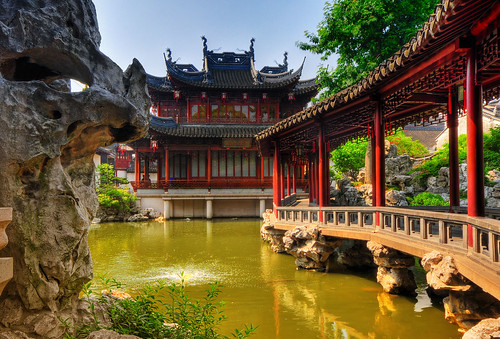
YuYuan Garden

Whilst in Shanghai it is worth a visit to the local Botanic Garden with its collection of old bonsai and many acid loving plants.

For a strange, modern, garden in Beijing the Grand View Garden was built in 1984 to represent a fictional garden replicating one described in a classic Chinese tale ‘ A Dream of Red Mansions’ available in English

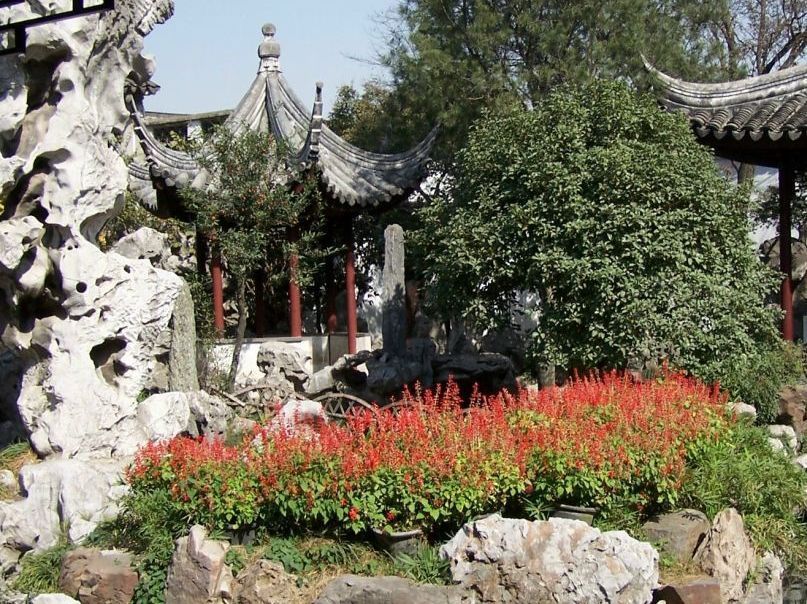
For keen gardeners the best location must be the ‘Silk City’ of Suzhou where you have a choice of choice gardens to visit.  The name Lingering Garden makes me want to invent a name for my own patch, perhaps that should be the patchwork garden. The image is of the Lingering garden from Wonderlust and Lipstick inspiring women travellers.

Humble Administrator's Garden
The Canglingting or Dark blue wave garden is deceptive in its use of pools and local scenery whilst the Humble Administrators Garden is anything but humble as the largest garden in the city. The Circular Grace  Mountain Villa blends with the rocky out crops making traditional use of the landscape evocative of Chinese painting.

The star amongst so may great  cultural heritage sites is the The Master of the Nets Garden a household garden and one of the smallest but highly recommended. It is about one thousand years old and is inspirational particularly in the design and linking with the living accommodation.
Imperial Garden in the Forbidden City

See more information courtesy of Travel Guide China
The Master of the Nets Garden

‘Even more than the architectural achievement is the mood of tranquillity and harmony that this humble garden embodies.
This exquisite garden was first designed during the Song Dynasty (960 – 1279) as part of a residence that was used until the Taiping Rebellion in the 1860’s. It was later restored and became the residence of a government official from whom the garden got its name.
The garden is divided into three sections: a residential section, the central main garden and an inner garden. The main garden has a large pond that is surrounded by pathways and a variety of buildings such as the Ribbon Washing Pavilion, and the Pavilion for the advent of the Moon and Wind. There are many more buildings that are situated so that there is never a sense of crowding, but always of spaciousness. As is common in Suzhou gardens, the pond has a small pavilion in it. Here the pavilion is accessible by a bridge that is less than one foot wide.
As you walk about the gardens and along the walkways, there are often views through windows onto beautiful flowers or plants framing them from a distance and drawing you to a single sight, a moment of peaceful natural beauty. As you walk through the buildings, it is easy to imagine the life that the original residents lived in a feudal society where these gardens were solely for their pleasure and the pleasure of their guests. The various buildings are constructed so that you can always access the main garden from any room.’

Guo Zhuang Botanical Garden and traditional private gardens are often on the tour circuit on trips to Eastern China. Other Botanic gardens to consider include Sun Yat-sen Botanical Garden in Nanjing , South China Botanical Garden, Xishuangbanna Tropical Botanical Garden
Kunming Botanical Garden, Wuhan Botanical Garden Lushan Botanical Garden, Hangzhou Botanical Garden and Guilin Botanical Garden.

Book Cover

Great book on Great Gardens in China by Peter Valder
From amazon ‘Valder’s illuminating compilation of more than 200 gardens promises to provide the ultimate resource for future travelers before mbarking on a trip they can study and savor images and information on diverse horticultural realms located throughout China… A lavish record of famed Imperial gardens as well as fascinating examples of lesser-known temples, parks, and botanical arboreta… Encompassing a treasury of plant portraits, stunning architectural details, and awe-inspiring vistas, Valder’s chosen topic is rendered in such depth as to rouse armchair dreamers and act as a call to action for avid garden trekkers.


Credits
YuYuan Garden by Wolfgang Staudt CC BY-NC 2.0 ‘Yuyuan Garden, first established in 1559, is located in the center of the Old City next to the Chenghuangmiao in Shanghai.
Humble Administrator’s Garden by Jan Langhaug CC BY-NC 2.0
Imperial Garden in the Forbidden City by ajft CC BY-NC-ND 2.0
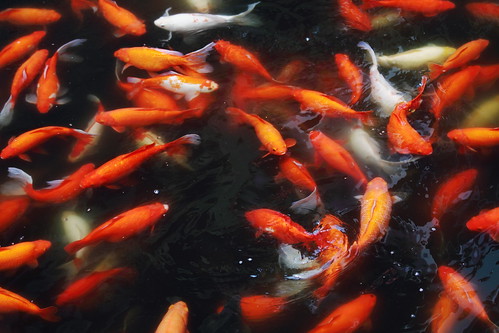
Yuyuan Garden by ksbuehler CC BY-NC-SA 2.0
Yuyuan Garden

May Seed Sowing Guide for MVUF

May Seed Sowing Guide for MVUF

Veg Seed Sowing Plans for May
To ensure a continuous harvest throughout the summer rather than a glut successional sowing of salads, radishes, beetroots, carrots, autumn giant leeks and spring onions and peas should continue.
Sow basil, particularly alongside tomato seedlings to help draw white fly away plus spinach, rocket and ornamental salad leaves.
Globe Artichokes and Swiss Chard for looks as well as food.
Pole, French and above all Runner Beans
Purple Sprouting Broccoli, Savoy Cabbage, Kale and Calabrese

Meanwood 019

Read More Read More

Gozo Flower Photos in March

Gozo Flower Photos in March

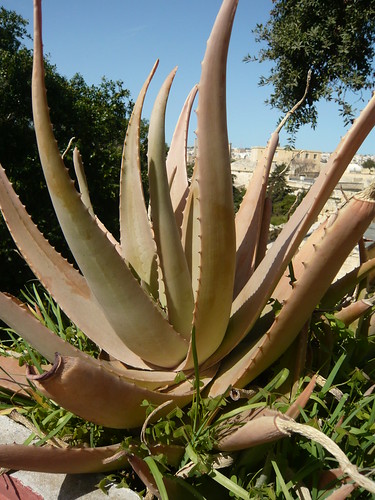
Malta, Gozo and Comino are Mediterranean island hot spots for early coastal flowers if these photos are anything to go by. Not a plant hunters paradise but a photographers opportunity to get some good shots.

Plants of  Gozo
Agave and Aloe varieties seem to cope with the climate and the salt ladened air.
Plants of Malta  march

Read More Read More

Pleiones Easy Orchids from Bulbs

Pleiones Easy Orchids from Bulbs

er-hai

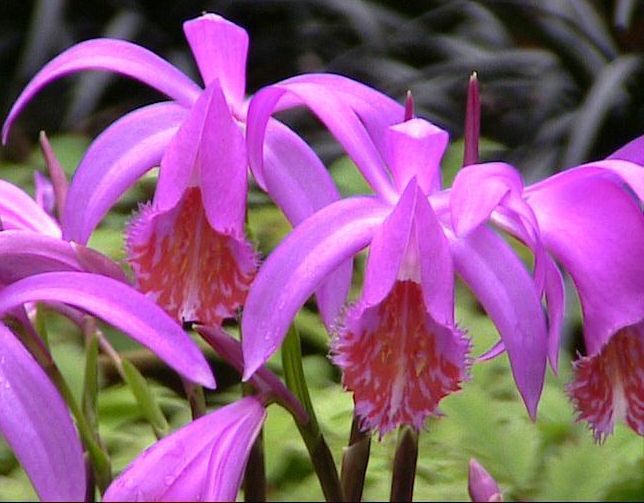
Pleiones are charming orchids grown in pots from a pseudobulb that splits into two or more after flowering which helps to increase your stock. The flowers arrive first on 6-8 inch stems in spring followed by 6 inch long 2 inch wide leaves.

Five Top Tips for Pleiones

  • Also known as the Windowsill Orchid or the Indian crocus Pleione species (20c) or hybrids (250c) are available in many colours including yellows, pinks, whites and purples. Most have the spotting on the lip or patterned colouring.
  • Pleione should be planted in bowls or pots with about one third of the bulb showing and one third of the pot filled with crocks. Drainage is more important than the composition of the compost and roots should not be allowed to become waterlogged.
  • Plant in cool conditions early in the year and allow to warm up through summer to no more than 25°C. Plants need a cool resting period in Autumn and Winter. The stringy roots can be trimmed to 2 inches before replanting.
  • Feed plants once the leaves start to emerge with a weak balanced feed but do not allow to stand in water.
  • Find a reliable local supplier or buy mail order from a specialist like Springwood Pleiones who supply the flower above Pleione Er-hai (speciosa x Etna) You will find many hybrids named after volcano like Stromboli and Vesuvius

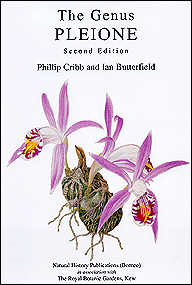
Book The Genus Pleione

genus-pleione3

Perennials for Poor Soil

Perennials for Poor Soil

Anemone Japonica
Anemone Japonica

Many gardens have soil that is too poor to be worth improving particularly when some perennials would thrive there anyway. Here is a top 14 selection of perennial plants that are tolerant of poor conditions.

Spring Flowering

Alyssum – yellow flowering

Aquilegia – mixed colours likes light  shade

Digitalis – Foxgloves with purple or white spikes

Doronicum – early yellow flowers, die back quickly

Lamium – ground cover bicoloured leaves and purple flowered

Vinca – arching stems with a prostrate habit and blue flowers

Summer Flowering

Acanthus – bears breeches, spikey leaves with purple flowers

Geranium – species with low habit and pink, blue or white flowers ( not Pelargoniums)

Hemerocalis – Grass like foliage Day lilies

Hypericum – St Johns Worts shrubs with yellow flowers

Nepta – silvery foliage cat mints

Saxifrage – white and pink starry shaped flowers on a neat mound

Autumn Flowering

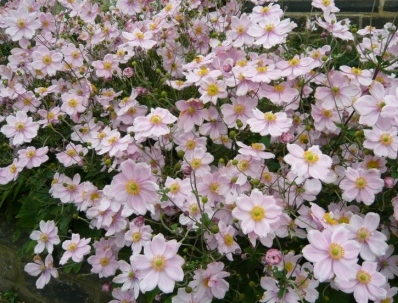
Anemone Japonica – Pink or white flowers clump forming

Solidago – Erect yellow flowers best in a limy soil


Cornwall 151

Simple Compost

Simple Compost

I promised a simple approach to thinking about your compost.  Compostable materials are either Green or Brown and you need a good mix of both. If you want the full scientific monte then you need a book.
Green Compostables include grass clippings, tea bags, old flowers, nettles, weeds, comfrey or rhubarb leaves, pond algae, spent bedding plants, rotting fruit and vegetable peelings – these provide the nitrogen and bacteria to generate heat.

Brown Compostables include twigs, prunings, leaves, straw, cardboard, straw, wool, feathers, shredded paper, wood ashes, vacum bag contents, pine needles and egg shells and provide substance in the form of carbon and mixed chemistry.

Good compost is made from a mixture of  some or all of these components with air, moisture, heat and bacteria. Too much green and it will be a smelly, slimy mess. Too much brown and it will remain uncomposted as twigs and ants. Mix up your heap with browns and greens, add some garden soil with worms to help bacteria if you wish. If the heap is dry, water the browns if it is soggy and green add some paper or cardboard.

Book Cover
A scientific approach to creating good compost with good photographs can be found in this book.

Or a simpler organic view in this book.
Book Cover

Animal Manure

Rotted manure from grass eating and vegetarian animals probably contains more fertiliser than compost. Dog and fox feces should not be spread on the garden or put in the compost bin.

Top British Gardens to Visit

Top British Gardens to Visit

Britain has some of the best gardens in the world. The choice of which to visit is far larger than this selective list but at least it gives you somewhere to start planning this years outings.

Folly Foot Folly

A list of 55 gardens in England recommended by the Royal Horticultural Society. The RHS generally provides free admission for members throughout the open period.

Harlow Carr – Harrogate Yorkshire
Hyde Hall – Chelmsford Essex
Wisley – Woking Surrey
Rosemoor – Devon
Bluebell Cottage Garden Cheshire
Holker Hall & Garden – Cumbria

Read More Read More

Yorkshire Gardens & Special Interests to Visit

Yorkshire Gardens & Special Interests to Visit

Newby Hall & Garden

Newby Hall and Garden is well known in the gardening fraternity as an impressive example of well designed and extensive range of garden features, expertly decorated with a diverse range of plants. The truly magnificent herbaceous borders are the central feature of the gardens but are by no means the only feature of quality. Garden rooms and themed planting provide a range of style’s that can easily be incorporated into most gardens large or small. Of particular value is the work on plant conservation and Newby boasts the best collection of the genus Cornus in the Country.” I would also add the acid lovers Azaleas, Camellias, Rhododendrons and Magnolias so recommend visiting in April or May.


Harewood House

Harewood Himalayan Garden

Known for the imposing House and sweeping terrace there is much to satisfy the gardener. The Himalayan garden is a feature I most appreciate. Designed by Capability Brown there are 1000 acres of parkland and even a bird garden with many species.

Read More Read More

Blue Poppies of the Himalayas

Blue Poppies of the Himalayas

Mecanopsis

Book Cover

Blue Heaven: Encounters with the Blue Poppy by Bill Terry from amazon
Bill Terry is a leading North American authority on Asiatic poppies relates his own encounters with the blue poppy and shows how, given a suitable climate, a patient and persistent gardener can raise this most alluring of perennial plants.
The origins of Meconopsis are expounded along with comments about those who first discovered and grew the plants. A personal account, fun to read and adds to the collective knowledge.

Mecanopsis Crewdson hybrid

Meconopsis the ‘hardy plant series’ is also still available via amazon

Read More Read More

Lime Tolerant Rhododendrons

Lime Tolerant Rhododendrons

Inkarho Rhododendron


Whilst Rhododendrons have been regarded as ericaceous  plants unsuitable for alkaline or limey soils the newly bred Inkarho plants may be an exception.  It is also believed that some species and root stocks are tolerance of more alkaline conditions.

These German branded Rhododendrons have been developed to survive in soil which is less than perfect  for Rhododendrons. They are all grafted onto a stock that is lime tolerant like the old variety Cunningham’s White or R. hirsutum or R. ferrugineum. The root ball tends to be quite large and robust on these varieties and that may account in part for the ability to withstand alkaline soils. Not everyone is impressed with the results attributed to this breeding programme and particularly the reasons for lime intolerance see Non Conformist Rhododendrons by David Rankin  

His ‘suspicion is that there are in fact many more lime-tolerant species than we had been led to believe, or that at least there are tolerant strains. What we want to do next is to see whether these species growing on limestone are able to avoid absorption of calcium by their roots.’

I am happy to have the right soil for most Rhododendrons but here are a couple more pictures from Inkarho off spring.

Rhododendrons, which require a pH between 4.2 and 5.5but lime tolerant types  of root stock can thrive with a pH between 4.5 and 6.5. An added advantage of plants which have been bred on lime-tolerant root stock is that they are stronger on normal soils.


new-picture-22


RHS suggests other rhododendrons to try on alkaline soil:

R. augustinii (Electra Group) ‘Electra’ AGM
R. ciliatum
R. hippophaeoides
R.
‘Praecox’ AGM
R. triflorum