Browsed by
Author: hortoris

What Makes a Good Cut Flower

What Makes a Good Cut Flower

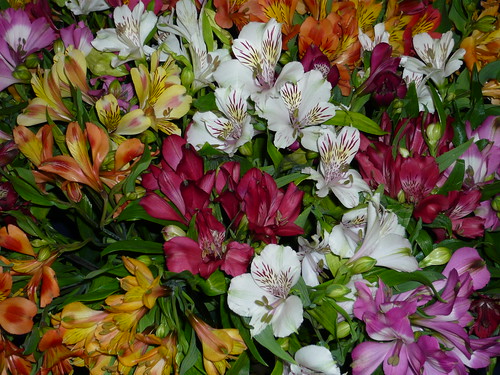
Alstromeria

A Gardener’s Perspective of ‘What makes a good cut flower’

  1. A flower that need little specialist care or treatment and is easy to harvest.
  2. Reblooming often and for a long season so it looks good even when left uncut.
  3. Grows quickly and true from seed.
  4. Can be forced, so it flowers when required.
  5. Satisfies the recipient for the least consumption of resources in time and space.

Tips to Help a Bouquet Last

  1. Choose flowers with firm petals or buds that sho colour that means they have developed enough feed to flower properly
  2. Fill your clean vase with lukewarm water, that will have less oxygen, to prevent air bubbles blocking the stem.
  3. Strip off leaves below the waterline
  4. Use flower food but not aspirin, bleach sugar or lemonade that encourage bacteria to breed
  5. Treat the flowers with respect, I changed after I stopped calling them a bunch of flowers

A Customer View Point of ‘What makes a good cut flower’

  1. Fragrance that is evocative, strong and distinctive.
  2. Colour or colour combinations that are appropriate. Rich and saturated or soft, contrasting or blendable
  3. Texture and proportion that can provide contrast of shape and form.Suitable length and flower aesthetics to match a display vessel.
  4. How long will it last in a vase or foam and will it need any special treatment or conditioning.
  5. Personal appeal or favourite reflecting a special association, event or season

To grow a generic mix of flowers for arrangements and bouquets check out Thompson & Morgan
A Retailers View of ‘What makes a good cut flower’

  1. Availability for a long period from a variety of suppliers.
  2. Lots of colour and sales Pizzaz
  3. Long life in Florists pre-sale and then in the home
  4. Profitable and able to generate repeat custom

According to Linda Beutler in ‘Garden to Vase’ the answer is not just ‘Mums’ ‘Glads’ and ‘Carns’

Book Cover

Gardeners Tips to Condition and Extend Life by Plant

Dahlia
Euphorbia
Pittosporum
Alstroemeria
Fatsia Japonica
Corkscrew hazel
Phormium

Glove Plants – Puppet or Muppet?

Glove Plants – Puppet or Muppet?

037

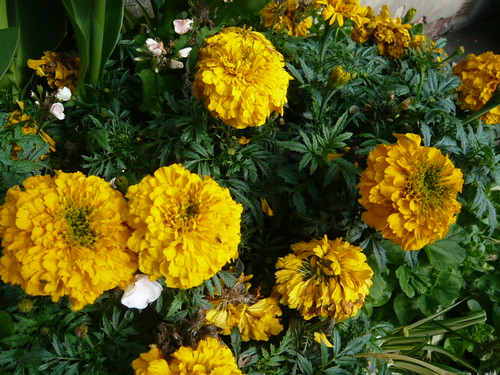
Some fun photos that appeal to my sense of humour. These are the famous ‘Glove Flowers’ yes you guessed it they are Marigolds. African Marigolds to be accurate with flower heads 4″ across.

If you were thinking of prickly plants that need gloves I am sorry no one Rose to the occasion.

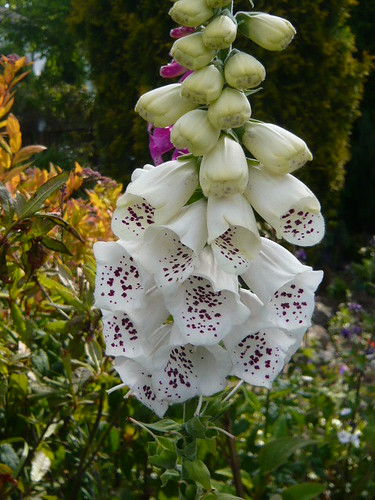
Foxglove

Foxes do not were gloves and I do not know how they got their name but this healthy Foxglove has distinctive spots on the white tubular flowers.

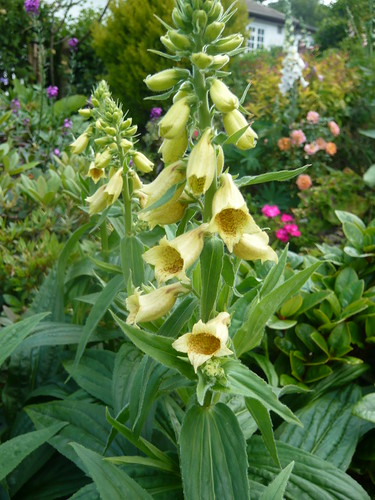
Yellow Foxglove

I am trying to remember the name of this perennial Foxglove species. The flowers are smaller than other foxgloves but the plant has been a reliable ‘doer’ for me for many years.
They are not called ladies Fingers that is the vegetable Okra.
That gave me time to remember that Digitalis lutea is the 3 feet high foxglove that flowers creamy yellow on one side of the stem.

Marsh Marigold Caltha palustris

Back to the rubber gloves of Marigold fame. This time they are Marsh Marigolds but as tempest fugit and time marshes on that is all for today (thank goodness ed). As the name implies these little rascals love water but try to do it without unzipping your pants.

Garden Seats to view Cyclamen

Garden Seats to view Cyclamen

The 18th century Union Jack Gardens at Wentworth Castle were originally called the ‘wilderness’. It was dense with shapes, texture and contrasts of shade and light. Now it may be a suitable place to take a seat in the garden and see the original Yew trees and the variegated ‘creamed’ Hollies.


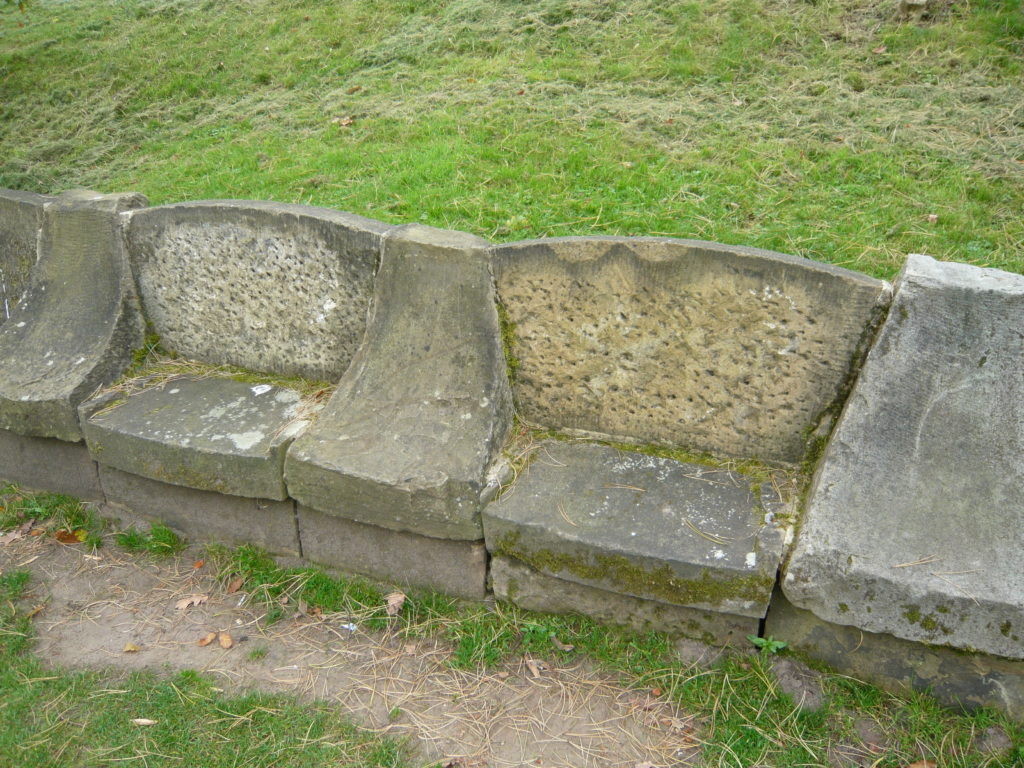
Wentworth Castle starts with an invitation to take a seat while you admire the unusual grounds. The seats are unusual too!


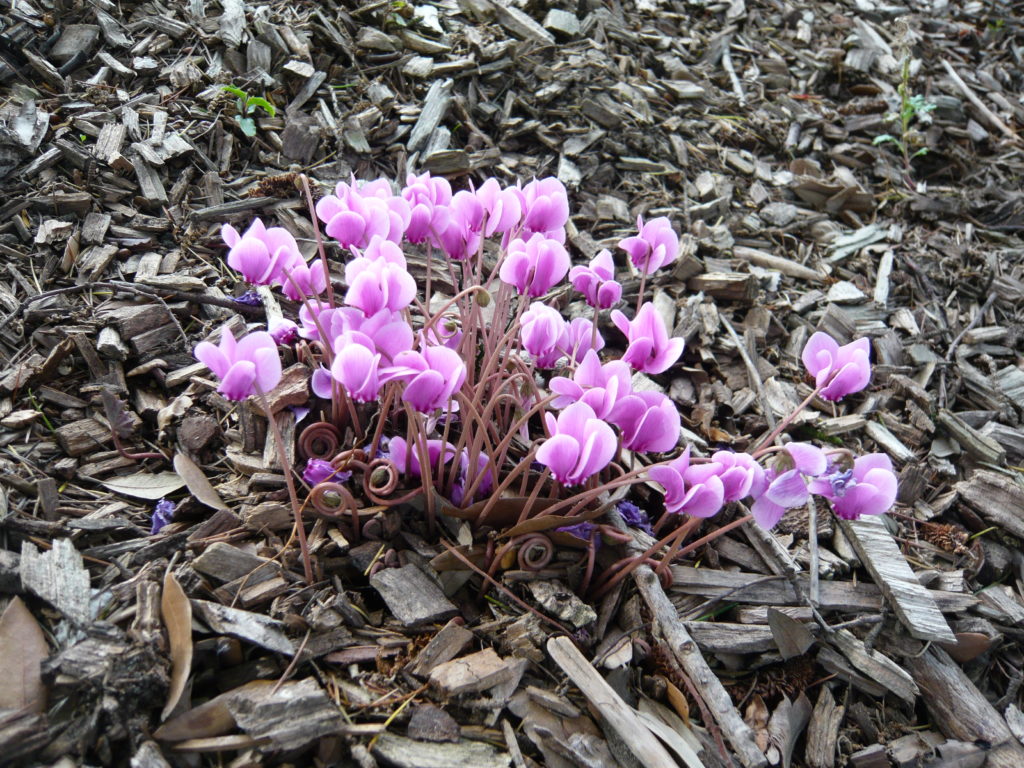
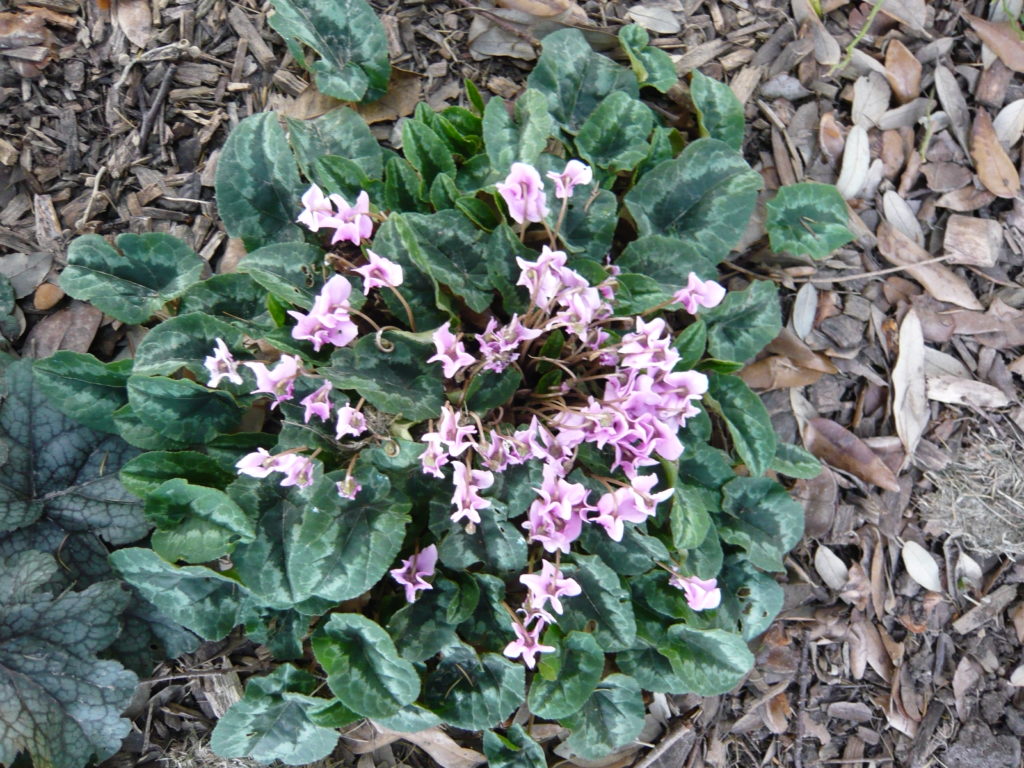
The living plants are less unusual but in the stumpery there are shaped tree roots riven from the soil and replanted upside down. This fails to affect the well mulched cyclamen growing from what must be substantial corms.


Gardeners can be a hardy lot but you need a hard bottom for this type of seating.


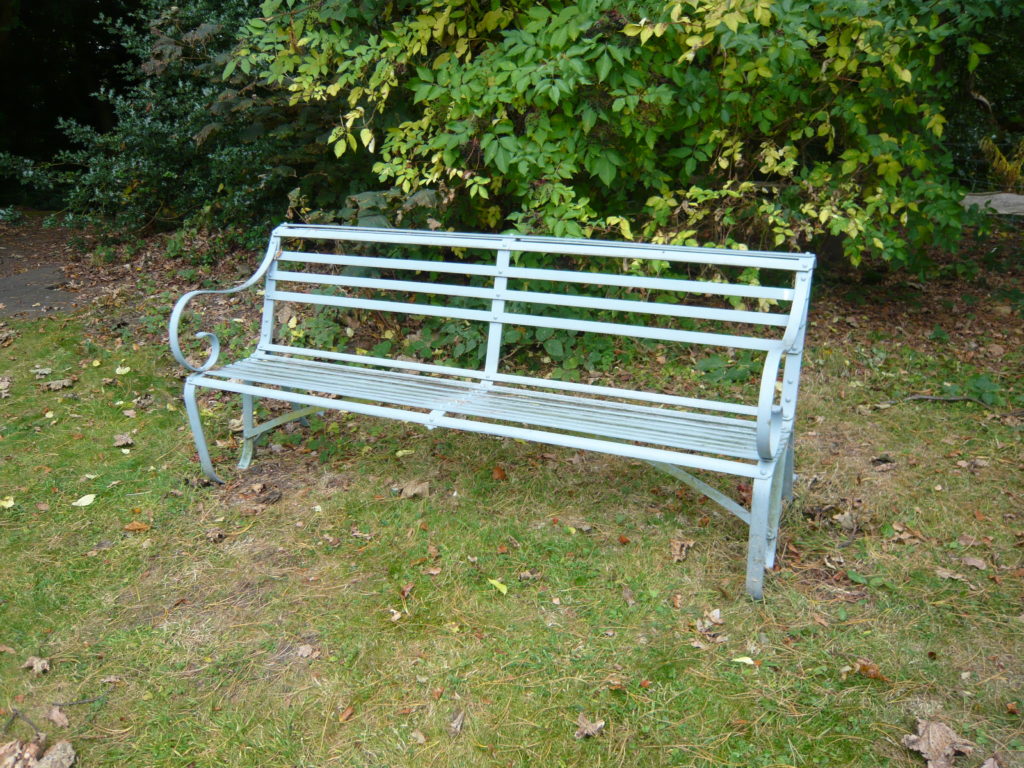
More traditional cast iron seat. Why do we paint them and other garden items in Wedgewood Blue?


Cyclamen mulch is made from coarse wood and bark chippings

In the last year the renovated garden originally designed in 1707 was forced to close. The Yorkshire Post reports ‘Talks are underway to secure the future of the only Grade I-listed landscape in South Yorkshire, which is said to be “nationally significant” for its extensive monuments including some of the earliest follies in the country. In an irony which would not have been lost on its founder Thomas Wentworth, who only built the estate due to a bitter dispute over the inheritance of the family seat at Wentworth Woodhouse …’ Sadly there has been no progress and I have to rely on my old photographs.

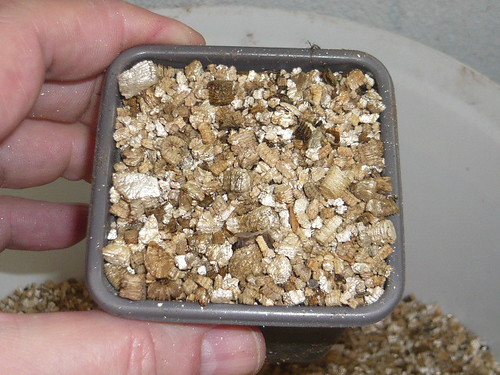
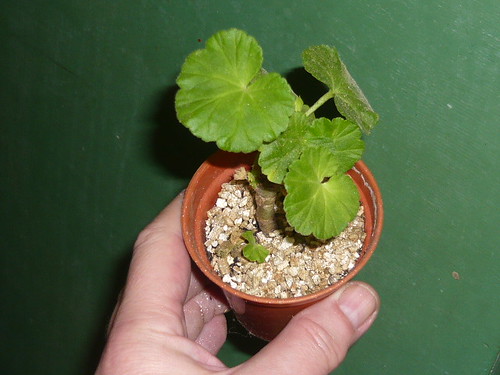
Vermiculite for Gardeners

Vermiculite for Gardeners

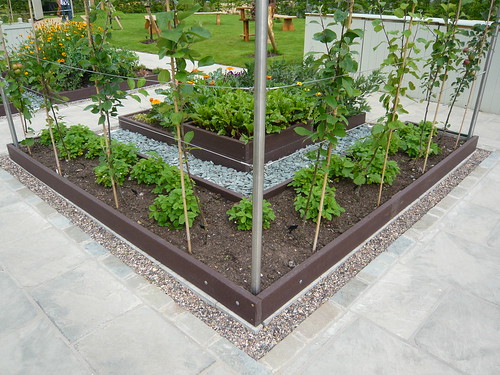
Raised Beds

Raised Beds

Seed Tray Review and Tips

Seed Tray Review and Tips

Plastic seed trays

The clue is in the name Seed Tray – this note is about seeds in trays and although they can double up for seedlings  the issues are different. Seed sowing probably starts in February and is reaching its height by the middle of April.

Seed Tray Review

  • Old wooden seed trays with slats and high sides are still in use. They need care when cleaning before new crops are sown.
  • Plastic seed trays from rigid polypropylene with drainage holes can be used time and again and are easy to store and clean. There is generally a pattern of ridges to improve drainage.
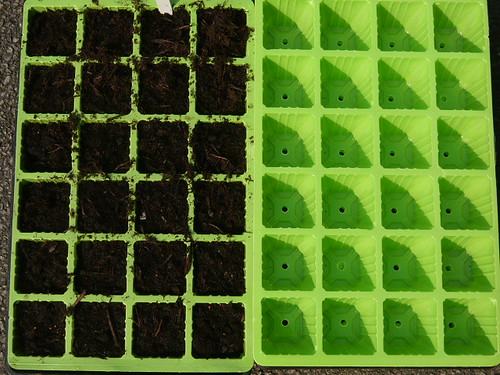
  • I like to use the thin plastic segmented inserts like those in the photograph inside a normal seed tray .
    • It adds rigidity and makes for easy movement
    • They are cheap enough to be disposable but last a couple of seasons with care.
    • They vary in the number of cells, 3×5, 8×5 or 4×6 for example.
    • Each cell can be for individual seeds or used for several fine seeds. It makes pricking out and planting far easier.
    • The cells can also be used for growing on after pricking out. 15 or 24 good plants can be raised in one tray.
    • Do not put plastic inserts in a tray without drainage holes or the compost may get water logged.
  • Seed trays can be used to hold individual pots in one place. Up to 15 square 3″ pots can be put in one tray and they are a bit deeper than a standard tray.
  • Disposable or disinfectable, plastic  labour saving devices were not available to our parents and grandparents but take care how you dispose of them.

Alternative Seed Trays

  • If you can find them old fish boxes can make good seed trays. The polystyrene variety helps to keep an even temperature. Some old fruit boxes can be adapted as seed trays. In both instances make sure there is adequate drainage.
  • You do not need a tray per se,  any container with drainage holes will suffice. I use a lot of old plant pots for starter seedlings.
  • Rubberised plastic trays usually in black are more rigid and I find them better than the extruded green plastic shown above.
  • Home made compressed capsules, rolls of paper, even cardboard toilet paper tube can be pressed into service.

Seed Tray Tips

  • Take care when watering to get all the area damp. Some composts and soils are difficult to get evenly wet
  • Label your seed sowing with the date and type of seed sown.
  • Sterilise your used seed trays in Jeys fluid or similar.
  • To water from the bottom fill a larger container and stand the tray in the water until enough has been taken up by capillary action.
  • Do not leave seedlings too long before pricking out. Long roots soon become stunted. Seedlings need space to develop roots.
  • Carefully push out the cell contents from the bottom if using a plastic product. Otherwise a firm tap will generally loosed to compost.
  • Be careful  small cells hold less soil and moisture.
  • The edges and cells near to the drying sun can be hostile to seedlings.
  • Exposure to sun and the elements can make some plastic brittle.
  • Prick out and pot on as soon as possible (when two leaves are showing).

Special Seed Sowing Devices

  • Matching the seed tray to the plant you are growing may dictate the tray you use.
  • Sweetpeas need a long root run and trays tend to be too shallow. I use deep pots but you can sow in root trainers or home made paper tubes.
  • Biodegradable peat pots can be used for plants that do not like their roots to be disturbed.
  • Individual pots may be best for large or expensive seed.
Rhubarb All the Talk at a Local Society

Rhubarb All the Talk at a Local Society

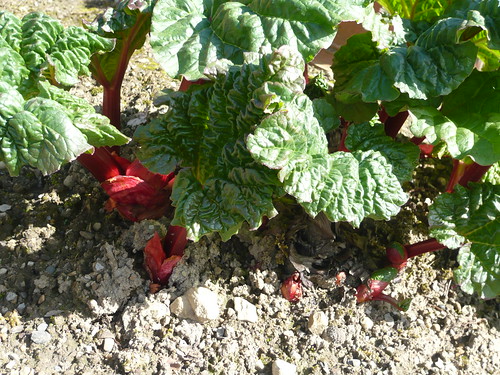
RhubarbEarly Spring Rhubarb breaking Through

What Does Rhubarb Mean to You

  • Rhubarb is a vegetable that thinks it is a fruit and has royal pretensions with top varieties called Victoria and Early Albert
  • Rhubarb Rhubarb Rhubarb is an indistinct chant  or none sense word shouted out in an unsynchronised manner at a public event.
  • ‘A rhubarb’ is baseball slang for a fight or argument among players.
  •   “Stop talking rhubarb”. Complete and utter balderdash and b*****s.
  • Stewed or in a pie it is the food of gods. Even raw with the stick end just dipped in a little sugar – gear nosh.
  • Already his year I have had Rhubarb flavoured gin and a special cider flavoured as Rhubarb and custard.
  • According to some ‘Its very name means “food of the barbarians” the people who live beyond the Rha, now the river Volga’.
  • To some less fortunate Rhubarb is a strong purgative.

In Praise of Growing Rhubarb

  • It is one of the earliest crops in the garden.
  • It can be forced into even earlier cropping if kept in the dark with a bit of warmth eg from a straw wrapper in an upturned bucket. The stems will then be thin, blanched pink and juicy.
  • Rhubarb is hardy and if fed and watered will produce for many years.
  • The big leaves are easy to compost. Even though they contain Oxalic acid they do no harm in the compost heap.

Young Stems


Bolting and Running to Seed

Bolting and Running to Seed

Early Flowing Rheum Rhubarb

Bolting

Said of plants that are making seed prematurely. A plants purpose in life is to produce offspring usually by seed. When stressed they will trigger the reproduction button and set seed.

  • Lettuce and salad crops are prone to bolt and ‘run to seed’. The heart of the lettuce is then useless and the plant only fit for the compost heap.
  • Rhubarb and rheums also throw seed stalks taking energy from the good parts of the rhubarb. You can and should brake-off the offending stalk as soon as it is seen. Water the plant and hope the rest of the crop is unaffected.
  • Other vegetables such as members of the onion family are affected in dry and stressful conditions. This is due to the plants keenness to reproduce before it succumbs to a problem.
  • Broccoli and cauliflower whose flowers open early are not truly bolting but the cause and effect is the same.
  • Flowers that turn quickly to seed will inhibit more flower production. That is why sweetpeas and annuals, amongst others, should be deadheaded to prolong flower production.
  • Bolting may be an advantage when seed collection or production is the main aim.

‘……….there exist very little literature on the possibility of manipulating flowering for seed production’ but this book from amazon is an exception

Running to Seed

  • If vegetable plants  are allowed to set seed after flowering they may taste bitter.
  • Plants that rub to seed will probably stop growing new buds and flowering.
  • Regular cropping the stems of herbs like parsley, basil and mint delay their running to seed.
  • This old gardener is running to seed with no new growth on the top of his bald head.

Book Cover


Stratification is putting your seeds in a moist material outside over the winter to allow the variations in temperature to act on them, so that they will germinate when conditions are warmer. Seed used to be put in layers (strata) of damp sand,