Browsed by
Author: hortoris

Banana Republic and Musa Review

Banana Republic and Musa Review

Banana hand

I have just finished eating a Fyffes banana grown in Costa Rica. They were certified by the Rainforest Alliance and were sold as ‘Ripe, snack size bananas’ and a very appropriate  name it was. In our fruit bowl we also have ‘organic Fairtrade bananas fro the Dominican Republic cutesy of the EEC at least until brexit by which time they will be well overripe.

This encouraged me to dig out an old post with photos from Kew in 2010. I was in the middle of a series of posts on fruit trees from exotic climes and realise that the Banana didn’t quite fit. Bananas are herbs and do not grow on trees. The stem,  can grow quite tall in some species and is really just matted together leaves.

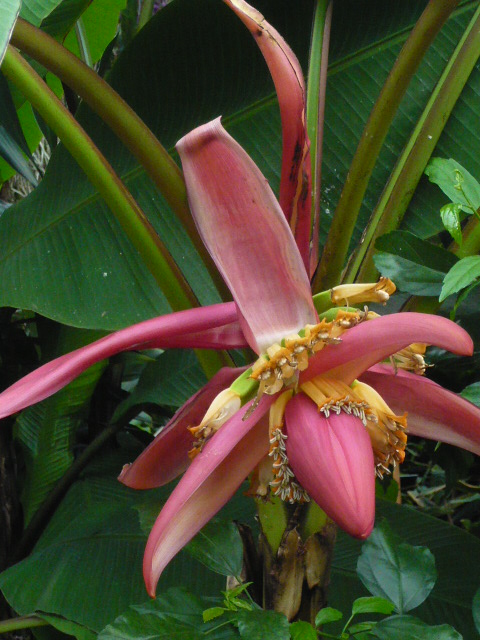
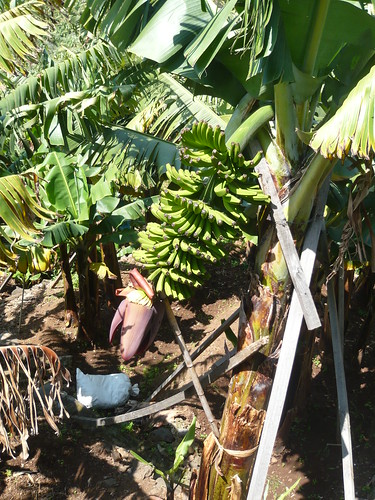
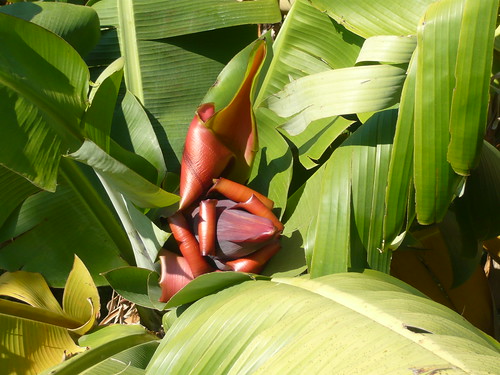
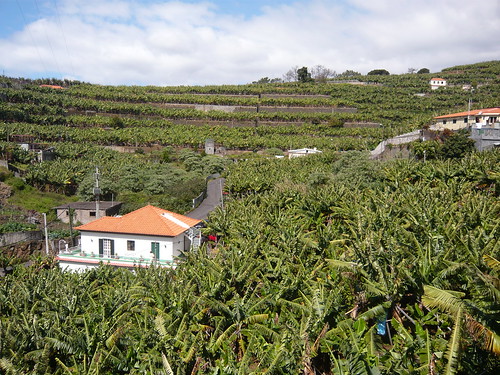
Therefore I offered some of my photographs to show different varieties of Banana growing in Kew hot house and Madeira.

Kew Red Banana
Red Banana

Musa coccinea Red banana
Very Red Banana Musa coccinea

Bananas
Commercial Banana plantation

Banana
Banana in Flower

Banana plantation
Banana Crop in Madeira

Read these articles for more information.

Banana growing in UK
Exotic Gardens to Visit to see Banana growing in UK

Other Musa Species and Genra

  • Plantains are  a cooking variety of Musa and a member of the banana family
  • Wild banana species, Musa acuminata and Musa balbisiana generally have seeds but cultivated bananas are almost always sterile and seedless
  • Wiki as usual has an authoritative list of Bananas and an explanation of their classification.
  • The false banana or ensete is a member of the Musa genra
Garden Problems Caused by Wind

Garden Problems Caused by Wind

Problems Caused by Wind

  • Wind desiccates leaves – moisture is gone with the wind
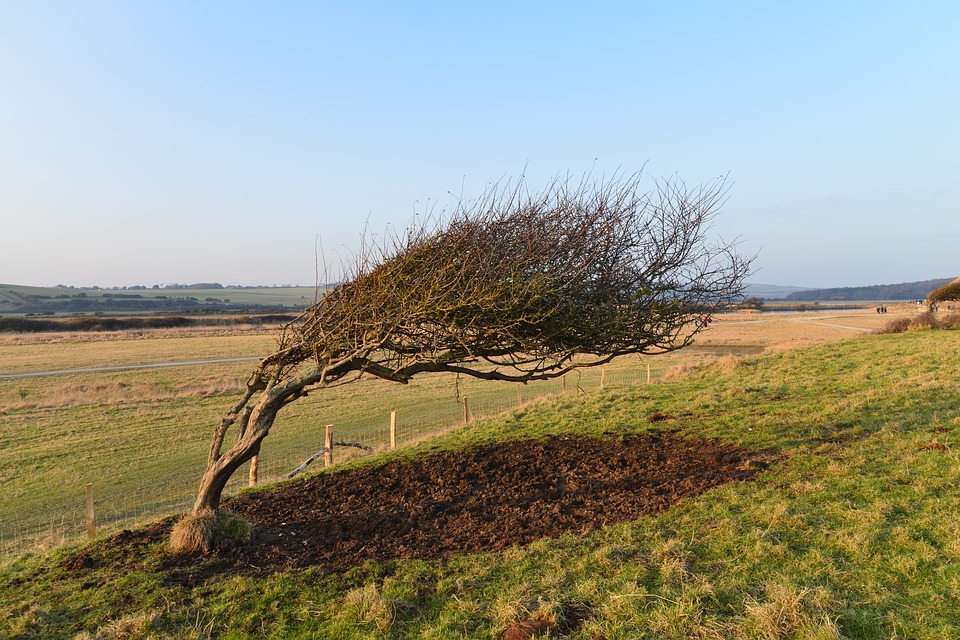
  • Even well rooted plants can be rocked by wind and this can be fatal to roses or fruit trees. Shrubs and tree growing at a slant caused by wind will never give of their best.
  • Wind abrades, rips and tears. I have just lost a good spray of chrysanthemums that I was looking forward to seeing in flower. Chrysanthemums stems often break near the joint with the main stem and I should have tied them up with more care or kept them out of the wind. Fleshy leaves like dahlias do not do well in wind.
  • A cold wind does no one any good and the wind chill factor can damage plants as well as gardeners.
  • In severe windy conditions pots can be blown over, loose debris scattered and even structural damage may occur. Pots appear top heavy when there is lots of growth that catches the wind. My clematis and runner beans  have caught the wind and both are leaning from the wind.
  • Trees and shrubs can be stunted by wind and will not reach thier normal potential. You seldom see giant trees on our windy coastline.
  • Unwanted seeds can be dispersed with only a gentle breeze

May all your winds be zephyrs and all your gales be miss spelt girls

Tips From Gardeners to Flower Arrangers

Tips From Gardeners to Flower Arrangers

10 Comments from Gardeners to Flower Arrangers

  1. Prior to collecting material get your gardener to spray an insecticide to prevent pollen beetle and other insects being imported.
  2. All flowers will last longer if a foxglove is included in the arrangement. If they are not desired or available make a tea by pouring boiling water on foxglove leaves. When cool use the liquid with water.
  3. For delphiniums and larkspur add sugar don’t bother with the old Wive’s idea of an old penny (give it to the gardener).
  4. For daffodils and narcissus add charcoal or camphor to the water and preferably keep them from other flowers.
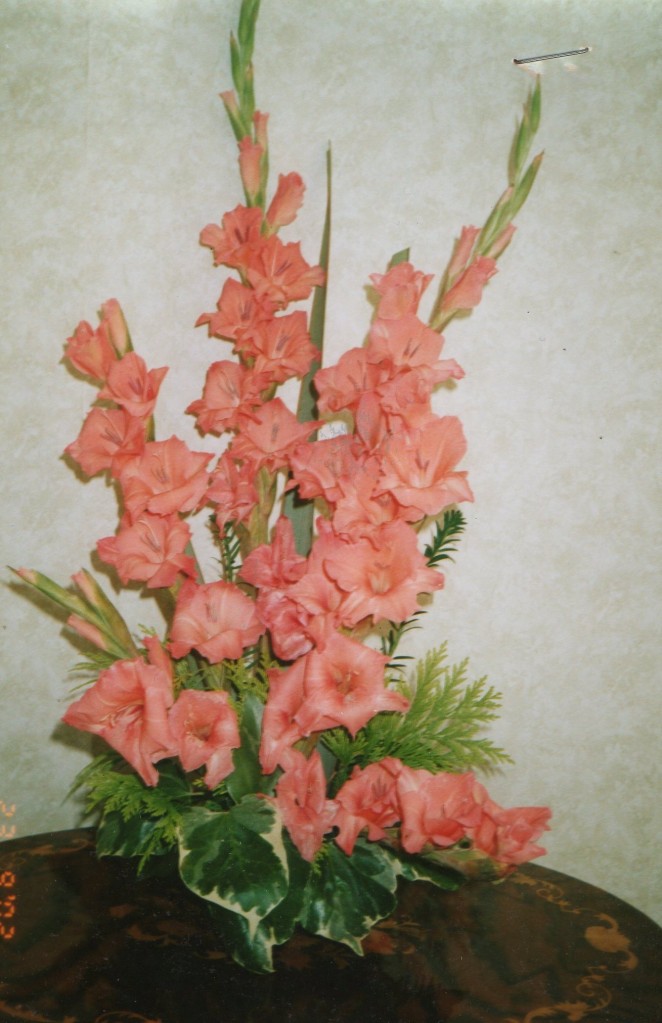
  5. Topmost buds should be nipped from gladioli, snapdragons and delphiniums.
  6. Heathers without water will last for weeks in the house without withering or dropping needles.
  7. Many spring flowering shrubs will last longer if picked in bud rather than full flower and stood in hot water first. Try this with Forsythis, Wintersweet, Witch hazel and willows.
  8. If flowering shrubs must be used the whole shoot should be taken down to two buds above old wood.
  9. Leave enough leaf material for plants to regenerate.
  10. Old flowers may be about to set seed and will not last long in the arrangement.

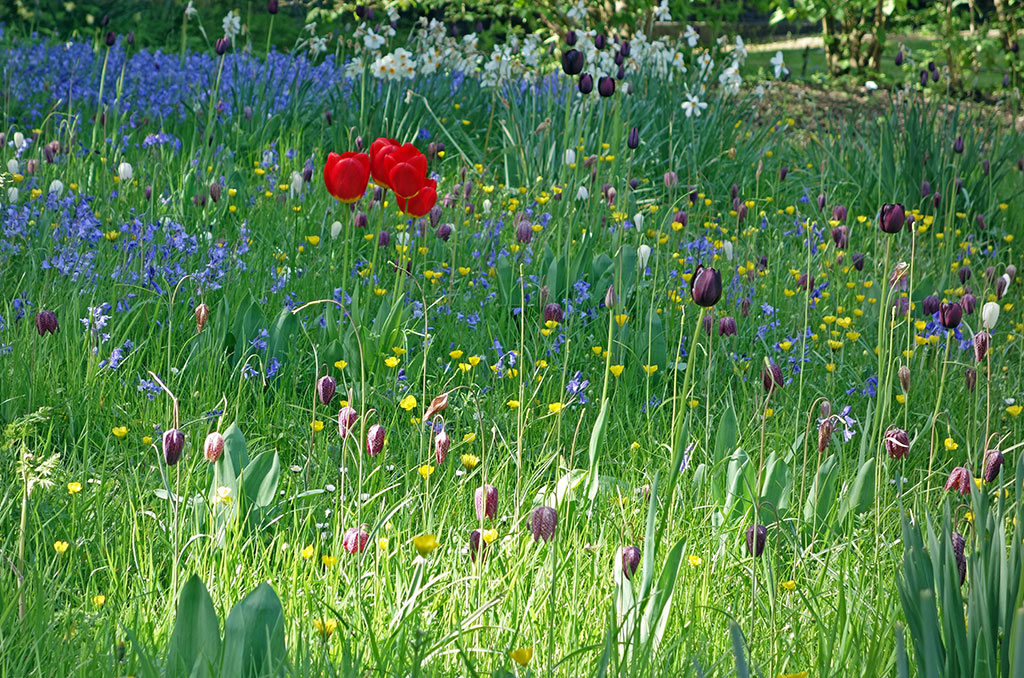
Meadow Flowering Wild or semi-cultivated

Meadow Flowering Wild or semi-cultivated

One red poppy to add interest to this photo of a ‘sown’ wild garden. The effect is pleasing with the cornflowers just breaking into colour.

fritilliaria

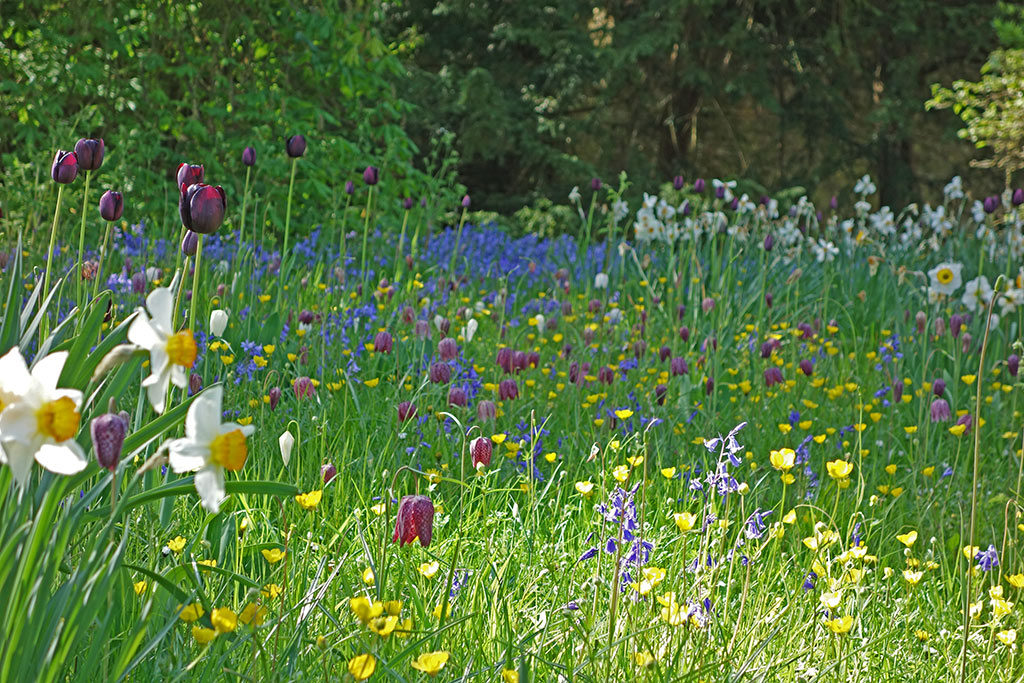
A spring bulb meadow in a tree line glade.

fritilliaria

Blue bells and tulips make a good combination. The fritillaries are nearly over.

Sown seed in a field of meadow grass cultivated to help this floral display.

An unusual August Wild Flower Garden when most wild flowers are spring flowering.

Drink to the Gardeners

Drink to the Gardeners

Or more aptly what can gardeners do with their drinks and any remnants.

Tea leaves can be composted of course but they can also be put around Camellias as a mulch. This may seem a bit like cannibalism as the tea plant is part of the family Camellia sinensis. Comfrey leaves soaked and rotted down in water make a good cheap fertiliser suitable for flowers or fruit and other leaves such as nettles have similar attributes.

Milk is slightly acidic (lactic acid) and washing out your old bottles and use the water for a mild liquid manure of indoor plant.

Coffee grounds and cup remnants can go on the compost heap or be used around small succulent plants to deter snails.

A beer after a hard session in the garden can refresh the jaded gardener but can a drop or two help any plants. The yeast in beer may have some benefit and it is worth rinsing the bottle of can onto hollyhocks or climber. In the unlikely event there is any beer un-drunk it is well known that slugs glug beer and can drown in a beer trap.

When it comes to washing up after all that drink the soapy water can be used on the garden. Soda based cleaners are said to be good for use on brassicas.

After the Drinking

Micturation or the production of urine is an inevitable byproduct of all that drinking. Human urine is rich in nitrogen and urea. Fresh urine can be used to water plants diluted 1:10. Alternatively add it to your compost heap to enhance its nutritional content.

Victorian musical hall artist Marie Lloyd had a famous song ‘She Sits Among The Cabbages and Peas’. To over come complaints from the moral police of the time she sang a new version ‘She Sits Among The Cabbages and Leeks’.

‘Oh, she sits among the cabbages and peas
With a pretty little peapot ‘tween her knees
She’s a whiz at shelling peas
So she sits and shells with ease
Till the pretty little peapot’s full of peas.

Play Music to Your Grass

Play Music to Your Grass

If Prince Charles can talk to flowers and plants perhaps your grass would like to listen to some classical music. Nocturnes may be more appropriate than ‘the floral dance’ or anything else that attracts weeds.

Grass & Lawn Music

  • Beethoven first movement (of the lawn mower) is  one of his lesser known hits.
  • 1812 is the best time of day to trim your edges.
  • To get neat patterns on the grass go Bach over it in opposite directions.
  • Fertilse your lawn with Schubert to give it some fizz.
  • Do not let your tuning fork Liszt .
  • Grass clippings are due for some Chopin before they adorn the compost heap.
  • I use a hook shaped knife to get grass out of cracks in pavement and flagstones. I call it a Mahler.
  • Do the twitch’, like Cubby Checker’s twist only spelt differently.’
  • Edelweiss should be rolled over in the clover not Mendelssohned with.


Mildew on Oxford Roses

Mildew on Oxford Roses

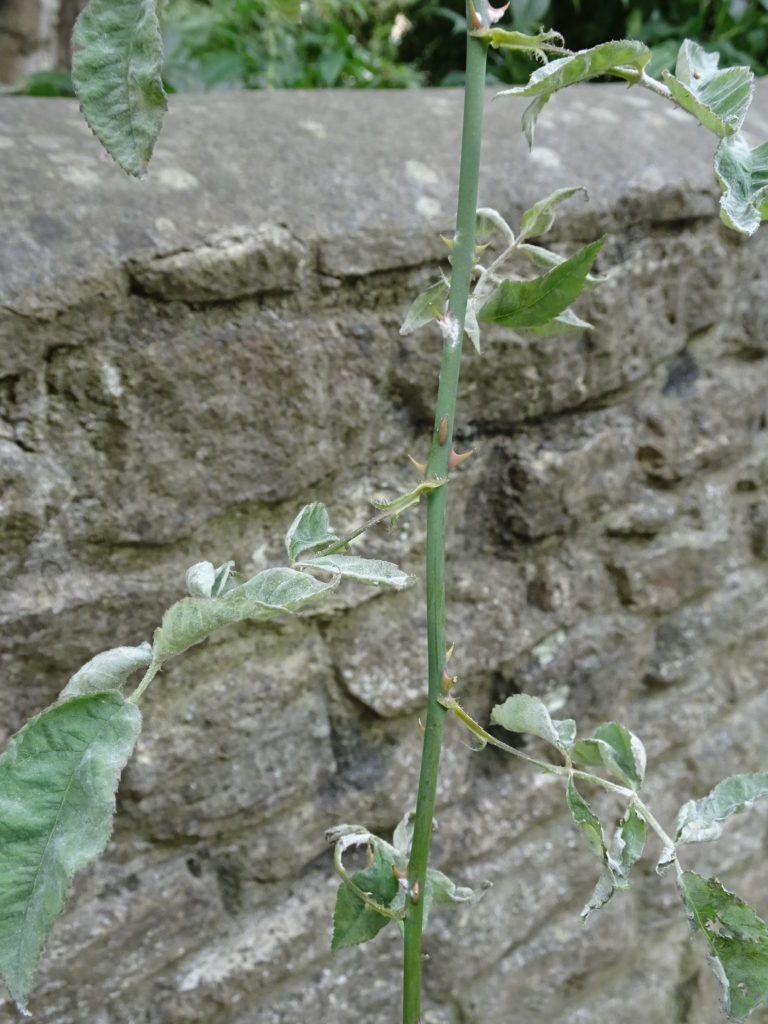
The dry weather has cause a lot of problems with moldew. (I should have said mildew but that is a Freudian slip I will leave in.) The worst affected in my garden is an early flowering clematis but this rose stem is not far behind.

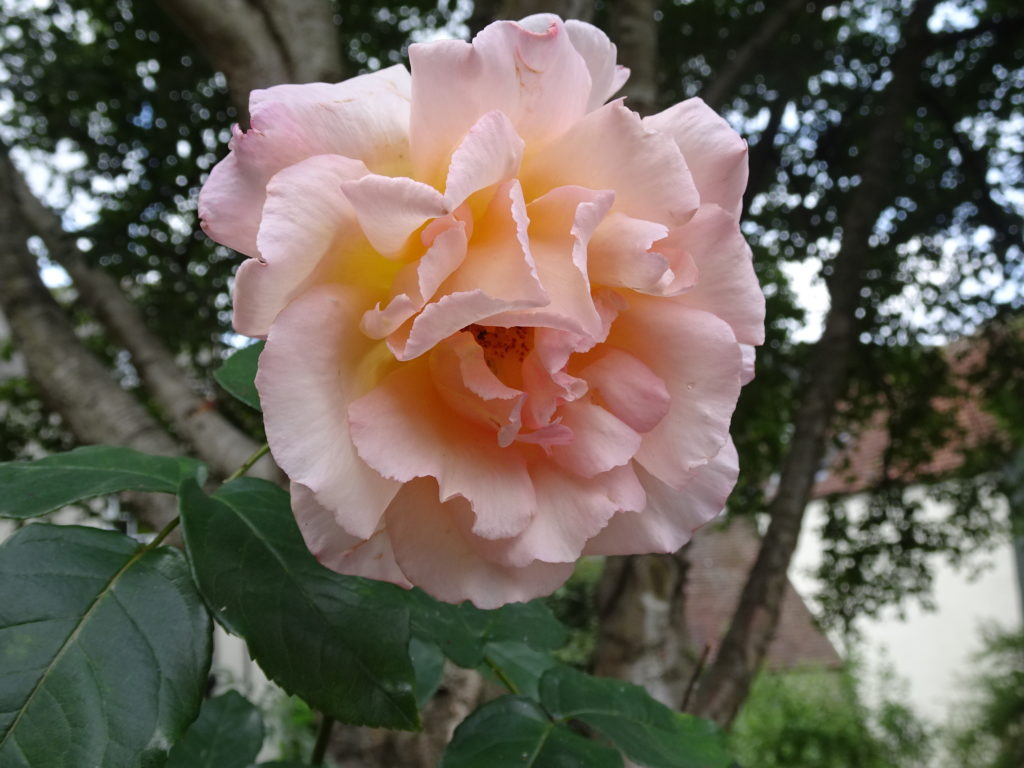
It was draping over a wall in the centre of Oxford with two immaculate flowers on an adjacent branch. Humid and still air plus lack of rain are to blame.

Avoid & Treat Mildew

  • Select roses that have been bred to be mildew resistant.
  • Roses get stressed particularly through lack of water. Mulch after a good rain and keep the mulch topped up
  • Spray badly affected plants with Rose Clear 3 to try stop spores spreading.
  • Limit nitrogen fertiliser which encourages sappy growth  that  is prone to attack.
Rotten Tomatoes

Rotten Tomatoes

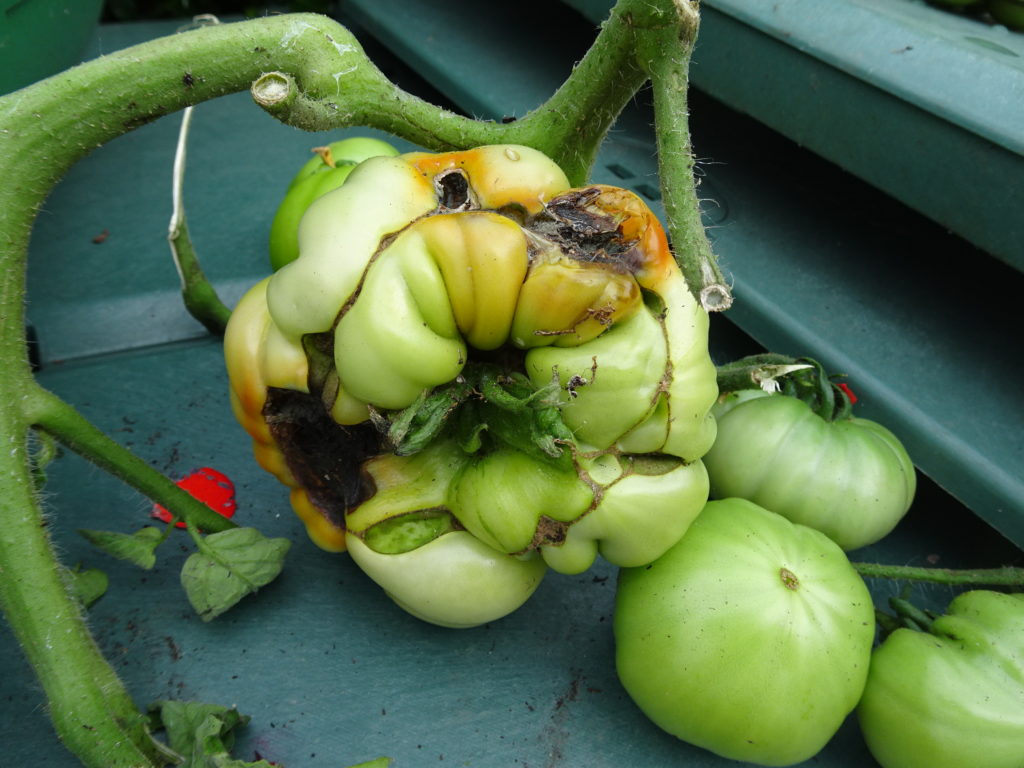
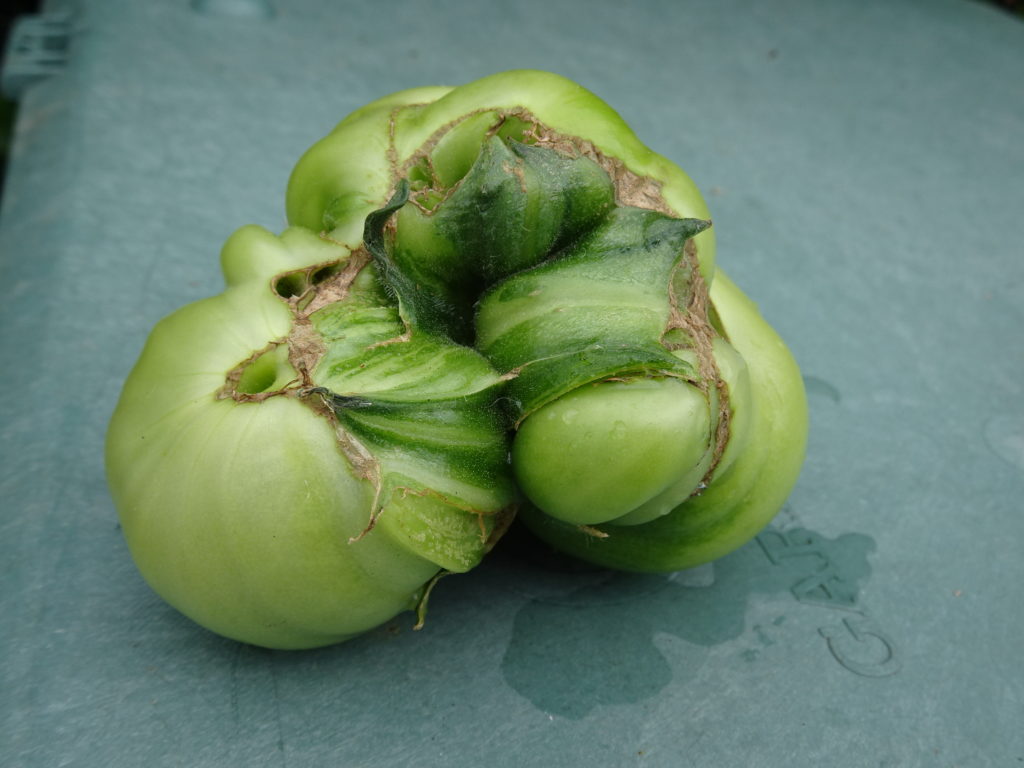
Misshapen tomatoes are a bane this summer and the rot is really setting in early .

Cause of the Problem

  • This is my first attempt at growing beef tomatoes. Did I chose a difficult variety with ‘Marmande’ which I now know is known for it’s different shape.
  • After an early start my plants looked fine until sun shine caught me out. I needed to install greenhouse shading earlier but thought I could rectify and catch up OK.
  • Many leaves curled turned brittle both for me and in my neighbors greenhouse.
  • Water and feed was readily available but not in the right  way to avoid problems.

Action Plan

  • I will settle for fewer plants and cull the worst culprits.
  • I have increased the feed and seaweed nutrients.
  • At the end of the season I will consider not growing these tomatoes again.
  • Our local show has a category for misshaped vegetables – will this fruit be according to classification.

Blossom End Rot

  • Too little calcium is the normal reason for this problem shown below. The strange weather may have contributed this year.

Tomato Husbandry Problems

  • Planting out in the cold will shock the plants and although they may live they wont thrive. Avoid impatience.
  • Inconsistent watering can create problems the most frequent being blossom end rot. Keep soil evenly moist. Ventilate well and water in the evening.
  • Forgetting to pinch out side shoots on cordons cuts down on the size of crop.
  • Tomatoes are heavy feeders – follow the instructions on a high potash, liquid  feed.
  • Over crowding can reduce overall number of tomatoes
  • Poor pollination can be helped by gently tapping open flowers and misting the plants.
Watering My Way or Not At All

Watering My Way or Not At All

It has taken a long, hot, dry spell in my Yorkshire garden for me to catch on to the blinking obvious.

  • If I decide to have a lot on new pot plants to house good specimens or prize plants (which I did) I should know better (which I didn’t). It should have been obvious that the weather would win.
  • With plants dying around me I decided to learn more about roots and water uptake. About time some my say!
  • I never applied my brain but it seems obvious now that plants take up most of their water needs from the tips of their roots.
  • More plants have died in this drought than I would like. e.g.  Annuals run to seed quicker, new plants do not have established root systems, heat increases water loss, trees take up more than their share of ground moisture etc.

Water

  • Leaves wilted since water and nutrients weren’t being transported up. Even if the plant survives the older leaves begin to fall off prematurely.
  • Roots are important to a plant because they are its primary source of water and food and are also crucial for the uptake of oxygen.
  • Over-watering, in simple terms, drowns your plant. Soil that is constantly wet won’t have enough air pockets and the roots can’t breathe. Roots that can’t breathe are stressed roots.
  • Plant roots meander through soil absorbing water and nutrients. Both are needed to help the plant grow below and above ground. All the action below ground happens at the very tip of each root: cell division, cell growth, absorption of stuff from the soil.

Having shown the after picture here is one before the swimming attempt. New Guinea impatiens do need regular watering or they wilt but I took it to extremes.