Browsed by
Author: hortoris

Best Trees for Toughness

Best Trees for Toughness

Avoiding early onset of death caused by disease or climate change will affect the trees we plant in the future. Gardeners must consider tree selection carefully bearing in mind more than aesthetics and utility. Economics of forestry have increased there relevance to Britain as (the dreaded by some) Brexit nears. We import and export more wood than in previous years but with those extra tree miles comes risks. Toxins pests and disease are to readily spread from one country to another. CITES (Convention on International Trade in Endangered Species of Wild Fauna and Flora) is designed to protect over-exploitation and endangerment  through international trade.

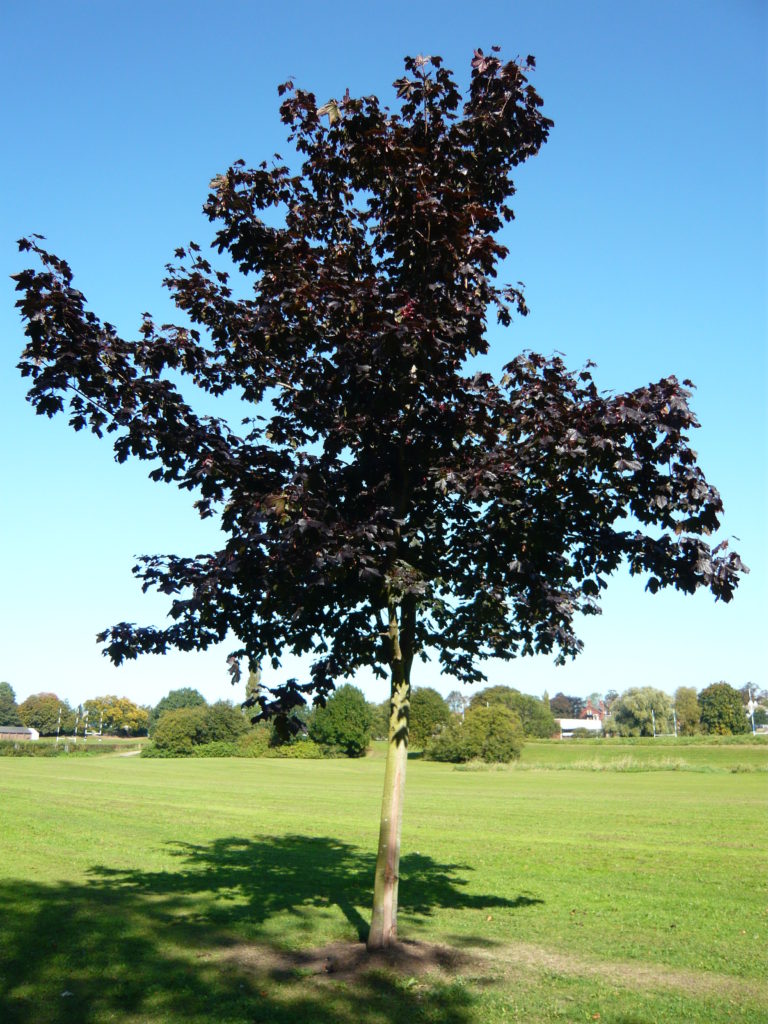
Some of the most reliable trees to plant with a view to them reaching maturity even if not in my life time include:

Tulip Tree Liriodendron tulipifera

American Sweetgum Liquidambar stryraciflua

Evergreen Oak Quercus ilex also Pin Oak and Chestnut leaved oak

Silver Lime Tilia tomentosa

Sweet Chestnut Castaneasativa

Hornbeam Carpinus

Dawn Redwood Metasequoia

Wedding cake tree Cornus controversa

Book Cover

Trees That Produce Hard Tough Wood

  • Janka is the basic measure of hardness for a sample of wood. The toughest tree is  an ironwood tree which is native to Australia.
  • Lignum vitae is so hard it was used to make policemen’s truncheons
  • Ebony and Brazilian Olivewood have tightly packed grain making up the hardness.
  • Snakewood is an exotic hardwood which is particularly prized for it’s decorative grain
  • Other hard woods common in Britain include mahogany, maple, oak, and teak.
  • Tropical pear, cashew and walnut are hard hardwoods.
Trees for Carbon Capture and Global Warming

Trees for Carbon Capture and Global Warming

Church Lane

I am  unsure about all the fuss over carbon emissions and the impact of humans on the environment. There is a finite amount of carbon in our world and it cycles around in solids, dissolved in water or in gaseous forms. Plants helped convert the primordial carbon gasses and  volcanoes eruptions into solid carbons. Trees capture carbon and hold as wood for long periods and historically many trees fossilised into coal.

Other key examples of carbon capture include the stores of hydrocarbons in the form of tar, oil deposits and shale from which gas is now fracked. Less related to tree carbon capture is the vast quantities of limestone deposited from crustaceans and coral.

Many ecologists and scientist now believe we should invent mechanical ways of storing carbon as there is a perceived imbalance in the carbon cycle caused by human activity. I am amused by the idea of sending carbon dioxide down the mines and oil wells to be retained for some future ill defined purpose.

Personal View on Global Warming

  • The above photograph of the Yorkshire Dales including a tree and dry limestone wall contains a substantial amount of captured carbon as does the peat up on the moor.
  • All Yorkshire can’t compare to the Amazon rainforest or the dissolved carbon in the sea. Since I first wrote about carbon capture major advances with shale gas exploration have highlighted again the plants of eons ago that were converted into captured carbon and are now giving up their bounty to modern man.
  • All the hot air about global warming and political influence isn’t going to change me or my gardening approach.
  • I will garden responsibly but I do not think I will take my gardening to extremes. However, I am going to plant some trees, grow some hard carbon and hope these trees have a long and hard carbon producing life, I just regret I won’t be around to carbon date them.

Amazon Rain Forest

  • This resource is often quoted as a shorthand for the ills of global warming. Is it better to use the land freed up by deforestation for human or animal food production? I don’t think there is a perfect answer but avarice and vested interest is a poor driver of policy.
  • If a tree grows 10% each and every year ( at least until adult maturity) then if follows that small young trees will capture less carbon than stately relatives. There is also a potential amenity benefit from large well managed forests so lets encourage the big and beautiful.
  • In National Tree Week we should be celebrating our British heritage of trees and those organisationst and woodland charities that help manage them.
Herbs and Herbals

Herbs and Herbals

If you feel Herbie, the plants not the films, then sniff out the comments below:

Herbie the Love Bug
Herbie the Love Bug

Herb & Herbal Groupings

  • Culinary herbs for use in kitchens
  • Medicinal herbs, ancient and modern the basis of many drugs and remedies.
  • Vegetable herbs like onions and garlic.
  • Flowering and decorative herbs.
  • Spices and other plants at home in a herb bed.

    Read More Read More

National Tree Week Tribute 2018

National Tree Week Tribute 2018

Gardeners tips would like to pay tribute to the nation’s trees, past and present and all those that use or care for them. The time to pay this tribute must be during National Tree Week which runs from 24th November to 2nd December 2018.

Where to Start the Tribute

  • I have ordered 3 bare rooted fruit trees to be delivered on the 24th November. These will be planted in my mini orchard to augment the apple and plum varieties I already grow. I don’t really need any more trees for fruit production as the family can’t eat a good years crop even when taking jam into account. Still another tree will be a good backstop should one of my current trees start to fail.
  • It may be a bit early for Christmas but I have agreed to give and have sourced a Kilmarnock Willow tree for my sister’s present. This is to replace a dead willow tree that used to provide a place for garden birds to congregate.
  • Whilst learning oil painting and watercolour I have set aside 2 books on how to draw and paint trees. It will make me look closely at all trees (during cold winter months that will probably be through a window.)
  • Historically gardeners tips have published 443 articles about trees. I will re-post and update one of these pages on each day during National Tree Week

Quirky Tree Facts

  • An 80,000 year old Quaking Aspen in Colorado formed a clonal colony linked to a single massive subterranean root system with all the trunks above ground remaining connected to each other.
  • Against all odds trees can have great survival instincts

  •  The process known as dendrochronology involves counting the rings of a tree trunk.
  • If a birdhouse is hung on a tree branch, it does not move up the tree as the tree grows.
  • There are over 50,000 tree species and some large specimens can drink 100 gallons of water a day.
  • There are numerous uses of trees including food production, energy creation from burning, construction of buildings and ships, decoration and furniture. Best of all I like the idea of a tree house.

Raise a toast including a tree botanical to the UK National Tree Week and all the great trees in the world

Michaelmas Daisies and Plants from Childhood

Michaelmas Daisies and Plants from Childhood

What plants evoke memories of your childhood. For me there are some old favourites that you can try again now in your natural garden. They are often available in a better form as seed and selection has improved over the years.

Michaelmas Daisy

Asters that flower in late summer are free flowering and with a flowing habit that conjures up summers of youth. A blowsy perennial that were prone to mildew but modern varieties are better. Try Aster novi-belgii or aster Frikartii Monch when you see them on offer.

This autumn my Michaelmas Daisies have performed very well probably due to the weather and the fact that the clumps are a good size without being over the top. Dividing such perennials every few years keeps them fit for flowering.Book Cover.

The photo was from old court nurseries. Golden acre Leeds formerly hel a national collection of Michaelmas Daisies

Night Scented Stock

Read More Read More

Garden Ghosts of Christmas Past Winterising Tips

Garden Ghosts of Christmas Past Winterising Tips

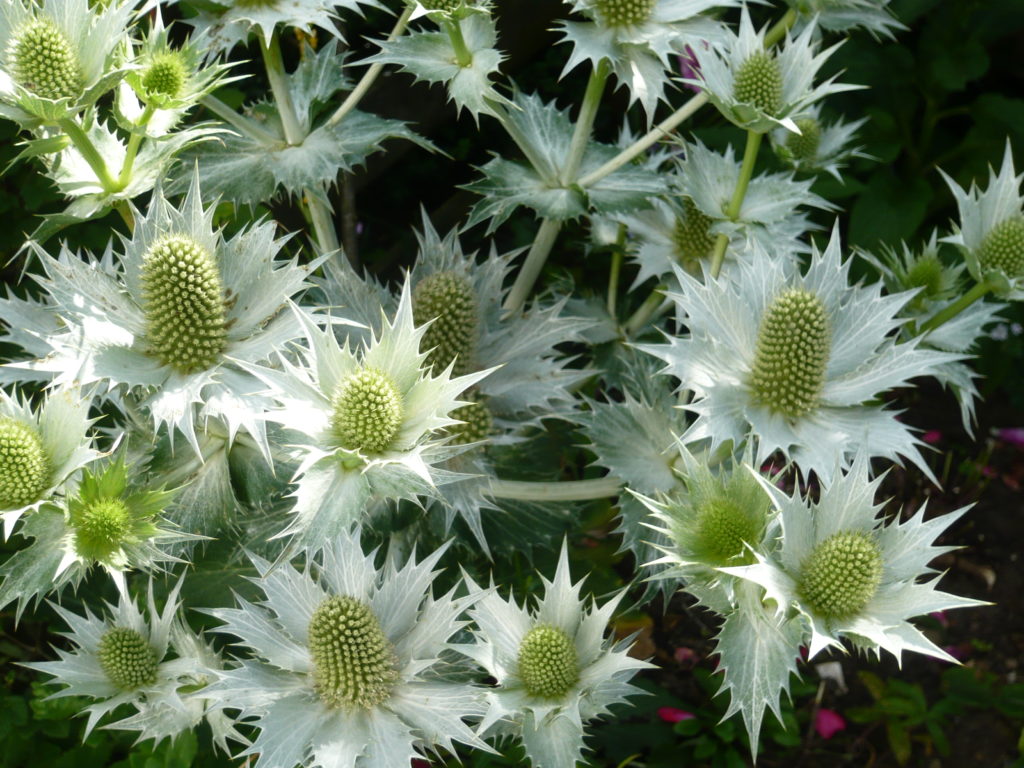
Eryngium giganteum better known now as ‘Miss Willmott’s ghost’ is my reminder to get ready for colder weather and Christmas. I have disconnected my hose pipes, lagged outside taps and cleaned up at least one water feature.
For some reason one job I procrastinate over is protecting my pots, containers and ornaments from hard frosts. I know it is time to insulate or put them on to legs to provide some protection. At least they are already grouped together, sheltered from high wind and some of the worst weather.

The greenhouse is used through winter as a cold frame and I have moved some succulents and Auriculas into shelter. When the last of the greenhouse Chrysanthemum flowers are finished all the stools will be put under the bench. On a warm day (or less cold day) I will wash down the windows, clean up any debris and try kill off any pathogens.

My spring compost is not as well rotted as I would have hoped to mulch the beds. This is probably due to the dry summer and lack of microbe activity that I belatedly tried to remedy with lashings of Garrota. As extra protection this year I am using some Strulch as a type of thermal blanket.The recently planted trees will get some mulch as root protection before the ground gets really cold, it will be no use sealing in frozen soil.

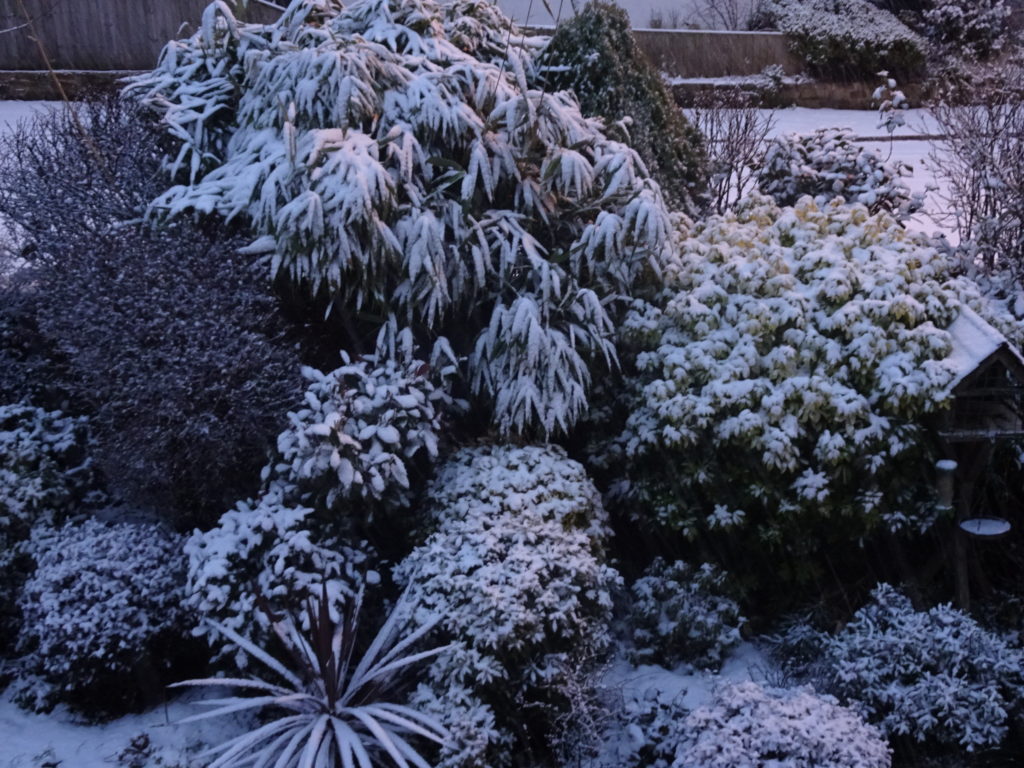
There is not much I can do to prevent snow other than be like the scouts and ‘be prepared’.

Belated Christmas Lawn Tips

  • Do not walk on the grass when it has been frosted. The leaves will snap and it shows.
  • Walking on soaking grass will compact the soil and drive out the air. It will be prone to moss infestations. Waterlogged soil needs some drainage treatment next spring.
  • A late trim with the blades set very high will pick up some remaining leaves and make the lawn look tidy.
My Climbing Hydrangea

My Climbing Hydrangea

I like the idea of a climbing hydrangea more than the actual experience. Good specimens seem to produce a profusion of frothy, white blossoms particularly when grown by someone else.

My Problem Climbing Hydrangea

  • In my case I planted the sole attempt near a supporting wall. The soil my not be of the best quality, fertility nor humous rich. So what can I expect from Hydrangea petiolaris an Asian woodland native.
  • To compound my sins the wall faces north but in mitigation it is only 2 feet high and the climber now occupies both sides. However flowers are there none or sparse to say the least.
  • Nostrums, potions and plenty of compost have not stimulated leaf or branch growth so what hope of flowers.
  • I expected this Hydrangea to take a while to settle in and start producing but 5 years on and my patience is wearing thin. I guess that is true of the plant which is still keen on revenge for my earlier mistakes over its location.
  • I would prune it after flowering in mid summer but without flowers to set me off I have been a bit too lax. Then again the plant is a bit lax too.
  • In researching this post I discover Hydrangea anomala is a species of vine hydrangea and may be my plant is as confused as I am.
  • I trim the vine to control its height and width or make cuts at leaf nodes to encourage the plant to fill out. However I may be chopping of my buds to spite my face.


Where too Now

  • Cut my losses and turf the climbing hydrangea out.
  • Take cuttings and try new locations more in keeping with its needs. A poor strain of plant will not get better after vegetative propagation.
  • Stick with it and be happy there is one plant to have a moan about.
  • Either move to the south of the UK or buy this book about getting Hydrangeas to bloom in the north.

Book Cover

Watering Lessons from a Dry Summer

Watering Lessons from a Dry Summer

After a wet early spring 2018 the UK had a very dry summer. You are never to old to learn and I picked up some new tips and reinforced some old watering tips.

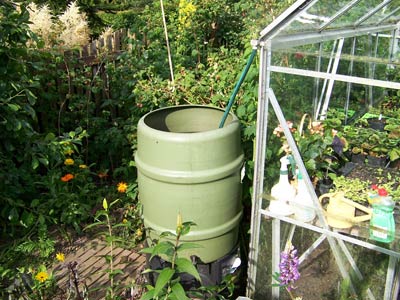
                        water butt but where is the water?

Dealing with Dry Weather

  • Water the plants not the soil in between them. Pay special attention to new plants as their roots are more vulnerable than established plants. Cut back perennials if they look like they might die, be cruel to be kind.
  • A wet spring will not leave the soil wet through summer. Chalky and sandy soils will dry out fastest.
  • Water the right amount at the right time. A good soaking once a week is better than a light sprinkling every day. Water when it has time to soak down to the roots in an evening or early morning.
  • Protect plants from drying wind with a windbreak.
  • Let lawn grass grow a bit longer during dry spells and do not bother watering your lawn.
  • Don’t bother watering fruit trees once the fruit has started to set and swell.
  • Group vegetables together according to their watering needs. Leafy crops, tomatoes, runner beans and potatoes need most water. Courgettes only when they start to swell and asparagus and root crops are more drought tolerant.
  • Patio plants need attention and care. The bigger the pot the more moisture the compost will hold. If they are drying out add a drop of washing up liquid the the water and or create a sump in a saucer or tray.
  • Don’t let clay soil develop cracks for more evaporation to escape. Add organic compost, mulch and sharp grit.

Make Watering Easy and Effective

  • Watering around the base of a plant means some water evaporates before it reaches the roots.Dig a channel between rows and fill with water from a can or use a length of guttering with holes in the sides to channel water where you want it.
  • Sink pots into the ground near plants so roots do not need to come to the surface to get a drink. Larger pots for established plants can have an old dish cloth in the bottom to deter slugs and slow down the seepage.
  • A mulch of grass clippings or Strulch will slow down evaporation .
  • Many contraptions can be created to drip feed or target water to the roots. A half buried plastic pop bottle with holes in the side or try a piece of hose with a funnel.
  • Soaker hoses need to be in the right place but are a simple solution to efficient watering.
  • Turn off your fountains and moving water when practical.

A Word About Recycled Water

  • Adjust water features to minimise splashing and spray drift.
  • Use a pond liner near the water feature to capture excess water and channel it back into the sump or reservoir.
  • Clean household water can be used in water features as any soap or detergent is not aimed at your plants.
  • Rain water is a valuable commodity for watering some plants as it is soft and gently acidic.
Lily Beetle Spotting & Prevention

Lily Beetle Spotting & Prevention

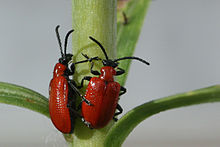
What has got 6 legs, a head, 2 eyes and red wings and  is not a dice game of Beetle. It is the red lily beetle Lilioceris lilii that consumes large quantities of one of our favorite plants.

How to Spot Lily Beetle

  • Adults are 8mm long, bright red with a black head and legs.
  • Eggs are 1mm long and orange-red, found in groups on the underside of lily leaves and they hatch in around a week.
  • Larvae have orange bodies with black heads but are normally covered with their own slimy black excrement.
  • The fully grown larvae are 8-10mm long.
  • At the pupal stage they lie in the soil.
  • Both the adults and larvae can defoliate lilies and fritillaries in short order.
  • Leaves get ragged and black gungy deposits can be seen on infected plants.
  • The red beetles easily fall off leaves and hide in the soil when gardeners try to remove them by hand.
  • The beetle was initially confined to south east England but has spread north.

The Lily Beetle Cycle

  • Adult lily beetles emerge from the soil from late March to May and feed on  foliage between May and  September.
  • Adults feed and lay eggs on the underside of leaves of host plants from late April until early September.
  • After about two weeks, when the larvae are fully grown, they pupate in the soil. Two to three weeks later new adults emerge.
  • The beetles overwinter as adults in sheltered places, often in the soil but not necessarily near lilies.
  • This non-native pest became established just before the second world war.

Prevention, Predators and Parasites

  • Red lily beetle overwinters in soil, leaf litter and other sheltered places so good husbandry can help.
  • Small infestations can be picked off by hand. There is some pleasure in squashing a red beetle that has caused your plant so much damage.
  • There are some parasitic wasps but probably not enough to help your lilies survive.
  • The RHS to which I am indebted for this advice say ‘ Pesticides are likely to be more effective on larvae than adults
  • Heavy infestations which are impractical to remove by hand can be treated with pesticides
  • Organic insecticides containing natural pyrethrins  Several application of these short persistence products may be necessary to give good control
  • Synthetic pyrethroid pesticides such as lambda-cyhalothrin (e.g. Westland Resolva Bug Killer), or deltamethrin (e.g. Sprayday Greenfly Killer) can be used
  • The systemic neonicotinoid insecticide acetamiprid (e.g. Bug Clear Ultra) can also be used’
  • In my experience it is wise not to expect miracles with chemical treatments and beware they can kill pollinating insects.
A Gardener’s Christmas Present List

A Gardener’s Christmas Present List

There are all sorts of presents you can give an avid gardener for Christmas. A concept present may be a small collection of garden ornaments or some funny sayings. More seriously garden tokens are always useful but I like to select my own tools.

Another present could be a subscription to the Royal Horticultural Society or a specialist plant or society or charity such as one of the following (other clubs are available):

I hope you aren’t spoilt for choice but if so there is still: