Browsed by
Author: hortoris

Roses in Summer

Roses in Summer

source

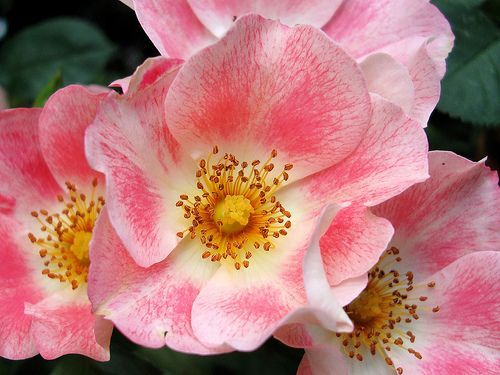
dog-rose

Is it too early to think about your Roses in ‘Flamming June’ and the rest of summer? I think not as boy scouts say ‘be prepared’ and here are a couple of preparations to consider.

Tips for Summer Roses

  • Roses are heavy feeders so provide a granular fertiliser before flowering and a foliar feed before buds open. Specially formulated foliar feeds are available to give nurishment through the leaves. This can be very useful if the soil’s lime content restricts the uptake of all the nutrients needed.
  • Plan irrigation perhaps by burying a pipe to get water down to the tap roots. Do not encourage surface roots by just wetting the top soil, water needs to get deep down to do any good.
  • Pest and disease control will probably be necessary so stock up with the right products.
  • If you are planning Exhibition roses then you may want to disbud your flowers to channel all the energy into fewer larger blooms. Clear away any imperfections if you can and take off the thorns so the foliage isn’t ripped in transit.

Book Cover

Vegetables for a Drought

Vegetables for a Drought

Book Cover

When you plan your crops you have no idea what the weather will be in summer when your vegetables need water the most. Herbs, plants from the Mediterranean and grey leaved plants tend to withstand drought conditions better than most. Some vegetables once established can be more tolerant than others and if you expect low rainfall this summer give them a try.

Drought Tolerant Vegetables

  • Leeks need to be ‘puddled in’ when planting in a hole but from then on  they will send down strong roots in search of moisture. Earthing up for blanching by drawing soil around stems helps preserve some moisture.
  • Root vegetables like Parsnip and Carrot can survive dry conditions as long as they get well established
  • Onions  will tolerate low rainfall but I find it encourages sets to run to seed. …

    Read More Read More

Great Garden Chrysanthus Crocus

Great Garden Chrysanthus Crocus

crocus

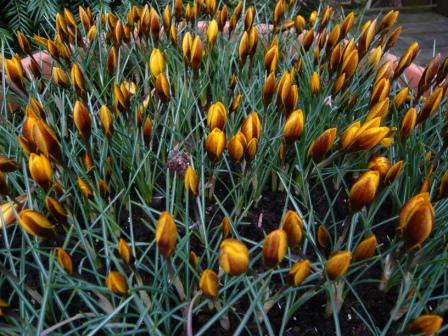
Hocus pocus this Crocus is out of Focus but it illustrates my main theme. Your 2010 garden depends on decisions you take now and I think it is worth recording every plant you aspire to grow. I record things in picture and notebook form and am not as well organised as I claim to be. However I am building a list of plants and designs features that I want to try for next year (it also doubles as a present list family take note). High on my list is the early flowering Chrysanthus Zwanenburg Bronze shown above.

Chrysanthus Crocus Species.

  • The flowers are smaller than the blousy, large flowered crocus of public parks and gardens fame.
  • The colour range is more varied with several varieties having purple outer petals and white or yellow insides. Eye Catcher, Prince Claus, Herald and this example Zwanenburg Bronze.
  • Lighter colours amongst the creams are Jeannine, Snowbunting, Romance and Cream Beauty.
  • Chrysanthus flower a little earlier than large crocus but are less robust when naturalising though grass.
  • Bought in bulk from 3p each the corms look good value for a range of pot grown applications including growing your own presents and gifts.
Frogspawn Tips and Hints

Frogspawn Tips and Hints


From me’nthedogs on flickr

Spawn
Frogs can be very useful in the garden eating more than their share of slugs. On a warm day from February onward frogs and toads will emerge from hibernation, mate and lay eggs as spawn. Do not worry about too much spawns as one frog will lay up to 2000 eggs of which only half a dozen become adult frogs. If you get far too much spawn so that it is chocking the top of the pond you can transfer some to a bowl so you can watch the tadpoles develop over the next 6 weeks or so. Transferring spawn to another pond may transfer disease or unwanted plants. Toadspawn is formed in long strings rather than the clumped or bunched frogspawn. Newts put there spawn on the underside of leaves.

…

Read More Read More

Garden Sculpture from Found Materials

Garden Sculpture from Found Materials

council-flower-bed

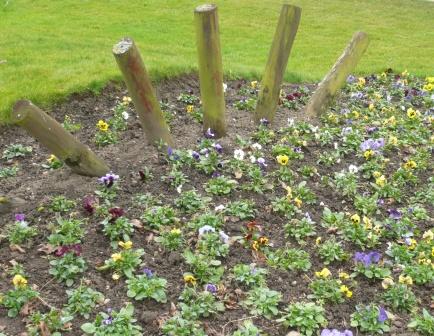
This council maintained flower bed claims a wooden sculpture which looks to me like 4 poles stuck in the ground at angles. It meets the specification of a sculpture in that it acts as a focal point, creates a new dimension with the extra height and becomes a topic of discussion.

Found materials can be any surplus matierial discovered in the wider garden or on your travels. If you have an artistic eye they can arranged in the garden to create a special feature. Old roots can be used to form a stumpery and old sea washed tree trunks can become a seat or decorative piece. I like natural wood as it harmonises in the garden without effort. Other wooden features include bird houses and tables, so much more pleasing than the rusty metal efforts.

Tips for Choosing Garden Sculpture

  • Select items that are in proportion to the space and surroundings. Too small and the sculpture will be lost. Too large and it may dominate a natural setting to the exclusion of the natural garden environment.
  • Plan why you want a sculpture and how it will integrate into your garden and the chosen site. Do not leave these items to chance or serendipity. Consider maintenance from the outset some items will tire rapidly.
  • Unless you have a particular reason do not copy similar sculptures in neighboring gardens. If everyone bought the same stone sculpture from the same garden centre there would be no frisson of interest. Why not try to find a unique item that achiever the same end.
  • Repeat a theme or stick to standard. It can be untidy having a glass,stone and wood sculpture in close proximity. Aim for harmony in the items you choose.
  • Even well selected rocks can be sculptural features and I have many rocks in the garden that I have collected as small sculptures.
The Garden Museum formerly Museum of Garden History

The Garden Museum formerly Museum of Garden History

The museum of garden history in St Marys Church at Lambeth Palace London reopens after refurbishment on the 18th November 2008. Renamed The Garden Museum, extra space has been created inside the medieval church to display paintings, drawings and ephemera related to gardening.

Visit to The Garden Museum (Garden)

  • I arrived a week too soon expecting the refurbishment to be completed ( I should have checked). It had been several years since my last visit when it was still called the museum of garden history.
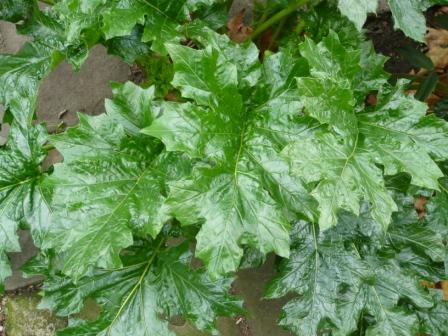
  • The Cafe and garden were still open and the graveyard was planted up with lots of plants including some strong growing Acanthus.
  • The knot garden contained a large spirally pruned Ilex altaclariensis Golden King as a center piece.
  • Evidence of the links to the Tradescant family were all over the small garden and for the most part the plants were well labeled.
  • My favourite feature was an old stone seat that had been surrounded by a small hedge clipped to make it look like a sofa.

See more pictures
…

Read More Read More

Nearly Free Seeds

Nearly Free Seeds

RHS Seed Distribution

One of the joys of RHS membership is the annual free seed distribution. A 24 page listing of available seeds, collected from the RHS gardens, provides a wide and unusual selection.

The descriptions are short and the official Latin names send me off to look up the species in books or the internet before deciding. At the beginning of next year I will receive the 20 packets together with a germination guide. In addition to recommended temperatures and likely germination times there are many tips on covering seeds, chilling to break dormancy and other influencing factors.

I have just ordered my 20 packets from the catalogue of over 500 different options. Half of my selection this year are trees or shrubs as I like to have something different and taller than usual from the RHS. This was my selection:

…

Read More Read More

Peace the Top Rose

Peace the Top Rose

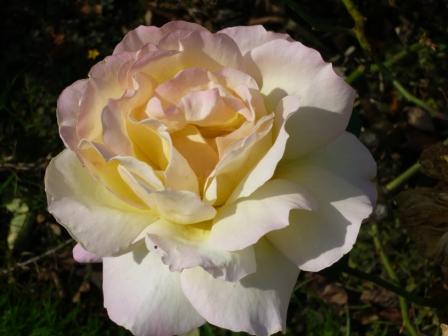
Named ‘Peace’ after the second world war this ‘Peace Rose’ could have been named not for the absence of war but for the tranquility of a peaceful garden.

History

In 1935, Francis Meilland cross-pollinated a french  rose with Margaret McGredy, from which was born a seedling of unknown qualities. Some eyes were budded in 1936, and by fall one of the plants had developed into an especially fine specimen with lush dark green, glossy foliage, and it had magnificent blooms of the most delicate ivory-yellow brushed with pink at the edges. From Kitty Belendes.

Purple Cabbage

Purple Cabbage

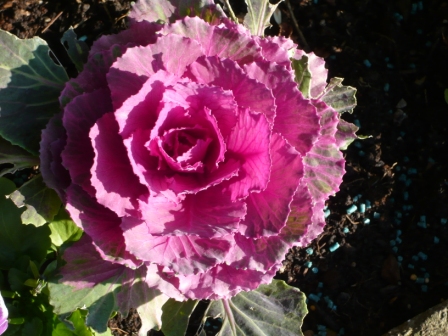
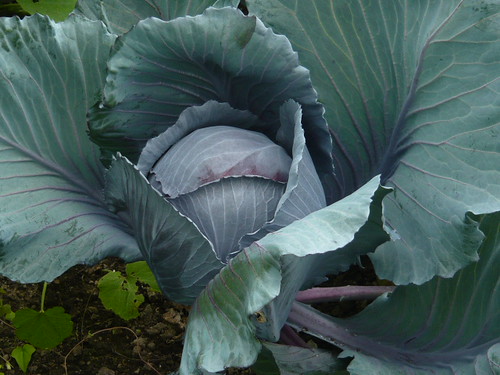
This ornamental cabbage is grown for winter colour. For a Red Cabbage with heart try Kalibos, Red Drumhead or Red Jewel varieties grown from seed.

Cabbage Tips

  • Red cabbage usually stands well in the ground from summer to early winter.
  • Solid hearts with fewer wasted leaves are also normal with Red cabbage.
  • Pickled or ‘shredded raw’ are two favourite ways of eating these Red cabbages.
  • If you grow 2 rows in your veg garden is it a dual cabbageway?

cabbage