Conifer Image Links
This is our selection unless you know better – if so let us know.
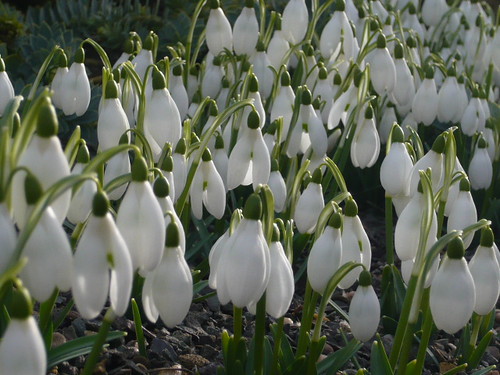
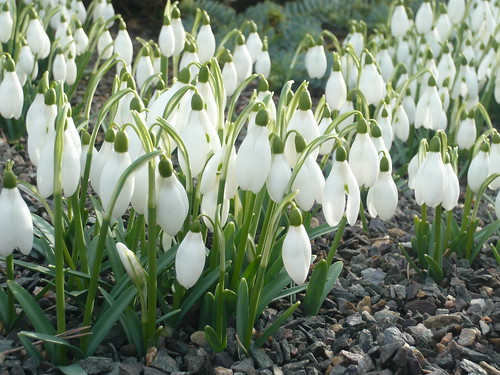
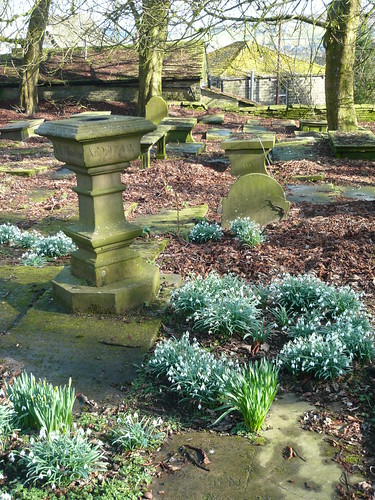
Check for open days in February and March for a day out to enjoy. You may also find snowdrops in unexpected locations. I snapped these pictures in Haworth church Bronte land.
Snowdrops in an alpine house at Harlow Carr.
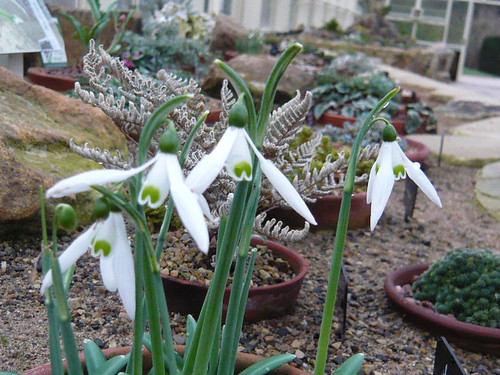
Galanthophiles see beauty many varieties.

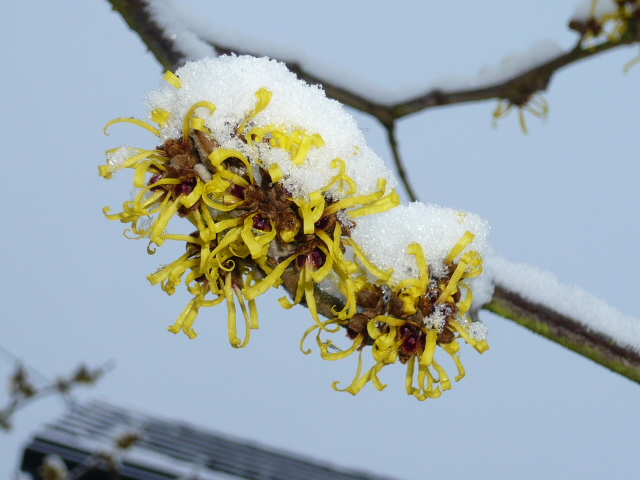
I was always taught ‘not to eat yellow snow’ but the yellow in our snowy garden caught my attention. This Witch Hazel was positively glowing and offered a bright spark on an otherwise dull day. The tree has seldom been pruned and is now over 10 feet tall with a very lax and open habit. This means I can see large quantities of blossom on the branches in January and get the scent on a still day.

Use the comments section below to send us the name of your favourite gardener (not the gardener themselves).
We will add it to our list of 100+ Top Gardeners
Your nomination may be a gardener who inspired you or has left a legacy in the form of an outstanding garden. Both are true for me with Geoffrey Smith and his Rhododendron garden at the Royal Horticultural Garden Harlow Carr where this memorial stone is displayed.
Celebrity gardeners are well represented in our list but you may know of one we have forgotten. As we admit the plant hunter/gatherers are not well represented and we would appreciate nominations is this category.
Sponsors of gardens are becoming a regular feature at shows like Chelsea but the well-to-do have long financed the gardening exploits to create beautiful surroundings for their homes and estates. Do they deserve more recognition or should that only go to the more earthy recipients of the Victoria medal (VMH).
International gardeners deserve a bigger profile and multiple nominations would be welcome. We would all like to know whose work to look out for when visiting new places.
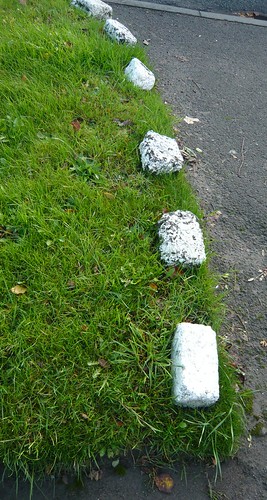 Keep Off The Grass Not on My Pavement
Neat, well trimmed edges make your lawn and garden look tidy and cared for. World class gardens take care of neat edges especially on formal lawns. In most cases you need to avoid obstructions that prevent achieving a well trimmed edge as these painted rocks do. Grass growing at the base of these rocks is hard to trim to the same length as the rest of your grass even if you use a strimmer.
 Best Tools for Cutting Edges
Lawn edgers allow you to cut back the edge by removing a sliver of soil. Useful if you have walked near the edge and it has crumbled or spread out. 
Strimmers are useful on rough grass and hard to reach spots.
 Black & Decker Strimmer
Lawn shears have a blade at 45° to the handles and are my favourite way of trimming lawn edges.
 Bahco Lawn Shears
For many jobs you can’t beat a traditional spade. If you are trimming an edge use a line or string to keep you honest.
If part of an edge is in poor condition you can cut out a square foot as a turf and turn it around by 180° to make the inner cut as the new edge and the ragged part a foot inside the lawn. Fill any gaps with sand or top dressing.
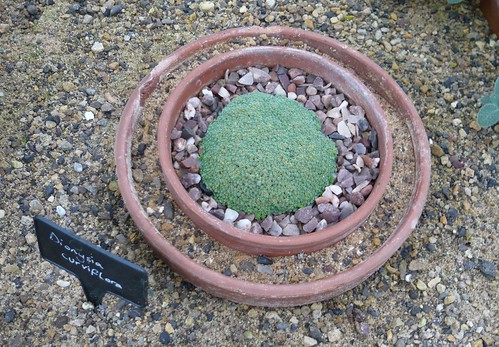
The new Alpine House at Harlow Carr has a plunge bed to be proud of as you may expect from the RHS. This Dionysia Curviflora has been double potted to facilitate watering and it’s flowers will be purple with a white inner ring and dark centre.
The plunge bed is at a good viewing height and the display can be changed as plants develop and seasons change. As a purpose built, alpine house plunge bed there are several features it would be hard to incorporate in my glasshouse but the rake from front to back and the use of rocks builds up height to provide a landscape rather than a flat two dimensional display.
The sand and gravel mixes vary depending on the plants being grown. Some free planting around the plunged pots adds to the attraction of this type of alpine display. The alpine house is climate controlled but much of the daily watering is done by hand before visitors arrive to view the gardens.
I am now keen to develop a better plunge area for my alpines. That is one of the joys or costs of visiting a best of class display like RHS gardens.
Tip – Study the best and think how you can incorporate new ideas in your gardening. The photo below shows how different coloured chippings and grits can work with your display.
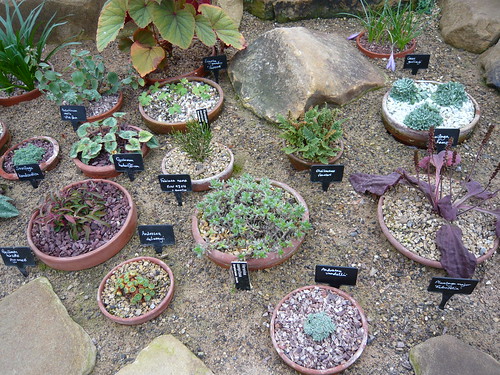
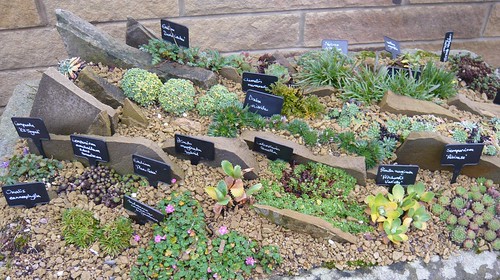
Outside Harlow Carr’s new Alpine house are a collection of troughs, stone sinks and other containers suitable for a collection of Alpine plants. The planting varies and is related to the soil and rock conditions each plant prefers. One container has old rotting logs and a richer soil for small rhododendrons and other species. Others have carefully inserted rock slivers to replicate mountain conditions giving shade and more importantly deep root runs and drainage.
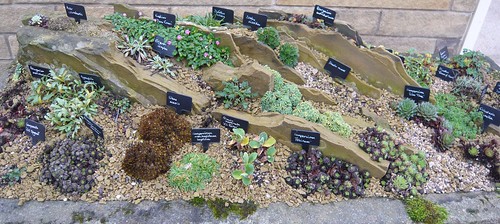
Whilst the troughs vary in size they are all less than 6 feet by 4 feet and could fit into virtually any garden. There is also many more outdoor containers full of selected plants. I was amazed at the number and variety of plants on display in the middle of November. They are all carefully named on these black labels with a white fiber tip pen which I resolved to try in my garden. On some plants there is a topical note that explains why it currently features or how it is grown. ( An autumn flowering variety of snowdrop fit into that category)
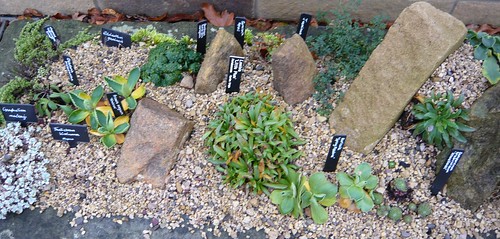
The photographs can be enlarged using flickr by double clicking on the image and going to all sizes. I hope the name tags are then visible.
A picture inside the house is available on the RHS website. and for Alpine plant lovers Harlow Carr is now worth a special visit.
The Alpine garden society have a good article on your own Alpine trough
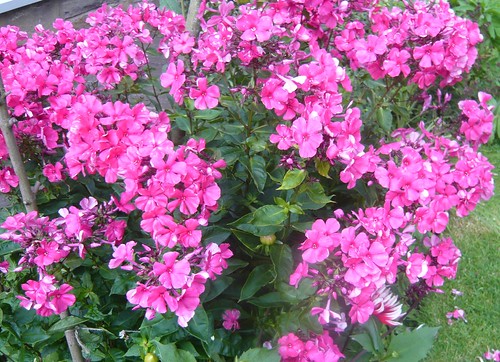
What is the flower that groups of people look at and sheep meet in ? Well it has to be Phlox and in this case the perennial Phlox paniculata.
Top Variety Tips

Pampas grass is the name given to species of the genus Cortaderia, most commonly Cortaderia Selloana which is available with white or pink plumes on strong stalks. Different varieties flower at different times and this example is a late autumn flowering variety that will look fine through early winter. Spring varieties may be slightly lower growing
Pampas grass will not tolerate wet boggy conditions but otherwise is a hardy easy to grow plant. Poor soil in a sunny position will encourage plumes. It takes some time for a small plant to produce the plumes but the clump then bulks up quite well. As you can see it should not be planted too close to the house or windows as it grows over 6 feet tall and can block out the light. The roots are not invasive or dangerous to good foundations. Even Dwarf Pampas Grass Pumila variety still grows to about 4 feet.
The dead leaves can be hard to remove because they have sharp edges prone to cut the unwary. Use strong secateurs and gloves or burn the leaves in January/February.
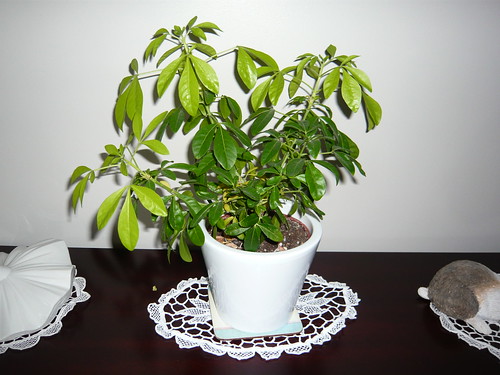
This small pot containing an even smaller Choisya ternata is growing happily in our front room. New leaves of light green are almost translucent and provide clean foliage. The leaves when crushed give off a very pleasant scent.
This plant was one of many grown from cuttings the siblings are now in the garden. Also called Mexican Orange Blossom I do not expect it to flower indoors but you never know and it is providing some interest in this quiet pre-Christmas season.
I have cheated a bit with the title as this is not yet a true bonsai plant but the restricted root run is constraining how it develops. I will prune and trim it carefully if it survives the dry conditions. That reminds me to water all the houseplants now the central heating is on full bore most days. Flushed with one success I may grow some Chiosya in bonsai pots for a miniature outdoor garden.