Browsed by
Author: hortoris

Best Pond Tips

Best Pond Tips

Water Lilies
If you are thinking and planning to get the best out of a new or rejuvenated pond than consider these quick tips

Design Tips

  • Design your pond so there are shelves around the edge of the pond for shallow and marginal plants. Water Lilies need to be planted at least 18″ deep.
  • If your pond has sheer sides you may want to grow marginal plants by submerging some staging (a weighed down inverted box). This can also be used as an escape route for amphibians to get out of the pond.
  • Keep good pond hygiene by preventing leaves and debris falling in the pond. Every two or three years have a good clean out reintroducing a small quantity of sludge at the bottom to get the process going again.
  • Locate the pond where you can see it preferably in a sunny position well away from any Pine trees. Koi fish need a shaded location.
  • Ornamental ponds may be best located in an elevated position to avoid run off filling the pond.

Book Cover

Planting Up

  • Plant in containers that you can hook out for plant maintenance. You can use a wire coat hanger on a stick if you use a basket with open loops. Invasive plants are constrained by the basket and you can rearrange the planting during the year.
  • Use good garden soil or special compost for planting and put a heavy layer of gravel on the top of the soil.
  • Unconfined plants can look more natural and are often wild life friendly but less showy as ypour best plants need to be containerised.
  • Consider a mix of Deepwater, Floating, Marginal and Oxygenating plants. Deepwater plants like cooler water and the floating leaves create this in a way that supports more life forms and restricts blanket weed.
  • Water hyacinth absorbs pollution particularly from fish waste. Skim off and compost excess plants as they multiply.
  • Bog plants and waterside plants are optional depending on your design and space. For a bog look in drier soil use Hostas and Bearded Iris or Iris Pallida that look like Bog Iris.

Book Cover

Berberis Decidious or Evergreen

Berberis Decidious or Evergreen

Berberis

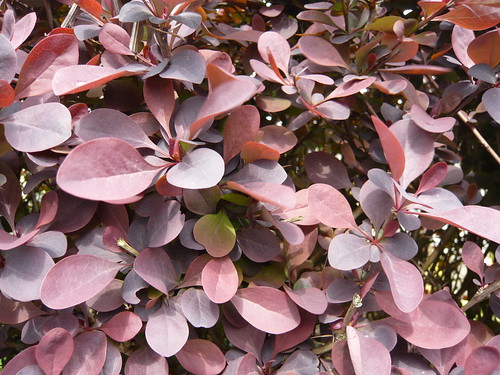
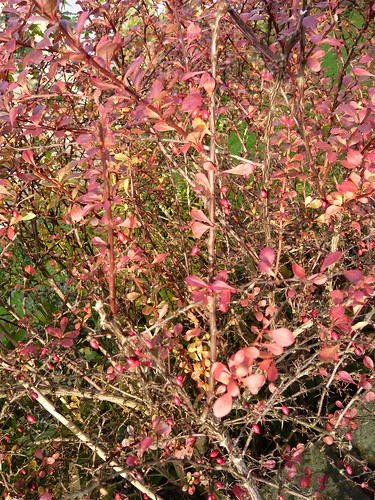
Your Berberis may loose their leaves or remain evergreen through winter. This purple leaved variety, Berberis Thunbergii has turned from very dark to red coloured leaves and after another frost they will be gone. The red berries wont last long either as they are feeding small birds which have already thinned them out. The spines will remain as a deterrent to unwanted intruders and fresh new leaves will reappear in spring.

Best evergreen varieties include Berberis candidula x carmine, Berberis dawinii (flowering orange see below) or one of the hybrid Berberis stenophylia.
Berberis and bee

Best for red or blue-black berries, include Berberis aggreata, Barbarossa, Micrantha, Berberis microphylla and Berberis buxifolia. Berberis vulgaris which used to be eaten in Victorian times plus Berberis heterophylla and Berberis darwinii are all worth considering for cooking or eating dried.

Best yellow flowered Berberis Dictyophylla, Berberis Koreana and Berberis darwinii.
Chose other Berberis varieties

With literally hundreds of species and varieties to select from you can experiment with a Berberis that is just right for your location. Many varieties are extremely prickly so be warned

Berberis

Book Cover

Decorative Bark on Trees

Decorative Bark on Trees

For texture and visual interest do not ignore bark. Some of my favourite trees have captivating bark that looks good through all four seasons.


When the leaves fall you get a chance to inspect the bark on your trees and shrubs. Some bark is outstanding and worth growing for it’s own sake.

Five Trees for Decorative Bark

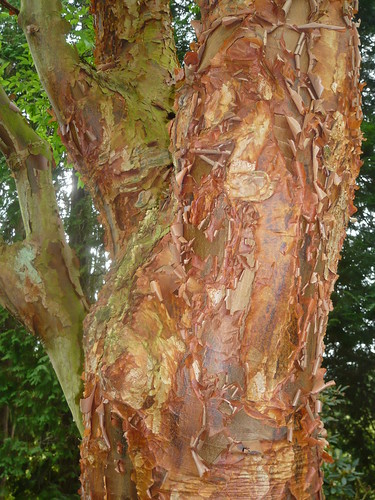
Acer griseum, paper bark maple, the outer bark peeling in papery flakes to show the copper-colored inner bark; opening leaves bronze colored, turning red or orange in autumn.

Paper-bark birch has shining white bark with large leaves turning pale gold in early autumn, making it more useful than other birches with colored stems.
…

Read More Read More

Plant Plants Together

Plant Plants Together

Massed planting, grouping and organised beds are just some ways of putting plants together to optimse impact.

Sometimes a single plant looks a bit weak or out of place on it’s own but a group of one variety can vastly improve the overall image of your garden. This row of Lime trees is planted close together with a fairly narrow path in between but the effect is visually strong whatever the season.

Tips to Use Plants Together

  • When planting shrubs it is often said that groups of odd numbers 3, 5, and 7 have positive effects. There is more harmony and they are easier on the eye that way.
  • …

    Read More Read More

Pot Mum Chrysanthemum Indicum

Pot Mum Chrysanthemum Indicum

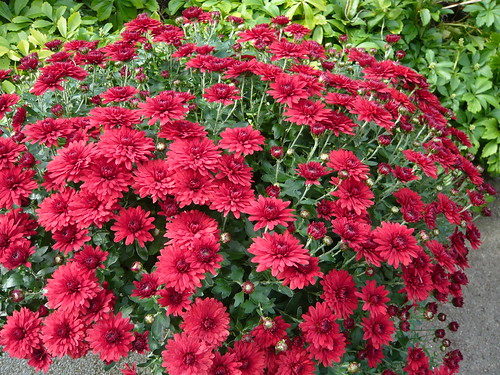
This Chrysanthemum has been grown from one of last years cheap supermarket plants. In a large pot with just garden soil it has sat in an out of the way place with only regular watering for maintenance. It is now a riot of blossom and I can hardly get my arms around the flower head.

  • Grown in pots like this plants can be moved to a more prominent position in the garden as the need arises.
  • These plants can make large domes in the garden prior to flowering close to the top of the foliage.
  • Chrysanthemums are hardy and I hope to get a few more weeks of colour from this plant before I bring the ‘stool’ (the old root stock) into the cold greenhouse for winter.
  • …

    Read More Read More

Cheap Perennials

Cheap Perennials

A well stocked garden is a treasure chest of potential new perennial plants. Divide clumps, take cuttings or collect seed and you can increase your bounty of hardy long lived plants to give away or replant.

Keep an eye out for new plants for your garden at reasonable prices as garden centers sell off old stock. I got 5 plants in 2 liter pots for a fiver at the weekend. It is a better form of recycling for me to renovate the plants for next year rather than see them composted.

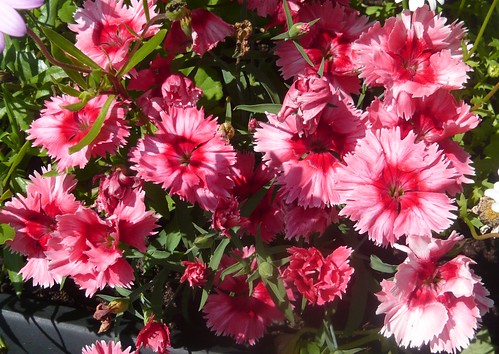
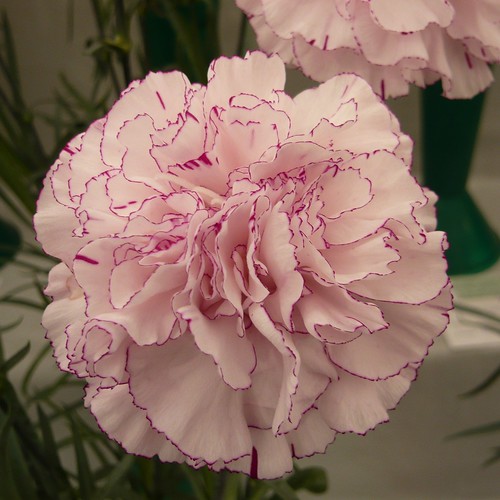
Dianthus ‘Kahori’ is an evergreen perennial with an erect habit. Its narrow leaves are greyish-green. In summer it bears scented pink flowers with a later flush in August if deadheaded.
…

Read More Read More

Perpetual Carnations from Cuttings

Perpetual Carnations from Cuttings

Old gardeners knew a thing or two about propagation.

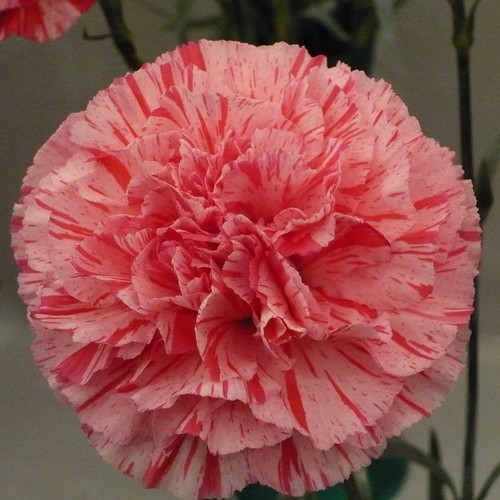
September can be a good time to take cuttings of Perpetual Flowering Carnations and other Dianthus. Using bottom heat they can be taken up to the end of March but if you have the greenhouse space then I would take them early.

Carnation Cuttings

  • Ideally use a “mother plant” that has not been allowed to flower but has been grown for the vegetative shoots.
  • Use only shoots from the lower part of the stem as cuttings from higher shoots will not form bushy plants.
  • Cuttings need a well drained compost of 50% peat (or peat and loam) and 50% sand with a bit of perlite and superphosphate.
  • Small pots can be used or three cuttings in a 3½in half pot.
  • Cuttings will have rooted when the leaves start to grow and by Christmas they need potting on into 4-5 inch pots.

The British National Carnation Society recommend taking cuttings ‘….very early and on a dull day if possible, you can take your cuttings by either using a sharp knife or pulling away with a heel. Strip away the bottom couple of leaves and make a clean sharp cut just below a node and insert into the side of the clay pot and stand in a shady spot.’

If you want to grow button holes you can pinch out all side shoots and grow carnations one to a stem in small 2″ pots from March cuttings.

Other Resources
…

Read More Read More

Tips Growing Decorative Alliums

Tips Growing Decorative Alliums

There was a sparkling show of long stemmed Alliums at our church flower festival this weekend.
Allium
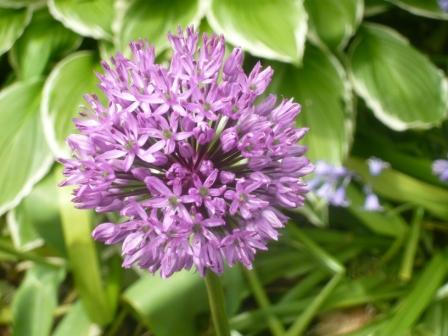
This Allium christophii must be one of the most attractive flowers for garden or cutting. the leaves are a disappointment and I recommend growing some annuals as cover as they die back in an unsightly manner.

allium

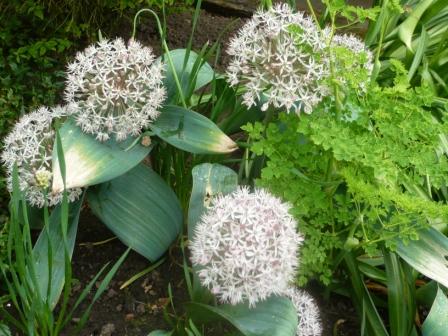
Lolly pop like Alliums  look exceptional when in flower in May until you look at the leaves which tend towards the scruffy. The seedheads are also eye catching and worth leaving although seed production may drain strength. The leaves are the way a plant builds up strength for next year as they help sunlight convert nutrients into food. Fortunately they do not cause any problem and can be taken over by other plant leaves soon after flowering. Mulch to provide food and encourage leaf growth or your Alliums will be shorter lived.

Gardeners Tips for Alliums

  • Generally Alliums need a sunny position and good drainage. Given both they will reappear year after year but may deteriorate if the leaves do not get a chance to do there job.
  • Plant bulbs in the autumn at twice the depth of the bulb and top up your stock of Alliums for those lost or not performing well.
  • Congested clumps can be lifted and divided  straight after flowering.
  • Dead-head before the seeds disperse to preserve strength or if you want to avoid unwanted seedlings.

allium-4

…

Read More Read More

Versatile Chives to Eat and Admire

Versatile Chives to Eat and Admire

Chopped up leaves, edible flowers and miniature onion bulbs are three ways to benefit from Chives.

Chive flowers

Chives Allium schoenoprasum are perennial and cultivated both for their culinary uses and their ornamental value. The flowers are deep blue to violet in the shape of little pompoms. The leaves are thin, hollow stem like tubes.
Chinese chives Allium tuberosum have white flowers and smell similar to mild Garlic but much milder.

Growing Chives from Seed.

  • Chives can be grown from seed and mature in summer, or early spring.
  • Chives need to be germinated at a temperature of 15-20 °C and kept moist.
  • They can also be planted under a cloche or germinated indoors in cooler climates, then planted out later.
  • After 4-7 weeks the young shoots (looking like leeks or onions) should be ready to be planted out.
  • Seeds are available from Thompson & Morgan

…

Read More Read More

Growing a Burning Bush – Dictamnus

Growing a Burning Bush – Dictamnus

http://gardenerstips.co.uk/blog/


The volatile oils from Dictamnus have a lemon scent and are quite flammable. The fumes are said to be capable of being ignited on a calm summer evening giving rise to its popular names Burning Bush or Gas Plant.

Growing a Burning Bush

  • Dictamnus is also called False Dittany but unlike Dittany it is inedible and has few herbal properties.
  • Dictamnus albus is a long lived perennial that grows 2-3 feet high. It flowers in late spring on a pyramid of spires in pink, purple and white.
  • Plants grow best in full sun but will tolerate some light shade. Grow in any well drained garden soil with added  lime . …

    Read More Read More