Browsed by
Author: hortoris

Chionodoxa Glory of the Snow

Chionodoxa Glory of the Snow

Get your bulbs planted asap, they like the autumn warmth and will reward you for years to come.
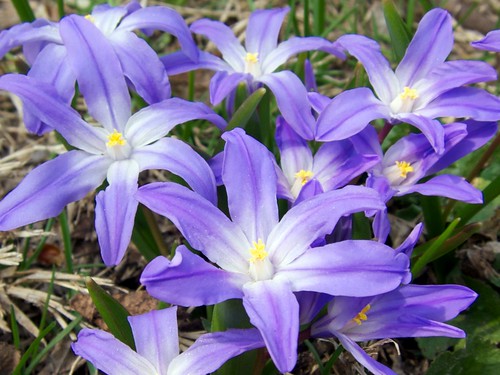
Chionodoxa forbesii 雪光花

An early bulb whose small flowers have an inner sparkle these Chionodoxa are also called Glory of the Snow. Judging by the current weather we are in for a good showing this spring. These bulbs can be planted under deciduous shrubs so they can catch early sun but like open positions. They can be grown in a lawn with crocus, in a container or a rock garden.
After flowering in February or March give the well drained soil a light sprinkle of bone meal to encourage offsets and build up the bulbs.
…
Read More Read More

Cyclamen my Top 22 Species

Cyclamen my Top 22 Species

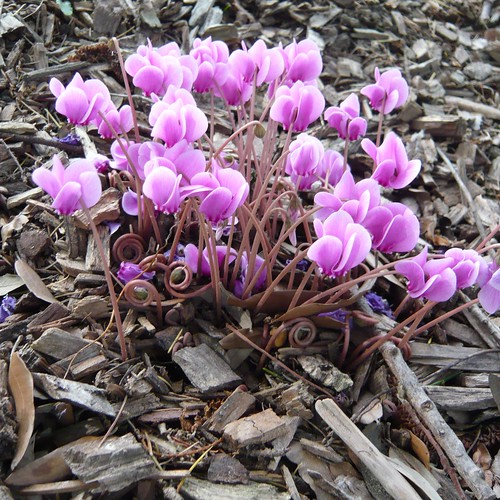
Interesting Cyclamen leaves compliment the flowers at this time of year.

Wentworth Castle Cyclamen

There are now 22 recognised species of Cyclamen. It is said that at least one variety is in bloom for every month of the year.
Cyclamen grow in a range of areas and environments from beech woodland, alpine meadows and windowsills through scrub and rocky areas. This tuberous family of plants are predominantly from North Africa, Turkey and Mediterranean areas.

Top Cyclamen Species

C. balearicum
C. colchicum
C. graecum
C. africanum
…

Read More Read More

Easy Carnivorous Pitcher Plants

Easy Carnivorous Pitcher Plants

‘Eat up your flies’ a mother would tell her baby pitcher plants.

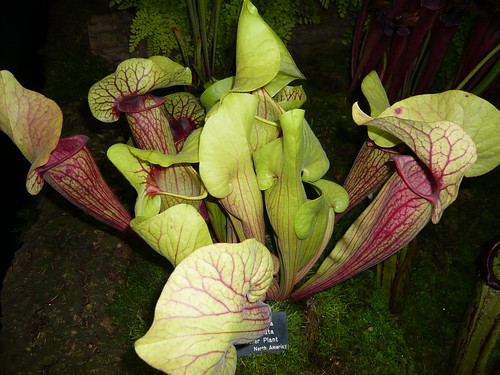
Sarracenia exornata

Sarracenia or Pitcher Plants are ideal for an unheated greenhouse, cool windowsills or a conservatory if grown in sphagnum moss with a little sand and peat. They are some of the easiest carnivorous plants to grow.
These carnivorous plants attract insects with nectar on the edge of the pitcher then the trap features a deep cavity filled with digestive juice. This provides Pitcher plants with sustenance from dissolved insects that are digested in a liquid known as a pitfall trap.

North American Pitcher plants belong to the genus Sarracenia and form upright, tubular leaves. The species in the genus Sarracenia readily hybridise, making a wide range of cultivars available.

Sarracenia species to grow:-

Yellow Trumpet Sarracenia flava
Hooded Pitcher Plant Sarracenia minor
Sweet Trumpet Sarracenia rubra
Purple Pitcher Plant Sarracenia purpurea
Pale Trumpet Sarracenia alata rubra below
Alabama Pitcher Sarracenia exornata above

…

Read More Read More

Hops For Your Garden

Hops For Your Garden

The best use of Hops is in the brewing of beer but there are some garden uses worth considering as you quaff your ale after a days gardening.

Common Hops, Humulus lupulus grow vigorously to 20 feet or more in a season. The heart shaped leaves over lap the stems and the plant makes a good screening climber. The female plants produce straw coloured flowering bracts.
Golden Hops Humulus ‘Aureus’ is not as vigourous and has soft golden foliage that looks good in sunshine. Frost tender Japanese Hops grow 12 feet in a season and can be used to make a screen to set off other  brightly coloured flowering plants. Nobel Hops refers to four varieties for beer production which are low in bitterness and high in aroma Hallertau, Tettnanger, Spalt, and Saaz named after the region. …

Read More Read More

Primula & Polyanthus Seed Sowing Secrets

Primula & Polyanthus Seed Sowing Secrets

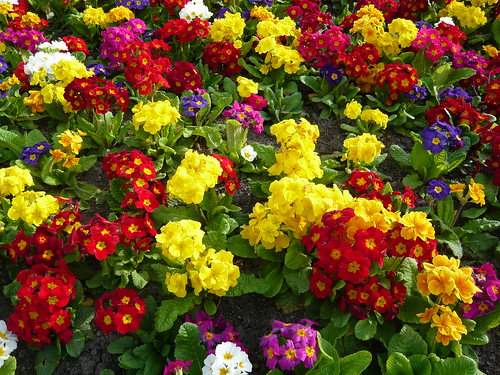
primulas

There should be no great secrets to sowing seeds of one of our favourite genus the Primula. However with in excess of 600 species and 30 different groups or sections you need to be on top of your seed sowing game.

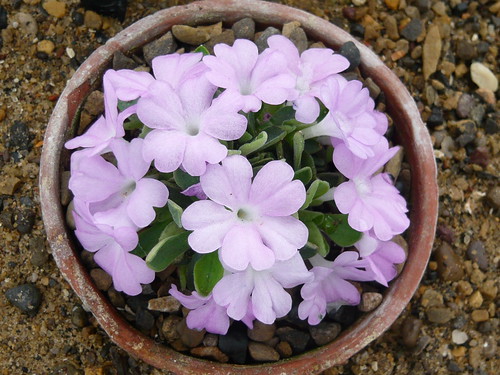
Primula allionii

Secrets of Timing when Sowing Primula

  • Nature sows seeds soon after flowering. If it is good for mother nature it likely to be good for gardeners.
  • On the other hand most seed can remain viable for several years. Keep the seed in packets in a screw-topped jar and store in the cool & dark preferably in a fridge
  • If you sow before the end of May the plants have time to develop before winter.
  • Sowings can be made up to the end of July as long as you keep the seed compost cool and moist.
  • The later you leave it the more difficult it is for small plants unestablished Primulas through a winter season.
  • Primula seeds germinate best when they are fresh and ripe.
  • Alpine Species generally benefit from natural freezing and thawing to get them germinating so it’s important to sow as early as possible.

…

Read More Read More

Tips and Pics of Primula allionii

Tips and Pics of Primula allionii

Primula allionii are easier to grow in pots than open ground but they repay a bit of effort. In an alpine house they can live for over 25 years providing many blooms in that time.
Primula allionii
Primula allionii have been cultivated for over 100 years and there are many forms some being more vigorous than others.
They are endemic to the French and Italian maritime Alps.
I have just bought a plant from the local AGS society Primuls allionii Anna Griffith. …

Read More Read More

Primula Cabrillo as Potted Plants

Primula Cabrillo as Potted Plants

Cabrillo sound like a good name for a new car but it is just as good as a name for a bright zippy Primula.
Primula Cabrillo

Primula Cabrillo is closely related to the Cowslip but this variety is a bit special. As you can see below there were many Primula Cabrillo as Potted Plants for sale at our local nursery. (I think they were imported from Holland but there are several greenhouses behind the scenes at our local nursery Swincar Guiseley.) The flowers are well scented and that is one reason for thinking about them as potted plants for the house.
…

Read More Read More

Androsace Vitaliana primuliflora and it’s Other Names

Androsace Vitaliana primuliflora and it’s Other Names

How do flies smell? Not as nice as these flowers I be bound!

Fly on Vitaliana

This rock plant is a prostrate, evergreen perennial. The leaves are small, grey-green in appearance often enhanced by fine hairs. In spring  the scented, stemless flowers are buttercup-yellow which can smother the plant.

This fly found the scent on the open flowers much to his liking.

Naming The Plant

  • Androsace vitaliana, may now be the official name although I still call it Vitaliana primulifolia.
  • Historically it has been placed in various genera, including Androsace, Douglasia, Gregoria and Primula.
  • The prickly-appearing foliage is certainly reminiscent of a Douglasia, although the flowers are primula-like.
  • It is  a member of the primula family and was once known as the “Golden Primrose.”

Vitaliana primuliflora

…

Read More Read More

Easy Clematis Pruning

Easy Clematis Pruning

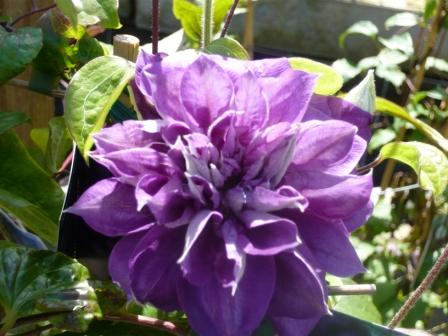
Do not sweat the problem of pruning clematis – do what seems right following these guidelines if you must.
c1

Easy Clematis Pruning Tips

  • Prune all Clematis in Spring, early Spring for late flowering Clematis that flower on new wood and late Spring after flowering for Clematis that flower on old wood.
  • The later in the year it flowers the harder you should prune it.
  • Treat your Clematis as a flowering shrub.

…

Read More Read More

Overkilling Slugs

Overkilling Slugs

Slugs will feel blue after this diet.
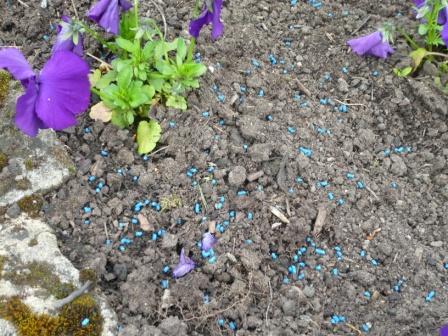
growing-slug-pellets

Killing Slugs

This gardener has found a new way of killing slugs using pellets. I think it is called saturation bombing. Those slugs not hit on the head will die long before they have gorged on the little blue devils that have been broadcast around and over the Pansies.

If you use slug pellets I recommend little and often – two or three pellets near a small plant will be enough. Slug pellets work by being more attractive to slugs than the juicy green leaves. Except in heavy rain they should remain effective for a couple of weeks.

I have lost upto half of my Runner Bean seeds to mice and will have to sow again. A shame the mice won’t eat slug pellets.

On the bright side my sunken beer-laced slug traps are catching many slugs so I do not think the beer is totally wasted (and nor am I totally wasted).