Browsed by
Author: hortoris

Drought or Flood in your Garden

Drought or Flood in your Garden

What sort of summer are you expecting. The probability is that there will be no extremes but the danger of flood or drought is always around for gardeners.

Dry garden

All the weathermen seem to be forecasting further drought conditions for the summer of 2012. Gardeners should therefore be prepared for flood!

Drought Preparations

  • There is a flood of advice from government and the government in exile ie. newspapers and media. eg. plant trees for shade and wait 100 years for them to grow.
  • Val Bourne at the Daily Telegraph suggests ‘puddling in’ when planting out your brassicas and leeks and this strikes me as a good use of water. It just means filling the planting hole with water just before you pop your plant in.
  • Another Val tip is to stand watering cans of tap water around the garden until the sun’s warmth has evaporated the chlorine away.
  • Carrots and parsnips naturally grow in drier sandy soil and grow longer in seeking out water. Try several varieties if you like these vegetables.

Flood

Flood Preparations

  • Be prepared to catch what water you may need in butts, barrels and ponds.
  • If your ground is liable to waterlogging either restrict the plants you grow or improve the drainage.
  • Minor drainage improvements can be achieved with added grit, sand and gravel
  • Major drainage improvements may include a deep soak-away or a perforated drainage system.

The Low-water No-water Garden: Gardening for Drought and Heat the Mediterranean Way – A Practical Guide with 500 Stunning Colour Photographs by Pattie Barron available from amazon

Managing the Wet Garden:
Plants That Flourish in Problem Places by John Simmons available from Amazon
Credits
Dry garden by foliosus CC BY-NC-ND 2.0
Flood by itspaulkelly CC BY-NC 2.0
Growing Echeveria a Succulent Succulent

Growing Echeveria a Succulent Succulent

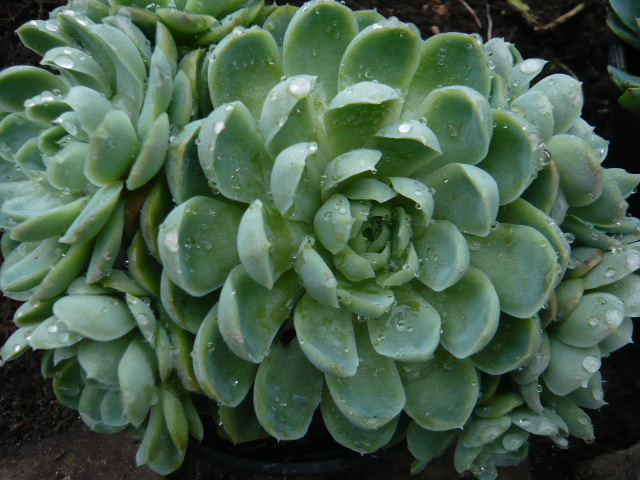
Echeveria Glauca has fleshy curving lobes in a geometric arrangement. As you may expect the lobes or leaves are blue-grey in colour. The delicate  flowers in summer are white and extend from the base of the plant. They grow 3″ tall and need free draining soil in full sun or partial shade. The rosettes spread by the addition of new rosettes forming a circular mound. Plant 6 ” apart.
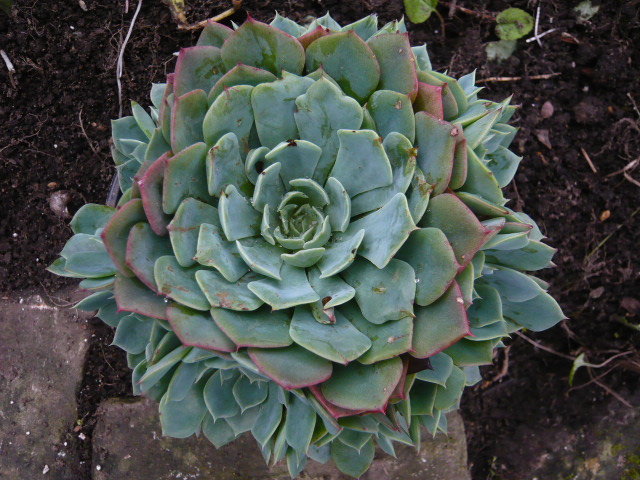
Echeveria Elegans has pink arching stems that produce dainty, yellow-tipped, red flowers. The dense rosettes of blueish white, fleshy leaves are often red tinged. They grow 2″ tall but spread more rapidly than Glauca so need to be planted 16″ apart.

Echeveria are often used in carpet bedding and floral clocks
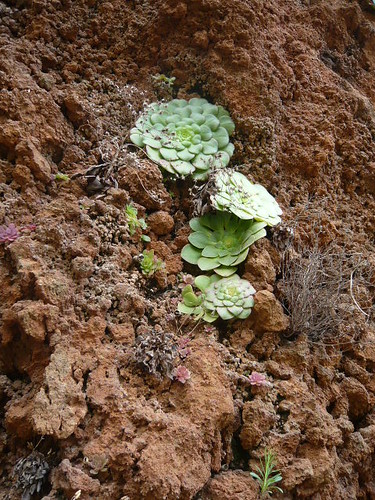
Echeveria are generally rosette forming succulents.

Most Echeveria can be easily propagated from leaf cuttings or offsets To propagate a leaf cutting, place the individual leaf in a succulent or cacti mix and cover the dish until the new plant sprouts.

Yorkshire Echiveria
Sedum

What would you call a shop in a courtyard that sells plants and pots? In Otley Yorkshire you would call it Courtyard Planters. Years ago you may have called it the stable yard for the Half Moon Inn.

Most of the planters have very few eco-miles on the clock as the Terracotta pots are from Barnsley Yorkshire, the earthenware salt glazed pots are made in Northumberland. Unfortunately the Oak Barrels come from an other country – Scotland to be precise where they used to mature whiskey.

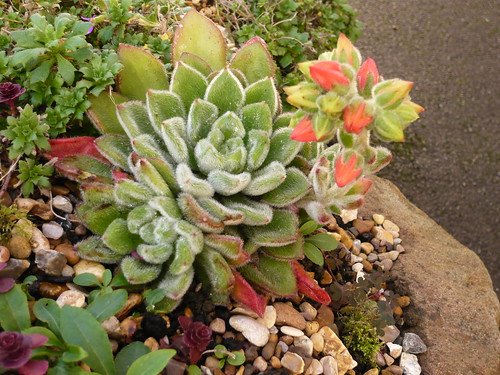
At the weekend I bought a couple of plants including a Dianthus Neon Star that shone out to me in the shade of the courtyard. The other plant was an Echeveria elegans with lots of extra rosettes of succulent foliage. I thought I would take the offsets and grow them as cuttings but forgot they were quite tender. Still, if I am successful I will find somewhere to over winter them.
If not Chiltern Seeds generally stock mixed Echeveria seeds that ‘mostly have fleshy leaves forming rosettes of a wide assortment of attractive, geometric designs in a range of colours from green through grey to almost white, often with markings in contrasting shades.’

Courtyard planters do not sell mail order that is not the type of gardeners they are but if you visit Otley look them up. If you are near Otley they offer free delivery.
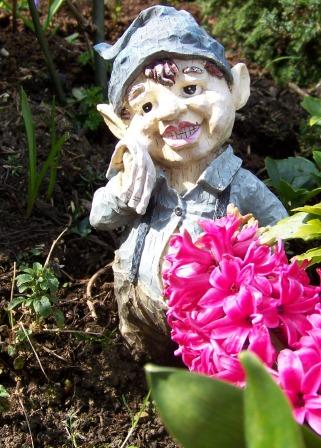
Echeveria

Books you can’t buy from Amazon

Books you can’t buy from Amazon

These gardening books are just crying out to be written so we suggest some titles and authors.

Do not smoke your grass by Mary Wana

Turn your MP into Compost by Pete Substitute

Money saving tips add up by Alice Summ

Trollius, Yaks and other plant transportation by Dick van Bike

Daisies can be Yellow

Daisies can be Yellow

Book Cover

Daisies are a large group of flowering plants under the family name Compositae. Included in the daisy family are well known groups such as Rudbeckia, Osteospernum, Helianthus, Coreopsis, Helenium even the cornflower and Globe Thistle.The Compositaes (Asteracea) are recognisable through their compound blooms consisting of many tiny flowers. A daisy has a yellow “core” of 200 disc florets, surrounded by 50 marginal, white ray florets with a conspicuous limb (these are the petals also called ligules). A single daisy “flower” contains about 250 separate flowers! Each central floret, a flower in its own right, has a style, anthers, corolla, pappus and ovary. The Daisy is one of the “core families” on which research at the Royal Botanic Gardens, Kew concentrates.

Perennial Yellow Daisies

The RHS produced a bulletin on this subject and an interesting pdf can be down loaded.

Read More Read More

Green Euphorbia & Wisley Handbook

Green Euphorbia & Wisley Handbook

euphorbia-2

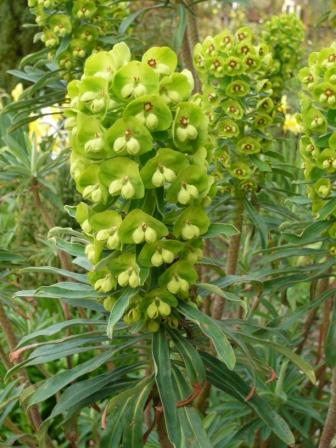
The lime green bracts on this Euphorbia are looking very bright in the spring sunshine. The plants are evergreen and easy to manage and form a good clump after 2 or 3 years. This clump has 17 flowering stems about 3 feet high but is only 2 feet in diameter.
  • New stems are being formed at ground level for future years but the plant isn’t invasive. Any dead stems are pruned out at ground level to keep the plant healthy and the growth fresh all year around.
  • Euphorbia come in all shapes and sizes so choose a variety from a gardene centre that fits your planting scheme. This plant is growing in poor soil in a sunny bed raised from the surrounding garden and forms the back drop for alpine plants.

Book Cover

Read More Read More

Sedums and Saxifrages

Sedums and Saxifrages

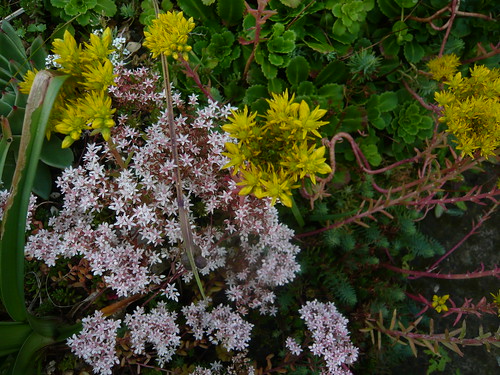
A pleasant mix of Stonecrop Sedums and Saxifrages or Saxifraga, as some would have it, are in flower at the moment. Stonecrop has taken my interest after reading about green roof plants.  I also have a friend who has created a Sedum Seat on an old dining chair by planting up the padded seat area to good effect.

The grand-daddy of books on the subject of Sedums is Ray Stephenson’s ‘Sedum Cultivated Stonecrops’.

Book Cover

Tips

  • Plant Sedums and other insect attracting flowers near vegetables that need pollination to set fruit. I have some near my Courgettes and Marrows and am getting a grand crop without worrying about fertilisation.
  • Do not plant London Pride  Saxifrage urbinus unless you want ground cover as, in my opinion, the flowers are weak in colour and form.
  • Borrow expensive monographs and special texts from the RHS library. It is free for members.

Other Resources

Royal Horticultural Society RHS ‘Gardening for All’
National Council for Conservation of Plants and Gardens ‘Conservation through Cultivation.’
Garden Organic National Charity for Organic Gardening.
BBC Gardening
Read More Read More

Best Shade Loving Plants

Best Shade Loving Plants

round-tulips

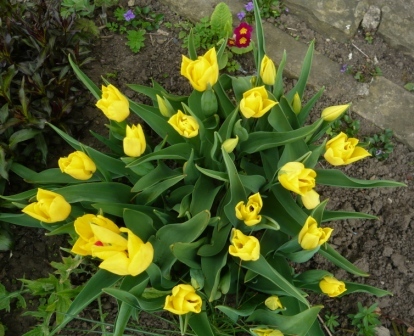
Beth Chatto believes you can transform a shady spot with easy-care planting that includes foliage and flowers for a brighter Spring garden. Illuminate a shady spot under trees with a range of flowers and plants.
Beth Chatto has an extensive list of plants for shady areas for all year round interest

Book Cover The Shade Garden

Top Ten Spring Shade Lovers

  • Honesty purple or white forms are good when in flower but also produce airy white seedheads
  • Forget-me-nots are flowering all over my back garden at the moment from self-sown plants.
  • Bluebells can be white as well as blue or even pink. They normally grow in shady woodland and will flower without sun. They also spread quite quickly particularly the thuggish Spanish variety. Do not take wild bulbs from there natural habitat.
  • Hellebore the Lenten Rose is another shade  loving plant that is happy under trees although the flowers tend to hang down and be hard to inspect.
  • Tulips can brighten the darkest spot. I plant them in pots so I can move them to where they will have the greatest impact. I can then replace them with other plants later in the year.

Read More Read More

Natural Garden Tips

Natural Garden Tips


Book Cover Available from Amazon ‘for anyone wishing to take an ethical and sustainable approach to gardening and garden design.’

One Gardener’s natural garden is another’s pile of logs and collection of compost bins. These tips are based on my view of a design led natural garden that is full of plants and informality.

Natural Garden Tips

  • There are virtually no straight lines in nature so why should gardens seek to formalise everything in rows like a demented Italianate showpieces. For me sweeping curves and waves are the natural way to garden.
  • Plant groupings can achieve an impact that even the best individual specimens can’t achieve. The Helenium Moerheim Beauty in the foreground of this picture provides that sweeping effect that a large perennial bed can withstand.
  • Thinking in 3 dimensions encourages the use of height and depth of view particularly in the backdrop of this picture. The trees and shrubs range from low ground cover to tall screeners and statuesque trees.
  • Planning your planting to help nature gives added choice. Foliage, berries and  bark can be as inviting as flowers in the right season and location.
  • Space and the gaps between can be an important feature in a natural garden. Not everything needs to be piled high like your local supermarket. The grass in this picture  fulfils that role but you may want to think of alternatives for your own natural garden.
  • The bones of the garden are as important as the floral flesh. Trees and major plants should have space and opportunity to grow naturally to fulfill their total promise.

Other Resources

Royal Horticultural Society RHS ‘Gardening for All’

National Council for Conservation of Plants and Gardens ‘Conservation through Cultivation.’

Garden Organic National Charity for Organic Gardening.
BBC Gardening

Growing Scabious – Scabiosa

Growing Scabious – Scabiosa

Scabious sp. 2

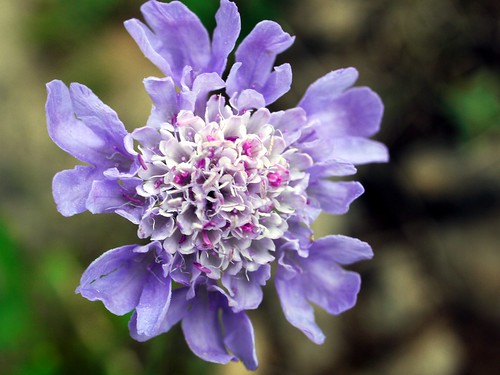
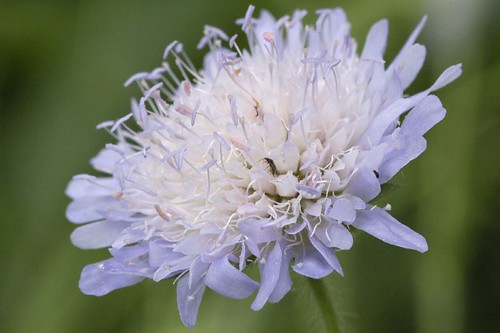
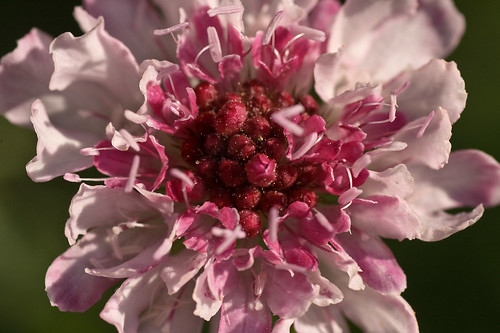
Scabious is a UK native perennial plant that is available in many forms and species for growing in your garden. Grown in damp areas it is popular with insects bees, moths and butterflies. Known for powdery blue pincushions of flower on the top of long stems makes this plant is a useful cut flower.

Description, Cultivation and Growing Tips

Scabious is a hardy perennial well loved for cottage gardens.
Scabious grows well on dry, sandy soil in a sunny position or partially shaded location.
You can acquire or just admire plants as part of a collection

Small Tortoiseshell

Common Names and Varieties to Consider

  • Scabiosa is generally known as Scabious or the Pincushion Flower.
  • Our UK native Scabiosa columbaria is compact with wiry stems topped with tiny Cambridge-blue pincushion flowers
  • Scabiosa caucasica is the Caucasian Scabious first grown in the UK 200 years ago. Generally pale blue there is a white form called Miss Willmot.
  • Scabious atropurpurea is available in pink (Beaujolais Bonnets) and purple (Ace of Spades).
  • A new compact Scabious is now on the market with a height of 20″ and a spread of 16″ enough to use as ground cover.
  • Scabiosa ochroleuca or the Yellow scabious has cream pincushions
  • Varieties for growing Scabiosa; Clive Greaves (light Blue), Miss Wilmott (white), and Pink Diamond

Scabious

Unusual Facts about Scabious

  • Scabious is a member of the Teasel family Dipsacaceae
  • Scabiosa species are also used as food plants by the larvae of some butterflies.
  • Devil’s-bit scabious and field scabious are UK natives but what the Devil?.
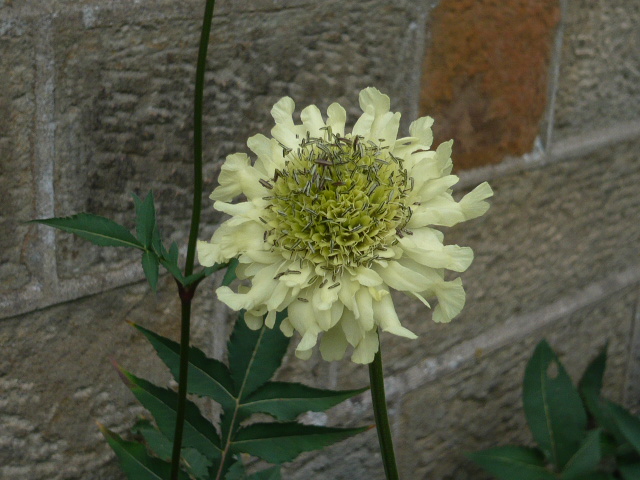
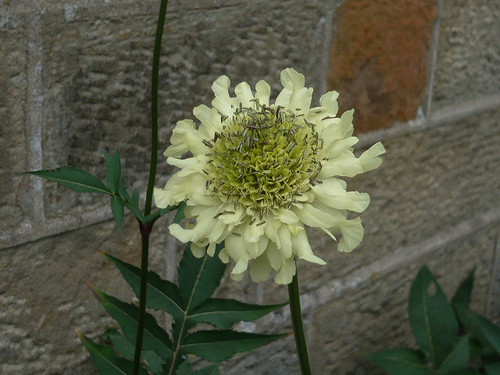
  • Giant Scabious isn’t really Scabious it is Cephalaria gigantea which has primrose yellow flowers on a 6′ stem.

Old & Odd Tips From Gardeners Tips

  • A top dressing of grit before winter will help surface drainage as Scabious dislike cold, wet poorly drained soil conditions.
  • Deadheading will prolong flowering and if you trim flowers down to the next bud you should get two new flowers from the axil bud.
  • As a black flower Scabious Ace of Spades has fragrant blooms that attract bees and butterflies whilst making impressive cut flowers.

devil's bit scabious
Credits
Scabious sp. 2 by the justified sinner CC BY-NC-SA 2.0
Small Tortoiseshell ‘It was feeding on Scabious at Ubley Warren near Cheddar’ by Annies Pics CC BY-NC 2.0
Scabious by Mike Legend CC BY-NC-ND 2.0
devil’s bit scabious by Facing North East CC BY-NC-SA 2.0
Scabious

Flower Arranging – Solomon’s Seal

Flower Arranging – Solomon’s Seal

Book Cover
The Complete Guide to Flower Arranging by Jane Packer

Using Solomon’s Seal for Flower Arrangements

  • Solomon’s Seal is one of the Polygonatum genus.
  • They spread by rhizomes in rich, moist soil in partial or full shade.
  • Flowers are often followed by red or black berries and in autumn the leaves turn an eye catching yellow.
  • Popular varieties of Solomon’s seal include:
    Polygonatum hybridum 8″ long arching stems with alternate flowers on the top side of the stem.
    Polygonatum biflorum or Greater Solomon’s Seal is larger reaching 5 feet.
    Polygonatum multiflorum can have green and cream striped leaves.
    Polygonatum odoratum has green tipped white scented flowers suspended below the stem.

Great Solomon's Seal and Sweet Woodruff

Special Tips – Flower Arranging – Solomon’s Seal

  • Solomon’s Seal has many uses in flower arranging from the massed pedestals to modern arrangements using only a limited amount of material.
  • Try removing all the leaves and leaving just the flowers. This provides a very graceful line to an arrangement.
  • Condition by standing in tepid water at least overnight. They then have a vase life of 10 days plus.
  • Preserve stems for winter by Glycerining the cut stems
  • How to Glycerine. Mix one part glycerine with two parts hot water and after cooling stand the stems in the solution for 7-10 days until they change colour right to the tips. Store flat in boxes until required

A full array of books on Flower Arranging and related subjects is available from Amazon. You will find more advice and artistic inspiration amongst this selection.
I would also recommend the Harrogate spring flower show where I am always stunned by the floral arrangement amongst the plants on display.
Silver bells
Credits
Great Solomon’s Seal and Sweet Woodruff by bill barber CC BY-NC 2.0
Silver bells by sonyaseattle CC BY-NC-SA 2.0
Japanese flower arrangement 1 by mharrsch CC BY-NC-SA 2.0
.

Japanese flower arrangement 1
Solomon’s seal or David’s Harp is a Polygonatum with arching stems of leaves and flower bells that is in demand for a range of flower arrangements. They can be grown in moist well drained soil but are one plant that likes dry shade.

To grow a generic mix of flowers for arrangements and bouquets check out Thompson & Morgan

Other plants discussed in this series
Dahlia
Euphorbia
Pittosporum
Alstroemeria
Fatsia Japonica
Corkscrew hazel
Phormium