Browsed by
Month: June 2015

Laburnum Golden Rain in Chains
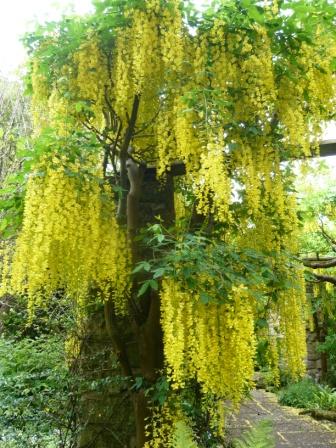
Laburnum Golden Rain in Chains

laburnum

Fantastic festoons of  floral racemes give this Laburnum its common name of  ‘Golden Rain’. The drooping clusters of small yellow flowers are produced in spring and early summer.

Describing Laburnum

  • Laburnum trees produce yellow pea like flowers and pea shaped seed pods.
  • These small ornamental trees are easy to cultivate and produce flowers in May & June.
  • The deciduous leaves are trifoliate usually dull green and slightly hairy.
  • Laburnum watereri Vossii is this free flowering form with extra long racemes of flower. Alfords Weeping is a small vigorous tree with a wide spreading head.
  • Common Laburnum Laburnum anagyroides can grow to 30 feet tall, Aureum is a golden leaved variety and Autumnale often flowers again in the autumn.
  • Laburnum alpinum ‘Scottish Laburnum’ is a small tree with fragrant flowers.
  • Common laburnum vulgare  flowers earlier and has shorter racemes with the same pea shaped flowers but hairy pods.
  • Laburnum also  has Erect and Pendulum varieties
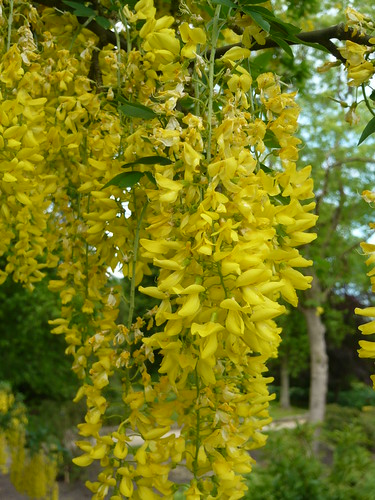
Flowers in May

Growing Tips

  • Below is a Llaburnum walk way that is many years old. Such decorative walks are replanted from cuttings but most Laburnums are propagated by seed.
  • Plant your laburnum tree in full sun. The more sun the better
  • Laburnum are not fussy about the type of soil
  • Try removing the drying seed pods on small trees to encourage a good show of flowers the following year.
  • The trees are not very long lived and I have recently taken out a tree that was 30 feet high because I hadn’t kept it in check.
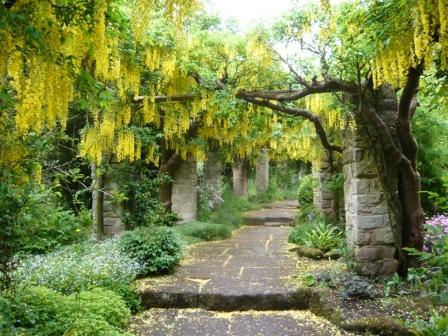
laburnum-walk

Health Warning on Laburnums

  • All parts of Laburnum are poisonous particularly the seeds -Stop children from eating them.
  • Symptoms of poisoning by Laburnum root or seed are intense sleepiness, vomiting, convulsive movements and dilated pupils.
  • The seeds look tempting shiny black but are bitter alkaline to taste.
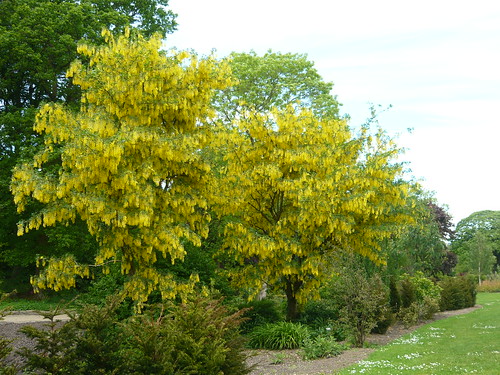
Flowers in May

Alpine Vista Mista

Alpine Vista Mista

alpbach 207

Missing posts on this site can be put down to my Alpine holiday in Austria. Mist on the hills was a small problem for my photography but it meant there were fewer walkers around to disturb me and the cattle on the Alpine pastures.

The surprise for me was the volume of Rhododendrons clinging to the mountain side at over 6000 feet. No soil to speak of, so that is one reason Rhododendrons and Azaleas are comparatively shallow rooted I suppose. They also like to get a fair share of water in spring and summer to help next years bud formation, no problem on these hills, (Get out the rainproofs again).
Nature usually has a reason for plants developing the way they have.

In Austria the seasons seem to be compacted together and at the end of June there was a festival of colour in the villages and hillsides to say nothing of the mountain tops.

alpbach 092

Flowers are used extensively in the neat well kept grave yards. However this shrine shown above was on one of the walking routes and the red rose seemed very apposite.

Candelabra Primula Bulleesiana & Hybrids

Candelabra Primula Bulleesiana & Hybrids

Flowers in May

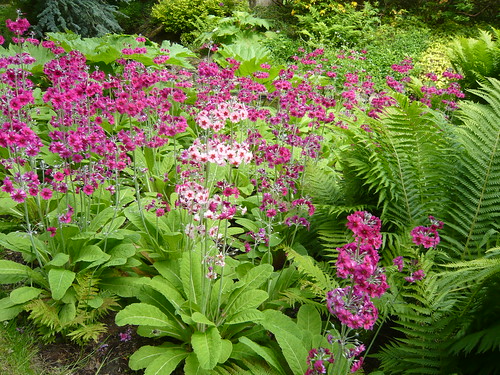
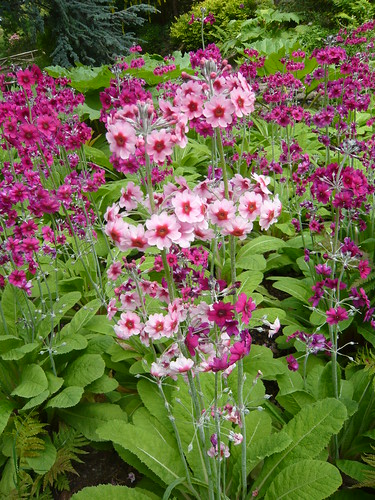
Primula x bulleesiana is being recognised as one of the great Primulas to grow in your garden. These Candelabra Primulas are great plants that originate from China and the Himalaya. They are ideal for woodland, damp or even extremely wet places.

Description of Candelabra Primula Bulleesiana

  • Candelabra Primulas make clumps of strong oblong shaped leaves often persisting through the winter .
  • They send up their tall stems on which there are whorls of ten flowers, each ring opening in succession, perhaps one every five or six days.
  • There can be up to six or seven whorls that gives a long flowering period.
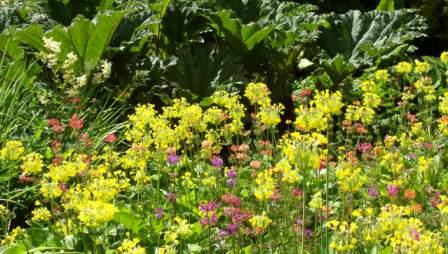
  • There is a mass of colour from brilliant orange or yellow, red, pink, white, even dark maroon.
  • There is a powdery white ‘farina’ or white meal on the stems and leaves.
  • Plants can grow and flower 24″ tall.

Flowers in May

Simple Primula Tips

The best book currently available is Primula by John Richards

Book Cover

  • Candelabra Primulas or Bulleesiana are easy to grow from seed that can be bought from RHS shops. Many primulas do not come true to seed.
  • From Harlow Carr hybrids you get a range of pastel colours which themselves self seed.
  • They like damp roots and these particular primulas were growing on the banks of a stream
  • Candelabra primulas get there name from the whorls  of flowers blossoming in a tiered effect part way up the stem as well as at the top.
  • There are over 350 species of Primula and they would  make an excellent subject for building a collection.
  • Primulas can be divided if you want a  plant true to type
Primulas at Harlow Carr

This photo was taken during summer  at RHS Harlow Carr in Yorkshire. The garden is renown for its variety of Candelabra Primula Hybrids.

Growing Primula

  • Candelabra Primulas prefer partial shade and can only be grown in a sunny position if the soil is always moist.
  • Plants grow best in deep, peaty soil or any soil rich in well rotted organic matter.
  • Primulas prefer winter and spring light values that are weaker than in high summer
  • A hybrid between Primula bulleyana and Primula beesiana flowers in varying cerise shades