Browsed by
Month: March 2015

Grow Bright Azaleas

Grow Bright Azaleas

A lazier shrub with exciting blossom I have yet to find.
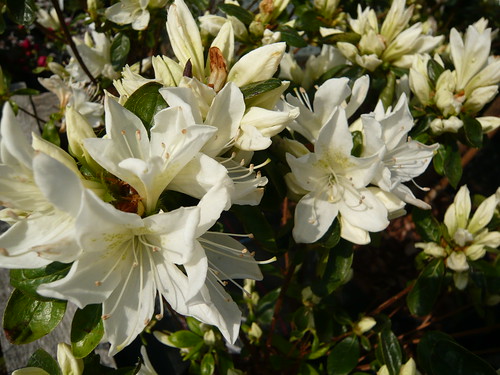
Azalea

How do you tell an Azalea from a Rhododendron? Most Azaleas have only 5 or 6 stamen while most rhododendrons have 10 stamen. Azalea leaves tend to be thinner, softer and more pointed than rhododendron leaves.
In a subjective way I think Azaleas produce more flower cover per plant.

Tips for Growing Azaleas

  • Azaleas are relatively pest-free  and easy to grow plants but may need a fungal spray if leaves are attacked in spring.
  • Azaleas like some shade  but deciduous varieties do well in full sun. Sun can produce more compact plants with more blooms but not as long lasting.

Read More Read More

Azaleas for your Home

Azaleas for your Home

A grand house plant that will last and last if you give it soft water.

Azaleas

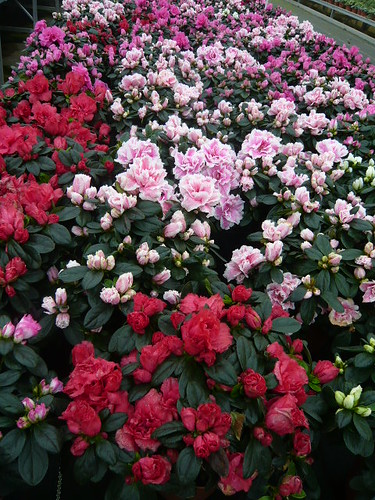
Rhododendron simsii or indoor azaleas produce large funnel shaped flowers in a range of bright colours almost gaudy.

  • They dislike warm conditions and are more suited to a cool room or porch.
  • Buy in tight bud and they will open progressively indoors.
  • Plants need an acidic, loam compost and will benefit from misting with water on a daily basis until their buds start to show colour.
  • Keep plant roots just moist at all times and water with soft water to keep plants healthy.
  • During summer they can go outside but keep the moist.
  • Flowers are better when the plant is root bound in a pot.

Read More Read More

Capability Brown Landscape Gardener

Capability Brown Landscape Gardener


Lancelot Brown 1716 – 1783

Lancelot Brown is the most famous gardener who popularised English landscape design. Lancelot Brown’s nickname ‘Capability’ came from his saying about an estate he was commissioned to work on ‘It has great capabilities’ .

During his life he was Sheriff of Huntingdon, gardener to King George III, architect and innovator of ‘Landskip’ gardening. At the age of 24 he went to Lord Cobhams garden at Stowe where he learnt from William Kent who had studies Italian and Grecian gardens and John Vanbrugh. In 1764 Lancelot Brown was appointed Master Gardener at Hampton Court.

Lancelot Brown described himself as a ‘place-maker’ not a ‘landscape gardener’. He didn’t want a series of tableaux within a garden, he wanted a piece of countryside. Formality and straight lines had to go and to avoid fences he created the Ha-ha a sunken version. Flowers were cosigned to walled gardens and trees imported to suit his design.

Some of his designs were elaborate and involved changing hills and lakes and some thought them lavish. After his death the strong vision he had carried through in his work fell out of favour and only in the last century was he fully rehabilitated.

Capability Brown is believed to be responsible for over 170 gardens surrounding the finest country houses and estates in Britain. He never worked in Ireland saying ‘he hadn’t finished England yet. His work still endures at Blenheim Palace, Warwick Castle, Harewood House, Milton Abbey and below is a further edited list of his work. Get out and visit some of these 18th century landscapes:-

Read More Read More

Growing Year Around Pansies

Growing Year Around Pansies

purple pansy

The smiling face of a pansy greets the gardener during most season of the year.
Pansy is a thoughtful flower as thoughtful is what the name Pansee means in French. In the wild form it is tricoloured and often called Heartsease and is a member of the Viola family.
There are many varieties to choose from including 46 on our T&M list below.

Growing Pansy

  • Great and quick results can be achieved from plug plants or seedlings.
  • Treat as annuals or biennials even though they may survive longer.
  • From seed, sow late winter/spring or mid-late summer 1.5mm deep in good seed compost excluding light as darkness helps them germinate.
  • Germination usually takes 14-21 days at 19-24C no warmer or germination suffers.
  • When seedlings are large enough to handle, transplant and grow cool.
  • Gradually acclimatise to outdoor conditions for 10-15 days before planting out after all risk of frost.
  • Prefers sun or part shade in borders or containers .
  • The flowers are edible and useful to colour a salad.
  • Summer sowings of winter flowering pansies should be  planted out in autumn or early spring.

Useful Links

Read More Read More

Growing Peony or Peonies

Growing Peony or Peonies

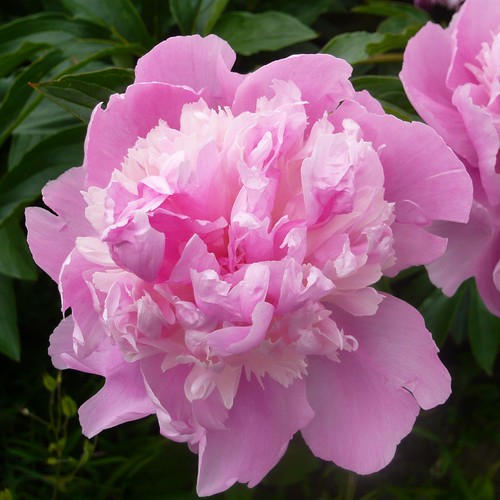
double peony

For centuries Peonies have been great favourites of the Chinese and are one of their national flowers. Peonies are easy to care for once established.

Peonies are shrubby herbaceous plants that will come back perennially (year after year). They can live 75 years and still produce a brilliant profusion of flowers. Herbaceous means the leaves and stems die back at the end of the season and new growth will start again in Spring.

Growing Peonies

  • Flowers are often strongly scented to attract bees and have double or single blooms.
  • The colours are deep red through pink to white.
  • Peonies do not like to be disturbed or moved once they are planted.
  • Because they will live in the same spot for many years add some bone meal and good compost at the bottom of the planting hole.
  • Peonies are best grow from plants bought at a nursery
  • Plants are hardy but may make take some time to flower.
  • Only plant Peonies at the same depth as they were grown, never deeper.
  • Peonies and special fertilizer from Thompson & Morgan

Tree Peonies are harder to grow successfully and cost more to buy but can have show stopping displays of flowers once they mature.

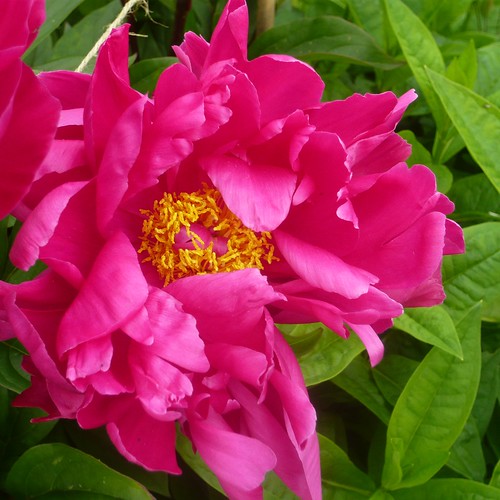
peonie

Useful Links

Read More Read More

Tips for Growing Nasturtiums

Tips for Growing Nasturtiums


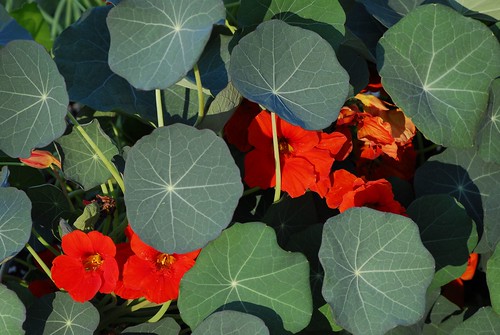
photo by Photofarmer

Even young children can manage to plant the large seeds of nasturtiums and watch them grow into Triffid like flowering plants in reds, yellows and oranges.

Tips for Growing Nasturtiums

  • Plant the seeds individually in a sunny spot in poor soil straight in to the garden.
  • Climbing nasturtiums will spread for several feet or clamber up a near-by support. These are the sort to amuse the kids.
  • The dwarf nasturtiums are better behaved and will flower well without any fertilizer.
  • Handle the stems with care as they are brittle and easily snapped.
  • Nasturtiums are no use as cut flowers but you can pick and eat flowers and leaves.
  • Collect the fallen seed for next year. You get 3 big seeds per flower.
  • Plants are loved by black fly that may colonise the underside of leaves. Wash off with soapy water or use an insecticide if you are not going to eat them.

One variety you can plant in a hanging basket is Jewel Mixed which adds fragrance to the dwarf trailing habit. Alaska has variegated leaves and two tone flowers. Black velvet is very deep purple that it looks as it says on the packet, black.

Useful Links

Read More Read More