Browsed by
Month: January 2014

Growing Tuberous Begonias in the UK

Growing Tuberous Begonias in the UK

The second raving post about Begonias.
Beggars Begonias

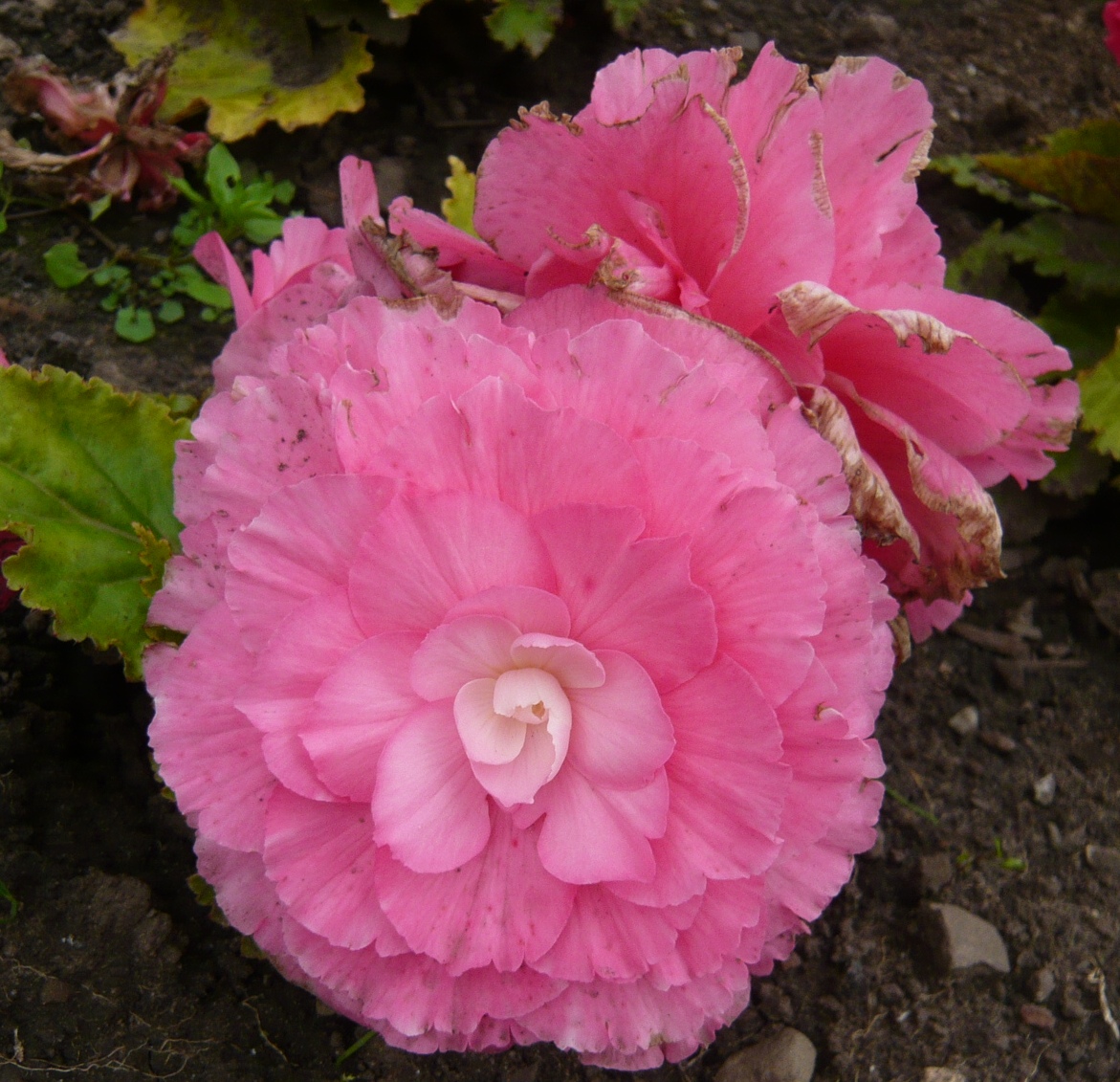
Begonias are native to all parts of the world except Australia and Europe. The South American species have been bred in England since the 1860’s and we can now enjoy many colourful varieties. Grow as houseplants or for borders.

Growing Begonias from Tubers

  • Growing begonias couldn’t be easier. Buy good stock, firm to the touch.
  • Plant the rounded tuber with the indented surface upwards and the roots downwards.
  • Start tubers off between February – April in frost free conditions. You can put several in a tray until new roots are formed.
  • Cover with damp peaty compost until only the top of the tuber is visible level with the compost.
  • When the tops are 2-4″ tall roots should be good enough to pot-on. That is plant in the begonia in it’s final home be it indoor pot, outdoor container or border.
  • Water in then leave until compost is on the dry-side to encourage new roots to search out more moisture.
  • Thereafter water and feed your pot begonias as they are thirsty plants.

Begonia Buds

  • Begonias are very free flowering and may try to flower before enough energy has been built up.
  • When the first small bud cluster is as large as a 10 pence piece lift it upwards and backwards and snap it off.
  • Future flowers will reward you for this effort.
  • Begonias bud in 3’s and the central bud is the dominant male which will be double. The single female side buds can be taken off to channel the energy into the main flowers.
  • Bedding begonias do not need to have the side buds taken off but do nip out the first buds to get a strong plant.
  • Read More Read More

Quick Tips for Growing Begonia

Quick Tips for Growing Begonia

Bold brash and showy are just some of the adjectives attached to Begonias.

St Just Truro Begonia

1.Begonia tubers for super flower heads and potted plants

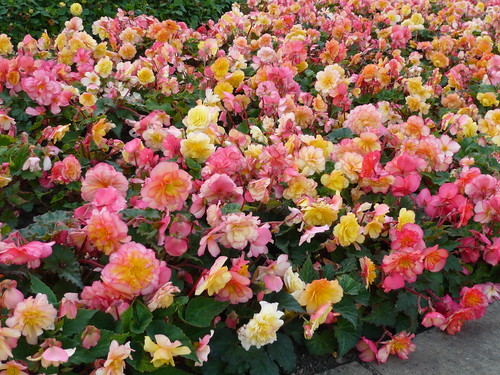
These plants can have massive blooms and or large numbers of blooms on the same plant. They can be used in pots and containers or used for bedding.

There are new varieties being launched regularly. This year Thompson Morgan are selling a scented variety in pastel shade

mixed begonias

2.Begonias fibrous roots for annual display

I like the red, white and pink flowers that grow on bedding begonias grown from seed. They have strong coloured leaves either dark red of lime green. They grow well in some shade and last until the first frost.

New varieties in the area include ‘Apricot Shades’ a trailing variety that I am trying for the first time this year.

3.Begonia Rex varieties with coloured or odd Shaped Leaves.

Read More Read More

In Praise of Frost

In Praise of Frost

The last in my quartet of posts about Frost for this winter. Roll on spring as opposed to spring on rolls.

010
Jasmin nudiflorum

‘If winter comes can spring be far behind’ or should that be changed, due to global warming, as the season merge. Due to lack of seasonal frost many spring flowers have been appearing through late Autumn and my Primula and even Wallflowers are showing lots of colour.

What we need is a series of crisp hard frosts to let everyone and everything know that the season has changed. Animals can go into hibernation (instead of the squirrels stealing the bird food) and plants can become dormant or die back as they are programmed by nature to do.

My Dahlias have given sterling service but now I wish the stalks a happy burial on the compost heap but I always wait for them to catch the frost first. Other plants are looking forward to getting frosted and what will the ‘sprouts taste like without a bit of cold weather.
If it was rain that encouraged winter dormancy then everything would have shut up shop way back. The soggy ground would appreciate some frost sending worms deeper and breaking the claggy ground.

Bulbs need some cold weather to develop the best roots so come on Jack lets have some cold weather. In previous years I have lifted crowns of Rhubarb to get a bit of frost but I am leaving them in the ground this year and will see if it has a negative effect or not.

So come on Jack Frost get on your Icicle and pedal down and arrange a cold snap for British gardeners.

Hoar Frost in my Garden

Hoar Frost in my Garden

A hoary old chestnut or an updated post from 2012?

mvuf 006

What is Hoar Frost

  • Hoar frost is airborne crystalised frost caused by rapid cooling of plants whilst the air is still and moist.
  • It tends to be shorter lived than a full frost when temperatures remain well below freezing.
  • ‘Air hoar frost’ can cover bushes and plants with ice crystals that look like white hair.
  • Cold air flows down into hollows and can create frost pockets.
  • Rime is a thicker ice deposit often created in windy conditions.

Damage and Treatment After Hoar Frost

Trees Exposed to Wind

Trees Exposed to Wind

Trees exposed to gales quickly become logs or kindling.

Snow Business

Gardeners have a lot to consider when confronted with the elements and vagaries of various plants. This picture encouraged me to consider trees exposed to wind in the form of a light breeze (a good thing), a strong blow and devastating hurricane force (a bad thing for English Trees in 1987).

Tips for Exposed Trees

Trees can act as a wind break but if too  exposed they may suffer. Think about the trade off and why you are planting a particular tree in a particular spot. (Trees are for life not just for decoration unless it is a Christmas tree).
Wind can make trees lean and so young saplings may need staking until they are well established. However the ability to sway in the breeze builds up the strength of a tree. Tie the tree low down otherwise the head can snap off in a gale.
If a tree is exposed then the growth will not be uniform and the side facing the prevailing wind will show less or shorter growth. Site your trees especially specimen trees in a wind shadow but not a rain shadow.
Too much wind damage will cause delamination of the roots & bark, cracking, rupture and buckling.
Strong winds cause trees to sway, pulling and stretching their roots and creating gaps in the soil that can stop water getting to roots.
Species vary in their response to wind. Most rhododendrons are sensitive to moderate wind and react by closing their stomates, reducing loss of water by transpiration. In contrast, trees such as larch and alder under the same wind conditions maintain open stomates and continue to photosynthesize and transpire.
Fruit tree growth increases as wind exposure decreases.
Trees can be partially supported with strong forked props.

Read More Read More

Plants for Carpet Bedding

Plants for Carpet Bedding

Don’t try this at home unless you have infinite patience.

Carpet Bedding needs a lot of Plants

Sedums make good carpet bedding plants including varieties like, Sedum spathulifolium ‘Cape Blanco’ and ‘Purpureum’, Sedum pachyphyllum roseum & album and the less hardy Sedum stahlii

Sempervivum are also most useful and can knoitt together with sedums to good effect. Try using Sempervivum tectorum, Sempervivum stansfieldii or Sempervivum arlanticum.

Echeverias are arguably the most attractive of all succulents, highly valued for their stunning leaf colour and variation. Echeveria pulvinata, elegans, setosa, agavoides, harmsii, secunda glauca and Echeveria subsessilis are worth seeking out.

Apart from succulents other popular plants include Alternathera, Ajuga reptans, Tanacetum parthenium ‘Golden Moss’ and Sagina pilifera.

Read More Read More

Phyteuma or Physoplexis comosum

Phyteuma or Physoplexis comosum

2 plants with a high Ph count not ph.
physoplexis cosoma

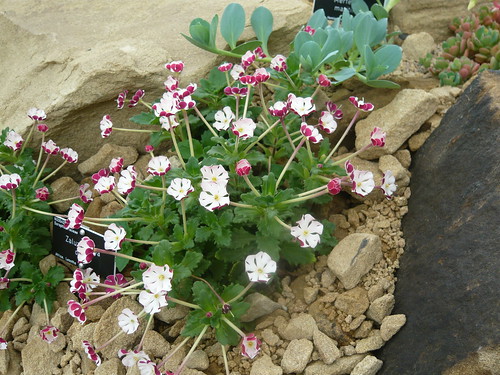
Phyteuma comosum also named Physoplexis comosum is a member of the Campanula family. Rosettes are produced on a fat and fleshy root stock to produce coarsely toothed pointed leaves. In June or July clusters of club like flowers in Lilac to deep Purple give Physoplexis Cosoma it’s common name Devil’s Club.

Gardeners Tips

  • Grows best in deep very well drained  limey soil.
  • Needs to be protected from slugs who seem to savour the fleshy parts of the plant.
  • Phyteuma comosum loves damp and cool soils therefore water it frequently in all seasons.
  • The Physoplexis comosa should be grown in a bright place, with direct sunlight.
  • This hardy, perennial with an RHS Award benefits from some frost protection.
  • Great as an alpine plant – it should be as the family comes from the Alps.
  • Comosum means with hairy tufts.

Read More Read More

Unusual Zaluzianskya and Night Phlox

Unusual Zaluzianskya and Night Phlox

Zaluzianskya provide more plants from the South African range of flora.

Zaluzianskya Ovata planted with Succulents

Zaluzianskya Facts

  • There are over 50 species of Zaluzianskya native to South Africa
  • It is a compact plant that seldom grows to more than 6in across and just a few inches high.
  • They have aromatic, evergreen foliage that forms a dense, neat dome.

Read More Read More

Bring Back Gardeners Buttonholes

Bring Back Gardeners Buttonholes

Many proper gardeners wore shirt and tie but few wore the button hole flowers they grew. We are starting a campaign to bring back button holes!

Buttonholes are ‘not just for weddings’ but they have dropped down the fashion stakes as gardeners have concentrated on garden design rather than sartorial elegance. How many gardeners now wear a suit and tie to work but pre war that was a different matter.
I am thinking of starting a campaign to bring back the regular wearing of a floral buttonhole but first I intend growing more buttonhole flowers.
National buttonhole day could be on your particular anniversary, April Fools day or my choice would be 30th June to offer a good selection of flowers.

Flowers For Buttonholes

  • I was torn between a Rose bud and several other species for the top of the list but Roses won. There are numerous varieties and colours now available and you can cut many buttonhole flowers from one plant.
  • Read More Read More