Browsed by
Month: June 2013

Perpetual Carnations from Cuttings

Perpetual Carnations from Cuttings

Old gardeners knew a thing or two about propagation.
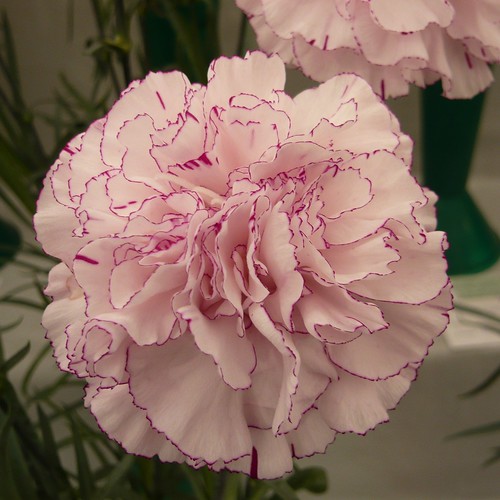
September can be a good time to take cuttings of Perpetual Flowering Carnations and other Dianthus. Using bottom heat they can be taken up to the end of March but if you have the greenhouse space then I would take them early.

Carnation Cuttings

  • Ideally use a “mother plant” that has not been allowed to flower but has been grown for the vegetative shoots.
  • Use only shoots from the lower part of the stem as cuttings from higher shoots will not form bushy plants.
  • Cuttings need a well drained compost of 50% peat (or peat and loam) and 50% sand with a bit of perlite and superphosphate.
  • Small pots can be used or three cuttings in a 3½in half pot.
  • Cuttings will have rooted when the leaves start to grow and by Christmas they need potting on into 4-5 inch pots.

The British National Carnation Society recommend taking cuttings ‘….very early and on a dull day if possible, you can take your cuttings by either using a sharp knife or pulling away with a heel. Strip away the bottom couple of leaves and make a clean sharp cut just below a node and insert into the side of the clay pot and stand in a shady spot.’

If you want to grow button holes you can pinch out all side shoots and grow carnations one to a stem in small 2″ pots from March cuttings.
Other Resources

Read More Read More

Tips Growing Decorative Alliums

Tips Growing Decorative Alliums

There was a sparkling show of long stemmed Alliums at our church flower festival this weekend.
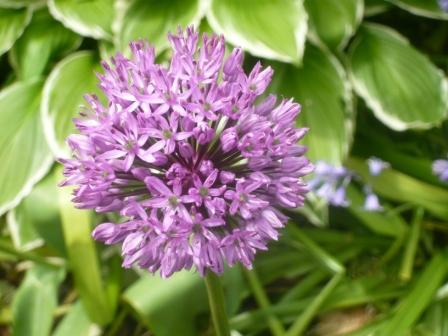
Allium
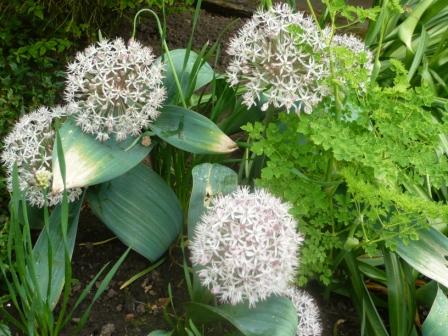
This Allium christophii must be one of the most attractive flowers for garden or cutting. the leaves are a disappointment and I recommend growing some annuals as cover as they die back in an unsightly manner.

allium

Lolly pop like Alliums  look exceptional when in flower in May until you look at the leaves which tend towards the scruffy. The seedheads are also eye catching and worth leaving although seed production may drain strength. The leaves are the way a plant builds up strength for next year as they help sunlight convert nutrients into food. Fortunately they do not cause any problem and can be taken over by other plant leaves soon after flowering. Mulch to provide food and encourage leaf growth or your Alliums will be shorter lived.

Gardeners Tips for Alliums

  • Generally Alliums need a sunny position and good drainage. Given both they will reappear year after year but may deteriorate if the leaves do not get a chance to do there job.
  • Plant bulbs in the autumn at twice the depth of the bulb and top up your stock of Alliums for those lost or not performing well.
  • Congested clumps can be lifted and divided  straight after flowering.
  • Dead-head before the seeds disperse to preserve strength or if you want to avoid unwanted seedlings.

allium-4

Read More Read More

Versatile Chives to Eat and Admire

Versatile Chives to Eat and Admire

Chopped up leaves, edible flowers and miniature onion bulbs are three ways to benefit from Chives.

Chive flowers

Chives Allium schoenoprasum are perennial and cultivated both for their culinary uses and their ornamental value. The flowers are deep blue to violet in the shape of little pompoms. The leaves are thin, hollow stem like tubes.
Chinese chives Allium tuberosum have white flowers and smell similar to mild Garlic but much milder.

Growing Chives from Seed.

  • Chives can be grown from seed and mature in summer, or early spring.
  • Chives need to be germinated at a temperature of 15-20 °C and kept moist.
  • They can also be planted under a cloche or germinated indoors in cooler climates, then planted out later.
  • After 4-7 weeks the young shoots (looking like leeks or onions) should be ready to be planted out.
  • Seeds are available from Thompson & Morgan

Read More Read More

Growing a Burning Bush – Dictamnus

Growing a Burning Bush – Dictamnus

http://gardenerstips.co.uk/blog/


The volatile oils from Dictamnus have a lemon scent and are quite flammable. The fumes are said to be capable of being ignited on a calm summer evening giving rise to its popular names Burning Bush or Gas Plant.

Growing a Burning Bush

  • Dictamnus is also called False Dittany but unlike Dittany it is inedible and has few herbal properties.
  • Dictamnus albus is a long lived perennial that grows 2-3 feet high. It flowers in late spring on a pyramid of spires in pink, purple and white.
  • Plants grow best in full sun but will tolerate some light shade. Grow in any well drained garden soil with added  lime .

    Read More Read More

Sympathy Planting and Vegetable Pollination

Sympathy Planting and Vegetable Pollination

To set fruit curcurbit vegetables need help with pollination and you can do help to do this with sympathy and a fine brush or natures way.
Coloured veg plot

Interspersing flowers that attract bees and hoverflies amongst marrows, cucumbers and courgettes will help transfer pollen from male to female flowers. No more hand pollination required.

The organic gardens at Balmoral castle leave areas of natural grass and undisturbed land to help generate more insect and pollination life.

Courgette and Egg plant

Other Vegetable Pollination Tips

Read More Read More

Mail Order Plants Feed Back

Mail Order Plants Feed Back

I buy various seeds and plants direct or via the internet and am a sucker for mail order, promotions and mind numbing mail shots – yes they do work on me at least!
Begonia Rex
Experiences 2013
Van Meuwen
I start with a bad experience with Van Meuwen. The first purchase of plug plants was OK and although the plugs were very, very small with almost no soil, they did grow away.
I was then emailed to buy a special limited offer of plants for £4.99 but I was charged on my credit card £13.99 the full price. A good job I looked and checked. Umpteen emails and technical problems at their end eventually elicited a promise of a refund.
Many weeks later and the next credit card statement had no refund so back to the email.
A cheque arrived today with no apology but that is as much as I expected.

Vita Sementi is a sister brand of Van Meuwen as is Vernons Geraniums which I have had several good plants from in the past. All these businesses are owned as divisions of Branded Garden Products Ltd by Thompson & Morgan one of our key sponsors. I hope they sort out the Ipswich business for next year.

Wallis Seeds
I buy from Wallis because you can get bigger quantities and the plain seed packets are saving the cost of photography and colour printing.
Last year I included one packet that was out of stock and they held back the whole order until I spoke to the team. The owner called me back to apologise and ask what I would prefer him to do. Great service.
This years supply arrived promptly and in good time for my new sowing. A company with good service that I am pleased to use again.

Aquilegia Growing

Aquilegia Growing

aqu2

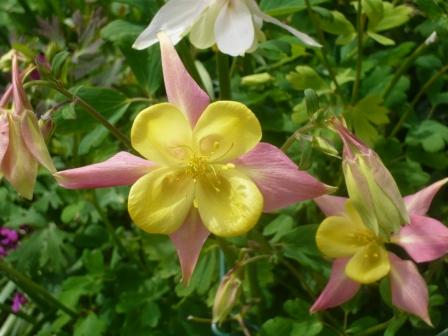
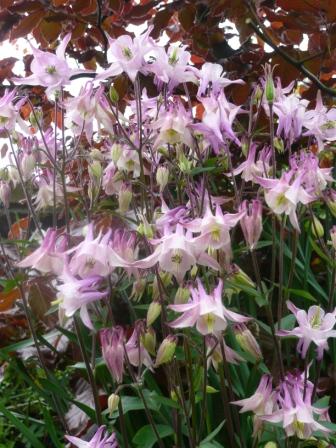
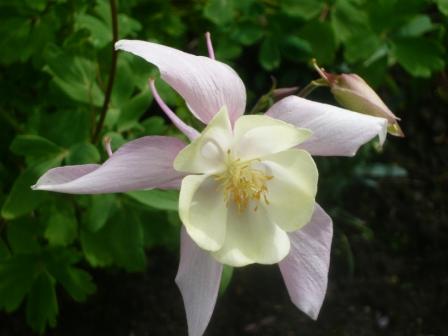
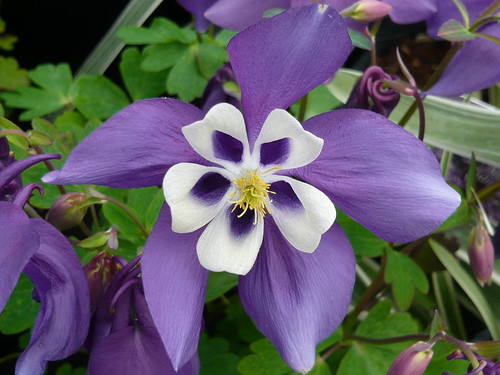
Aquilegia are growing and flowering in all parts of my garden at the moment. This Aquilegia canadensis or red columbine hybridises very easily and will self sow if left to its own devices. This Aquilegia Kansas looks very striking in tight groups.

aqu-honeysuckle

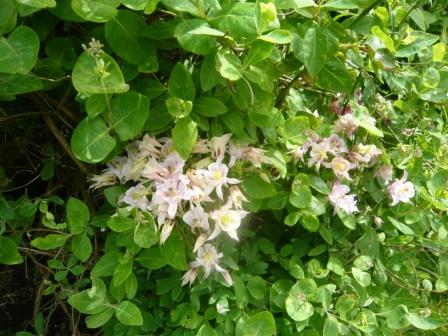
When I saw this photograph of Aquilegia colombine growing with  Honeysuckle the significance of the names escaped me. The Honeysuckle will flower a bit later than the Aquilegia which I will cut down after it flowers in the hope of a second flush of flowers later in the year.

horns

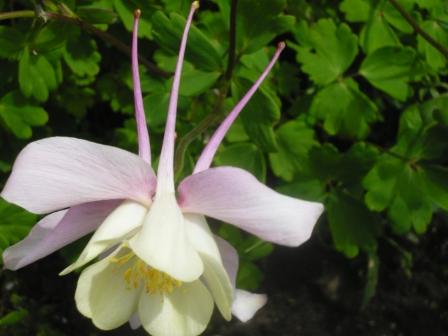
The horns of a dilema are shown on this close up of an Aquilegia flower. It pays to take the time to inspect individual flowers as well as the whole plant.
You can acquire or just admire plants as part of a collection

aqu-rhodo

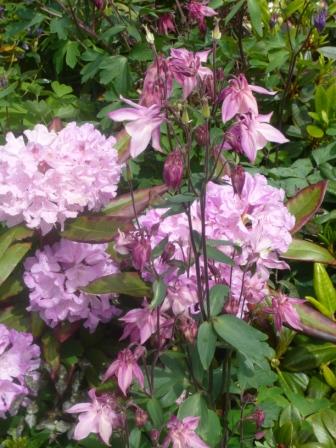
Aquilegia combine well with other plants and the colours of the Rhododendron work well with the shade of this Aquilegia.

aqu

Whilst it may not be obvious Aquilegias grow as small alpines 4 inches tall like A. Flabellata and as 3 feet high plants and various sizes in between. A good selection of seeds from many Aquilegia varieties are in the  Chiltern Seed catalogue.

aqu-leaf

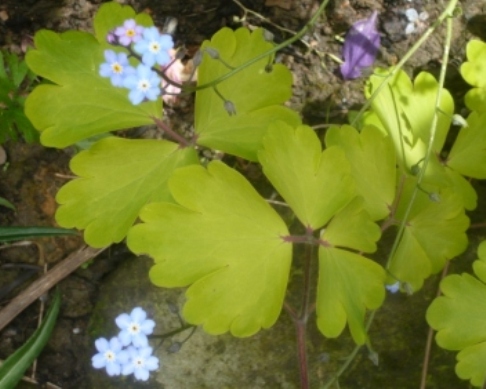
The leaves have a pleasing shape and vary in colour from the yellow green above to grey green and dark green.

aqu4

Give Aquilegia a try in your garden. They grow very easily from seed so poor specimens and colours can be weeded out.

Aquilegia

Geranium Maderense

Geranium Maderense

maderiensce

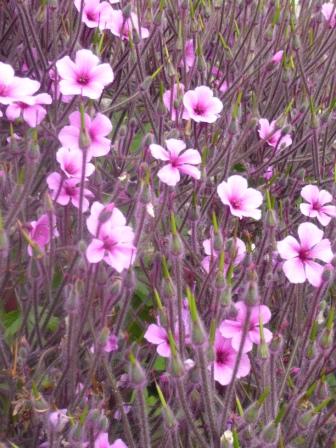
I saw this Geranium in pots in the walled vegetable garden at Harewood House and the gardener was happy to talk enthusiastically about this and other plants from Madeira. The plant was growing taller than the normal 4-6 foot and made a spectacular display.

How are Geraniums confused with Pelargoniums?

By way of contrast the Pelargonium ‘Attar of Roses’ was growing only feet away in the greenhouse but the flower colouring was similar. The Pelargonium had the edge for me because of the scent when you touched the leaves. They would make a good conservatory plant but need to be kept in check so they do not become too gangly.

pelargonium-attar-of-roses

Read More Read More

Red Poppies

Red Poppies

Poppies are a great flower and the greatest colour must be red.
redpoppies

I was surprised to see these red poppies still flowering into Octobers. Simple to grow, these red poppies offer a dazzling display of late season colour.

redpoppies

Red Poppies from Seed

Red poppies are easy to grow from seed. Annuals grow quickly and tolerate a range of soils, preferring a sunny position. Perennial red poppies are also quite easy to grow, though the flowers are more blousy and may need staking.

redpoppies

Red Poppies against backdrop of Magadalen College, Oxford

Read More Read More

New Guinea Impatiens Failure

New Guinea Impatiens Failure

Back in 2009 I reported on my failure with impatiens. now I am tempted to try again. So far so good no of them have died but nor are they a run away success.
ng-imp

I had a disaster with New Guinea Impatiens 4 years ago. Rather than grow from seed I bought a pack of half a dozen plants to grow on. The only trouble is they haven’t grown on but got sickly and hardly survived.

Errors and correct treatment

  • I used a peat based compost to pot them into. I should have used a faster draining soil based John Innes No 2.
  • The leaves have gone brown and limp because they were on a windowsill getting too much hot sun before they were strong enough. I should have given them less direct sun whilst young.
  • Once or twice I must have let the soil dry out. New Guinea Impatiens must have moist soil at all times and I regret not standing them on some gravel to help humidity.
  • I have not fertilized the plants but as they have barely grown in 6 weeks it is due to other health problems. Feed when growing.
  • I have not got red spider mite – at least I have saved them from that problem.

I gave some of the lilac flowered plants away so  am interested to see if they have done any better. I also put some of my sickly plants in a plastic zip up greenhouse outside so I am now off to see how they have done.

New Treatments
I corrected the above issues but watering still gives me nightmares.
I potted the plug plants on into 3″ pots and they are more robust.
I like the plants when well grown as a summer houseplant.