Browsed by
Month: May 2013

Osteospermum African Daisy & Cape Daisies

Osteospermum African Daisy & Cape Daisies


African Daisy
, South African Daisy, Cape Daisy or Blue-eyed Daisy more correctly called Osteospermums not surprisingly belong to the daisy family of Compositae – Asteraceae.
They are similar to the annual Dimorphotheca with which they can be cross pollenated.
Although most Osteospermums are labeled as annuals they are in fact half-hardy perennials
The bright sun of the African or Namibian velt helps these flower show the true colours which are some of the strongest in the garden. These plants almost look fluorescent with the purples, oranges and yellows.

Read More Read More

Black Geranium Cranesbill

Black Geranium Cranesbill

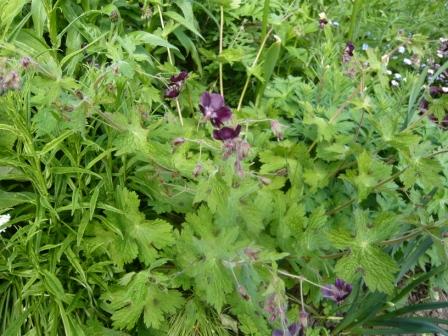
There are not many totally black flowered plants but this geranium gives a good impression.
black-geranium

Geranium phaeum is called ‘the mourning widow’ because the late spring flowers are dark maroon often sold as black. I am in mourning because the plant has been more trouble than it is worth in my garden and this morning I dug out what I hope will be the last surviving specimen. This plant grows well in shady places but the flowers I got were meager to paltry. Despite this poor flowering it managed to self sow in the most amazing places usually in the best sunny spots.

Read More Read More

Growing Lettuce

Growing Lettuce

Lettuce may not contain that many calories so it makes a great summer food crop.

Lettuce
Lettuce in neat rows, looks a great sight as well as offering great crops

Growing lettuce is one of the most rewarding vegetable or salad crops. If you keep the slugs at bay, you will have a rewarding crop, even from a tiny space in the back garden.

In summer, lettuce has a short growing season. It means within a couple of months, you can be cutting leaves for the salad bowl. The loose leaf varieties can be ready for harvest after only 6-8 weeks. If you sow at regular intervals and make use of cloches, you can have a supply of lettuce for a large part of the year.

Tips for Growing Lettuce

  • Sow directly into the ground and thin out later. Lettuce doesn’t like being moved. If you have to sow in greenhouse, use modules for easy transfer.
  • Lettuce do npot germinate well in hot temperatures.
  • Lettuce like a humous rich soil, so make sure soil is well prepared, otherwise, the leaves will be tougher and more leathery.
  • Read More Read More

Anemone in Strong Colours

Anemone in Strong Colours

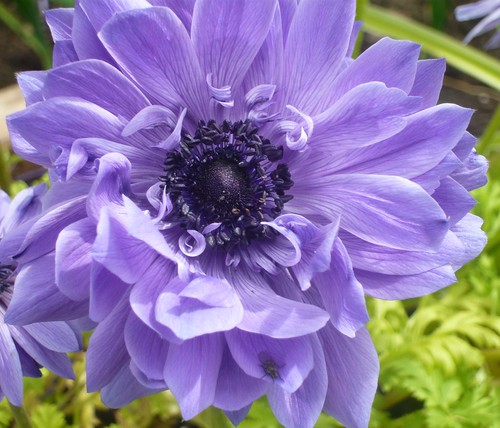
I have had a great show from 100 Anemone coronaria corms I bought in January. I only got them because they were being sold off at half price but were in individual packs of one variety.

Varieties Chosen

  • The double blue Anemone Lord Lieutenant (shown above)  was planted in a large container and has given the best display. I have now planted the compost corms and all direct into the garden.
  • The Govenor is a deep red with a white inner ring and I planted this direct into the garden. Where I got good flowers the colour was striking but I had fewer blooms.
  • Admiral and Sylphide are both pinks that I mixed together – why I did I don’t know considering my comment above.
  • The Bride was my selected white Anemone and this did very well in its own container. Whilst I thought I watered the containers quite well I found the bottom half of the soil had totally dried out and was hard to re wet. I must remember to do something about this next time.

Read More Read More

Orange in your Garden

Orange in your Garden

Orange trees wont fruit in the open in the UK but you can still find the colour in flowers and plant combinations.
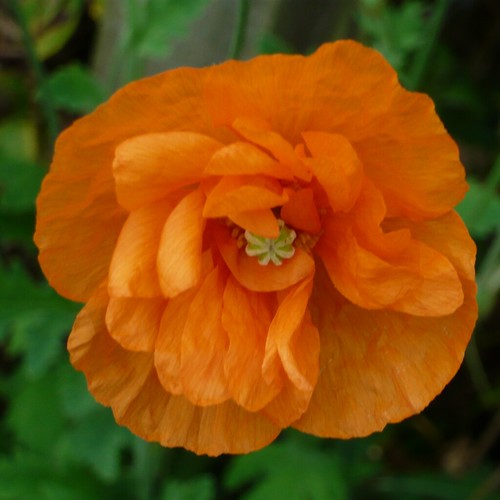
Poppy Polly

Orange was the colour of the 1970’s but gardens seemed to reject this colour as too gaudy and fit only for psychedelic record sleeves. Times have now changed and hot borders are fashionable with an exciting choice of plants including those from the Poppy family. Oriental poppies are big and blousy whilst the strong orange of Californian poppy on frail foliage can be startling.

Orange can be a hard colour to place but a strong purple leaf like Cotinus Royal Purple will offer a good contrast. However Geum Borisii will provide perennial blooms in any location without a backdrop. Acer palmatum Osakazuki is the autumnal orange leafed small tree variety to go for, underplanted with orange lilies Jet Fire, Orange Pixie or Tigrinum maybe.

Roses have a variety of orange colour schemes, choose from creamy pale Just Joey, floribunda Anne Harkness, clear toned Geraldine, apricot Pensioners’ Voice and patio rose Sweet Magic.

Beggars Begonias

Canna lilies in pots with purple leaves and orange flowers can be titally stunning like Triomphe, Wyoming or Delibab varieties and for a Gladioli try Topaz or the reddish Hunting Song. Also amongst summer tubers you can do worse than give space to some Dahlias like Bishop of Oxford and Catherine Deneuve with dark foliage or the decorative Mrs Eileen.
Eden Project Calla Lily

Tip Winter is a good season to dream of those hot psychedelic orange colours and plan where to grow the plants that will catch everyone’s eye next summer.
Primulas 172
Yellow and red make orange in some colour schemes.

Contrasting Grass Forms and Foliage

Contrasting Grass Forms and Foliage

Lawn, meadow, prairie or specimen grass it is all one to the sheep.

Fountain Grass

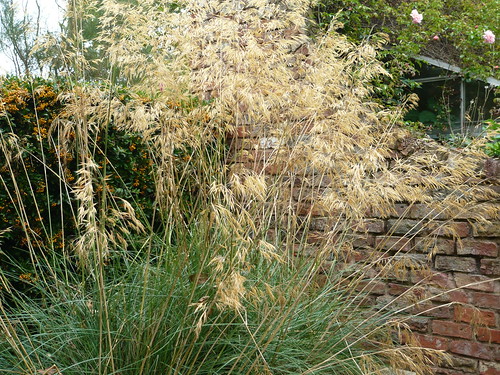
Undulating shapes and sizes in an attractive outline help to create a flourishing and sophisticated design in a garden. By varying plants and grass shapes in your landscapes you can create a lively scene.
There is no end to the combinations you could select but below is one option.

Simple Contrasting Foliage

Miscanthus sinesis Graziella is a vigorous ornamental, clump forming grass with bold narrow leaves that grow to 4 feet high. It is well behaved and will not spread and has showy white flowers at the end of the season.
Variegated foliage can add a new visual dimension and the white striped leaves of Gardeners Garters Phalaris arundinacea Picta has floppy to arching leaves that can be stricking. It is a bit of a thug spreading rapidly in damp soil but you can plant it in a buried pot.
The Solenostemon family of Coleus have a wide range of colours often on the same soft leaf.
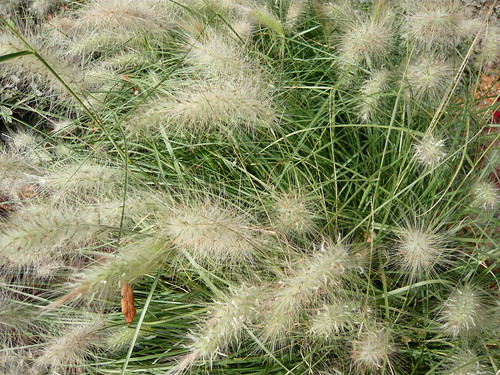
For mobile grass try Pennisetum alopecurides the Fountain Grass with seed heads that can reach 3 feet high.

Wheat grass
Artemesia stelleriana has silver-grey leaves through out the year.

In this selection I have avoided plants grown primarily for their flowers. However if you wanted to intersperse just one flower then a Hemerocallis ‘Imperial Lemon’ may suit the situation.

2 Ways to Kill Your Slugs

2 Ways to Kill Your Slugs

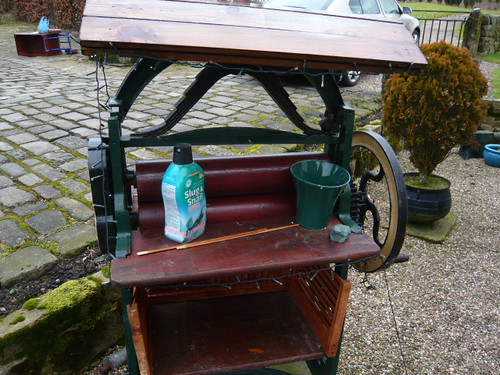
2 way slug killer

I have always wanted a new way to kill the slugs in my garden and now I have discovered how. The ‘old mangle trick’ seems to be the one for me, put the slug between the rollers and give the handle a good old turn.
Environmentally friendly (if not in the slugs mind) this mangle uses no chemicals and causes no CO2 emissions. Slug juice can be caught in the green urn and bits removed with a pointy stick provided.

If you are squeamish or squashist then you will have to resort to the blue pill (I mean pellet). Available from slug lovers Amazon

The mangle is not yet tested on the large evil Spanish slugs that are achieving what the armada failed to do

Our Big Selection of Salad Leaves

Our Big Selection of Salad Leaves

Eat up your greens and your other salad crops.

Lettuce -  Bijou & Freckles

Salad is a diverse name covering any of a wide variety of dishes including,  green salads, vegetable salads, salads of pasta, legumes, or grains; mixed salads incorporating fruit and fruit salads. They include a mixture of cold or hot foods, often including raw or sometimes cooked vegetables and/or fruits.
Alternatively ‘Salad’ is any green plant or herb used for such a dish or eaten raw so that is the part we will concentrate on.

Leafy Salad Plants

Lettuce is available in many varieties with popular types like Cos, Butterhead, Crisphead, Lollo, Oak leaved or loose leafed. The coloured varieties above are called Bijou and Freckles. Buy a mixed packet of seeds and eat young seedlings as a way of thinning out crops.

Read More Read More

Garden Tools – Maintenance Tips

Garden Tools – Maintenance Tips

When the growing season comes to a close there are garden maintenance jobs that can make next years gardening even more pleasurable. Good maintenance will extend the life of your tools and save you money.
An appropriate and well maintained tool will do a better job than making do and mending. From my experience these are some top tips for maintaining your tools during autumn.

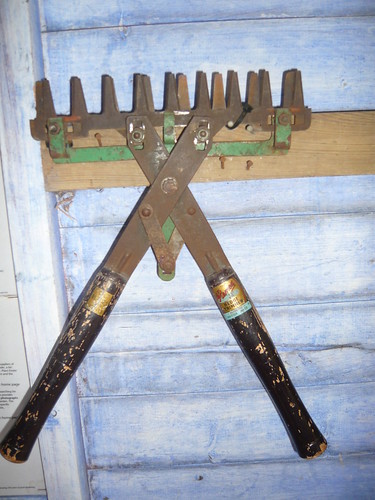
clippers

Tool Maintenance Tips

  1. Start with the best quality tools you can afford and look after them.
  2. Keep your tools clean and do not put them away wet.
  3. Maintain your Secateurs by sharpening and oiling.
  4. Keep a sharp edge on cutting blades including spades. It is worth investing in a sharpening stone (they are quite cheap and easy to use).
  5. Wipe off any sap that gets on the blades or edges of your tools. Sap can be very sticky and build up a thick layer on lawn mowers or secateurs unless you are careful.
  6. I like to oil wooden handles to keep them smooth and discourage cracking. Sand off any rough edges and use a good furniture oil.
  7. Set up a place to store your tools when not in use. Small tools can be strung & hung from a frame in the shed rather than lumped together in a pile where they may get damaged.
  8. Do not leave standing water in metal buckets, watering cans or wheelbarrows to avoid rust or frost damage.
  9. A brightly coloured handle or bright marking will help you find that trowel that you have just lost. A dab of paint may do the job
  10. Where needed I wrap ‘gaffa tape’ around rough handles to improve the hold.
  11. Straighten and bent tools and replace any badly damaged tools.
  12. Learn how to select a special tool for a garden job

Using the right tool for the job makes a gardeners life easier. However many gardeners take delight in making do and mending – on balance I like a mix of both methods.

Help Growing Euonymus

Help Growing Euonymus

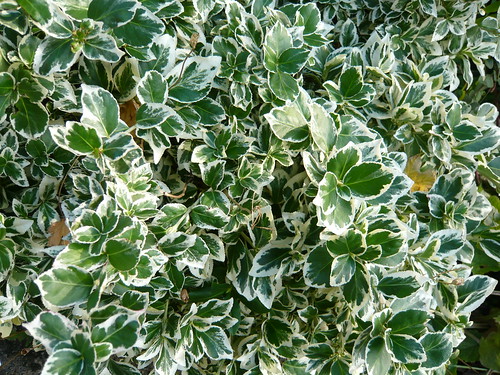
Euonymus need little help from gardeners to produce a fine show of leaves. The green, white and yellow combinations are great but dwarfed by the leaves that turn brilliant red in autumn on some varieties.
There are over a 100 species so there is a Euonymus for your garden.

Leaves

Growing Euonymus in the United Kingdom

  • The RHS have awarded an AGM to Euonymus Fortunei Emerald ‘n’ Gold’, ‘a dwarf evergreen shrub of spreading habit, with broadly yellow-margined leaves, tinged pink in winter; occasionally produces a few small, inconspicuous greenish flowers’. AGM is a recoginition that a plant will grow successfully in the UK.
  • Read More Read More