Browsed by
Year: 2012

Sourcing Plants that are ‘Good to Grow’

Sourcing Plants that are ‘Good to Grow’

The horticultural trades association (HTA) has over 2700 member locations, many of which are one site nurseries often specialising in a small quality range of own locally produced plants.
The UK gardening industry has a retail turnover of over £5 billion a year and according to the HTA it is a buoyant and growing market. (well it would be growing!)
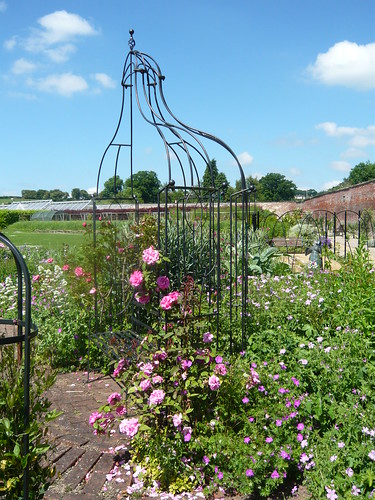
Rose garden

Garden Centres

  • Like supermarkets the modern garden centres now sell more than plants and garden accessories, they even provide cafes and coffee shops.
  • Much of the stock has been grow abroad and brought to you at the cost of many ‘garden miles’.
  • Garden centres often have special offers and vouchers often designed to get you to spend in a way that extends their selling season. Not quite BOGOFF’s but 4 for 3 at Hayes or 20% off in November on selected items are examples.
  • Stock that is past the retailers sell by date may be reduced. You need to understand why the reduction is offered – if the stock is weak, damaged or unfit then stay well clear.
  • If Tulips, say are reduced in October to make way for Santa and the Christmas stock (that is so important to us gardeners) then fill your gardening boots because Tulips can be planted in November.
  • Normally look these gift horses in the mouth – a cheap wilted plant may never recover
  • There seem to be as many chains of garden centre as there are plants nowadays. Hayes, Dobbies, Strikes, Wyevale, Nocutts, Webbs, Klondyke and RHS are just some of the 130 members of the Garden Centre Association. http://www.gca.org.uk/
  • You may get a money back guarantee but will you return in 12 months to be told you killed the poor little plant.
  • Many large perennial plants can be split before you plant them to make several smaller plants that rapidly grow on. I have just bought and split a robust aster that I bought pot bound from a nursery and got 3 good and several smaller plants that will grow in the next couple of months.

Mail Order Companies

  • I like Thompson & Morgan for seeds and Jersey Direct often have good offers for annuals that provide bulk colour.
  • Buy-in seedlings and grow on yourself. Kinder pots and seedlings at the cost of a seed packet can be an economic way of getting a lot of stock for your garden.
  • Mini mail order plug plants are the next level of cost up but can be good value particularly for seeds that are difficult to germinate like begonias.
  • I like buying seedlings as a way of getting several vegetable varieties that will crop at different times and provide variety and insure against one crop failure.
  • In Praise of the Nursery
  • Of the retail choices available to gardeners my preference is to buy from Nurseries. The stock is likely to be local, hardy and ‘good to grow’.
  • The choice and selection of many varieties may be better although the overall range will be tighter.
  • The knowledge is often detailed and willingly imparted.
  • Many nurseries specialise and offer something different.
  • Owner managed business units need or help it is unnecessary for big business to cream off the profits made from hard working gardeners.
  • Nurserymen and women are some of the most knowledgeable gardeners I know.
Growing Varieties of Eggplant -Solanum melongena

Growing Varieties of Eggplant -Solanum melongena

Aubegine

The Solanum family includes peppers, potato, tomato and even deadly nightshade as well as our aubergine (Eggplant). The small flowers all look similar but the resulting fruit are quite different.

Aubergines Varieties to try

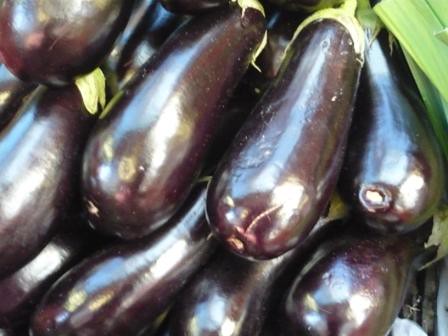
  • Aubergine ‘Antar’ fruit can be dark purple and are a satisfying 9” long
  • Aubergine ‘Moneymaker’ produces good, early crops whether it is grown in the greenhouse, in patio containers or outdoors. The Height and spread is upto 24”. The purple fruit are long and slender with an excellent flavour.
  • Dwarf Baby Belle F1 should have lots of 2” fruit on a 20” plant
  • Red Ruffled also more prolific fruit but bitter and used for Asian cookery
  • ‘Florida High Bush’ Aubergine has an upright branching habit and carries its fruit well off of the ground. The white flesh is delicious grilled, baked or fried.
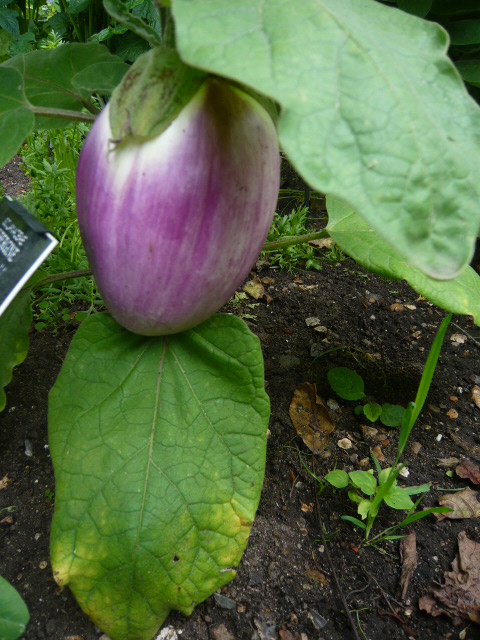
  • Aubergine ‘Listada de Gandia’ produces a large and early crop of stunning, white streaked, purple skinned, oval fruits up to 6” in length.
  • There are 15-20 different varieties of eggplant mainly of Asian origin.

Other Eggplants
Thai long green is one of the modern thin skinned varieties that should grow well in the south of the UK.
Diamond Eggplant is mild with no bitterness and coming from Russia it should thrive in the UK
Aubergine ‘Black Beauty’ is an heirloom variety worth considering.
Aubergine ‘Prosperosa’ produces spherical, ribbed, pale purple fruits with firm, flavoursome flesh. This Sicilian heritage variety has a mild flavour and no bitter after taste

Aubergines from Thompson Morgan
Read tips for growing Aubergines

Aubergine

Tips for Growing Michaelmas Daisy

Tips for Growing Michaelmas Daisy

November Aster

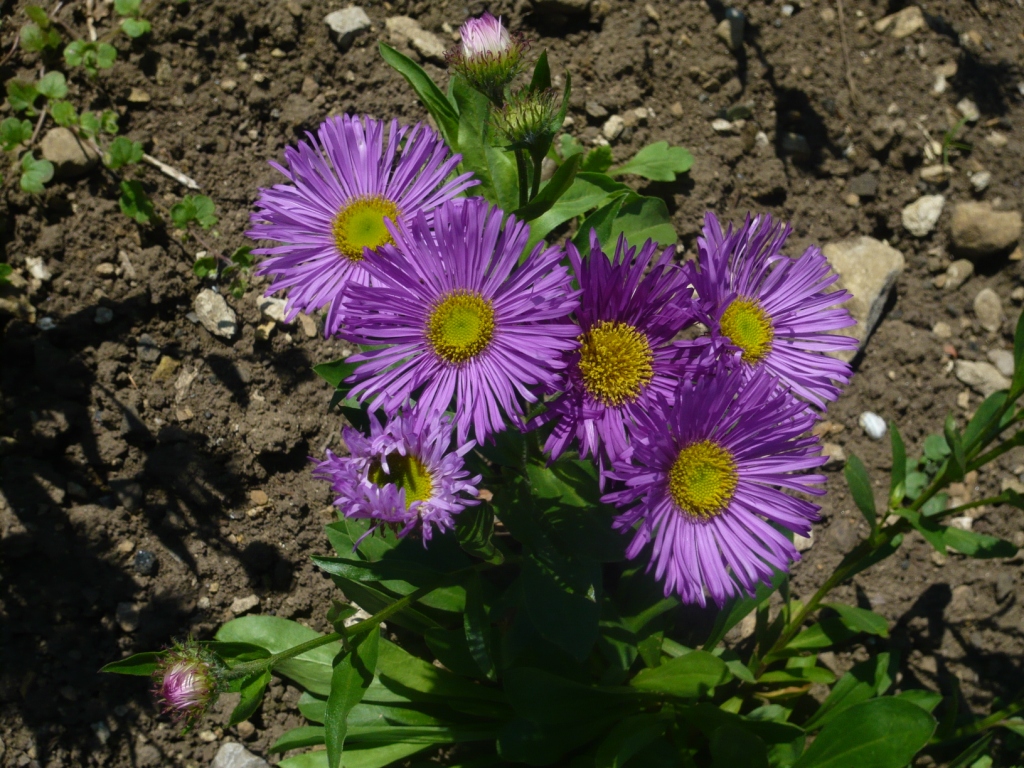
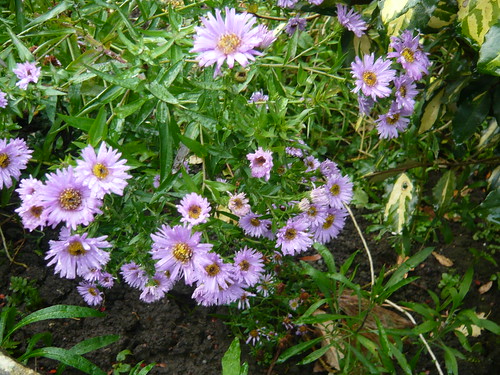
Michaelmas Daisy can be fun to grow with lots of small daisy shaped flowers. Given reasonable conditions they can grow quickly and provide excellent height and flower in late autumn.

Asters of which Michaelmas Daisy is one species are considered easy to grow and are often considered to be a good plant for children. However, to get the best out of most plants requires a few careful points.

Choose the right variety. If you want to grow a tall sunflower try a specific variety such as

  • Aster novi-belgii ‘Royal Ruby’ is a red flowering varieties, bursting into bloom in late summer when many other plants are beginning to fade. A superb clump forming perennial for the front of borders, and an excellent cut flower.
  • Michaelmas Daisies or Aster novae-angliae are available in a contrasting rich colour range of long stemmed autumnal flowers for cutting.
  • Aster novae-angliae ‘Harrington’s Pink’ grows 5 feet tall and is one of the easiest plants to take cuttings from.

Grow as Bunch or clump. Michaelmas Daisy can make an excellent impromptu screen for late summer. The height of taller varieties can divide a garden creating a natural sense of rooms – something top garden designers often go for.

Proper Staking. Preventing tall Michaelmas Daisy from falling over is one of the great challenges of growing them. Stake with bamboo canes or brushwood in early spring. If you grow them in blocks it will be easier to provide staking for the group; they will give each other support as they grow. Shorter varieties need no staking.

Feeding. Michaelmas Daisy enjoy a rich, moist well fed soil. If going for height, use a nitrogen based fertiliser, switching to potash (tomato food) as the buds begin to appear.

Watering.Michaelmas Daisy don’t like drying out and they can soon start to get mildew. Make sure they are well watered; each watering should aim to reach its roots, rather than just touching the surface.

Best Location. Michaelmas Daisy like a sunny position and preferably not too windy.

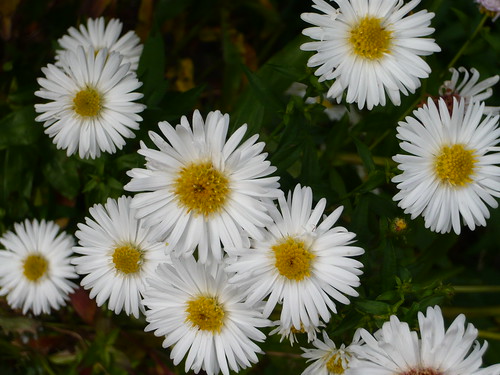
Michaelmas Daisy alba

Grubby Grass Problems

Grubby Grass Problems

Chafer Grubs, Crane Fly Flatworms & Leatherjackets

Have I been lucky?

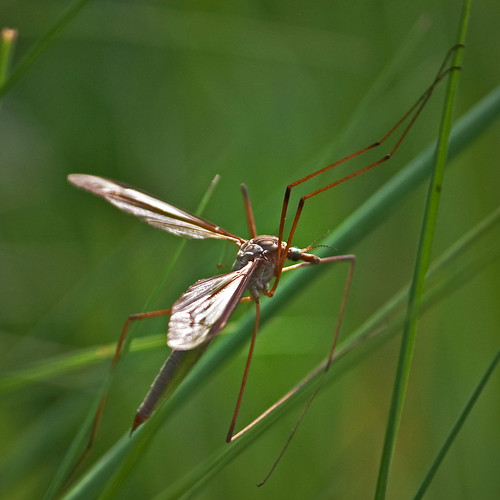
I have never had a lawn that has been infested with these insects. Leatherjackets are the grub of Crane Fly and they and Chafer grubs feast on the roots of grass. This creates brown patches and makes lawns and sports turf the target of birds looking for tasty grubs that are fat on your roots.

Crane Fly

Chafer Grub eggs hatch and the grubs feed on grass roots from July until late Autumn before burrowing deep into the ground to pupate. These grubs then lay dormant deep in the ground under the soil before moving to the surface the following Spring emerging as beetles in May / June and starting the process again.

  • Nematode control work best when the soil is warm on August. Grub killer from amazon
  • The organic alternative may be ‘Strikeback Natural Insect Killing Spray’ which is a solvent free, water based insecticidal space and surface aerosol spray that contains only natural organic ingredients
  • http://www.chafersurvey.co.uk/Is a site for more information and to record the location of infestations. It is provided by one of the purveyors of biological controls

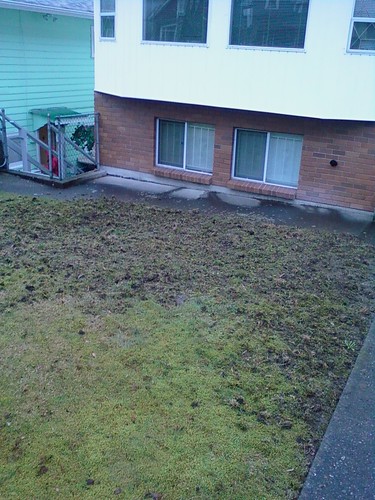
Chafer beetle damaged lawn
New Zealand flatworms are an invasive species that are purple-brown on top and flat and pointed at both ends. They live on earthworms, covering them in digestive juices to dissolve them before sucking them up. Squash them if you find them on your lawn or under stones.

flatworm

Photo credits
Crane Fly by me’nthedogs CC BY-NC 2.0
Chafer beetle damaged lawn by urbanwild CC BY-NC-ND 2.0
Flatworm by Mollivan JonCC BY-NC 2.0

Yew Can Outlive You

Yew Can Outlive You

The worlds oldest living thing is a tree. Which tree is the question and where is it growing is a supplementary that causes regular discussion. Yewrica is not the answer unfortunately.

Is it the recently discovered Scandinavian Spruce 9000 years old? Or is it the Australian Wollemi or Huon Pine or the Californian Bristlecone Pine. At the moment the general assumption is that it is the pine recently found and dated in Sweden but may be there is an old Yew lurking somewhere.

Yew

According to Fred Hageneder in his book Yew a History ‘It was under the great Ankerwyke yew at Runnymede in Buckinghamshire that Magna Carta is believed to have been sworn by the barons in 1215. In 1803 Wordsworth celebrated the great yew in Lorton Vale, ‘single, in the midst of its own darkness’, a tree under which both the great Quaker George Fox and John Wesley preached. In many cultures it is the Tree of Life, and its association with churchyards in Britain and Europe has given it a particular claim on the popular imagination as a living link between our landscapes and those of the distant past.
Fred Hageneder’s fascinating book is the first to cover all aspects of the botany as well as the cultural history and remarkable mythology of the genus Taxus or Yew to you and me.’

How can you compete

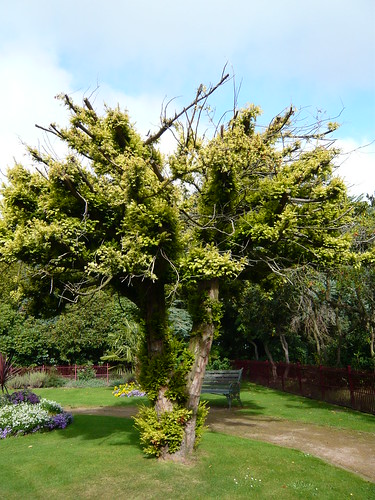
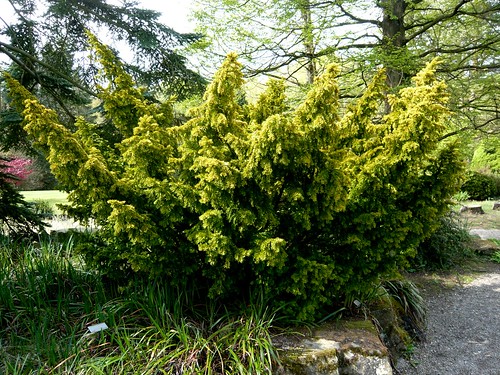
Unless you own a forest in a suitably protected climatic environment you can’t compete.The next best thing might be to plant a Yew Tree but rather than the green Yew (‘Common Yew’) seen in church yards I recommend the Golden Yew ‘Taxus baccata Semperaurea’ (AGM). These are very slow growing and long lived like their cousins. .

Golden Irish Yew male trees have the same upright form as green Irish Yew. It was first cultivated in 1880. Unless planted in a particularly moist fertile site it is slow to establish itself. In the south golden Irish Yew benefits from some shade from hot sunshine and drying winds.

Irish Yew

Tips for Yew and You

  • Use Yew in hedges – they are evergreen.
  • Only Female trees set berries and some varieties only come in male form
  • The berries are poisonous but are now collected and used in cancer medicines
  • They can be used as wind breaks but only grow slowly 4” a year when young
  • They like slightly damp shade
  • The Dutchy of Cornwall list 14 varieties for sale from the plant shop
  • Yew is a good subject for Topiary
  • Plants are available from nurseries or look for seedlings near a friends tree
  • Be patient with cuttings and even more patient with seeds that need 18months to break dormancy
  • Plants like chalky and limestone areas but I have a healthy specimen in slightly acid soil.

yew Mont Gardon
yew Mont Gardon by Jos van Wunnik CC BY-NC-ND 2.0 “I feel tired…after thousand years…do I have to start again, receiving starlight for a new period?” I can imagine this old yew feels like this, not getting the attention it needs, leaning on a Gallic tombstone on top of a hill, next to the church of Mont Gardon.

See Yew Root and Branch review

Tweets to Keep Garden Birds Happy

Tweets to Keep Garden Birds Happy

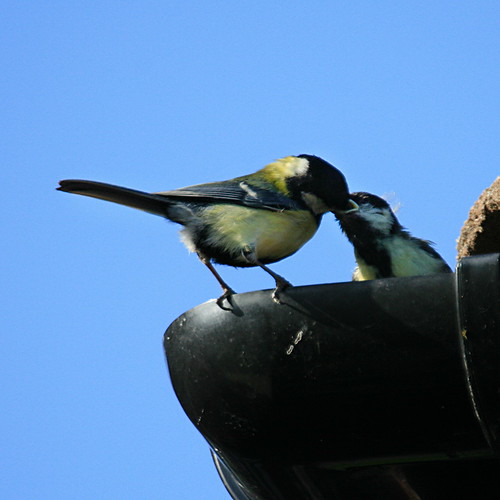
Treat your garden birds to get more tweets (I mean treats).
‘No mess’ bird feeding helps keep your garden relatively clean and provides high energy nutrition to your favourite birds.

Bird feeding fledgling

No Mess Mixes

  • Pre-mixed selections are now available from most suppliers. They are formulated for dispensation through a hanging feeder and attract a range of birds. Kibbled (ground into small pieces) maize, hemp, millet and sunflower hearts are amongst the usual ingredients.
  • Mealworms are the favourite of starlings and robins and not a crumb will be left. Put in a small dish.
  • High energy mixes are best reserved for cold winters. They include peanut granules, pinhead oats and sometimes mealworms. Use on table feeders and in hanging baskets.
  • Kibbled (ground into small pieces) maize is a cheap feed for sparrows, pigeons and doves. Usually taken from the ground.
  • Niger seed is very fine, small thistle seeds from a special dispenser. It is especially loved by siskins and goldfinches. Dunocks may also like a few sprinkled on the ground
  • Sunflower hearts attract the wides range of birds including tits, finches, and goldcrests. There are no husks to leave behind
  • Fat balls and suet mixed with seed can attract a range of birds including woodpeckers. Good for cold weather.
  • For fruit loving birds like thrushes and blackbirds you could try a few soaked raisins. Try out in cold weather when there is little alternative food available.

Book Cover
Traditional Feeds

Black sunflower seeds are so popular with tits and finches so it was worth giving them a mention despite the mess the husks can leave.
Peanuts are protein rich but blue tits may leave a little debris on the area below a feeder.

Bird food from amazon

Happy Bird Tips

  • Platforms and ground feed stations attract more species of birds than hangers.
  • Little and often is better than one over stocked feeder.
  • Avoid cheaper mixes that contain a lot of filler (it wont fill the birds so it is just left or discarded
  • Clean your feeders regularly and resite occasionally to avoid problems.
  • No mess seeds are less likely to germinate if they fall in your garden

Bird Feeding at Sariska Tiger Reserve

photo credits
Bird feeding fledgling by Adrian Midgley CC BY-NC-ND 2.0
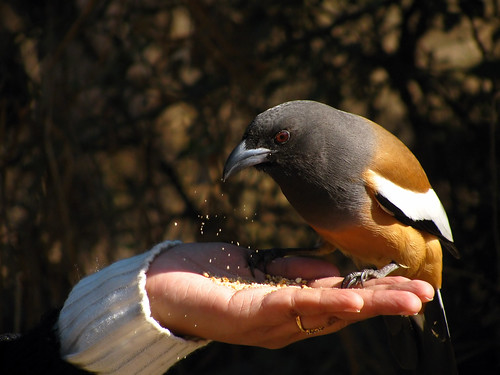
Bird Feeding at Sariska Tiger Reserve by Mirza Asad Baig CC BY-NC-ND 2.0

Evergreen Climbers

Evergreen Climbers

Not to everyone’s taste but Ivy or Hedera species are the most frequently grown, year round, climbing plants. Try these alternatives.
Kew 056e

5 Top Evergreen Climbers

Solanum crispum ‘ Glasnevin’ is a shrubby climber that needs to be tied in to wire supports. It will repay with prolific blue blossom with yellow stamen during summer and autumn.
Lonicera henryi has purple flowers followed by small black fruit. It is a good twining and climbing plants to grow up vertical supports.
Lonicera japonica variety Halliana is another honeysuckle this time with scented yellow flowers. It will only loose the leaves if the winter is exceptionally harsh and cold.
Trachelospermum Jasminoides is heavily scented when in flower. It grows aerial roots and like most scented climbers prefers a warm south facing wall.
Clematis armandii flowers in late winter and covers a large area such as a wall or fence clinging with twisting leaf stalks.
Ivy

Evergreen Ivy Tips

Try a variety other than common Ivy such as Hedera colchica ‘penata variegata’. You get better colour or leaf form but retain all the benefits.
Ivy provides food and shelter for wildlife and a year round backdrop for your garden.
The aerial roots should not damage a sound wall but the young rootlets may loosen bad mortar.
The leaves can be plaited to create wreaths or used as a filler in decorations.
Ivy can be grown on steep sloped as ground cover that protects soil from erosion.

Ivy

Photo credit
Kew 056e by Michelle Bartsch CC BY-NC-ND 2.0
Ivy by R~P~M ‘Ivy leaves at sunset, Lower Salden Farm, Mursley’ CC BY-NC-ND 2.0

All a Gardener Wants for Christmas

All a Gardener Wants for Christmas

What should you give your gardening relatives for Christmas?
Not an out of season plant that will doubtless die after a short indoor performance.
Nor in my mind a Poinsettia that will shed its leaves no matter how good a gardener they are (because it has already stood in a draught.)

Poinsettia

As a keen gardener I would be happy to receive vouchers at anytime and at Christmas it beats a shirt, tie or socks into a cocked hat. No I do not need a cocked hat either unless it keeps the rain off.

Vouchers for Gardeners

Amazon vouchers. The range of garden and outdoor products is now quite large and I love gardening books into the bargain.
National Garden tokens are accepted by lots of garden centers and some nurseries.
Seed and supplies are available on tokens from Thompson & Morgan They also accept Tesco Clubcard voucher, Copella voucher, Woodland Trust voucher or Garden News Society vouchers.That is just as well as their vouchers are hard to order on line!
Local nurseries and garden centers often sell vouchers which are bespoke to one nursery (I can always use them for dry goods if there are no plants I want)
Larger multiples – B&Q Gift Cards can be spent on anything at all UK B&Q stores, including the massive range of gardening goods. From sheds to shears, they make a great garden gift. Argos Gift Cards can be spent on the catalogue store’s complete garden range including barbecues, garden decoration, garden power tools and lawnmowers
RHS gift vouchers make great presents and are accepted in any RHS shop, along with HTA vouchers.


Alternative Garden Gifts

If it is a close family member we often make our own homemade gift vouchers. The gift may be cash, time or a service and is often well received as it is very personal.
You can make your own voucher from garden material or the back of a flower photograph. It is the thought that counts.
If you promise some labour don’t forget to deliver on your promise.
Small gifts can be found in cheap ‘pound’ shops – garden twine always comes in and a favourite Aunt may be amused by a plastic snail or garden ornament.

Book Cover
36 Great Christmas Presents for Green Thumbed Friends and Relatives [Kindle Edition] by R.J. Ruppenthal

Top Ten Styles of Garden

Top Ten Styles of Garden

Garden design and style is influenced by Gardeners, Location, Objectives and Resources. No two people would design the same garden for the same space nor would that garden grow and develop in the same manner.
Style is a personal choice made by the gardener but influenced by nature.

Top Ten Garden Styles

  1. Alpine or Rock garden
  2. Cottage garden
  3. Wild or Environmentally friendly garden
  4. Walled or Victorian garden
  5. Family and traditional garden
  6. Fruit and Vegetable plot
  7. National garden, Italian, Japanese, English, Swiss, Spanish, New Zealand or Mediterranean
  8. Sculpture garden
  9. The Peace garden
  10. Water garden

There are so many gardens that could be designed that a top 10 list is subjective in the extreme. The content of the garden then goes to the heart of the gardens style.
A woodland garden came very close to inclusion in out top ten and is a natural feature that many want to cultivate.
We could have selected a ‘garden of rooms’ but that is often a ‘technique’ used in many of the above types of garden.
Specialist plantings like Rose gardens or Herbaceous gardens could have had there own spot but I had to finish somewhere.
Top of the shop should have been my garden (or my wife’s and our garden).

Strawberries Growing on Trees

Strawberries Growing on Trees

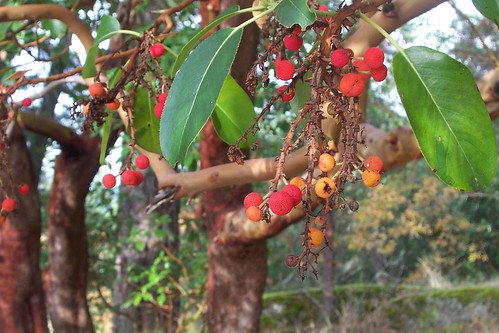
With knobbly fruit that are all dimpled and uneven Arbutus unedo is a group of trees and shrubs that fruit with strawberry like red berries.

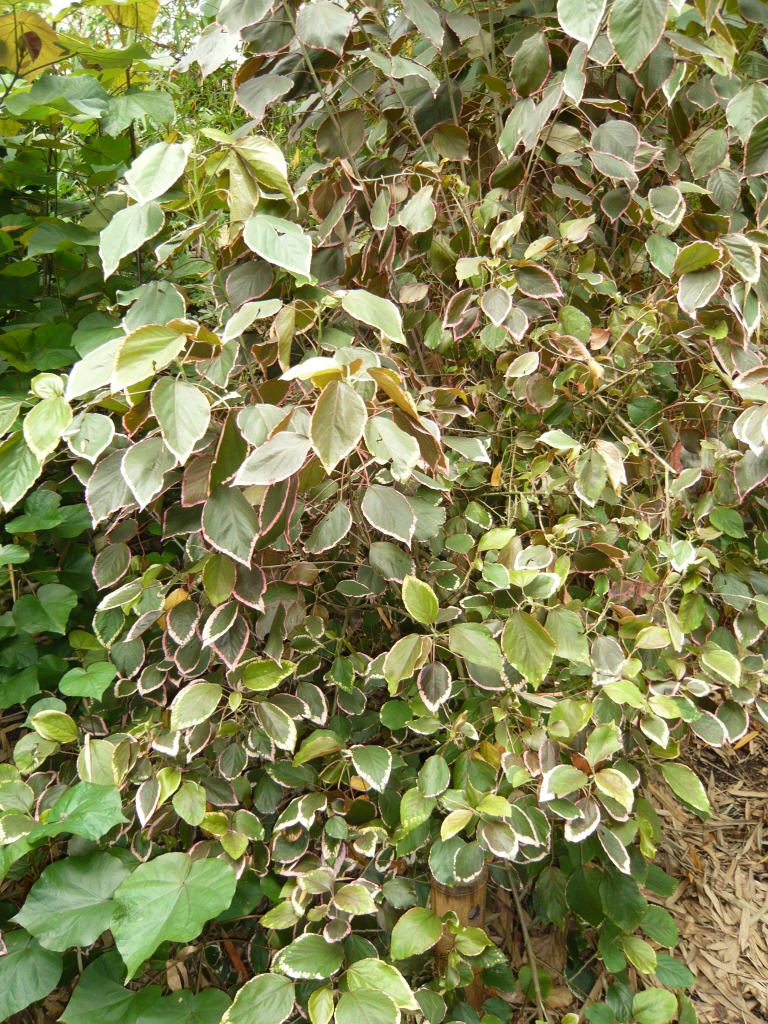
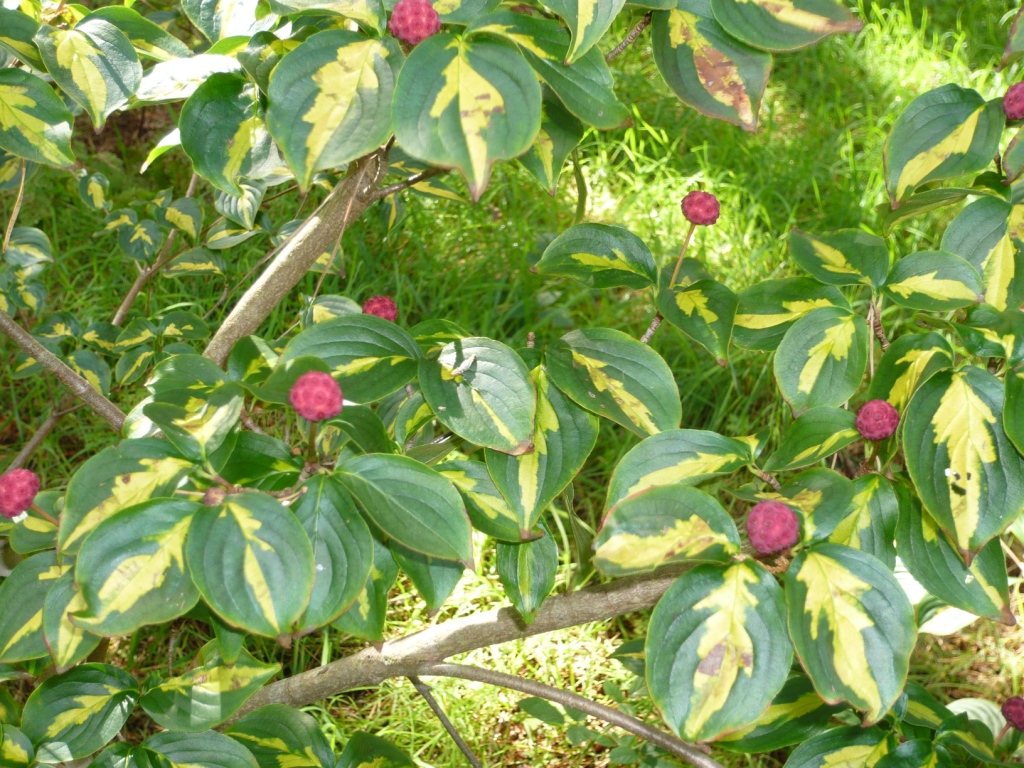
Variegated Arbutus unedo
Variegated shrubs such as ‘Ukigumo’ are successful grown in shade.
Fruiting is less dominant on variegated forms. The round knobby fruits gradually ripen to strawberry red.
The evergreen glossy foliage can be quite beautiful. The cinnamon-colored bark is also attractive.

Arbutus berries

Arbutus unedo ‘Compacta’, Killarney Strawberry Tree from Thompson Morgan
‘This striking shrub makes a superb focal point for year-round interest. Its leathery, evergreen foliage and peeling, cinnamon brown bark form a superb backdrop for the clusters of small, white, urn-shaped flowers in autumn. The dainty blooms give way to scarlet red fruits that only fully ripen in the following year, as a new set of flowers emerge. The edible fruits of Arbutus unedo ‘Compacta’ have a sharp aftertaste when eaten raw, but can be made into jams and preserves for a sweeter, guava-like flavour. This neat, compact variety is an ideal specimen shrub for a sheltered position. Although perfectly hardy once mature, Arbutus will appreciate a layer of fleece for winter protection when young. ‘

Arbutus andrachneor the Greek Strawberry Tree is less hardy in the UK as it is native to the Mediterranean.

Arbutus unedo

Photo credit
Arbutus berries by GerryT CC BY 2.0
Arbutus unedo by Xevi V CC BY-NC-SA 2.0