Browsed by
Month: November 2009

Best Lawn Edge Trimmers
Best Lawn Edge Trimmers

Garden edgesKeep Off The Grass Not on My Pavement

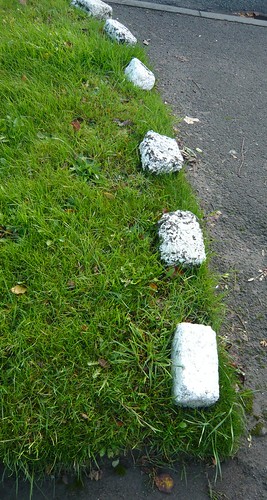
Neat, well trimmed edges make your lawn and garden look tidy and cared for. World class gardens take care of neat edges especially on formal lawns. In most cases you need to avoid obstructions that prevent achieving a well trimmed edge as these painted rocks do. Grass growing at the base of these rocks is hard to trim to the same length as the rest of your grass even if you use a strimmer.

  • Plants growing close to the edge will get in the way of a lawn mower or over-hang the lawn and weaken the grass.
  • A path in the lawn made from stepping stones should be sunk below the sward so that a lawn mower passes over the path edge and cuts right up to it. If the path is proud of the grass you may damage the mower and leave an untidy edge.
  • Where ever practical leave a gully or channel at the edge of the grass before the planting starts.

 Best Tools for Cutting Edges

Lawn edgers allow you to cut back the edge by removing a sliver of soil. Useful if you have walked near the edge and it has crumbled or spread out.

Strimmers are useful on rough grass and hard to reach spots.
Book CoverBlack & Decker Strimmer

Lawn shears have a blade at 45° to the handles and are my favourite way of trimming lawn edges.
Book CoverBahco Lawn Shears

For many jobs you can’t beat a traditional spade. If you are trimming an edge use a line or string to keep you honest.
If part of an edge is in poor condition you can cut out a square foot as a turf and turn it around by 180° to make the inner cut as the new edge and the ragged part a foot inside the lawn. Fill any gaps with sand or top dressing.


Alpine Plunge Bed

Alpine Plunge Bed

Double Plunge Bed

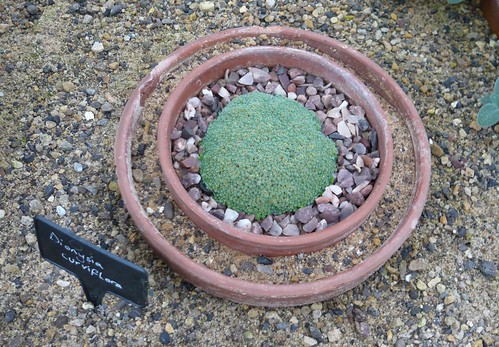
The new Alpine House at Harlow Carr has a plunge bed to be proud of as you may expect from the RHS. This Dionysia Curviflora has been double potted to facilitate watering and it’s flowers will be purple with a white inner ring and dark centre.

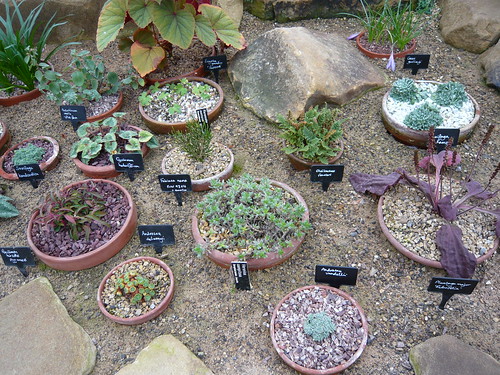
The plunge bed is at a good viewing height and the display can be changed as plants develop and seasons change. As a purpose built, alpine house plunge bed there are several features it would be hard to incorporate in my glasshouse but the rake from front to back and the use of rocks builds up height to provide a landscape rather than a flat two dimensional display.

The sand and gravel mixes vary depending on the plants being grown. Some free planting around the plunged pots adds to the attraction of this type of alpine display. The alpine house is climate controlled but much of the daily watering is done by hand before visitors arrive to view the gardens.

I am now keen to develop a better plunge area for my alpines. That is one of the joys or costs of visiting a best of class display like RHS gardens.

Tip – Study the best and think how you can incorporate new ideas in your gardening. The photo below shows how different coloured chippings and grits can work with your display.

Plunge Bed

Alpine Troughs and Plant Selections

Alpine Troughs and Plant Selections

Alpine trough

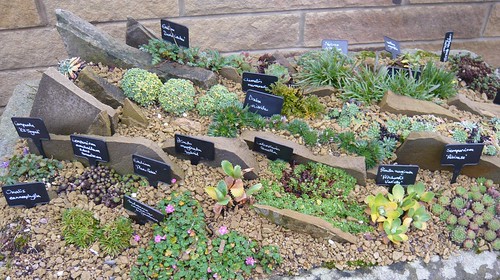
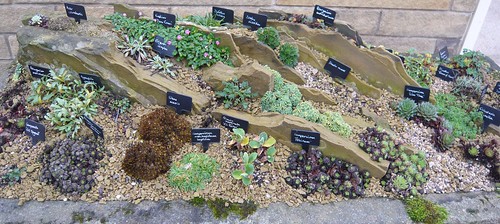
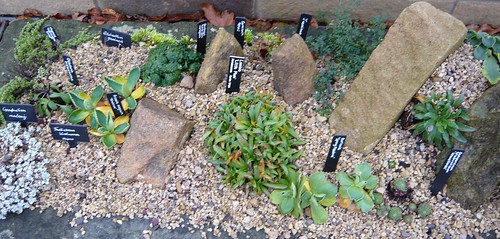
Outside Harlow Carr’s new Alpine house are a collection of troughs, stone sinks and other containers suitable for a collection of Alpine plants. The planting varies and is related to the soil and rock conditions each plant prefers. One container has old rotting logs and a richer soil for small rhododendrons and other species. Others have carefully inserted rock slivers to replicate mountain conditions giving shade and more importantly deep root runs and drainage.

Alpines in trough

Whilst the troughs vary in size they are all less than 6 feet by 4 feet and could fit into virtually any garden. There is also many more outdoor containers full of selected plants. I was amazed at the number and variety of plants on display in the middle of November. They are all carefully named on these black labels with a white fiber tip pen which I resolved to try in my garden. On some plants there is a topical note that explains why it currently features or how it is grown. ( An autumn flowering variety of snowdrop fit into that category)

Trough for alpines

The photographs can be enlarged using flickr by double clicking on the image and going to all sizes. I hope the name tags are then visible.
A picture inside the house is available on the RHS website. and for Alpine plant lovers Harlow Carr is now worth a special visit.
The Alpine garden society have a good article on your own Alpine trough

Scented Phlox Give Gardens Aroma

Scented Phlox Give Gardens Aroma

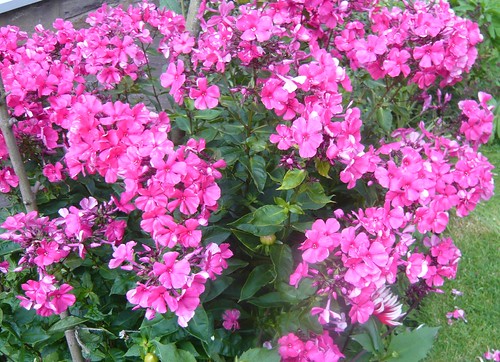
What is the flower that groups of people look at and sheep meet in ? Well it has to be Phlox and in this case the perennial Phlox paniculata.

Top Variety Tips

  • Only 3 feet tall but the pure white Phlox of Mount Fuji earns its AGM. the flaring petals open out from twisted buds to form clusters of flat white scented flowers.
  • Another AGM winner is Bright Eyes with pale pink flowers having a deeper red centre. The foliage may take on the red tinge during summer and it grows to about 4 feet tall.
  • Phlox paniculata ‘Dodo Hanbury-Forbes’ AGM just for its name or Blue Ice or Blue Paradise to balance up the colour scheme.
  • Alpine phlox can also be strongly scented try Pholx divaricata

Read More Read More

Pampas Grass Upclose

Pampas Grass Upclose

017
Pampas Grass in cottage garden

Pampas grass is the name given to species of the genus Cortaderia, most commonly Cortaderia Selloana which is available with white or pink plumes on strong stalks. Different varieties flower at different times and this example is a late autumn flowering variety that will look fine through early winter. Spring varieties may be slightly lower growing

Pampas grass will not tolerate wet boggy conditions but otherwise is a hardy easy to grow plant. Poor soil in a sunny position will encourage plumes. It takes some time for a small plant to produce the plumes but the clump then bulks up quite well. As you can see it should not be planted too close to the house or windows as it grows over 6 feet tall and can block out the light. The roots are not invasive or dangerous to good foundations. Even Dwarf Pampas Grass Pumila variety still grows to about 4 feet.

The dead leaves can be hard to remove because they have sharp edges prone to cut the unwary. Use strong secateurs and gloves or burn the leaves in January/February.

Choisya Bonsai

Choisya Bonsai

025

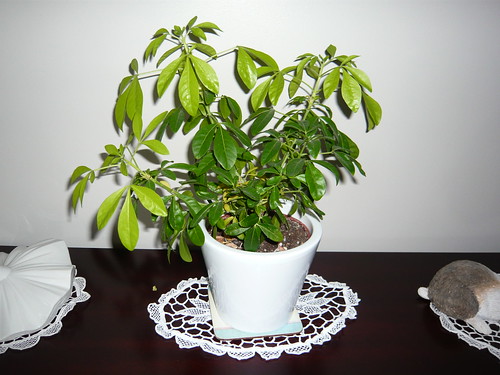
This small pot containing an even smaller Choisya ternata is growing happily in our front room. New leaves of light green are almost translucent and provide clean foliage. The leaves when crushed give off a very pleasant scent.

This plant was one of many grown from cuttings the siblings are now in the garden. Also called Mexican Orange Blossom I do not expect it to flower indoors but you never know and it is providing some interest in this quiet pre-Christmas season.

I have cheated a bit with the title as this is not yet a true bonsai plant but the restricted root run is constraining how it develops. I will prune and trim it carefully if it survives the dry conditions. That reminds me to water all the houseplants now the central heating is on full bore most days. Flushed with one success I may grow some Chiosya in bonsai pots for a miniature outdoor garden.

Gardeners Sowing the Seeds of Success

Gardeners Sowing the Seeds of Success

Rose Hip

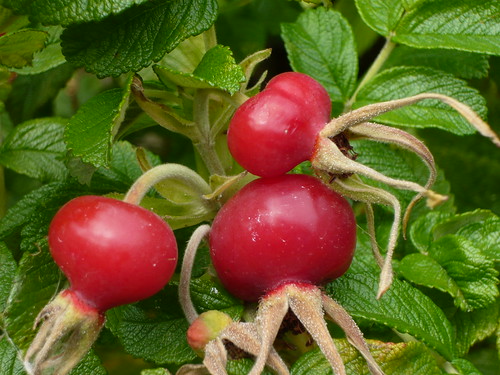
Sowing the Seeds of Success – Rose Hips containing Seeds

All good gardeners know that seeds are on your side they want to grow and thrive. Apart for some weedy exceptions that I will save until the end of this article seeds can be coaxed into blooming excess with only a little know how.

Help From the Seeds.
Every seed tells a story and you can learn to read that story by considering the parent plant and the seed itself. To set seed most plants need to be pollinated male to female and many plants are self-fertile. Having taken a deal of trouble to attract pollinators or pollination most plants package up the seeds and plan how to distribute them.

Berries and fruit have a soft or pithy outer case to help. Birds ingest elderberries and deposit the seed where they will.
Poppies have a pepperpot shaker type seed head that allows some ripe seed to be sprinkled each day over several days or weeks.
Aquilegia seed pods contort and twist to ping out seeds in a squirting motion so they travel a distance.
Dandelion seeds have feathery tufts to allow the wind to blow them where you don’t want them (but I said I would save these comments to the end)

So from these examples you can see seed pods protect and help distribution of the seed.

Seed Size and Features
Seeds vary in size and shape and many will become familiar to the regular gardener. A conker, pea or a grain sized Mesembryanthemum all have the same function to reproduce plants and maintain the survival of the species.

A good big one beats a good small one is a modern quote and in the vegetable garden leek and runner bean seeds are saved from good parent plants. Note it is the plant not necessarily the seed where size counts. Flower seeds should all be sown to get a choice of seedlings to plant out.

Some seeds have hard coats to protect them and legumes like Lupins or Sweetpeas may need the coat soaking in water or chipping or sanding the outer coat to allow moisture to start the germination phase.

Seeds from Alpines or bulbs generally need a period of cold so are sown in autumn or stratified in the fridge and brought into gentle heat in spring.

Special Treatment
Seeds are programmed to germinate when they expect conditions to suit. You can help provide the growing conditions they need.
Moisture or water is the first key ( so do not save seeds in damp conditions for later sowing they may have germinated and died before you get to sow them).    Temperature is the second issue as seeds are programmed to germinate when the seedling has a chance of survival. So tropical plants will need more warmth than say native Cornflowers.

Read More Read More

Heritage Seeds and Varieties

Heritage Seeds and Varieties

Lettuce -  Bijou & Freckles

Radishes not tasting like they use too?  Blemish free supermarket crops without taste or aroma?  A bland selection of seeds from your nurseryman to grow the same varieties as your neighbour? Well there is a movement to bring back and promote the old varieties that would change all that. Heritage varieties are an imposing collection of ancient vegetable and other varieties saved and collected by specialist companies to tempt our taste buds and maintain our heritage plants.

Here are some  UK seed supplier links together with many other international seedsmen offering specialist heritage and heirloom varieties.

Gardeners Foliage Houseplants Top Dozen

Gardeners Foliage Houseplants Top Dozen

red begonia rex

Gardeners like growing plants and in winter the best location to do this is indoors or a heated greenhouse and foliage houseplants are one group that work well in these environments.

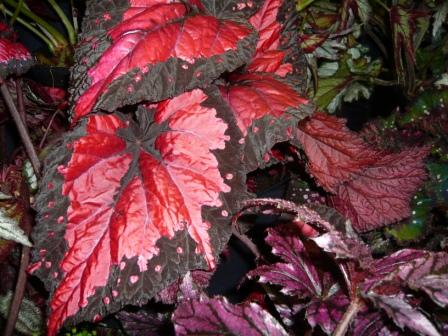
Begonia masoniana has rough surface leaves with a distinctive central brown cross. The plant grows to a good size in the right conditions but may loose some lower leaves in winter. Begonia Rex above is available in all sorts of shapes and colours of leaf and can be propagated from leaf cuttings.

Ferns like the Maidenhair fern Adiantum make shapely plants with fine green leaves on black stems. Ficus, Yucca, Dracaena and Fatshedera plants are currently less fashionable (thank goodness) but you may wish to try a Creeping Fig Ficus Pumila with small oval leaves.

The old varieties are often the better for longevity than style so Tradescantia, Spider plants (St Bernards lily) Chlorophytum comosum variegatum and Aspidistra elatior with its large, tough, sword shaped leaves are still popular. These plants will survive most conditions but thrive when given good conditions.

For architectural leaves I like the Bromeliad family like Cryptanthus Foster’s Favouirite or Cryptanthus bromelioides tricolour with pink green and white leaves. Neoregelia carolinae tricolour has a rosette of leaves that creates an urn for water.

Houseplants can help keep a room fresh, produce oxygen, add precious moisture and filter toxins to reduce pollution. They are better value than a bunch of flowers and with the right TLC can last for years. For a last selection try the Peperomia family Magnoliaefolia Desert Privet, Argyreia, Caperata or the grey green leaved Hederaefolia

Book Cover Buy from Amazon