Browsed by
Month: April 2010

The Power of a Giant Flower Tower

The Power of a Giant Flower Tower

Public gardens are building more towers of flowers using bedding plants like Busy Lizzy.

Your Own Edifice
On a small scale you can grow mound for pounds by buying mini plugs.
Build a shape using chicken wire or proper units and incorporate containers at varying levels.
Instal a watering or irrigation method as you build.

Plants to Use

Busy Lizzie are a great start as the have a loose habit and will flower in some shade and that will be important if the structure is 360 degrees around
Trailing petunias will aslo do well at covering the structure quickly.
Tyrolean window boxes should also provide the idea of using red trailing geraniums

Thompson Morgan supplied the photograph and have an advisory service for those interested in the ‘Maxi Tower’ large structure.

Harlow Carr Library & Learning Centre is Eco Friendly

Harlow Carr Library & Learning Centre is Eco Friendly

HHarlow Carr Library & Learning Center

Harlow Carr continues to be a rising star amongst the Royal Horticultural Societies Gardens.
Opening in the next few weeks will be the new library and learning centre at the gardens in Harrogate.

‘The building, designed by one of the leading practitioners of sustainable building architect Andrew Yeats (Winner of the Queens Award For Sustainable Design), is designed to be one of the ‘greenest’ buildings in the UK with a zero carbon footprint.’ (Dean Peckett)

Eco Friendly Features
Super insulated, low energy consumption building.
It will have integrated renewable energy technologies including  rainwater harvesting and a grey water recycling system.
A small wind turbine will provide energy to the building and a ground source heat pump will help with the minimal heating requirements.
A sedum roof design to help blend the building into its surroundings and provide an insulating surface, promoting biodiversity and assisting with  the absorption of carbon dioxide.

Other Energy Saving Features include:
• Solar panels and Sun pipes
• Wind turbine
• Cement replacement concrete
• Clay blocks
• Natural ventilation
• Timber from sustainable sources.
These will all be incorporated by the main contractor William Birch of York.

If you are interested in ‘Homes for a Changing Climate’,  Will Anderson has a new book out.

Book Cover

No Chelsea Flower Show This Year?

No Chelsea Flower Show This Year?

Book Cover

If you can’t visit the Great Show this year £10 or so gets you a good book with memories of Chelsea flower shows inspirational aspects. ‘RHS Take Chelsea Home: Practical Inspiration from the Chelsea Flower Show‘ by Chris Young is available from Amazon by clicking here

Well illustrated with lots of photos and a huge amount of information ‘The book features best planning, design and decoration ideas from the last five years of shows, including masterclasses with gold-medal winners, celebrity designers, RHS experts and the world’s top plantsmen and plantswomen. The design and planting ideas inside the book are not just enviable but are made achievable for show-goers and armchair gardeners alike.’ It is so good you wont need to read Gardeners Tips much longer.

May 25-29th is Showtime
Visit London and ‘The Great Show’
Take in a show after the show with an organised break.

New Places for Growing Cress

New Places for Growing Cress

HC & York 115

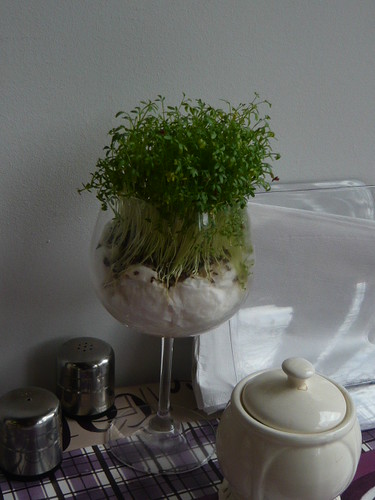
Egg and Cress sandwiches from your own home grown cress – marvelous and so easy.

I liked the Cress growing in this large wine glass at a local cafe so I thought I would grow some as I did as a child.

  • Fill your glass with an absorbent paper towel or blotting paper.
  • Dampen the paper and if necessary add more paper so the Cress will grow above the rim of the glass. This is a bit low to get at the sprouted cress.
  • Sow seeds evenly onto the damp paper.
  • To get good germination, make sure the freshly sown seed is kept in the dark.
  • These will take from ten to fourteen days to mature.
  • Mustard grows 3 days quicker than cress so if growing both sow Mustard later.
  • As there is no drainage do not flood with water keep just damp.
  • Harvest whilst still young and crisp.

Proper cress as in “Mustard and Cress” is Lepidium sativum and the Mustard is Brassica hirta. Beware many supermarkets sell oilseed rape seedlings (Brassica napus) as Cress with little or no flavour.

Beware if you grow on soil the seed husks drag up the soil as the plant grows and can create a gritty feel to your harvest. I like the scent of growing Cress but it may not be to everyones taste.

Other places or receptacles for growing your crop of Cress could include a smart plant pot, broken or chipped china but not grannies best antiques. I put a pot on top of the TV and the water leaked and broke it!

Cress seeds and other ‘sprouters’ from Thompson Morgan

Tips for Growing Cherry Tomatoes

Tips for Growing Cherry Tomatoes

Chris Winters

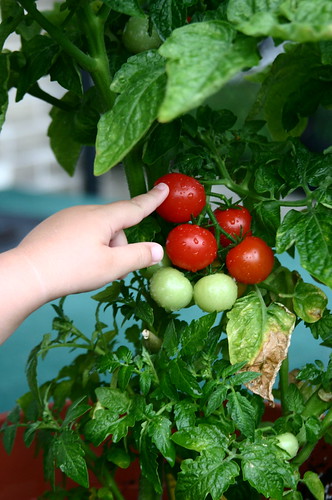
Bush tucker trials could refer to Tomatoes grown on bush varieties because they make great ‘tucker’. I love the sweet sharp taste of some of the new Cherry Tomato varieties.

Quick Tips for Growing Cherry Tomatoes

Buy a variety like Sweet Million or Gardeners Delight.
Garden Pearl has been specially bred by Unwins for growing in containers.
Baby Plum Tomatoes are now available in a variety called Sweet Olive.
The Tumblin’ series can be grown in hanging baskets or containers.

Cultivation of Tomatoes

The surface roots take up the fertilizer and nourishment. Encourage them by building soil around the stem.
The tap roots go deep in search of water. Help by making sure you water well into the soil by sinking a pipe or pot near the plant to fill up & make sure the water gets deep down.
Do not be too greedy with each plant. Stop them growing when you have 5-8 trusses of fruit by pinching out the growing tips. This channels the energy into your fruit.
Feed and water on a regular consistent basis.
I still support my Cherry tomato plants with a cane and string.

Plants and seeds available from Thompson Morgan

More Tomato growing tips

Small is Beautiful Particularly amongst Alpines

Small is Beautiful Particularly amongst Alpines

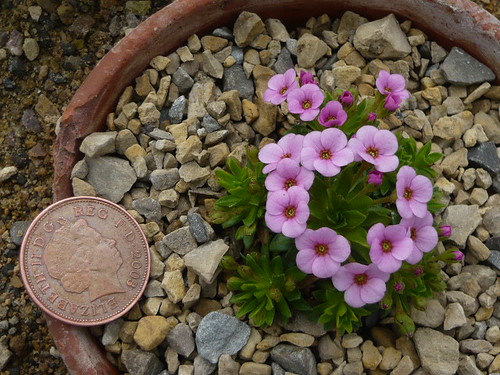
Saxifraga cranbourne

You do not need a large garden to grow a massive range of interesting plants and flowers. The 2p coin gives some impression of scale to this Saxfraga cranbourne which is about the same size as the coin.

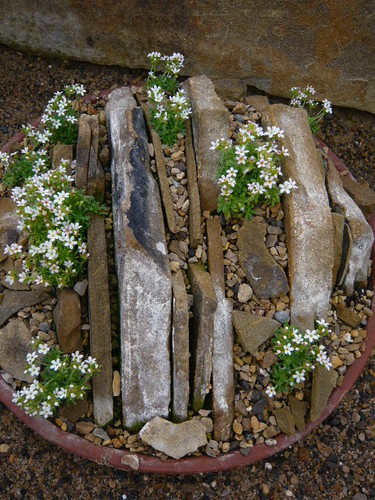
Note how it needs the protection of grit plus a sand and grit plunge bed as these small plants can easily be washed away and generally do not like damp roots.
Many alpines dislike wet foliage and would rot so I always water from below.

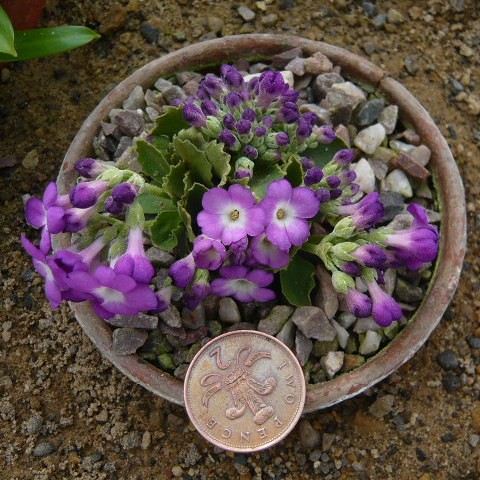
Primula allianii Joan Hughes

There are many species of Primula that could form the basis of an interesting miniature collection. This photo is of Primula allianii Joan Hughes. There is a National Auricula and Primula Society if you get keenly interested.

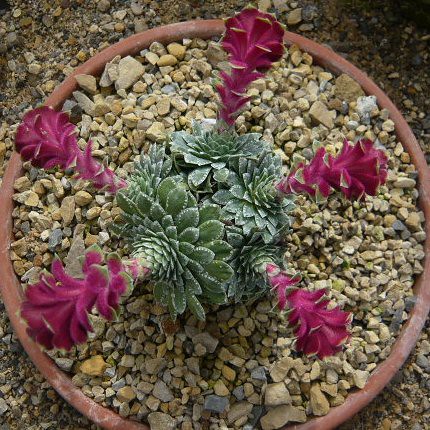
Androsace carnea pyrenaica

Similarly there are many Androsace to collect and experiment with. This display, in a 4 inch pot, requires several plants of Androsace carnea pyrenaica together to make the interesting shoe.
There is a specialist society within AGS for these small plants Androsace.org.
See a range of other pictures here .

Easter Flowers and Altar Decoration

Easter Flowers and Altar Decoration

Hols spain 572

On the first Sunday after the first full moon on or after March 21st churches are filled with Easter flowers.

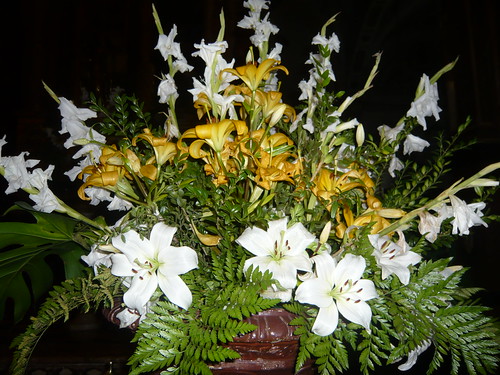
A fine display of altar flowers was arranged at this church. The white lilies of Easter in various species were popular this year, the traditional Lily longiflorum, these Asiatic hybrids and where available the Arum and Cala lilies fulfilled the Easter tradition of white lilies.
‘Often called the “white-robed apostles of hope,” lilies are said to have been found growing in the Garden of Gethsemane after Christ’s agony. Tradition has it that the beautiful white blooms sprung up where drops of Christ’s sweat fell to the ground in his final hours of sorrow and deep distress. At Easter time, Churches bank their altars and surround their crosses with masses of Easter Lilies, to commemorate the resurrection of Jesus Christ and hope of life everlasting.The pure white lily has long been associated with the Virgin Mary….. read more on Phillip’s florals.

In this arrangement there are white Gladiolus and yellow Lilies where we might of expected other yellows like Polyanthus, Chrysanthemum ‘Tuneful’ Pussy Willow catkins or even Orchids Oncidium varicosum for a bit of exotic. All the flowers have some longevity when cut for a vase and do particularly well in the cool shade of most churches.

Read More Read More

Spring Shrubs Forsythia and Flowering Currant

Spring Shrubs Forsythia and Flowering Currant

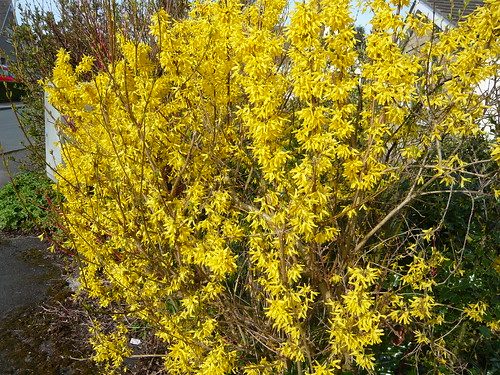
Forsythia

Forsythia is now in rampant bloom around our village. The sunny yellow flowers compete with the Daffodils for a place in the yellow spectrum of colour.

Blossom arrives before any leaves on the twiggy growth from earlier years. This cloaks the shrub in a mass of yellow blossom that really takes some beating. Only the very old wood has not got blossom this year and I will be tempted to encourage new twiggy stems by selective pruning when the flowering has finished. This will only be a light trim like they say at the barbers not a No 1.

Forsythia grows 1-2 feet per year from cuttings taken in late spring when the wood is green. Push 6 inch stems into a gritty soil preferably with some peat added as they like acidic soil. The shrub grows to 7-10 feet tall and almost as wide if left untended but it is then open and erring towards straggly, so I recommend the post flowering trim.
Flowering Currant

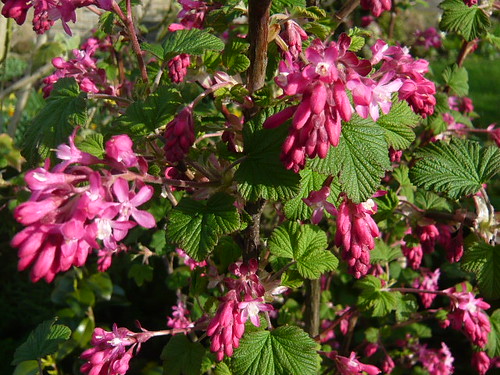
Flowering Currants also called Ribes sanguineum are also early spring blossoming shrubs. The sprays of flowers are like racemes of red or dark pink that are on show as the scented grey green leaves start to open. There is also a light pink variety that is a strong grower reaching 10 feet tall if left to its own devices.It is best kept at a 4-5 foot height.

Some better know varieties include ‘King Edward VII’, with red flowers, ‘Pulborough Scarlet’, also with red flowers and ‘White Icicle’, with white flowers.
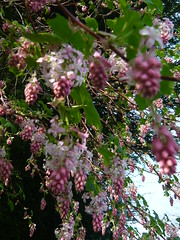
Pink Ribes

Tips for Spring Shrubs

  • Prune after flowering. This encourages new flowering wood to grow for next year.
  • Take cuttings to propagate new shrubs in spring or early summer.
  • Mulch shrubs after summer rain or a good watering to see them through a dry summer.
  • Both Flowering Currants and Forsythia are east shrubs to grow.

Forsythia

Pollination Makes The World Go Around

Pollination Makes The World Go Around

Reflective Pollination

Without pollination there would be no new seed, no new crops for animals and no food in our supermarkets. (No supermarkets may be good news for several reasons but I will put up with them to keep being fed).

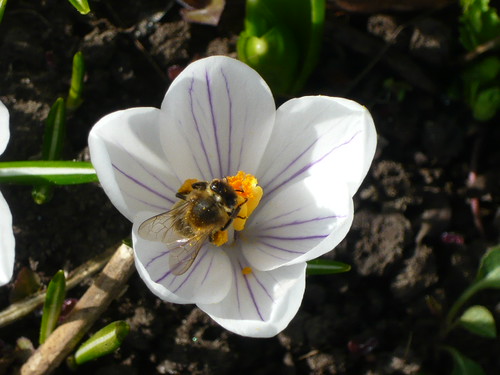
Wind pollination may work for some plants particularly those with catkins that shed pollen in copious quantities. The main pollinators in a garden are insects and they deserve our respect. There have been scare stories about the declining population of Bees so I was pleased to capture (in photos ) these bees hard at work on my Crocus crop last week.

Pollination crocus

Tips to Aid Pollination

  • Avoid using pesticides.
  • Grow plants that attract and feed butterflies, birds and insects.
  • Make insects safe and at home in your garden.
  • Do not expect F1 plants to pollinate.
  • Hand pollinate your curcurbits (courgettes, marrows and cucumbers).
  • Tap flowering greenhouse tomato plants to get the pollen into the air and thus other flowers.
Saxifraga in Well Drained Pots

Saxifraga in Well Drained Pots

Saxifraga cranbourne

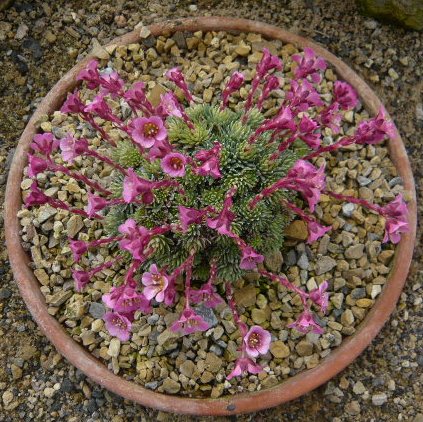
Small can be beautiful in the world of Saxifraga as can be seen with this Saxifraga Cranbourne one of the Kabschias series. This hybrid has a flat cushion bearing many rose pink flowers.

Saxifraga kellever suendermannii

Normally Saxifraga suendermannii has a solitary white flower but x kellever has these pink flowers. The hybridisation of Saxifraga is one of the pleasures of this plant.

Saxifraga griesbackii

Saxifraga griesbackii from Englerias section has lime encrusted rosettes with tall arching sprays of pink flowers. The flower stalk is covered in deep red glandualr hairs show above. They look good over a long period whilst the inflorescence is growing and opening.

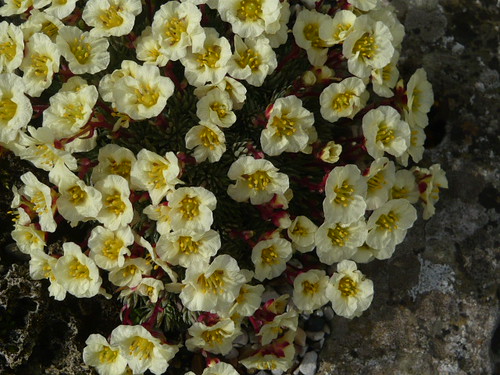
Saxifraga Sulphur

I have arrived late to the pleasures of Saxifraga but to see the range of plants I have been missing I looked at the Rock Garden Society of North America
If naming of varieties is still a difficulty for you at least you can find out what your variety probably isn’t by referencing this site.