January 31, 2010 at 3:13 am
· Filed under Books, Garden Design, Gardening

How to Start Your Own Gardening Business An Insider Guide to Setting Yourself Up as a Professional Gardener is a useful tutorial if you want to set up a gardening business. I recommend you consider your aspirations and limitations carefully and either set up a ‘Life Style business’ or consider becoming a qualified, professional career gardener.
Life Style Gardener
- There are many jobs from spring onward for jobbing gardeners. Lawyers hang out a shingle but for gardeners a post card in the post office usually suffices.
- Labouring on hedges and lawns for the infirm or doing small construction and garden maintenance projects are within the grasp of most hobby gardeners.
- If your work is good then word of mouth should get you lots of referals.
- Hourly rates in the North of England vary from £6- £20 per hour depending on the level of horticultural skill, experience and quality of garden. Ask around amongst those already in business.
Career Gardener
Permalink
January 31, 2010 at 2:27 am
· Filed under Articles, Gardening, Tips Hints and Ideas

You might get sent to the Tower of London if you damage your Lawn during winter. One gardener must be there as the picture of their lawn in January after the snow is shown above. You can start your own business with the book and tips below.
Winter Lawn Care
Do not walk on frozen grass the leaves and stems will snap and damaged patches will show when the frost has gone.
Do not walk on very soggy grass or when covered in snow as this will also damage turf and soil structure.
Do not be afraid to smarten up your lawn on a fine dry day. Trimming the edges and removing any dead leaves or debris always gives a lawn a lift.
If you want to cut the lawn set the blades on the mower at the highest level and give it a light trim not a short back and sides.
Preparation for a Summer Lawn
Read the rest of this entry »
Permalink
January 29, 2010 at 6:58 am
· Filed under Alpine Garden, Flowers and Plants
Polygala chamaebuxus grandiflora is a low maintenance, hardy, evergreen sub-shrub also known as Creeping Milkwort, Chapparal Pea or Bastard Box. It bears racemes of purple-pink and yellow, pea-like flowers. Flowering is fragrant and profuse in late winter to very early spring, often with further blooms in summer.
Polygala chamaebuxus grandiflora is capable of forming a hump up to ten inches tall, but is generally flat to the ground and only two or three inches tall. Spread is slow up to 2 feet but not fast enough for serious ground cover. This makes it useful in an Alpine garden setting.
They are underutilized plants for flowering early in the new year. It is worth finding some of these small plants and looking closely at the flowers.
Permalink
January 29, 2010 at 12:16 am
· Filed under Flowers and Plants, House & Greenhouse plants, Top Ten

Orchids are the largest known family of plants and it is invidious to select a top ten. Each genus below has several or even thousands of species and numerous hybrids so treat this list as a taster to the world of top Orchids.
- Phalaenopsis or … Moth Orchids
- Dendrobium
- Cymbidium Boat Orchids
- Cattleya
- Paphiopedilum – Slipper Orchids
- Oncidium – Dancing Lady Orchids
- Ponerorchis hardy orchids
- Ondontoglossum Tiger Orchid
- Miltoniopsis
- Pleiones - Windowsill Orchid
See also Wild Orchids in Britain
Permalink
January 28, 2010 at 7:22 am
· Filed under Books, Garden Design

January may be a bit cold to think about water features in your garden. Be ready as soon as the hard frosts are over to redesign your garden with an appropriate fountain or continuous flow of water like the powered globe above. Water features in this context are the prefabricated devices you can buy ready made, ponds streams and your own designs come under DIY
.
Benefits of Water Features
- Water plays with the light and can enhance any visual appearance. Water often reflects the changing colours and light temperature in your garden.
- Running or trickling water can add the dimension of sound to a landscape and as long as it keeps running it wont smell stagnant.
- Landscaping and water features can improve property values make it stand out from the rest.
- Water is restful and a feature can create a place for contemplation or a focal point in the garden.
- Some water features are designed to successfully attract wild life.

Read the rest of this entry »
Permalink
January 27, 2010 at 3:14 am
· Filed under Flowers and Plants, House & Greenhouse plants

Dendrobium is an extremely large and varied genus of Orchids containing both deciduous and evergreen types. They originate from India, China, Malaysia and Australasia with nearly all being epiphytic (growing on trees). They typically develop pseudobulbs, which are small storage bulbs that house the plant’s energy.
How To Care For A Dendrobium Houseplant
- The ideal temperature to keep them is between 75 and 85 °F, as they like it hot but at night the temperature can be between 60 and 65 ° F.
- Dendrobium orchids like morning sunlight but during the bright hot times of day they need to be shaded so their leaves don’t burn.
- Keep dry in winter and water sparingly until the buds are set. Allow the soil to dry out between the watering and then feed. As these types of orchids grow naturally on trees they’re used to becoming dry between rains.
- Repot every couple of years, in spring, after flowering or when a new growth cycle starts. Do not over pot but restrict the growth of roots.
- Weigh down the pot with heavy stones or set it in a container as the rapid growth can make the plant top heavy.
- Dendrobium like all orchids require some care but for true orchid lovers the reward is well worth the effort!
Growing Dendrobium Species
Permalink
January 26, 2010 at 5:21 am
· Filed under Flowers and Plants

Euphorbia rigida is a choice evergreen Euphorbia with blue/green fleshy leaves arranged in spiralled whorls around the stem. It has a lax habit with several stems up to 2 feet long.
The flower buds are pink opening to an acid yellow in spring or early summer. This specimen was photographed in the new alpine house at the RHS garden Harlow Carr.
Cultivation Tips
Grow in full sun in sharply drained soil. Beth Chatto grows them in her ‘Dry Garden’.
Propagate by stem cuttings but let the cut surface to callous over before planting.
Euphorbia collections can be created to display a wide variety of textures and architectural features.
Read more about top ten Euphorbia

Permalink
January 25, 2010 at 11:37 am
· Filed under Flowers and Plants, Gardening, Pests, Problems and Health

Does your soil sticks to your shoes and garden tools like glue? Is your soil slow to warm up in the spring and hard to manage? If your soil is slow draining, forms big clods, crusts over and cracks in dry weather then you have clay or even heavy clay soil.
Clay soil is made up from very fine particles that make pure clay good for potters but not plant roots. One redeeming feature is that clay soil is generally rich in nutrients.
Improving Clay Soil
- If gritty sandy soil is the opposite of clay soil it follows that mixing the two may get the best of both worlds. Add copious quantities of grit or gritty sand to your clay soil to open it up. Do not use builders sand as it is very alkaline or fine sand that will set like concrete.
- Add even more copious quantities, 6 ” plus, of organic matter such as compost. I have tried wood chippings, spent mushroom compost, old feathers, composted bark and various other items to open up the texture. Dig it well in to the top 10″ as you not only incorporate the organic matter but you add air to the soil and help drainage.
- Mulch with compost as often as possible and let worms drag it down into the soil.
- Earthworms thrive on humus and breed rapidly if the conditions are right. You only need a handful or two to get things going so put a few on the soil when incorporating the compost.
- Improving your clay soil will take time and patience.
Plants for Clay Soil.
- Special seed mixes of wild flowers are available from Amazon
Read the rest of this entry »
Permalink
January 24, 2010 at 3:41 pm
· Filed under Flowers and Plants

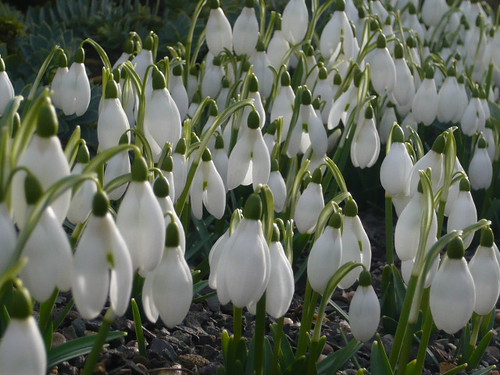
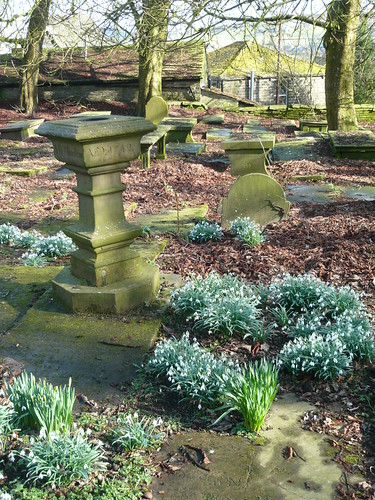
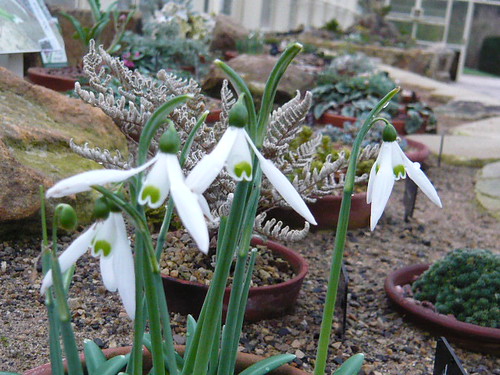
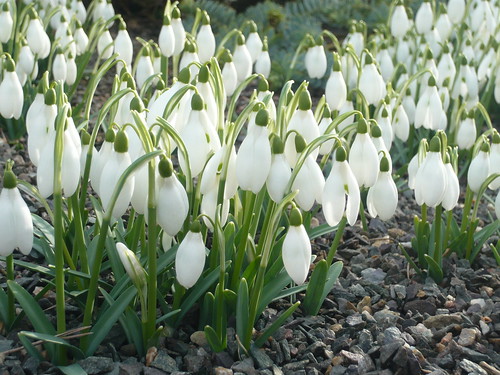
The snow and exceptionally cold snap has delayed the first snowdrops, but, this weekend, I spotted the first snowdrops peeping through the soil. I love the way they suddenly just appear. You hardly have time to notice the leaves before they are in bloom.

Another great early spring flower is the yellow aconite. A low growing bulb, this looks great in mass planting and creates a great foil to the white snowdrops.

Read the rest of this entry »
Permalink
January 24, 2010 at 12:53 am
· Filed under Flowers and Plants

Hellebores are generally very accommodating plants flowering early in spring and living happily in shade. Avoid Helleborus foetidus the stinking hellebore or setterwort, if you want coloured rose like flowers but it has shapely green florescence if you like growing a flower green bed.

As this graphic shows there are a growing number of hybrids offering a range of colours.
See our tips on Growing Helebores
Read the rest of this entry »
Permalink