July 29, 2009 at 12:01 am
· Filed under Flowers and Plants, Tips Hints and Ideas

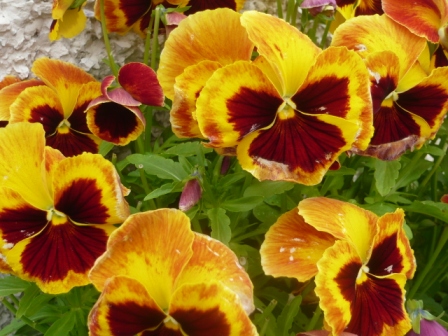
African Daisy, South African Daisy, Cape Daisy or Blue-eyed Daisy more correctly called Osteospermums not surprisingly belong to the daisy family of Compositae – Asteraceae.
They are similar to the annual Dimorphotheca with which they can be cross pollenated.
Although most Osteospermums are labeled as annuals they are in fact half-hardy perennials
The bright sun of the African or Namibian velt helps these flower show the true colours which are some of the strongest in the garden. These plants almost look fluorescent with the purples, oranges and yellows.

Read the rest of this entry »
Permalink
July 27, 2009 at 3:13 am
· Filed under Flowers and Plants
Unfortunately, the vegetable gardeners’ best laid plans can be spoilt be two large pests – rabbits and pigeons.
Rabbits are on the increase in our local area, and if not careful, they can decimate a crop overnight. Pigeons can also pick at vegetables, especially in the winter months they will attack your purple sprouting broccoli.
The best solution, short of standing outside allnight with a shotgun is to cover up the vegetables in netting. It’s not ideal if you are aiming for an ornamental vegetable garden. But, it is less unsightly than leaves with big holes in.
This is a simple contraption with six stakes topped off with a flower pot. A net is then secured over the top, providing an effective barrier against wild animals.
Permalink
July 27, 2009 at 12:20 am
· Filed under Fruit, Vegetables & Herbs, Trees and Shrubs

Sweet Cherry are not often grown in UK fruit gardens. To get a good crop of cherries you need several varieties for pollination, it takes 10 years to get a good crop (then birds eat them) and the trees take up a great deal of space. I will get lots of comments to the contrary now.
Going Ahead with Cherries
- Fan train your cherries against a wall and pinch out the growing shoots in June and again in September.
- Add lots of Lime and Potash to feed your Cherry
- Plant Standards 25 feet apart.
- Opt for a self fertile Morello Cherry or Acid Cherry like Kentish Red or Flemish Red
- For early Cherries in June try Early Rivers, Frogmore fruits in July and Emperor Francis in late August.
- For the above varieties check on the pollination requirements when you buy
- Be content to grow Cherries for the blossom that can last 3 weeks in spring.
- Smaller ‘Colt’ rootstock now allow trees to be controlled to 12 feet high.
I was lucky to be walking through this orchard earlier this month in Prague.
RHS
BBC Gardening Plant Finder
Permalink
July 27, 2009 at 12:06 am
· Filed under Flowers and Plants

Elegant Hollyhocks can grow and flower up to 9 feet tall on slender stalks that do not take up too much space. Cottage gardens thrived on the added height that Hollyhocks provide and many old varieties survive close to walls in these gardens.
General Tips on Hollyhocks
- Hollyhocks like a moist soil but a dry air to avoid rust. Only water at the base of the plant.
- The top half of the Hollyhock bears a spike of large showy flowers either single, semi-double as well as double.
- If growing from seed use the freshest seed you can get. I sow in summer after flowers have set seed but you can wait until May the following year.
- Hollyhocks are perennial (although I treat them as biennials) and if they stay free of Rust Virus (and some are better than others at this) then you can take cuttings or divide the plants to get more stock.
- Fertilise a couple times during the early part of the season with a general purpose fertiliser.
- When the 3-4 inch flowers fade cut them down to the ground.
- Seeds can be found under the name Althaea rosea in self colours of white, yellow, rose, scarlet and black. Read the rest of this entry »
Permalink
July 26, 2009 at 3:08 am
· Filed under Fruit, Vegetables & Herbs
I took this photo in Oxford Botanic Gardens. On the left is an imposing Verbascum. I love the way its tall yellow spikes contrast so well with the purple spikes in the background. Just to add a bit of interest there is the odd splash of orange from a rogue intruder.
Permalink
July 25, 2009 at 3:03 am
· Filed under Flowers and Plants

Sea of Sunflowers
photo by stuck in customs

Sunflower against perfect blue sky

A type of Sunflowers in Oxford Botanic Gardens

I think this is a form of Rudbeckia, a relation of the sunflower.
Tips on Growing sunflowers
Permalink
July 25, 2009 at 1:36 am
· Filed under Flowers and Plants

I have had a great show from 100 Anemone corms I bought in January. I only got them because they were being sold off at half price but were in individual packs of one variety.
Varieties Choosen
- The double blue Anemone Lord Lieutenant (shown above) was planted in a large container and has given the best display. I have now planted the compost corms and all direct into the garden.
- The Govenor is a deep red with a white inner ring and I planted this direct into the garden. Where I got good flowers the colour was stricking but I had fewer blooms.
- Admiral and Sylphide are both pinks that I mixed together – why I did I don’t know considering my comment above.
- The Bride was my selected white Anemone and this did very well in its own container. Whilst I thought I watered the containers quite well I found the bottom half of the soil had totally dried out and was hard to re wet. I must remember to do something about this next time.
Tip. Wholesale suppliers like J Parker’s have Amemones priced from £25 per thousand plus vat. Buy the biggest bulbs you can for a good show.
Permalink
July 25, 2009 at 12:05 am
· Filed under Flowers and Plants

I discovered a 6 inch pot in my greenhouse with a label saying Habranthus but I don’t know where I got the contents from. There were a couple of short, green, narrow leaves and little else until this week when flowers erupted from the soil on 4 inch stems with petals nearly as long.
I water my greenhouse with a hosepipe spray except when I am adding fertilizer and recently I have been misting over all the pots and plants. You can see how the spray has stuck to the Habranthus flower.
Rosemarysims from Daves Garden gives the best description ‘Like the Hippeastrums, Habranthus is hardy where ever the ground does not freeze and summers are hot. They are also excellent and forgiving pot plants but should be left outside during summer so the rains can touch them.
This is among my favorite of all rain lilies because of its size and that it continuously blooms in waves from April through about September (on the gulf coastal plain). The large Hippeastrum-like flowers all face in the same direction and give a charming effect. They are about 4″ long and across and on stems from 12″ to 24″, depending on how much rain has spurred them to bloom and whether they are in shade or sun (shorter in sun). The leaves are about 1/3″ wide and are flat and floppy but not unattractive in the garden.’ There are over 20 species of Habranthus to choose from and other plants also called Rain Lilies such as the Zepyranthes and Cooperia.
With all the rain we have been getting in England it may be worth tracking down some bulbs and giving them a try. The flowers are very pretty but I must wait to see how many actually flower and how mthey survive. ( The drizzle is coming down in stair rods again to make my garden boggy)
Permalink
July 24, 2009 at 6:27 am
· Filed under Flowers and Plants

What is the flower that groups of people and sheep all go to look at? Well it has to be Phlox and in this case the perennial Phlox paniculata.
Top Variety Tips
- Only 3 feet tall but the pure white Phlox of Mount Fuji earns its AGM. the flaring petals open out from twisted buds to form clusters of flat white scented flowers.
- Another AGM winner is Bright Eyes with pale pink flowers having a deeper red centre. The foliage may take on the red tinge during summer and it grows to about 4 feet tall.
- Phlox paniculata ‘Dodo Hanbury-Forbes’ AGM just for its name or Blue Ice or Blue Paradise to balance up the colour scheme.
Other Phlox Tips
- Phlox are easy to grow but some varieties may suffer from mildew. Bright Eyes is resistant.
- Phlox paniculata are a clump forming member of the Phlox family.
- Cut down the old stems in winter and give the plants a mulch.
- Phlox will flower in some shade but prefer and smell best in full sun.
- Phlox Tiara is a new double white flower
Permalink
July 24, 2009 at 2:54 am
· Filed under Fruit, Vegetables & Herbs

Courgettes
Courgettes are an easy crop to grow and well established can offer an excellent crop of tasty veg. Global warming in the UK, has made this crop even more successful and can be grown out of the greenhouse, even in the north of England.
Tips for Growing Courgettes
- Sow from late March to May in pots to make easy planting out later. Make sure soil is well manured and fertilised, the plant is a heavy feed.
- Early courgette plants should be grown in a warm greenhouse to protect against any frost and cold temperatures. They do well in full sun.
- Courgettes do better in warmer climates, heat will give a bigger and faster crop.
- Protect from slugs in the early stages of growth. But, once established they are fairly pest resistant.
- Crop regularly when courgettes are 4-6 inches. Cropping encourages more vegetables to be made.
- When growing in the greenhouse be ruthless in removing any fungal leaves or fungal vegetables. This fungal disease can easily spread if not kept in check.
- If you grown courgettes in the greenhouse you may find the leaves can become too big. If this is the case, you can remove some of the bigger leaves without much loss. It is important to ensure good airflow.
- When vegetables are forming it is important to keep well watered and well fed. A proprietary tomato feed is an excellent food for the cropping vegetable.
Courgettes, gourds and marrows
Other Resources
Royal Horticultural Society RHS ‘Gardening for All’
National Council for Conservation of Plants and Gardens ‘Conservation through Cultivation.’
Garden Organic National Charity for Organic Gardening.
BBC Gardening
Permalink