Archive for September, 2008

Mildew on Plants in Autumn

mildew-on-hebe

Mildew is a white powdery fungus that looks unsightly on these leaves. Mildew is a sign of stress in a plant and usually arises from damp air with poor circulation. It is prevalent in my garden now Autumn is here in force.

Some plants are more prone than others. My Phlox, Roses, Michaelmas Daisies and Azaleas have varying amounts of mildew at the moment.

Prevention improves by increasing the air flow and prune to allow that to happen. Water the ground not the leaves and mulch to keep moist. Treatment by fungicide may not be eco-friendly so try a spray made from a tablespoon of baking soda in a gallon of water with a squirt of washing upo liquid to help it to stay on the leaves.  The fungus will not spread from one species to another but will linger in the soil so destroy infected plant matter or put up with the problem.

Seek out mildew resistant varieties and avoid late feeding of high nitrogen fertilizer creating young sappy growth.

Comments

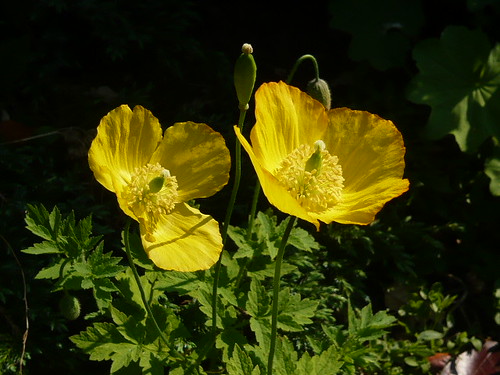
Growing Iceland Poppies papaver nudicale

iceland-poppy

Photo from http://mikeandphilonthehill.blogspot.com/2008/02/080113-first-icelandic-poppy.html

This is an easy to grow biennial. Plant seeds now, either where they are to flower, or under cover for planting out 9 inches apart later. Germination can be erratic but they also dislike being transplanted so you are caught between a rockery and hard-landscaping.

The reason I say they are easy, is because they self sow all over my garden and dispite the delicate petals I think of them as weeds. So much so that I forgot to photograph any earlier this year.

Other Seeds to sow for next year

  • Cerinthe major ‘Purpurascens’ grey leaves with purple bell flowers
  • Eschscholzia - Californian Poppy
  • Calendula officinalis - Indian Prince mixed coloured pot marigolds

Comments

Taking Late Autumn Cuttings

It is still not too late to take semi ripe and hard wood cuttings. Many perennials are short lived, like penstemon above, and they can be reinvigorated from new cuttings. Plants are not at there best in Autumn so results may not be perfect but I find it pays to experiment.

Gardeners Autumn Cutting Tips

  • Take more cuttings than you need to cover losses.
  • Add perlite to your  compost or use damp sand and peat
  • Hardwood cuttings of roses, hebe, choysia and other shrubs and trees can be taken and left outside under some shelter from a hedge.
  • Pelargonium and decorative Fuchsia need to be over wintered away from frost and I find it easier to do this with cuttings rather than large plants.

Comments

Dealing With Weeds in Ponds

Pond Weed
Pond Weed

A small wild life pond doesn’t have to be weedy in either sense. This pond in our park for example is a fairly large size. However as you can see it is ‘Weedy’ in the gardening sense.

Removing Blanket Weed

  • Oxygenating plants are the best and organic method but may fill half the pond.
  • For a small pond you can try the winding it around a stick method but roots regrow and small critters may be thrown on the compost heap with the weed.
  • Sun causes growth of blanket weed and a covering of water lilies will help keep it down
  • Hydrogen peroxide inhibits all algae growth and this can be created organically using straw bales made from Barley - Put some in a stocking for a smaller pond or try a chemical concentrate
  • UV filters are expensive but if you want to be sure to see your fish hang the expense.

Comments

Photos from Oxford Gardens - Early Autumn

photo

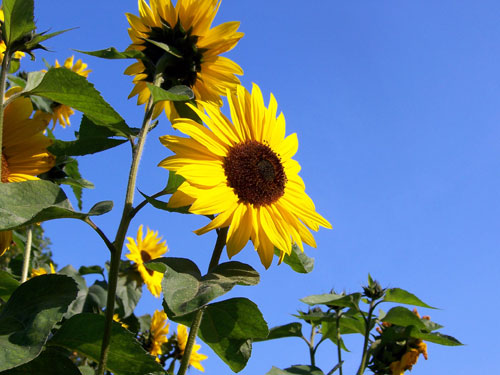
Sunflowers

photo

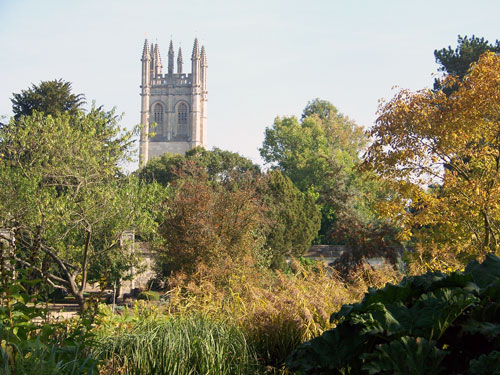
Oxford Botanic Gardens

photo

Sunflowers nearly as tall as the tower

photo

Autumn Colours

photo

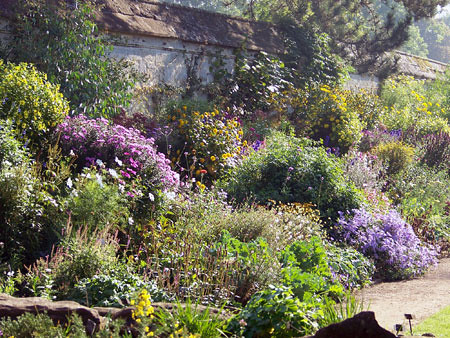
Oxford Botanic Garden - early autumn

photo

Late flowering herbaceous border

Comments

Confessions of a Gardening Gourmand

A gourmet is a connoisseur of delicacies and a judge of good food. Therefore a ‘gardening gourmet’ is a connoisseur of the garden and its impact on all your senses.

A gourmand is more like a gluttonous and greedy feeder who is hard to satiate. A ‘gardening gourmand ‘ acquires more plants,  grows more seedlings, takes more cuttings than needed and crams everything into a tight garden space.

I am a repenting garden gourmand at least until next spring.

Avoid the worst of Gardening Gourmandishness. Read the rest of this entry »

Comments

Rhus typhina, Stag Horn Sumach

This tree in my neighbours garden is about 9 foot tall. The panticles looks spectacular in the evening sunlight but overall the plant is prone to suckers and consumes a lot of space.

Growing Rhus

  • If you get sucker problems try the RHS web site
  • As part of a large family select your Rhus from a reputable nursery avoiding the Poison Ivy ‘Rhus toxicodendron’ (several species have irritating sap)
  • Autumn leaf colouring of yellow, orange, red and purple can be spectacular. It is one of the main reasons for giving these plants garden-room.
  • I am happy to admire these plants in other gardens, at least until I have a lot more space to fill.

Comments

Gardening For Climate Change

After this wet summer what has happened to Global Warming? Are there any advantages of Global Warming and how should gardeners design for such changes.

What is Global Warming

‘Climate change’ is used as a catch-all phrase to encompass the effects of global warming, the increase in temperature caused by greenhouse gases and the Northerly drift of hotter climates. Read the rest of this entry »

Comments

Floral Clock Bradford

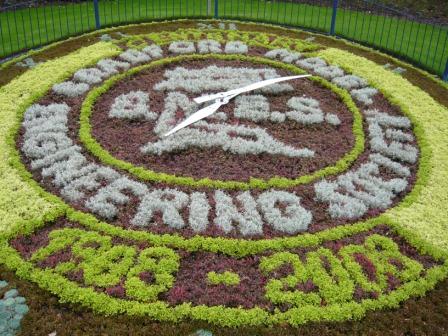
For many years I have seen floral clocks at Cartwright Hall, Bradford but just realised they are seldom floral. The plants used are low growing, coloured leaf plants like short Lavender, Sedums, Golden Moss, Blue Festuca grass and Sage. Each year the clock celebrates an event, charity or organisation - perhaps I will have a theme for my garden next year.

This year the numerals were picked out with Echeveria see earlier post.

Comments

Uses for Echevaria

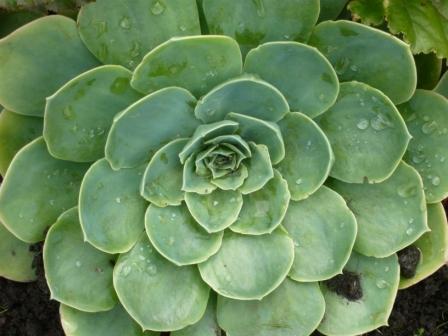
Succulents often have neat attractive leaf forms. The range of rosettes available in the Echevaria group include red tipped points to the leaves and tight groups of offsets as they multiply. This leads to a common name of ‘Hens and Chickens’.

Where to Grow Echeveria

  • This specimen was part of a row at the front of a formal border.
  • They can be grown with success in old sinks or pots, both indoors and outdoors. Ensure it is well drained and never stands in water.
  • In rockeries or alpine gardens surrounded by gravel these plants can colonise neat areas and suppress weeds.
  • As greenhouse or indoor pot plants they flower with interesting spikes. Again keep them quite dry.
  • They make an interesting collection with enough variety to a maintain interest.

Comments

« Previous entries