Gardening Products

Tips for the Gardener

Raised Beds Raise Crop Yield

Posted: May 30th, 2010 | Author: hortoris | Filed under: Growing Aids | Tags: good soil | No Comments »
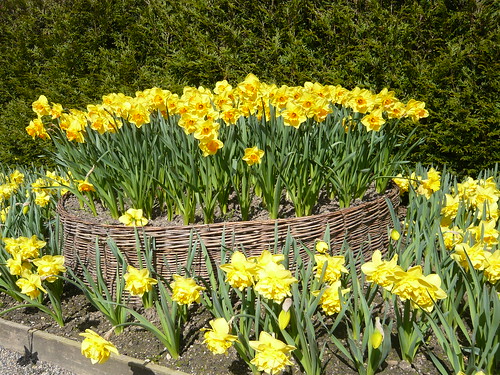
daffodil in willow display

In praise of raised beds I find I get more veg and salad with a raised bed. Not only that but with careful siting I can access the raised bed with less bending – good news for a creaky old gardener.

Types of Raised Bed

  • Pre-formed wooden boards or plastic are easy to assemble and long lasting. The photo above shows how the boards have lifted the base above the surrounding soil.
  • The photo then shows how woven willow is used to hold a pile of soil as a raised bed for Daffodils.
  • You can build a permanent wall of stone or breeze blocks, then fill it with good compost and manure.
  • If you use your own boards or planks support the lower side with long pegs driven into the ground so the raised soil doesn’t push the board over. I made my pegs from 1-2″ diameter tree prunings.

Raised beds are available from Thompson Morgan in several styles. I like the idea of the mini-grow bed that can be moved when not in season.


Best Lawn Weed Killers

Posted: May 20th, 2010 | Author: tejvan | Filed under: Uncategorized | 3 Comments »

The traditional lawn weed killer, is based on  Ferrous Sulphate. Ferrous sulphate will kill moss and damage the broad leaves of weeds such as dandelions. However, ferrous sulphate is not guaranteed to kill all lawn weeds, so it is usually combined with other selective weedkillers with active ingredients such as:

  • MCPA
  • Dicamba
  • 2,4 D
  • Mecoprop- P
  • Dichlorprop
  • Fluroxypy

Take care when applying lawn weedkiller, it is important to follow instructions careful. Make sure you don’t apply too much as you could be left with brown grass.

After application do not walk on lawn until it has rained or two days have passed. The application may take a long time to have effect, up to 4-5 weeks. Some weeds may need a second application.

It may also be worthwhile doing a bit of grubbing for stubborn weeds (using trowel to dig up tap root).

Also, it is important to combine lawn weed killer with good lawn maintenance. For example, if your lawn is very mossy, try to ensure better drainage, and more light, otherwise the problem will just return.

Best Lawn Weed Killers

Book Cover
Lawn weed killer

Four in One Weed killer and Feed. Feeds grass, kills weeds, controls moss and helps protect against draught.

Spot Lawn Weed Killers

Useful for direct spraying of problem areas. This is easy to use with a simple spray gun action – saves having to mix up chemicals.

Book Cover

Spray on lawn weed killer at Amazon

Related

  • Common Lawn weeds and treatment

Best Weed Control

Posted: May 20th, 2010 | Author: tejvan | Filed under: Uncategorized | 1 Comment »

weed

There are different ways to control weeds in the garden. This will depend on the type of weed.

Hoeing.

For annual weeds, hoeing is often simplest and most effective way of killing them. Wait until they have got to a reasonable size, but, before they start setting seed, then hoe cutting them off at ground level.

Be careful of hoeing bare soil as you may bring weeds seeds to the surface. Also, I like to take care to avoid hoeing any self-sown annuals that you actually want.

Choose a dry day, so that you they will soon dry up. They can later be collected and put on compost heap.

Grubing.

Be prepared to go on hands and knees. Get a trowel or fork and dig under the perennial weeds tap root. Loosen the soil and try and get as much of the root as possible. It works better on dry soil as it tends to be easier to sake off the soil from the roots. Be careful, not to split up the tap root into smaller pieces, as you may end up multiplying the weed.

Glyphospate

Glyphospate is one of the commonest available weed killers. It is often sold under brand names such as RoundUp. It will kill any plant material, so take care when spraying. One option is to use some suitable gloves and put some weedkiller on the tips of the gloves and then smear it directly on to the leaves. You can also use a small brush to apply the weedkiller directly.

Glyphospate Weed Killers

Book Cover at Amazon.co.uk

Weedkillers at Amazon.co.uk

If necessary, cut away some lower leaves of a nearby choice plant to make it easier to get the weed.

For climbers like Bindweed, put a cane in ground to allow it to grow up. (see picture top)

After applying Glyphosate, give the chemical time to travel down in to the ground.

Related

  • Controlling invasive weeds
  • Most Common Garden Weeds
  • Tips for weeding a garden

Killing Aphids

Posted: May 20th, 2010 | Author: tejvan | Filed under: Pests and Problems | 3 Comments »

Aphids can do a lot of damage to plants. Firstly they weaken it by drinking the sap. Secondly they can spread disease such as powdery mildew. Aphid action also often attracts ants, who enjoy the sticky residue left by aphids. Ants are not directly a problem, but, they can damage the base of plants and look unsightly.

If you have some prize specimens, keep a close eye for first sign of infestation in April, May. At first sign you can try squeezing them with your fingers or blowing them off with water.

If you are going for organic control, you will want to be encouraging natural predators such as hoverflies and ladybirds. This can be done by using plants which attract the hoverflies. For example stinging nettles and marigolds.

Organic Spray for Aphids.

There are organic sprays for aphids. These are based on fatty acid sprays which are counted as organic. However, they are not systemic. Organic Aphid Sprays at Amazon

Pesticides for Aphids.

If organic controls are insufficient, you may need to resort to a chemical spray which kills the aphids and can also provide a systemic action, entering into sap and preventing future infestations.

  • Pesticides for Aphids

Related

  • Organic methods for dealing with Greenfly
  • Best Way of Killing slugs

Create a Butterfly Garden

Posted: May 14th, 2010 | Author: hortoris | Filed under: Products, Seeds and Plants | 4 Comments »

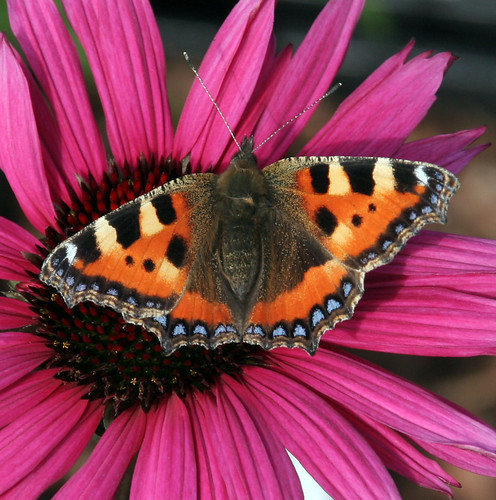
A Butterfly Garden Kit can help children appreciate the beauty of butterflies in the garden. In addition to the kit comes a certificate to get 5 live caterpillars sent to you to grow on until they metamorphise into butterflies. Then they can then be released into your garden.

Butterflies then will look for nectar and pollen from your garden flowers. Buddleja, Pinks, Achillea and wild flowers are ideal plants to grow. You can buy seeds or plants in a range of varieties and clours. Butterfly seed mixture from Thompson & Morgan

Only the Cabbage White butterfly caterpillars have ever done any damage in my garden. That was to the brassicas and who needs too much cabbage anyway. So as an environmentally sound wildlife garden project give butterflies a treat this summer.

Butterflies like a drop of water and a bird bath can be of some use.

Related Links

Get Butterflies in your garden
How to attract butterflies in your garden


Best Plant Food

Posted: May 13th, 2010 | Author: tejvan | Filed under: Uncategorized | 1 Comment »

To get best from garden it is important to make sure your plants have adequate food and nutrients. It is also important to make sure they aren’t overfed with the wrong kind of food.

The first thing is to try and feed the soil. See these soil improvement tips. This will provide natural food and also help the organic content of the soil.

However, it may be hard to get sufficient compost in a short space of time. Therefore, the garden will need additional feeding.

A liquid feed is ideal for pots and grow bags. It enables you to feed exactly where you want and the food is immediately in the soil. Sometimes it is worth feeding less than the manufacturers recommendations but more frequently – less but more frequently is main thing.

Slow Release Feed.

Slow release feed is great for the low maintenance gardener. One sprinkling in spring can be sufficient to provide food throughout the gardening season.

Organic Feed.

If you have a patch of comfrey, you can make your own organic feed  by stewing comfrey in a tub of water and draining off the liquid. Be ware it is somewhat smelly. See: Free comfrey plant food

Tomato Food.

There isn’t a specific ‘tomato food’ Tomatoes just thrive on Potash – which is element ideal for fruit and flowers. It is relatively low in nitrogen – good for green growth, but, this will help provide a bumper crop. Tomato Feeds

  • Plant Food at Amazon

Compost Accelerators

Posted: May 12th, 2010 | Author: tejvan | Filed under: Products | 2 Comments »

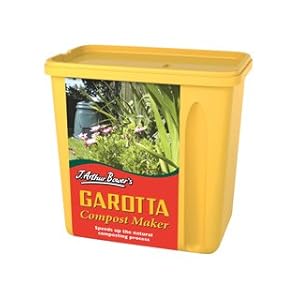
Good compost is a valuable ingredient for a successful garden. Unfortunately, compost can take a while to decompose. Therefore, it is well worth helping to speed up the natural process with a compost accelerator. A compost accelerator contains nitrogen and other ingredients which help speed up the natural organic cycle of breaking down plant material.


  • Compost accelerators at Amazon

Book Cover

  • Garotta Compost Maker

In addition to using a good compost accelerator, it is also worth bearing in mind the following tips to help compost decompose.

  • It is vital the compost is moist. Dry compost will take forever to decompose. Make sure when adding accelerator, that you add sufficient water.
  • Well drained. At same time, it is important that there is sufficient drainage, if compost gets waterlogged it will become a smelly anaerobic mess.
  • Mixture of plant material. Mix grass clippings with more woody style plants.
  • See: Tips on making compost

Sunflowers From Seed

Posted: May 7th, 2010 | Author: tejvan | Filed under: Seeds and Plants | 1 Comment »

sunflowers

It is not too late to try growing some sunflowers from seed. At this time of the year they can be sown directly into the soil. However, for best results, we suggest sowing 2 or 3 seeds in a 3 inch pot and then later planting out.

For early sunflowers, try sowing under glass in March. Provide a gentle heat for best results.

After a few weeks thin out the weakest seedlings to leave one plant. When the seedling has outgrown its pots, dig a hole into the ground and plant the young sunflower into the soil.

Before planting, try digging some organic matter into the soil to give the sunflowers a good source of food.

Keep well watered, especially during the planting time.

Staking Sunflowers.

As soon as a sunflower is over 1 foot, you will need to think about staking. Try to know the likely size of the sunflower and plant a cane firmly into the ground. Make sure, it is put firmly into the ground to protect against late summer winds. Also, the sunflower will become heavy when it starts to flower.

Sunflower Seeds – Great Value

    Various sunflowers from Thompson & Morgan

More Tips on Growing sunflowers

  • Tips for growing sunflowers

Watering Cans for Colourful Gardens

Posted: May 5th, 2010 | Author: hortoris | Filed under: Products | Tags: Watering | No Comments »

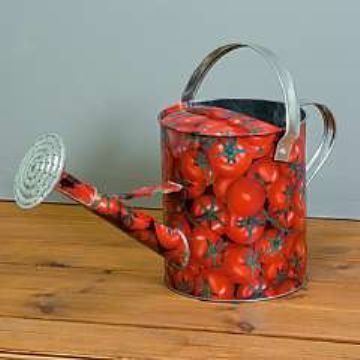
Watering Cans can add a splash of colour as well as a splash of water.

The tomatoes on this can will benefit from regular watering. I take the rose off to get a stream of water down into the deep roots of the tomato via a sunken plant pot alongside each plant.

Colourful cans and traditional ‘Haws’ cans (red) with a good balance can make light work of watering.

Girlie Gardeners do a fine pink watering can for a lightweight load.

Note
Watering cans in plastic do not react to garden chemicals but go hard and brittle with UV sunlight.
Galvanised metal cans are the more sturdy, traditional and longer lasting.


List of Plants in RHS Plant Finder

Posted: May 5th, 2010 | Author: hortoris | Filed under: Books & Publications | 1 Comment »

Book Cover

If you want to know where to find 73,000 plants the Royal Horticultural Society Plant Finder 2010-2011 is the source for you.

Containing contact details, with maps, for over 750 nurseries it will help you locate and buy your plants.

At £8.00 for about 1000 pages of valuable information it is a good buy or present for another gardener.


« Older Entries
Newer Entries »
  • Best of Gardeners Tips
  • Top 100 Gardeners
  • Gardening at Amazon.co.uk
  • Seeds at Thompson & Morgan
  • Jersey Plants Direct

Categories

  • Art
  • Books & Publications
  • Clothing
  • Constructions and Greenhouses
  • Garden Economics
  • Growing Aids
  • Pests and Problems
  • Products
  • Projects
  • Seeds and Plants
  • Tools and Equipment
  • Uncategorized
  • Weeds and Treatments
Gardeners Tips