Gardening Products

Tips for the Gardener

Gardening Book of the Month Botanic Art

Posted: October 19th, 2011 | Author: hortoris | Filed under: Art, Books & Publications | 1 Comment »

Book Cover

‘The Golden Age of Flowers: Botanical Illustration in the Age of Discovery 1600-1800′ by Celia Fisher is a lavishly illustrated book of the most beautiful illustrations from the 17th and 18th centuries.
The organisation is alphabetical with a text that outlines origins, derivation of names and the properties for which the flower was most valued.

The book could become one of your most valued coffee table books or a suitable Christmas present for a relative.

The 17th and 18th centuries saw a surge of interest in the horticultural and gardening with new plants. This led to a ‘flowering’ of botanical illustration and witnessed the production of some of the greatest books of plant illustration ever produced, including such outstanding examples as the Hortus Eystettensis, the work of Maria Sybilla Merian, Thornton’s Temple of Flora, Banks’s Florilegium and Sibthorpe’s Flora Graeca.

  • During this period several developments took place that led to a significant increase in the popularity and output of botanical illustration. The first was the development of the process of engraving on metal in the 1600s, which revolutionised illustration.
  • The second was the development of the new Linnaean system which was helped, in part, by the high quality of illustrations produced at the time.
  • The third significant development was the epic voyages of discovery which recorded and collected the exotic plants encountered in remote uncharted lands.

In this lavishly illustrated new book, ‘The Golden Age of Flowers’, ‘Celia Fisher has selected over 100 of the most beautiful flower images from this period. The flowers are arranged in alphabetical order, and the text that accompanies them outlines their origin, the derivation of their name and the properties for which they were most valued. This beautiful new book will appeal to anyone with an interest in botanical history and illustration, and flowers and gardening’.

Celia Fisher is a renowned expert on flowers and fruit in art and books. She is the author of Flowers and Fruit, Still Life Paintings, Flowers in Medieval Manuscripts (The British Library, 2004) and The Medieval Flower Book (The British Library, 2007). This title is available from Amazon for £17 post free in the UK

Botanic Art in Wales
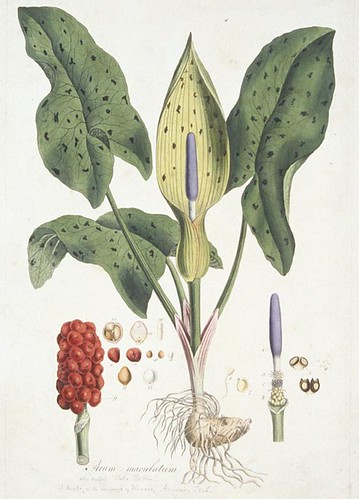
lords and ladies


Arum maculatum (Lords and Ladies) from Flora Londinensis (1777-1787) published by William Curtis.
Hand-coloured engraving: 46cm x 31.5cm.
Flora Londinensis included all wild flowers growing within a ten mile radius of London, which was then surrounded by fields and undrained marshland. The hand-coloured illustrations are exceptionally delicate and precise so it is surprising that it failed to attract many subscribers. After ten years, Curtis had to admit financial defeat and in 1787, he produced the smaller Botanical Magazine, which is still in production today, over 200 years later.

Further information can be seen on Rhagor, the collections based website from Amgueddfa Cymru – National Museum Wales. Creative Commons on flikr NonCommercial-ShareAlike 2.0 Generic


Rodent Removal and Remedies UK

Posted: October 17th, 2011 | Author: hortoris | Filed under: Pests and Problems | No Comments »

Garden Chemicals

Rodents are active at this time of year. In late summer they think about shelter for winter and start building nests in warm areas like old garden huts or garages.
A second problem comes as rodents scavenge for food to see them through winter.

Rodent Food and Damage

  • Mice love to eat crocus and other newly planted bulbs.
  • I have found rats like the warmth of my compost heap to say nothing of the kitchen food scraps they can find on the heap.
  • Rodents chew sacks and even wires and can make holes just where you do not want them

Remedy these problems with a chemical product or opt for a humane trap.
Keep food stocks in safe containers

Humane traps leave you with the problem of disposal. It isn’t right or fair to the animal. For example if you catch a grey squirrel it is illegal to let it go again. There is no legal poison for home owners to use on squirrels.
So that leaves lethal traps designed to do what it says in the name.

Garden Chemicals


Sow and Stich Silk Flowers

Posted: October 12th, 2011 | Author: hortoris | Filed under: Art | No Comments »

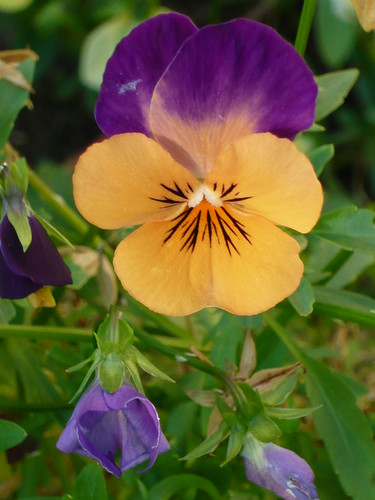
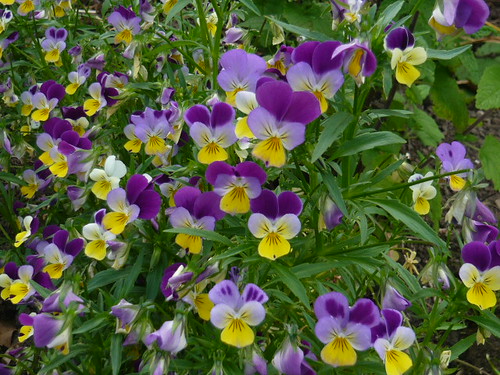
Viola 045

Something a bit different that might appeal during the long winter nights when gardening gets tough.

‘Stitch and Sow’ are a range of Embroidery kits with a packet of seeds to grow alongside the Embroidery you are creating. Indian silk fabrics are provided and the A5 sized flower range includes
Cornflower or Lavender
Geranium (Pelargonium)
Lupin or Poppy.
Sunflower (Grow your own Van Gogh)

A4 sized kits include Morning Glory, Foxglove, Dahlia and Hearts-ease.

Abacus Designs are the supplier

Viola self sown


Humate Biologically Active Plant Food

Posted: October 12th, 2011 | Author: hortoris | Filed under: Products | No Comments »

Humic acids are eco-friendly compounds derived from soil, peat, and humus. Humic substances are formed by the microbial degradation of dead plant matter and when used as plant food it seems to be a form of recycling.
Humic product vendors claim they greatly improve the soil and promote beneficial micro-organisms and bio-life within the plants root zone area.
I first encountered these new products at the Glee show for garden centres and horticulturalists in Birmingham in September

Claimed Benefits

  • Stimulates seed germination
  • Promotes  rapid root development and helps layering
  • Reduces transplant shock
  • Promotes increased immune system and resistance to pests and disease
  • Decreases watering requirements and stimulates weak plants
  • Grows green foliage, thicker stems and larger buds
  • Reduces residual pesticides and nitrate
  • Backed by 40+ years of research in organic Humate base agriculture products
  • Works in any growing medium…no expensive hydroponics necessary, and no need to change the growing medium between crops

Humates consisting of biologically active fulvic acids and humic acids are crucial to life on earth because they provide a biochemical bridge between mineral and living plant matter. Humic and fulvic acid are powerful chelaters and help to increase nutrient absorption.

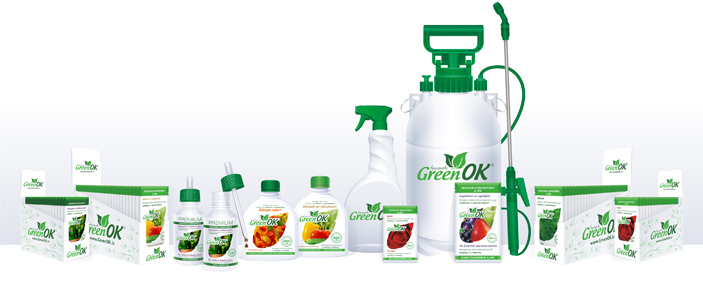
Green OK
have a range of products which also include good old NPK so the plants shouldn’t suffer if you decide to experiment.
They are part of the Latvian Institute of Humic Studies and the product are just arriving on the shelves of UK retailers

Snake oil or a breakthrough in plant nutrition? Well seaweed is a great additive so will Latvian soil extracts work as well? I have yet to try the products but hope too soon. I will report back


Organic Hoof and Horn Fertilizer

Posted: September 28th, 2011 | Author: hortoris | Filed under: Growing Aids, Uncategorized | No Comments »

high trees 132

Hoof and Horn or ‘Hoof and Horn Meal’ is a valuable organic fertilizer.
Ground in to a powder the hooves and horns of animals from slaughter houses makes this nitrogen rich granular fertilizer. The cooked, ground, dehydrated cattle hooves and horns also contains phosphates for root growth.

Using Hoof and Horn

  • Fine ground the Hoof and Horn will provide a quick hit of nitrogen and some phosphates.
  • A coarser ground product will be slower to release the goodness.
  • Hoof and Horn is usually worked into the top of the soil at about 2oz per square yard.
  • Take care as fine roots can be burnt if applied to thickly.

Uses of Hoof and Horn

  • Hoof and Horn is a useful top-up or stop-gap organic fertilizer for nitrogen hungry plants and on poor soil.
  • Used to increase green leaf growth and on vegetable when they have overwintered.
  • Hoof and Horn increases root growth
  • Organically improves soil structure
  • Top dressing of Hoof and Horn as a stop-gap measure when growing hungry vegetables including brassicas, tomatoes and lettuce.
  • Can be used instead of manure on rhubarb plants and around large fruit trees such as Nectarine and Peaches
  • Hoof and Horn is sometimes used as a compost activator to speed decomposition

Compare Hoof and Horn to Other Fertilizers

  • Hoof and Horn Meal is is equivalent to Blood Meal in Nitrogen content. The nutrient availability is slower, which is better for organic crops causing less leaf burn.
  • It nutrient availability starts at around 4-6 weeks and can lasts 12 months.
  • It contains Phosphorus for stem and root growth.
  • Hoof and Horn nitrogen content is comparible with Blood Meal. The slower release rate of the former is better timed with plant uptake rates.
  • At normal application rates it will not be damaging or wasteful.
  • Hoof and Horn has a strong smell that may attract animals but it dissipates more rapidly than that created with Bone Meal.
  • Not seen packaged up as frequently as it was at one time Hoof and Horn is worth looking out for
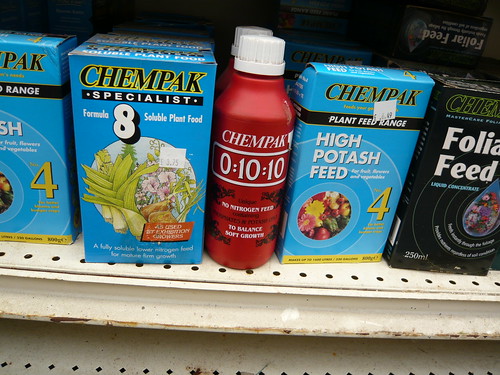
  • The nearest substitute we have found is Chempak 2 a product range supplied by Thompson & Morgan


Gardening Glove for Every Finger

Posted: September 20th, 2011 | Author: hortoris | Filed under: Clothing | No Comments »

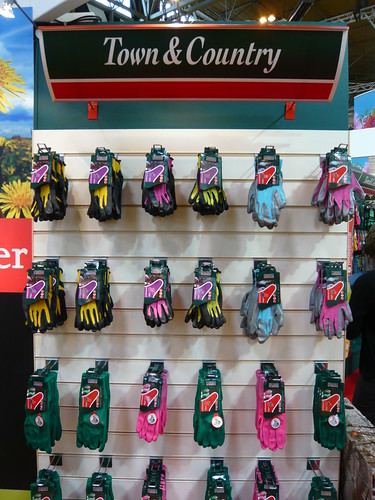
Gardeners Gloves

Gardening gloves come in a variety of colours and sizes. As I found out at the Glee show in the NEC on from Sunday to Wednesday this week the colours and sizes also relates to the number of manufacturers and resellers.

Tip and Uses for Gardening Gloves

  • I prefer to do as much gardening as possible without any gloves.
  • Sharp, spiky leaves and prickly prunings are an exception and I need good thorn proof protection
  • When occasionally calling upon chemicals, like disinfectants for my dirty plant pots, I use the old standby rubber glove or Marigold
  • When lifting or moving something slippy or awkward to hold gloves may give you extra purchase.
  • When your hands are cut, grazed or damaged then gloves can keep them clean and prevent infection or further damage
  • I collect free horse manure from a local stables and when it is wet and ripe I have been known to wear some gloves.
  • Freezing weather should be a time for gloves but I find they generally get in the way.

Heavy duty leather working gloves and others available form Amazon

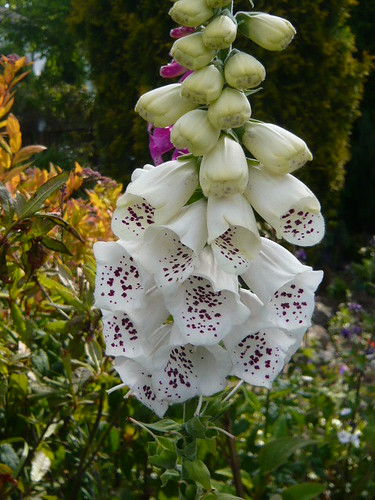
You knew I couldn’t resist a terrible pun and gloves in the garden, having no palms but some hand-some fox-gloves I opted for this picture – wait til I get my mits on the person who gave me my sense of humour.
Foxglove

Potato scrubbing gloves available from Thompson & Morgan

I have fingered it out at last a finger stall will protect a damaged finger better than an elastoplast.


Gardening Book of the Month October 2011

Posted: September 14th, 2011 | Author: hortoris | Filed under: Books & Publications | 1 Comment »

Book Cover

Directions for the Gardiner and Other Horticultural Advice by John Evelyn 1660-1706 and edited by Maggie Campbell-Culver is this months interesting selection.
Do not expect many photographs as they had not been invented in the 17th Century when this book of diary entries and collected works were first created. Instead expect a learned document of gardening observations from long ago.

John Evelyn Scholar and Author

  • John Evely was a noted diarist and contemporary of Samuel Pepys
  • He wrote ‘Sylva or a Discourse on Forest Trees’ a significant work on trees and timber management
  • Included in ‘Directions for the Gardiner and Other Horticultural Advice’ are 3 works as originally created.
  • ‘Kalendarium Hortense’ gives month by month advice on work in the flower and kitchen garden. (A first gardeners tips project!)
  • ‘Directions for the Gardiner’ lists plants, tools and gardening terms.
  • ‘Acetaria’ deals with salad crops and there preparation for eating.

John Evelyn Gardiner and Gardener

  • As a royalist during the Civil War he saw the Prince of Orange’s garden in the Hague and in Paris saw the Tuileries, Luxembourg gardens and ‘Cypress cutt flat and set even as a wall’
  • In 1652 he set up home in Sayes Court in Deptford now sadly only a small urban park marks the spot.
  • Undoubtedly he was influenced by the hedges of Europe including the Pope’s garden and the Elysium at Villa Borghese
  • The main features at Sayes Court in the 17th century included
    • a long terrace walk overlooking an elaborate box parterre;
    • a large rectangular area planted with many different species of trees, inset with walks and recesses;
    • avenues and hedges of ash, elm, and holly; and a long walk.
    • large kitchen gardens and a great orchard of three hundred fruit trees;
  • In 1660 Evelyn was a member of the group that founded the Royal Society.

Book of The Month

This book contains over 300 pages of detailed work both by John Evelyn and the editor who has stitched it all together into a useful resource to dip in and out of.
John Evelyn works in print including his diary are available from Amazon The Directions for the Gardiner and Other Horticultural Advice can be found on Amazon by clicking on the book cover above.


Woodcare this Winter

Posted: September 7th, 2011 | Author: hortoris | Filed under: Products | No Comments »

Weather the winter with top tips from the woodcare people, Ronseal .

With the onset of wintry weather just months away, leading woodcare manufacturer Ronseal are urging people to act now in order to protect their homes and gardens from the elements.

Just a few simple steps and some carefully chosen products are all it takes to ensure that both interior and exterior woods are fully protected and ready for whatever the weather has in store.

1. Protect wooden garden furniture against cracking, splitting and discolouring with a long lasting, protective stain such as Ronseal’s Hardwood Furniture Stain. This will protect the wood against the elements and also offers a three-year guarantee, meaning next year you can just sit back, relax and let Ronseal do the work!

2. Decking areas are one of the most vulnerable in the garden. Exposed throughout the winter months, decking has to be able to cope with all manner of weather conditions so it’s important to prepare it well. Ronseal’s Perfect Finish High Traffic Decking Stain is waterproof so it protects against rain, frost damage, cracking and peeling. The advanced formulation also protects against knocks, scuffs and scratches whilst the UV filters prevent greying and maintain colour for longer.

3. The winter months are notorious for being grey and bleak so why not protect your garden wood with a product that will also add a splash of colour. Ronseal Woodland Trust Colours are a range of wood stains suitable for use on all types of garden wood including furniture, fences and sheds. Available in eight natural tones, including Bluebell (blue), Fern (green) and Bramble (red), each colour is wax enriched and offers up to three years of protection.

4. Ronseal’s One Coat Sprayable Fencelife provides an easy and convenient way to combat fence rot and water decay brought on by winter climates. With its wax enriched formula it protects your fences from the effects of the weather, whilst advanced resins and light-fast pigments ensure superb coverage in just one coat. What’s more, when applied using a Ronseal Power Sprayer, your treatment time is shaved to just two minutes per panel. Perfect for when the nights are closing in!

5. Prepare exterior doors, window frames and cladding for winter with Ronseal 5 Year Woodstain. Available in a choice of eight colours, this easy to apply stain is rainproof in just one hour and delivers five years of protection. Highly water repellent, it also resists cracking and peeling and, when the summer eventually arrives, it will protect your timber from the sun’s harmful UV rays. Top tip: Ensure you treat the top, bottom and sides of doors to keep moisture out and prevent bowing and warping.

6. Autumn and winter are also the best times of the year for doing those interior jobs that you didn’t get round to doing during the summer. Ronseal Perfect Finish Varnish is the easiest way to achieve beautiful interior wood and comes with a Perfect Finish pad and can be used on either large flat surfaces or small intricate areas. The unique varnish pad deliver a super smooth finishfree from brush marks, ensuring that you always get a perfect finish. Ronseal Perfect Floor Varnish is also available for areas of flooring.

Ronseal products available now from Amazon

Path Cleaning and Cleaners
Garden Disinfectants
Best Weed Killers
Wood Care
Fence Care


Chihuly Glass Garden Art

Posted: September 6th, 2011 | Author: hortoris | Filed under: Art | No Comments »

Chihuly in the Garden

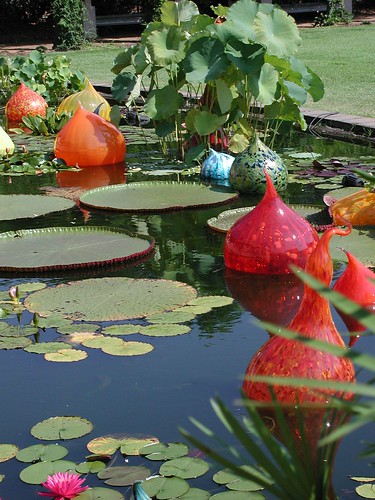
These freeblown functional and sculptural glass works floating in Atlanta Botanical Garden were designed by Dale Chihuly

Chihuly in the Garden


Attribution-NonCommercial-ShareAlike 2.0 Generic (CC BY-NC-SA 2.0)by robholland, on Flickr
Comment

  • Glass is a great product to use in garden design and sculpture
  • Protect your delicate glass sculptures from heavy frost
  • See more on glass installations by Dale Chihuly

Gazebo and Garden Tent Types

Posted: September 5th, 2011 | Author: hortoris | Filed under: Constructions and Greenhouses | No Comments »

Gazebo a Minerbio

Spring showers, Autumn rain and Summer storms can all spoil our enjoyment of the garden.
For those planning a garden party or just informal drinks a Gazebo may be the answer.

Low Cost – Good Value Gazebos

  • Surprisingly you can get a self assembly, steel framed gazebo from B&Q for £17. It measures 10 foot by 7 foot and is powder coated steel in white.
  • The Arran gazebo is a big play tent 10′ by 10′ costing £30 from Homebase or a striped model is £80 from Tesco
  • Pop up Gazebos from Tesco, Webbs and Greenfingers are from £70-£90. Guy ropes and pegs are included.
  • Side walls may be appropriate but remember this will increase wind resistance so watch the weather.

Upmarket Gazebos

  • Skye garden party gazebo from B&Q costs £99 and measures an impressive 30′ by 10′. It is enclosable on all 4 sides.
  • Totally open sides with a pyramid shaped roof looks elegant in the Sumba model from B&Q.
  • Gazebos

    available from Amazon are shown here

What is a Gazebo

  • Gazebos are an ornamental garden feature with international connections.
  • Used to provide shelter from strong sunshine, breezes, insects and light rain they are constructed in numerous styles and from a variety of materials.
  • Tent-style structures of poles covered by tensioned fabric are detailed above along with example suppliers.
  • Gazebos can have a range of alternative names including; pagodas, pavilions, kiosks, belvederes, follies, alhambras, pergolas, and rotundas.

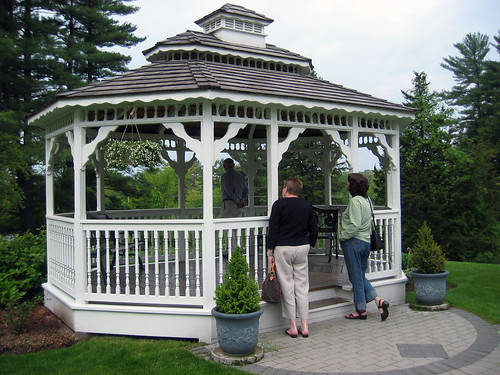
gazebo closeup

Thanks to poluz, on Flickr for the first picture and increasing our international connections. Visitors from 34 different countries have read our blog in the last week.

Also to nicpic, on Flickr for the Bespoke gazebo that is the top tip for those with big gardens and aspirations.


« Older Entries
Newer Entries »
  • Best of Gardeners Tips
  • Top 100 Gardeners
  • Gardening at Amazon.co.uk
  • Seeds at Thompson & Morgan
  • Jersey Plants Direct

Categories

  • Art
  • Books & Publications
  • Clothing
  • Constructions and Greenhouses
  • Garden Economics
  • Growing Aids
  • Pests and Problems
  • Products
  • Projects
  • Seeds and Plants
  • Tools and Equipment
  • Uncategorized
  • Weeds and Treatments
Gardeners Tips