Gardening Products

Tips for the Gardener

Gardening Book of the Month September 2011

Posted: September 1st, 2011 | Author: hortoris | Filed under: Books & Publications | No Comments »

Book Cover

The Bad Tempered Gardener by Anne Wareham with photographs by Charles Hawes emphasises why I am often bad tempered in my own gardening efforts.

‘Anne unflinchingly conveys the challenges, the hard work, triumphs and failures behind the creation and development of a substantial contemporary garden’. There is plenty of resource material to call on from her development of a contemporary garden at Veddw in Monmouthshire. Anne displays her interest in the history of the local landscape and has incorporated this into the garden design.
Charles the photographer and husband of Anne is a member of the Garden Media Guild and the Professional Garden Photographers Association.
Amazon


Poundshop Pots and Cheap Pots

Posted: August 29th, 2011 | Author: hortoris | Filed under: Projects | No Comments »

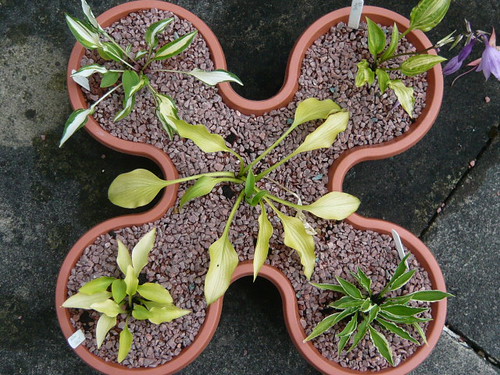
Pots for mini Hosta

I am an extravagant shopper throwing my pounds away on all sorts of garden related offers.

This plastic pot was only £1 and I wish I had bought several more. It was probably designed as a holder for 5 individual pots.
I drilled holes in the bottom and using well drained but moisture retentive compost I planted it up with these miniature Hostas. It will keep the slugs at bay and provide a home for the Hostas to increase in size. Fortunately I had some red alpine grit to decorate the top and it looks OK with the terracotta plastic colour.

I could have put gravel or Hortag in the bottom and used it for pot plants but I would probably have let them get waterlogged.

Warning on Cheap Pots

  • Make sure there is enough drainage. Pots sometimes have too few holes or none at all.
  • Pottery pots may not be frost proof and even terracotta pots and earthen ware may crack and split in freezing weather.
  • Ceramic pots need to have been fired at high temperatures (expensive energy) or they will chip and have a short life.
  • Cheap plastic pots may be made from thin material that flexes, cracks and distorts when full of wet compost

Related articles
Poundshop bulbs
Growing tips for miniature Hostas


Cuttings in a Tray or Open Ground

Posted: August 28th, 2011 | Author: hortoris | Filed under: Growing Aids | No Comments »

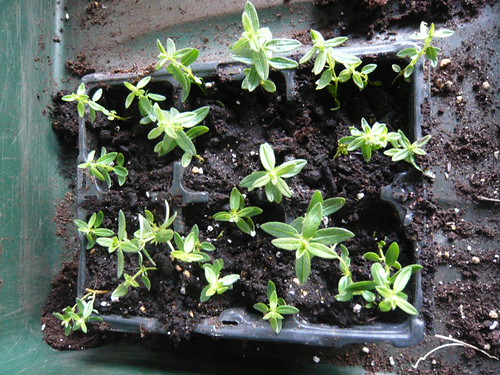
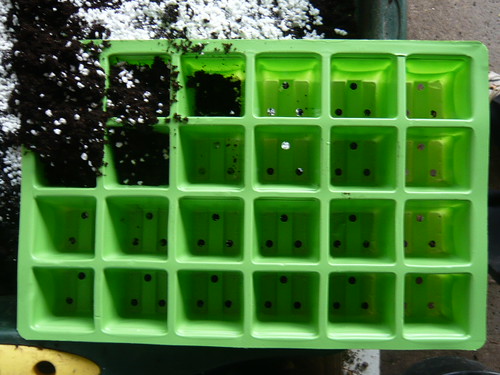
cutting tray

Tips For Cuttings

  • I mix compost with Perlite and fill a 24 cell tray for small cuttings.
  • This green plastic tray is supported by a rigid plastic seedtray. This cuts down sterilisation but I use the green trays several times until they crack or need throwing away.
  • Bottom heat can help cuttings root more rapidly.
  • On some Rock Roses (Helianthemum), I have just used hormone rooting powder from amazon.
  • I keep the atmosphere humid with a clear lid and or a regular spray of clean water.
  • The cuttings do not need any fertilizer until roots show at the bottom of the cell.
  • When roots start to show, pot-up into individual pots or plant out in the garden.

cuttings

Larger Cuttings

  • 3″ pots or 12 cell trays can be used for larger cuttings like pelargoniums.
  • Pelargoniums do not need any hormone rooting powder.
  • For hardwood cuttings I would take a longer piece of material 4-8″ in many cases. For this size you need a deeper and more stable pot to hold the cutting
  • Last autumn I took some Rose cuttings and put them in a trench filled with soil and sharp sand. Several have rooted nicely and are now ready to be set out in the garden.
  • I do not get despondent if cuttings fail. If cuttings succeed I am hapy to get true clones of the original plant at no cost

Fuchsia cutting tips
Root Cutting Tips
Delphinium cutting tips
Carnation cutting tips
Autumn cutting tips
Dahlia cutting tips


Equipment Every Gardener Needs

Posted: August 27th, 2011 | Author: hortoris | Filed under: Tools and Equipment, Uncategorized | No Comments »

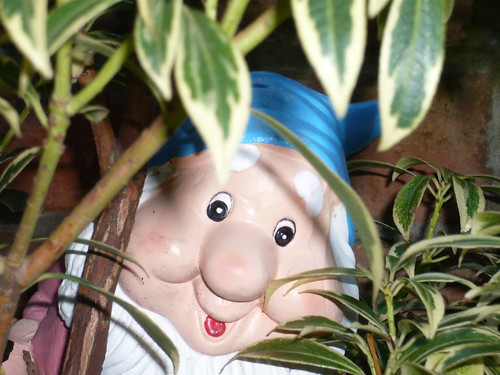
Gardener

The first and most essential item of equipment for a gardener is a sense of humour. How else can they expect to cope with weather, insects, disease and death. If you have had an endorphin bypass then give up gardening and take up nuclear physics or something else equally less challenging.

An assistant gardener is a bonus piece of equipment and hidden in the shrubbery is my no.2 helper. (My wife is no.1 as she cuts the grass, edges and much more).

Some ‘gardeners’ have a professional to do the hard work and this doesn’t disqualify them as gardeners but the armchair variety is not as hardy as the all weather species.

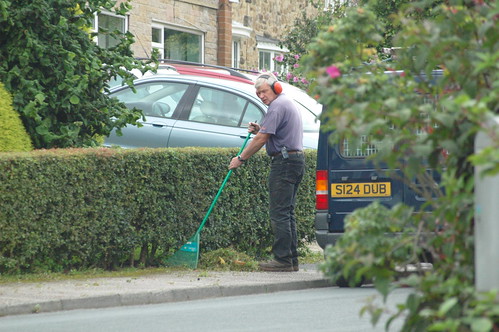
Gardeners equipment


Equipment for Gardeners

Lawn Rake with tines that can collect leaves and hedge trimmings from grass or in this case paths. A long handle on most garden tools makes life easier.

Ear Muffs are not strictly essential garden wear but if you use noisy machinery for a long period they would be worthwhile. Hedge trimmers, wood chippers and some lawn mowers are noisy and so are the sounds of these tines on the path.

Jeans and Boots are part of many gardeners clothing kit. Boots keep you dry and have a protective upper, but according to Billy Connolly were would you be without wellingtons


Wet Water Features

Posted: August 5th, 2011 | Author: hortoris | Filed under: Uncategorized | 1 Comment »

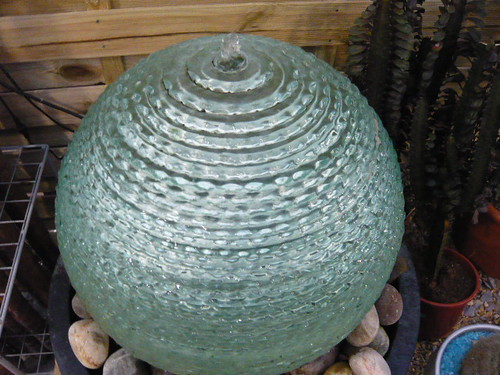
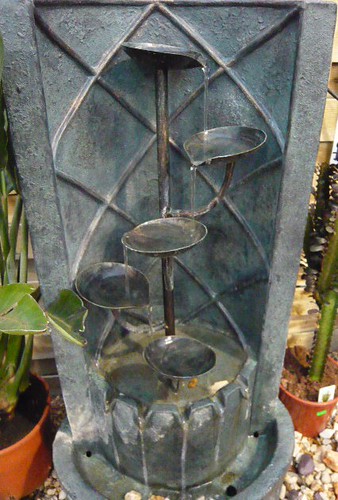
Water feature

Water features are designed to be wet or so you might think.
There is a breed of water feature that I think are ‘wet’ in the pejorative sense. That includes these ball shaped fountains above and other plastic bubbling devices.


Water Features In Order of Preference

  • A natural lake with soft edges, fish and water lilies.
  • A stream and streamside gurgling along a chalk bed. I would tolerate a man-made stream with pump if it appears natural.
  • A gothic or monumental fountain as a centre piece to a colourful garden.
  • Elegant birdbath
  • DIY store ‘dribbling device’ see below

Water feature


Gardening Book of the Month August 2011

Posted: July 31st, 2011 | Author: hortoris | Filed under: Books & Publications | No Comments »

Book Cover

Gardening For Dummies – UK Edition by Sue Fisher, Michael MacCaskey and Bill Marken is not to be underestimated. You get what you always get with the Dummies series expert advice, helping the novice get a solid start.

For the summer months you do not want to be stuck reading a detailed treatise on how to grow exotic garden plants. Better to have a book you can dip in and out of during the August break from gardening chores.

‘The seasoned gardener will be able to broaden their breadth of knowledge, learn and develop skills in how to do everything from planning your planting to controlling pests – and everything in between. Full of useful illustrations and insider’s tips this book will be a vital reference for everyone with an interest and love of gardening, whether you have a few containers in the back yard or a huge back garden with a rolling lawn.’ Amazon


Peripheral Gardening Professionals

Posted: July 22nd, 2011 | Author: hortoris | Filed under: Books & Publications | No Comments »

Garden Media Guild formerly the Garden Writers’ Guild aims are to raise the quality of garden writing, photography and broadcasting, and keep members up-to-date with events in the world of gardening and horticulture.

Professional Garden Photographers claims to be ‘The Leading Source of Specialist Plant & Garden Photographers, showcasing the work of over 100 Professional Garden Photographers’

The Society of Garden Designers To tie with the SGD’s 30th anniversary celebrations, Open Gardens will see 30 gardens designed by Registered Members (MSGD) and Fellows (FSGD) of the SGD, open across the UK, celebrating the best of British garden design over the past three decades.


Gardening Book of the Month July 2011

Posted: July 1st, 2011 | Author: hortoris | Filed under: Books & Publications | No Comments »

Book Cover

Fearless Colour Gardens: The Creative Gardener’s Guide to Jumping Off the Colour Wheel is a work of art in 180 pages. Written by Keeyla Meadows the book uses more coloured ink than I have ever seen before in it’s illustrations.


Sections and Quotes in the Book

  • Colour Journey ‘Colour is fun and colour is everywhere’. Do not be afraid of colour.
  • Putting together colour palettes – flowers do it why shouldn’t you – mix your colours.
  • Building colour gardens – frame your garden in sections like a series of photographs
  • Tour of colour gardens – If you want to be happy for the rest of your life, plant a garden

Making Gardens Works of Art: Creating Your Personal Paradise also by Keeyla Meadows gives me opportunity to show another splash of colour in this post.

Book Cover


From Amazon


Clay or Plastic Plant Pots

Posted: June 30th, 2011 | Author: hortoris | Filed under: Growing Aids | No Comments »

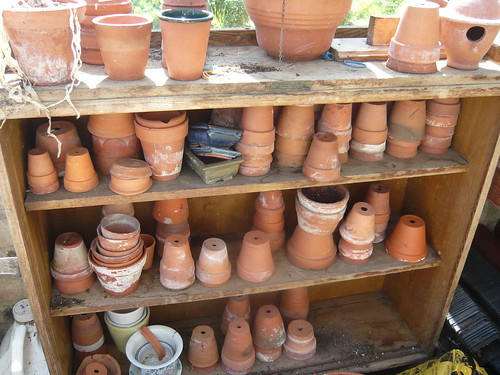
Pots for potting

Some plants thrive best in plant pots. Others need pots to help them through their juvenile life until they can be planted out into a permanent position in the garden.

Uses of Plant Pots

  • Pots are a good medium for containing, selling and transporting plants. Garden centers couldn’t function without them and nurseries nowadays only sell a small number of bare rooted plants.
  • Pots protect and enable plants to develop good root system.
  • Pots can be the final home for some plants and be used in a decorative manner.
  • Houseplants are invariably housed in a pot of some description.

Clay Pots

  • Terracotta pots made from fired clay are the pots old gardeners had to use.
  • Clay pots are porous and allow water and air to move within the compost.
  • Water evaporation from the sides is slow but helps keep the pot and soil cool.
  • Clay pots can be heavy and well balanced so shouldn’t be blown over.
  • Clay pots tend to dry out quicker than other pots and watering needs must be considered.
  • Some plants such as Auriculas, love the conditions of clay pots.
  • Glazed pots are usually earthen ware or some form of clay pot.

Plastic Pots

  • These are cheap to manufacture, available in many sizes and light to carry.
  • Black flexible plastic is used for larger pots. Brittle plastic seems to be used for small 3″ and similar pots.
  • Plastic pots are easy to clean with a disinfectant. Pots can be reused many time and last several seasons.
  • Plastic pots tend to breed and if you end up with a surplus they are not  recyclable.
  • Plastic pots rely on the compost to control the watering and moisture level.
  • Roots do not adhere to the sides of the pot as they may do with clay pots.

Related article Tips for Planting Summer Pots


Rain Brings Slugs

Posted: June 30th, 2011 | Author: hortoris | Filed under: Pests and Problems | No Comments »

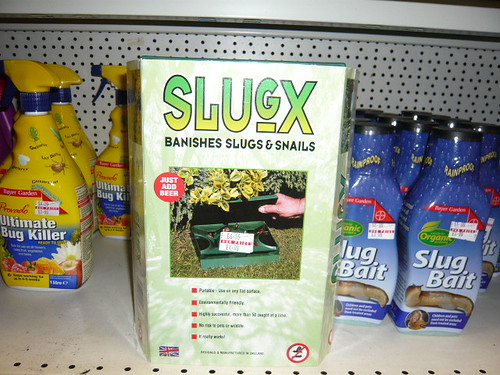
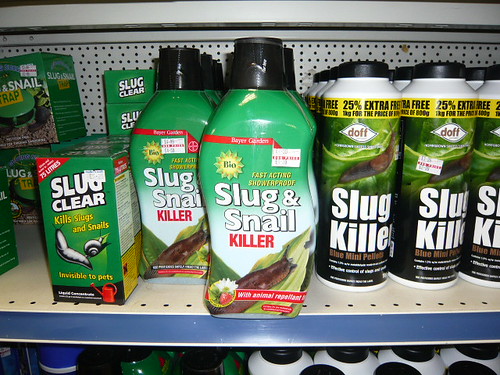
Slug Killer

After a dry winter and even dryer spring gardeners are keen to see more rain. Unfortunately more rain equals more slugs and snails.

One benefit of the dry weather has been a reduction in the amount of plant damage done by Slugs and Snails. So much so that I have been able to leave these critters unmolested by my sundry treatment methods.

Seeing these various chemical treatments on the shelf at our garden centre I was able to restrain myself and not make a purchase. The slugs can munch on a bit longer. The only concern I have is for a new collection of young miniature Hostas that I hope will expand and not become an early lunch for molluscs.

Amazon selection of Slug and snail products.

Related
Biological Controls
Slug Pellet Poison

Slug It
Read the rest of this entry »


« Older Entries
Newer Entries »
  • Best of Gardeners Tips
  • Top 100 Gardeners
  • Gardening at Amazon.co.uk
  • Seeds at Thompson & Morgan
  • Jersey Plants Direct

Categories

  • Art
  • Books & Publications
  • Clothing
  • Constructions and Greenhouses
  • Garden Economics
  • Growing Aids
  • Pests and Problems
  • Products
  • Projects
  • Seeds and Plants
  • Tools and Equipment
  • Uncategorized
  • Weeds and Treatments
Gardeners Tips