Gardening Products

Tips for the Gardener

Women Who Gardened

Posted: November 9th, 2011 | Author: hortoris | Filed under: Books & Publications | No Comments »

Book Cover
Gardening Women: Their Stories from 1600 to the Present by Catherine Horwood covers over 2000 years from Flora the Roman goddess of plants to today’s media gardeners. It of necessity concentrates on the last 400 years.

What to Expect in the Book of the Month

  • An interesting feature is about the battles fought against male-dominated institutions.
  • The history of women illustrators of botanical books is dealt with a some length .
  • One reviewer called the book a ‘forking over’ not a ‘double digging’ but it is hard to cover such a large topic in a way that suits everyone, even with 450 pages.
  • The trials and triumphs of the women who gardened are often covered by lists and light coverage. Gertrude Jekyll and other famous women gardeners are well covered in other works but more could have been said about some of the lesser known women gardeners

Who Wants to Read ‘Gardening Women: Their Stories from 1600 to the Present’

  • Women gardeners traditionally grew vegetables for their kitchens and herbs for their medicine cupboards. Anyone who wants to know who taught young women about gardening twenty-five years before women’s horticultural schools officially existed, can gain from reading this book.
  • Students of horticulture should be appraised of the roles women have played in the development of gardening.
  • Sociologists may find the research a bit skimpy but for a gardening tome there are ample references and scope for further study.

Buy ‘Gardening Women: Their Stories from 1600 to the Present’ by Catherine Horwood from Amazon

A bit more challenging is Radical Gardening: Politics, Idealism and Rebellion in the Garden also available from amazon

Book Cover

Quick Thoughts of the Month

  • Women do a lot of work in the urban and contemporary gardens of the UK and deserve recognition for their efforts. This work could have gone much further and done more.
  • The RHS and Kew have promoted the idea of women gardeners and now have senior executives within their traditionally male bastions.
  • Many garden authors and women writers on gardening write on the subject from an upper middle class perspective. Lets have a book on women gardeners that gets down to earth!
Organic Blend Manure

Posted: November 7th, 2011 | Author: hortoris | Filed under: Products | No Comments »

Manure

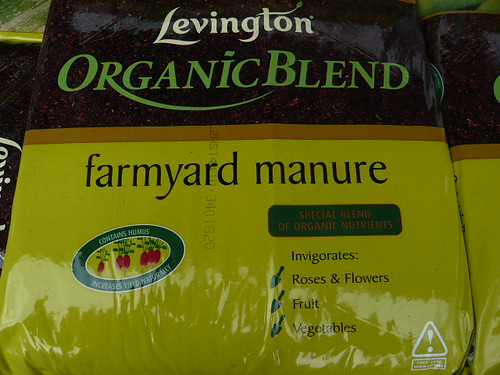
Organic Blend manure is a trade name rather than a description. Obviously there will be organic materials in the manure because that is what it is all about.

Pros and Cons of Packaged Organics

    I am a bit concerned that the packaging fails to prominently identify the animals in this farmyard.
    Farmyard animals may have been treated with medicines and chemicals that are expelled in to the manure and I do not think this is Organic in the true sense of the word.
    A ‘special blend of organic nutrients’ could be blood fish and bone or just a way of saying horse muck.
    ‘Contains humus’ well lets not be surprised!
    ‘Invigorates’ roses, flowers fruit and vegetables Mmmm some claim.

    On the plus side the manure should be sterile (unlike the stuff I collect from the stables).
    I would expect the manure to be weed free (unlike the stuff I collect from the stables).
    The manure is more friable and textured (unlike the stuff I collect from the stables).

Buyer beware ‘where there is muck there’s brass’ to mix two sayings. Vendors (retailers and manufacturers) are out to make a profit whilst gardeners are out to make a great garden and in my case without too many plastic bagged products.
If you can’t acquire your own ‘Organic’ may not be worth the extra price but it enhances the feel good factor and may do your garden good.


Organic Top Soil

Posted: November 6th, 2011 | Author: hortoris | Filed under: Uncategorized | No Comments »

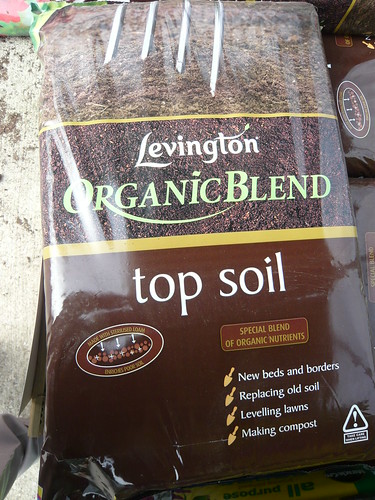
top soil

I am not an advocate of buying Top Soil especially in small quantities.

What is Top Soil

  • Top soil is the upper layer of soil in your garden.
  • Top soil is the part of your garden soil that has the highest concentration of organic matter, humus and micro-organisms.
  • Topsoil is where most of the plants roots grow and thrive.
  • Deep top soil would be one spade spit deep up to 10″.
  • Shallow top soil may be all you have when gardening on chalk or heavy clay soil but 2 inches is a minimum.
  • Sub soil is the compacted uncultivated soil under the top soil. The quality of this soil is varied and not so good for growing your plants

Why and When to Use Top Soil

  • Top soil is the natural home for plant roots.
  • In a newly built house the top soil has often been removed to facilitate the builders. I have bought lorry loads of top soil to cover the sub soil that builders have left uncovered.
  • Increasing the depth of top soil when you garden in difficult conditions such as limestone or rocky areas also require large quantities.
  • Some soils suffer from erosion of the top soil by wind or rain and it needs to be replaced and protected from further erosion.
  • Top soil, like that in the bag photographed, can be used in pots and containers, leveling lawns or making compost.
  • Top soil may be used to replace old diseased soil such as that with rose sickness.
  • There is no added nutrient as there is with John Innes. This may be important when setting up a special bed for plants that do not want fertilizer such as many alpines

Organic top soil is another of my less loved phrases. Soil is mainly inorganic carbons and elements. The humus content may be free of chemical treatments like pesticides and fertilizers but top soil is just muck.


Freeze Up’s and How to Prevent Them

Posted: November 6th, 2011 | Author: hortoris | Filed under: Uncategorized | No Comments »

Water hose fixing

The cold snap at the start of November may be the beginning of a period of attrition. This morning I found yesterdays rain puddles covered in ice!

Lag your water supply. I put bubble wrap on my outside tap and bring my hose pipes indoors.
Empty containers that may otherwise freeze. Last year I left water in a galvanised watering can. When it froze and the ice expanded it caused the seams to crack.
Protect pots and containers by moving into frost free areas.
Even frost proof pots need to be on feet so the bottom of the pot is not frozen to the soil.
Remember frost flows down hill and creates frost pockets that are colder than the surrounding area.

Pond Ice

  • Take delicate items out of the shallow end of a pond.
  • Ponds do not respond as well as I would like to the floating ball method of keeping an ice free surface.
    A long 4″by2″ piece of wood in the pond is my way of gently stirring things up to break the ice for the sake of the fish. You can buy small water heaters.
  • Bird baths can be kept ice free with a new additive ‘Fountain Frost-Free is a safe, environmentally friendly way to protect your water feature, birdbath, pond and pump from freezing whilst ensuring that the safety of your children, pets, birds and wildlife is not compromised. It prevents water freezing in temperatures up to -6 degrees.’
  • Amazon have a range of weird and wonderful pond ice preventers floats and heaters.

Time to stock up on deicer for the car wind screen and rock salt for the road. I won’t use rock salt near the garden for fear of burning or poisoning the plants at the edge of paths.
How come the moss never dies in the cold? Well I may as well get some path cleaning concentrate as well.


Hover Mower Tips on Use and Safety

Posted: November 6th, 2011 | Author: hortoris | Filed under: Tools and Equipment | 1 Comment »

mow

Hover Mower Tips

  • Hover mowers are quick and easy to use but they do not leave stripes in your grass.
  • Use hover mowers to keep your grass tidy but consider a cylinder mower for a top quality look to your lawn.
  • The special mowers for long grass are an excellent way of clearing space like a hovering scythe.
  • The electric Hover mowers are fine for small lawns and are far lighter than most other lawnmowers but they are unlikely to collect up the cut grass.
  • When mowing a bank or slope stand at the top, attach a rope if you need too then swing and lower the mower.
  • Mow up and down not across a slope and take extra care on any uneven ground.
  • Handles generally fold so the machine can be hung from a shed or garage wall making them extremely space efficient

For Safeties Sake

    Before Using Your Mower

  • Read the instruction book, it may seem obvious but best to be prepared.
  • Fill the petrol tank before you start as pouring petrol into a hot engine can be as dangerous as smoking.
  • Examine the area to be cut for stones, bits of metal, toys or pets.
  • Set the cutting height, not too short!
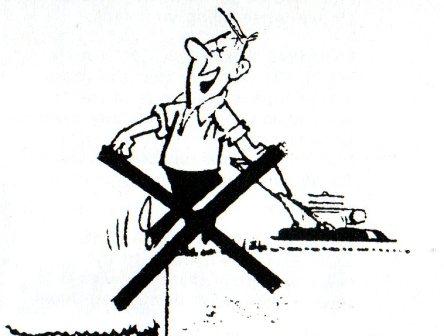
  • When starting the machine keep it still, perhaps by putting your foot on the hood.
  • Hover mowers do not have wheels so they must be carried onto and off the lawn.Lift with care and buy one that is light enough for you to manage.

While Mowing

  • Wear heavy shoes with a good grip and keep children away from dangerous machinery.
  • Do not carry the mower whilst it is running it will not float from one lawn to the next.
  • Keep the mower flat as it is designed to stop ‘flying stones’ by hovering close to the ground. Do not mow over gravel.
  • Do not try to use your mower as a cultivator some areas may be so overgrown they need a machete.
  • Don’t take risks or walk backwards as you may pull the machine on top of you.
  • Safety regulations require all new electric mowers to have elaborate safety switches that usually require two handed use and a constant grip

Amazon supply virtually anything and that includes this range of Hover Mowers

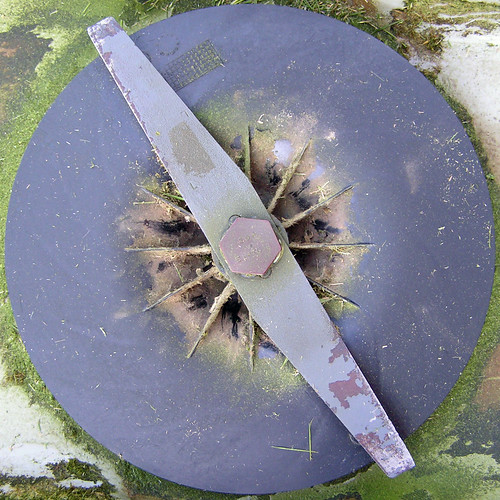
mower blade

The photograph of a rotating blade is under a creative commons license 2.0 by Jovike.

See also Gardeners Tips for more safety advice.


Book of the Month Fruit Tree Handbook

Posted: October 25th, 2011 | Author: hortoris | Filed under: Books & Publications | No Comments »

Book Cover

2011 has been a bumper year for Apples and many fruit. If that can’t encourage you to grow more fruit in your garden then perhaps the fresh flavour will. Failing all that try reading one of the many books available on the subject such as The Fruit Tree Handbook by Ben Pike.

Fruit Tree handbook from amazon
‘The Fruit Tree Handbook is a clear, practical guide that will help both amateur and expert to grow delicious fruit, from apples to mulberries and plums to peaches. Simple instructions guide you through soil preparation, choosing the best varieties and planting your trees successfully, while the mysteries of pollination and pruning are unravelled with the help of diagrams and photographs. At the heart of the book is a deep respect for the natural world, so you will find simple tips that help you to tackle pests and diseases in harmony with nature.

Whether you are planting a few trees in your garden or 50 trees in a field, this book gives you all the information you need to design, plant and look after your orchard, large or small, and be rewarded with basketfuls of luscious fruit at harvest time.’

Comment

  • A small orchard is a good investment. I have 4 apple trees that provide lots of fruit some which store very well.
  • Small rooting stock and careful pruning control the amount of garden space these trees are allowed to take.

Greenhouse Clearance Sales and Cleaning

Posted: October 25th, 2011 | Author: hortoris | Filed under: Constructions and Greenhouses | No Comments »

New Greenhouse Clearance Sales.

October is a slow time for greenhouse sales as you would imagine. That is why there are numerous sales offers around at this time of year.

You can save 20% or more on the price of a new greenhouse if you buy at this time of year.
The Greenhouse People have just sent me a mailshot offering £3000 Alton or Robinsons 8′ X 10′ greenhouses for £1999 in a major clearance event.
Local retailers need the space for Christmas products and may be offering special quick sale deals.

Old Greenhouse Clearance

  • I am content with my current greenhouse subject to winter damage!
  • Clearance for me means taking out the old plants and soil used for growing tomatoes.
  • I will fumigate an empty greenhouse to clear out any lingering pests.
  • Selected plants will be returned into a new plunge bed I have developed for alpine plants.
  • Windows will be cleaned and algae removed to improve the amount of light during the short winter days.

Compost Activators & Makers

Posted: October 21st, 2011 | Author: hortoris | Filed under: Products | 3 Comments »

Copy of DIY 161

Compost making is a productive activity for gardeners. All vegetable waste from the kitchen and garden can be used in a compost heap to rot down into good compost. A mix of ‘green’ leafy material and ‘brown’ twiggy material will make the best compost. Green is nitrogen rich and brown is carbon and trace element rich.

Compost Making Essentials

  • The compost material needs to rot down and there are ways to help this process.
  • Insects, worms and bacteria are key as they chew there way through the material. Chopping it up provides more access points for the critters to chomp at.
  • Rotting happens better when slightly damp rather than when bone dry.
  • Heat speeds up the process and this will be improved with air and an activator.

Activators and Compost Makers

  • Adding a spadeful of soil mixed in to the heap will add soil microbes and worms.
  • Turning a compost heap introduces more air and avoids compaction. The introduction of this extra oxygen can stimulate a new round of warm rotting.
  • Animal urine adds natural salts and encourages critters to get on with the composting process.
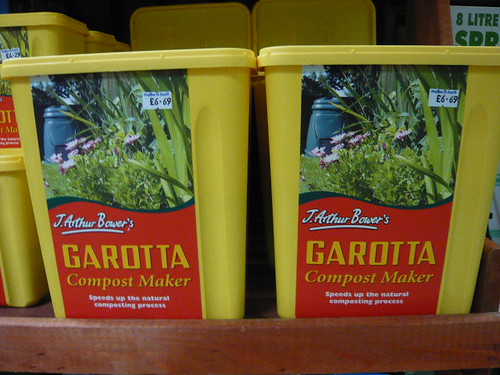
  • Chemical additives in powder form like Ammonium sulphate or proprietary products like Garrotta can speed up the heating. Liquid activators like Biotal perform a similar function and this is an eco-friendly product.
  • If the heap is dry I water with Comfrey leaf water. (Soaked Comfrey leaves from an old water butt).
  • The longer the temperature stays high, the shorter time will be needed for rotting.  Nitrogen  warms up fastest so grass clippings, nettles and comfrey leaves are good additives.

Compost makers, activators and additives are available from good garden centers and DIY shops or from Amazon

You can collect fallen leaves with a multi tine rake
Book Cover

For a labour saving job you can buy a garden vacuum from Amazon.
Book Cover
Read more Easy tips on Composting leaves

Read about Quicker better compost.


Garden Vouchers I want for Christmas

Posted: October 20th, 2011 | Author: hortoris | Filed under: Garden Economics | No Comments »

Geisha Makeover - Gift Voucher

What can you give your gardening relatives for Christmas?
I would be happy to receive vouchers at anytime and at Christmas it beats a shirt, tie or socks into a cocked hat.

In order of my personal preference I would ask for:-

Amazon vouchers. The range of garden and outdoor products is now quite large and I love gardening books into the bargain.
National Garden tokens are accepted by lots of garden centers and some nurseries.
Seed and supplies are available on tokens from Thompson & Morgan
Local nursery vouchers which are bespoke to one nursery (I can always use them for dry goods if there are no plants I want)
B&Q Gift Cards can be spent on anything at all UK B&Q stores, including the massive range of gardening goods. From sheds to shears, they make a great garden gift.
Argos Gift Cards can be spent on the catalogue store’s complete garden range including barbecues, garden decoration, garden power tools and lawnmowers
Love2shop Gift Vouchers are accepted at 20,000 stores around the UK including Argos and Wilkinson (wilko).
RHS gift vouchers make great presents and are accepted in any RHS shop, along with HTA vouchers.

and more…

If it is a close family member we often make our own homemade gift vouchers. The gift may be cash, time or a service and is often well received as it is very personal.
You can make your own voucher from garden material or the back of a flower photograph. It is the thought that counts.


(CC BY-NC-SA 2.0) Gift Voucher by lu_lu, on Flickr


Stone Sculpture For or Against

Posted: October 20th, 2011 | Author: hortoris | Filed under: Art | No Comments »

high trees 131

I saw this lion at our local garden centre. He was guarding the entrance and looked the ferocious part.

Stone Sculpture Pros and Cons

  • Stone looks good in the right place. It creates a better effect when local stone is used
  • Reconstitutes stone looks good in the show room and for several seasons. For some reason it weathers more rapidly or looks less crisp a couple of winters later.
  • Stone is heavy and not easy to move around or steal.
  • Sculptures without natural sunlight get more moss and lichen than well lit sculptures

Sculpture Comments

  • Large scale sculptures work best in larger gardens. It is worth balancing scale as too small a sculpture can get lost from view.
  • White or light stone sculptures should be set against a dark background
  • Small sculptures can be mounted on a plinth with great effect.
  • Sculptures work well in pairs. Natural items work best in odd numbers
  • Old and valuable stone items should be insured, bolted down or alarmed. Thieves will steal anything!

A resin and composite stone sculpture like that below will cost significantly less than a stone sculpture.

Gargoyle


« Older Entries
Newer Entries »
  • Best of Gardeners Tips
  • Top 100 Gardeners
  • Gardening at Amazon.co.uk
  • Seeds at Thompson & Morgan
  • Jersey Plants Direct

Categories

  • Art
  • Books & Publications
  • Clothing
  • Constructions and Greenhouses
  • Garden Economics
  • Growing Aids
  • Pests and Problems
  • Products
  • Projects
  • Seeds and Plants
  • Tools and Equipment
  • Uncategorized
  • Weeds and Treatments
Gardeners Tips