Autumn Insect Feed

Autumn Insect Feed

Sedum

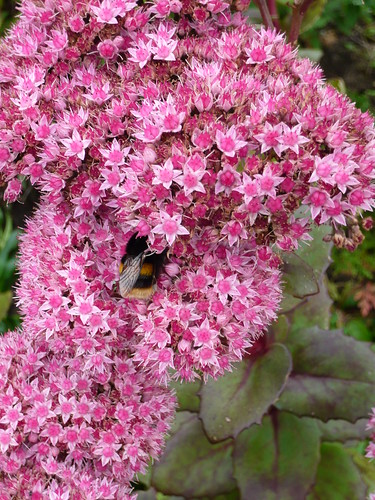
The Sedum or Ice Plants are providing a treat for the bees and insects in the garden this September. Many other plants have ‘gone over’ quite early this year so these Sedum blossoms will be quite welcome as a pre-winter energy booster.

Autumn Insect Food

  • Late Rose flowers seem especially well scented at the moment and this will also be attracting nectar feeding insects.
  • I have left a couple of rotting apples on the ground and of course the slugs are now getting free reign on the Hostas.
  • This morning I spread an old compost heap on a plot that I am renovating. The bio-activity and insects have done a great job breaking down the garden waste but there are still bits for the insects to keep feeding on as they work their way back into the garden soil. If you think about the waste products produced by insects no wonder the compost is rich in food – they provide the P in NPK!
  • My sprouts have been decimated by butterfly caterpillars
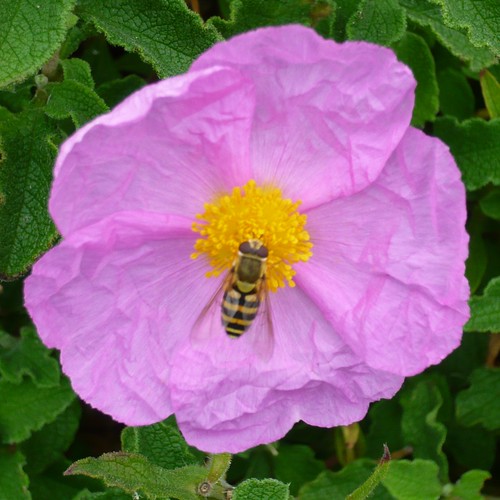
  • Some plants are having a final burst of individual flowers like the Cistus below.
Wentworth Castle 069

Winterproofing your Garden

Winterproofing your Garden

Summer is over and we had the first Autumn frost last night 26th September. It was only a light frost and we have some cloud cover for the next few nights so it won’t be as cold tonight. Still I set-too to protect some plants.

Winter Plant Protection

  • Tender plants can be protected in a frost free environment. Conservatory plants left out for some summer sunshine should be brought back inside. This is true of Citrus fruit trees and Pelagoniums.
  • Insulate your greenhouse with bubblewrap and install a heater for really cold nights. Aim for a minimum temperature of 37°
  • Lift tender rhizomes of Cannas and Gladioli corms.
  • Prepare hessian or sacking to wrap the centre of tender plants like Tree Ferns and Palms.
  • Reduce watering and keep pot plants a bit on the dryer side.
  • Mulch or cover the growing crowns of perennials with bracken, dry leaves or compost.

Winter Maintenance Tips

  • Put terracotta pots on feet or raise onto bricks so they do not freeze to the earth or paths. Bring in none frost proof pots.
  • Clean up paths, greenhouse glass, garden furniture, bird feeders etc.
  • Retie or stake trees that may suffer from wind rock.

Causes of Winter Damage

  • Prolonged excess damp can be fatal to pot plants. In winter there is little or no drying effect.
  • Snow can break the branches of trees and the weight can damage conifers and evergreens.
  • Frost will damage soft fleshy growth easier than it will kill ripe twiggy growth. Camillia growers will know what frost can do to blossom.
  • Climate changes, prolonged cold snaps, unseasonal spring or summer weather and other changes can create ‘plant stress’ that shortens the plants life.

Other tips – Leave on holiday for hotter climates and return in spring.

Single and Collerette Dahlias Tips

Single and Collerette Dahlias Tips

The hot subject for discussion this Autumn seems to be the renaissance of Dahlias. For me they have never been far from my garden but I understand how fashions come and go then return.

Quick Dahlia Cultivation Tips

  • Disbudding two out of three buds per stem with produce longer, stronger and more weather resistant stems.
  • Support all but the very low growing Dahlias with a stake or triangle of canes.
  • Keep feeding with high potash feeder until September.
  • Remove dead and dying flowers regularly.
  • Earwigs may be a problem for flowers destined for the house but otherwise they are good predators and should be tolerated.
  • Buy new tubers from a Dahlia nursery. A plastic bagged retail plant often disappoints and I have never known one flower better than the picture on the packaging.

Single and Collerette Dahlia Varieties

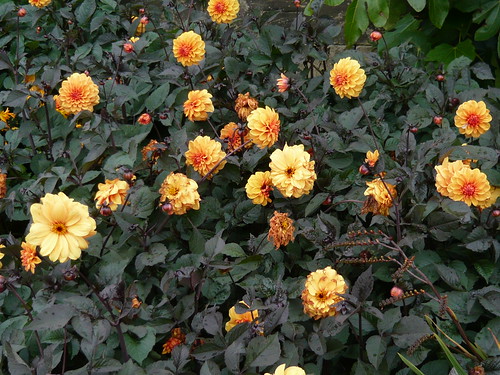
  • Single Dahlias bred from the dark leaved varieties like Bishop of series are popular this year.
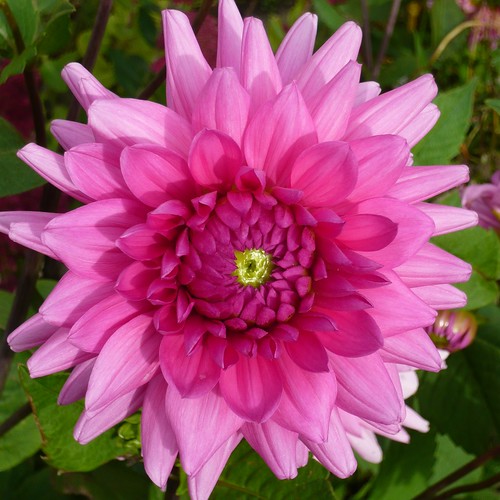
  • The garden writer Rachel de Thame has had a pink variety name after her.
  • After Eight is the name of an AGM winner with  white flowers on very dark leaves.
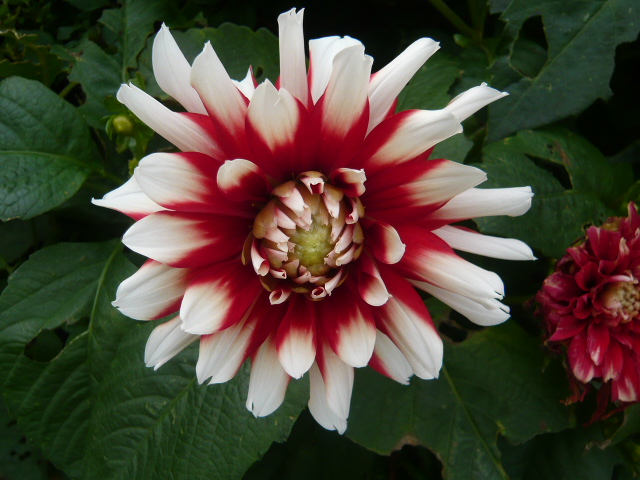
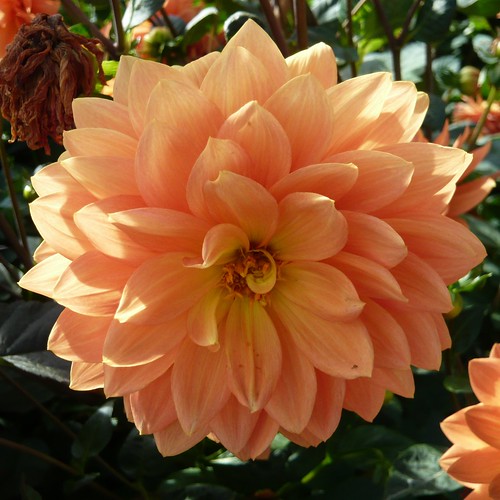
  • Collerettes are flowers of two petal layers rather than one single – see pictures
  • One collerette that caught my eye was ‘Twyning’s Revel’ a 4-5′ high plant with salmon flowers, orange centre and dark fern foliage

Note
Dark leaved Bishop’s children Dahlias are looking very good as Autumn comes to an end. Children will be surprised the leaves are not green and the flowers remain so colourful read more
See a mosaic of Pink Dahlias with top ten pointers

Big Brash Dahlias

Big Brash Dahlias

Dahlia

Dahlias may still be out of fashion in many gardening circles but I am an affectionado and think they are well worth growing.

I have just started off last years tubers in big plant pots that I will plant out lock stock and barrel (literally in some cases) when the spring flowers have gone along with any danger of frost.

I left some tubers in the ground last autumn but after this winter I am not hopeful. It is damp rather than cold that does the damage so you never know.

If I was keen and earlier (around February) then I could have forced the tubers then taken cuttings and grown them on. Still last years tubers divided easily this week and I could see the eyes or young shoots.

It seemed a waste to compost some of the tubers that had no stalk to them but they would never grow so off to the bin with them.

I have been a bit precious about growing annual dahlias but some seed mixes provide great results. If it is quick late colour you want give the annuals a try.

Thompson & Morgan supply seeds and tubers.

Dalek Dahlia

Note
Dark leaved Bishop’s children Dahlias are looking very good as Autumn comes to an end. Children will be surprised the leaves are not green and the flowers remain so colourful read more


Dahlia

Iris from Bulbs as Opposed to Rhizomes

Iris from Bulbs as Opposed to Rhizomes

George Iris

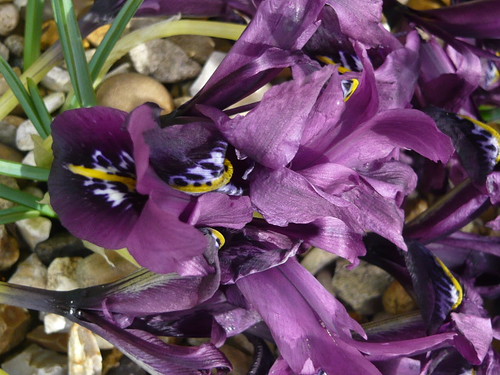
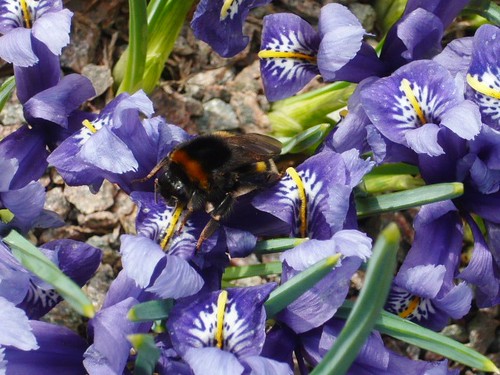
Dutch Iris or Iris reticulata are small bulbs for pots or rockeries.
Flag Iris are big and blousy and grow from Rhizomes.
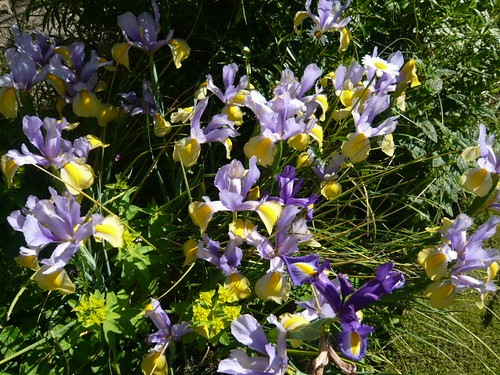
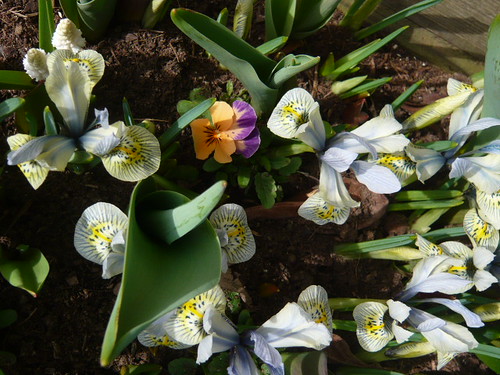
These pictures of different Iris are grown from bulbs.

Iris B

The reticulata group produce narrow, triangular leaves and a single, slender bloom per bulb.
Flowers are principally in shades of blue and purple, often with an attractively contrasting orange or yellow mark at the top of the fall.
Iris histrioides ‘George’ is proving to be a good Iris shown top.

Iris Frans Hals

Iris Franz Hals above or you could try the unusual Iris ‘Katharine Hodgkin’ below. Its exotic colouring of cream overlaid with a blend of light yellow and greeny-blue comes from its parents.

Iris joker

Read our other article Tips for Growing Spring Iris

Biggest Aspidistra in the Toilet

Biggest Aspidistra in the Toilet

Palma Loo

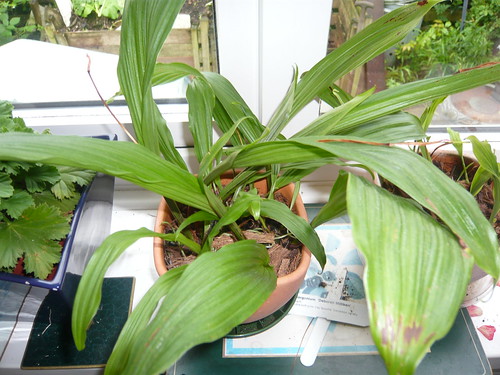
On holiday in Majorca I spotted this potted Aspidistra plant marking the way to the toilets. It is fitting that it was located at The Banys Àrabs, or Arab Baths.
These baths are a remnants of Palma’s Moorish past and include the lush gardens of Ca’n Fontirroig. Although very small the gardens are home to Sardinian warblers, house sparrows, cacti, palm trees, and a wide range of flowers and ferns.

Aspidistra

  • Aspidistra is a popular foliage plant, grown as a landscape plant in shaded spots in areas with mild winters.
  • It is better known as the middle class Victorian must have as a houseplant.
  • They’re grown for their ability to survive neglect and very shady conditions, indoors and out.
  • In Japan, leaves of this species have traditionally been cut into pieces and used in Bento and Osechi boxes to keep each food separated.
  • I have never seen one in flower but with 90+ species listed in wiki they must reproduce somehow

Also read about Bomb Proof plants
Moorish bath

Odd Aspidistra Facts

  1. Aspidistra elatior can also be called the Cast Iron Plant and was made famous by the Gracie Fields Song ‘The Biggest Aspidistra in the World’
  2. Aspidistra are native to China and Japan but were popular in Victorian England as a house plant amongst the dark and sooty atmosphere
  3. Aspidistra belongs to the lily family
Do Not Over Feeding House Plants

Do Not Over Feeding House Plants

Leaf at the expense of Flower

Pamper your plants by all means but resist the urge to over feed.

Doubling up on the plant feed or recommended concentration level will not help your plants. They wont grow bigger and better, quite the opposite.

Plant Responses to Over Feeding

  • A strong dose of fertilizer will ‘burn’ or cause browning of the tender leaf tips and margin of the leaves.
  • If the nitrogen level is too high the growth will be soft, sappy and may lead to total collapse.
  • Fertilizer salts can build up in pots as the feed is never totally used or absorbed.
  • Delicate feeder roots are then damaged by the greater concentration of undissolved minerals which can kill a plant.
  • Browned off leaf tips and distorted or stunted leaves are a result.
  • A white crust of salts on the top of pots or compost is a sign of over feeding. This crust can burn the most delicate of plants to death.
  • Unbalance feeding can cause the plant to react in a disproportionate way such as growing leggy or too leafy.
  • Feeding through winter is generally a mistake. If plants aren’t growing naturally then do not force feed them!


Over Watering reminder Plants can drown! Some go limp and can be revived other ‘pop their clogs’ and you get no second chance.
Roots need nurishment and air. Water helps one but can remove the other from soil.

Young plants can often get all they need from commercial compost for several months.  Seedlings need even less feed.

Do not add a slow release fertilizer then use your weekly liquid feed.

Fertilizer companies want to sell more fertilizer so  many proprietary feeds can be diluted by half and still be effective. Match the quantity of feed to the size of your plant, you wouldn’t give a toddler a 5 course banquet.
Red Spider Mite Problems

Red Spider Mite Problems

Tetranychus urticae

 Habits of Red Spider Mites

  • Red Spider mites do not spin good webs. Proper spiders make symmetrical and neat webs.
  • You can recognise infections if the web is feeble and scraggy with tiny white flecks on some of the strands (this is dead mite skins).
  • You can also detect mites by placing white paper under a leaf and tapping several times. If infested some of the mites will fall from their hiding under leaves and away from direct light on to the paper.  If you see red dots scampering around and you have your work cut out although they start green in spring turning red later in the summer.
  • Mites pierce the skin of leaves and suck sap causing paling then red or yellow spots. This then leaves a fine white powder and leaves begin to fall off.

Problem Control and Prevention

  • Few plants are immune and indoor Cistus, Dracaena, Citrus, Podocarpus and even Aspidistra are susceptible.
  • Tomato and greenhouse plants also suffer.
  • Crocosomia, dahlia, fuchsia, runner beans and soft fruit are also susceptible.
  • Mite move easily from plant to plant and are so small that drafts can blow them from one plant to another. Isolation is the first option.
  • Mites find a hot dry environment a delight, whilst mites abhor humid conditions so try frequent misting to discourage mites.
  • Submerging plants in a stream of warm water or hosing off out doors may help.
  • Spray with soapy water or plant oils paying attention to the undersides of leaves and leave to dry.
  • Biological control with Phytoseiulus persimilis is effective in warm areas.
  • Malathion pesticide can be used, mix with water and a drop of soft soap but keep the spray away from cacti and ferns.
  • Systemic granular pesticide is a last alternative.

Sources
Tetranychus urticae Female of the red form of the spider mite
Scale : mite body length ~0.5 mm
Creative commons by Gilles San Martin, on Flickr
Chuck Crandall ‘Whats wrong with my plant?’

RHS the Tetranychus urticae is also known as Two Spotted Spider Mite

Cyclamen Indoor and Outdoor

Cyclamen Indoor and Outdoor

Hederefolium

I admire Cyclamen more and more as the years go by.

I am currently in awe of the indoor cyclamen that my wife obtained around Christmas time. The volume of strongly coloured flowers has been phenomenal on the Persian cyclamen. We have stopped watering them expecting them to rest through summer but in one case the plants have been reinvigorated.

Cyclamen coum

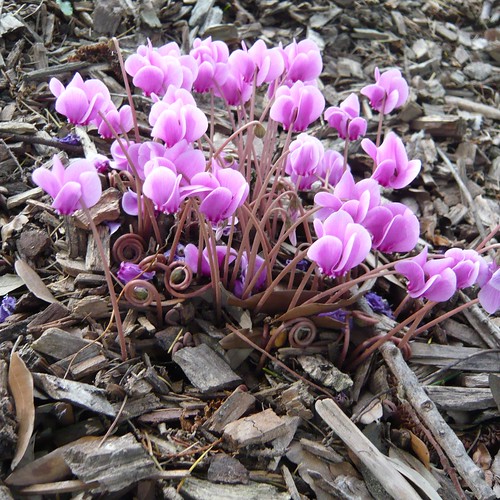
Cyclamen coum are hardy plants. The Persian varieties will not withstand frost.
I lay the pots on their sides so the plant can die back slowly.

In late autumn I bring them back into the light and give them a gentle watering and light feed. Hopefully I will then get a new showing of these super flowers.

Keep regularly watered whist in growth. I find it better to water from the bottom to prevent the corm from rotting.

coum Cyclamen

There are now 22 recognised species of Cyclamen. It is said that at least one variety is in bloom for every month of the year.
Cyclamen grow in a range of areas and environments from beech woodland, alpine meadows and windowsills through scrub and rocky areas. This tuberous family of plants are predominantly from North Africa, Turkey and Mediterranean areas.

Top Cyclamen Species

C. balearicum
C. colchicum
C. graecum
C. africanum

Read More Read More

Compost and Fungus Gnats the Little Critters

Compost and Fungus Gnats the Little Critters

I have no photographs of fungus Gnats because they are very small, little critters like miniature flies.
Houseplants with wet compost attract and breed gnats and the more organic matter the greater the brood of little flies. Fungus gnats are the most common flying insects found in and around compost bins.

Problems with Fungus Gnats

  • On their own they do no damage to your plants but their offspring will.
  • The Gnats or flies lay eggs on the surface of damp houseplant compost.
  • The eggs hatch into minute white maggots that burrow into the soil. Here they can bore there way into roots leaving them open to infection and bacterial diseases.
  • Gnat maggots can eat feeder roots and weaken plants or generate chlorsis.
  • I also find they are the sort of fly that ends up in your eye.
  • Susceptible plants include Chrysanthemum, Cyclamen, Freesia and Pelagoniums.

Control of Fungus Gnats

  • Allow soil to dry out completely before watering to kill the flies.
  • Drown the maggots by leaving plants in a bucket of water over night but then drain throughly.
  • For heavy infestations Malathion kills maggots and eggs.
  • I rely on a fly paper with a sticky glue to catch the flies before they breed.
  • Half fill a shallow container with ‘Sweet Almond Oil’ and place near an infested plant. Leave it and the flies find it irresistible and meet a sticky end. Another recipe is apple cider vinegar, a little water and a tiny dab of dish soap. the gnats love it and
    drown
  • Venus fly traps would be fun but may not eat enough
  • In the garden, wormwood is supposed to be an excellent deterrent
  • Cover your indoor composting bin

See also Which Gardening pdf on fungus gnats