Lucky Winter Heath and Heather

Lucky Winter Heath and Heather

winter heather

Erica carnea or Winter heath is a grand plant to grow in an ericaceous soil. The numerous, small, bell shaped flowers give the impression of lots of blossom from autumn through winter particularly if you choose appropriate varieties.

Heather Tips

  • My personal favourite is the old Myertown Ruby but you may want to try the Springwood White or Pink. Buy plants in bloom to see the colour and vigour of the plants you are getting.
  • Cuttings 2 inches long will eventually root in a mix of sharp sand and peaty compost. Alternatively plants can be formed by layering ( scrape the lower part of a stem then bury that part to root from where it touches soil)
  • Prune when they have finished flowering to form neat hummocks and encourage more flowers next season.
  • Little or no fertiliser is required but if flowering is poor try an ericaceous feed.
  • Plant with the root ball level with the top of the soil. Do not bury plants too deep or cover with mulch.

Read More Read More

Fastia – Fastia Japonica

Fastia – Fastia Japonica

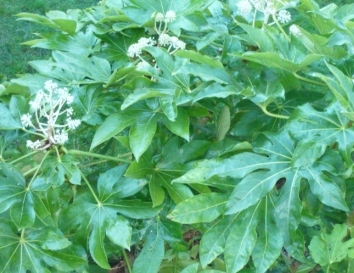
High five these palmate leaves of Fastia japonica

This Fastia was grown indoors as a houseplant then planted in the garden where it thrives to the point where it is now flowering at the end of summer.
It is several years old, 4 feet tall & wide and is very happy in a shaded north facing position.

When you have finished with some old house plants you can try to give them a new life outdoors. If they fail you have lost nothing. I have several former foliage house plants in a low maintenance area of the garden where I let plants get on with it for themselves.

The evergreen finger shaped leaves are larger than a hand and create a sculptural plant. I haven’t studied the flowers before but they are neat and simple spheres.

Sorry this photograph has a blue cast from a near by wall.

Types of Apple Rootstock

Types of Apple Rootstock

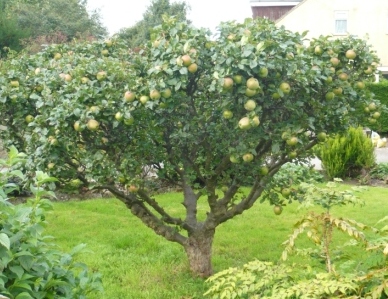
Big apple trees may give you the pip but smaller trees can be a delight.

Modern apple trees are grafted on to a root stock that will govern the vigour and eventual size of the tree. These are the vital statistics of some common rootstocks.

Name

Nature

Height ft.

Spread ft.

M 27

Very Dwarf

4-6

5

M 9

Dwarfing

6-8

9

M 26

Semi-dwarf

8-10

12

M 106

Semi-vigorous

10-13

12

M 111

Vigorous

13-15

15

The larger the tree the more fruit it should bear up to 300 pounds on a mature orchard tree on M111. The smaller trees bear fruit after 3 years, larger trees need 3-4 years

  • Apples are potentially long lived trees and the small trees are often pruned into pyramids and central leaders. For an espalier tree get a root stock that is M26 or M106.
  • Semi dwarf and semi-vigorous can be grown in containers but need care with water and feeding
  • Smaller trees need staking all their life

There are many professional fruit tree firms like Ashridge, Ken Muir and Blackmoor but Amazon also offer a range using their supplier base.

Watering Using Capillary Matting

Watering Using Capillary Matting

Capillary action or ‘wicking’ is the upward movement of a liquid via a surface such as from one bit of compost to another.

These Poinsettias have been placed on a micro perforated matting that allows water to be taken up by the plants in a capilliary action. From the mat the water is slowly drawn up to the pot and soil in the pot to water your plant.

It is a simple process to water the matting, set up a dripfeed system or syphon and the plant will then take up what it needs.

Benefits and Tips on Capillary Mats

  • Water is taken up at the temperature of the matting so you avoid the shock of cold water.
  • Plants shouldn’t become water logged as the capillary process slows as soil become wet.
  • A bed of wet sand can be used as your own home made capillary watering system
  • Advantages of capillary action include plants with delicate leaves not being damaged by the overhead watering and an even supply of water being consistently available.

Tips for ‘Wicking’

Read More Read More

Autumn Lawn Care and Artificial Grass

Autumn Lawn Care and Artificial Grass

I have attempted to kill off the moss before autumn and must now rake out the dead brash and give the grass a tonic. The gin I will keep for myself.
Lawn Leaves

Lawns can be one of the most neglected parts of your garden. Everytime we mow the lawn and remove clippings we are cropping the ground. Goodness needs to be replaced by top dressing and fertilizer.

Lawn Care

  • Keep mowing established lawns once a fortnight until it stops growing. The blades should be raised for the final few cuts.
  • Collect fallen leaves and brush away worm casts.
  • Scarify by raking out the old dead grass and moss then spike to improve drainage.
  • Feed with autumn weed and moss killer. This low-nitrogen preparation strengthens grass roots for winter.
  • Repair bumps, hollows, bald patches and broken edges.
  • Top dressing of soil, sand and compost mixed and brushed over your lawn is a good improver.
  • Read More Read More

Digging out and Spreading Compost

Digging out and Spreading Compost

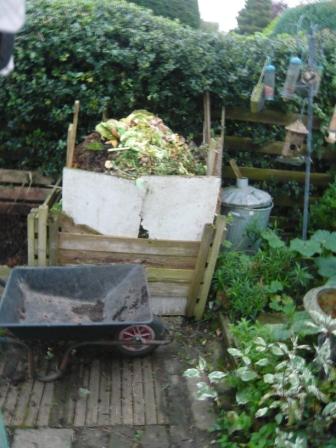
Three years ago this was how my compost heap looked. Today I restarted the job of spreading the good stuff 2013 in my veg garden.
014

My arms and back ache as I have spent most of today’s daylight hours emptying a compost heap. Not before time my wife thinks when she sees the other heap (below).

Even with ‘greedy boards’ to hold extra compostables the heap is too high. The last grass clippings of the season won’t fit even though the soft, nitrogen rich texture will help rot the dryer brown material available in quantities during autumn.

The greedy boards are the home made extension to the front and sides of the heap. The sort of thing you see on waste skips that are overfilled. The difference is my compost will shrink to half it’s current size. Then it will be turned into the now empty sister bin no.2 to aerate and mix the compost.

No Dig Composting and Spreading

Read More Read More

Moneymaker The Tomato to Grow

Moneymaker The Tomato to Grow

The clue is in the name – with Moneymaker you get a large, reliable crop of juicy tomatoes

What Tomatoes to Grow

  • New growers need to select reliable varieties to grow to develop their enthusiasm.

  • Moneymaker crops so well and regularly in my greenhouse that I will be growing it again.

  • Thompson Morgan have over a dozen varieties with the AGM so if I was looking for a new variety I would try one or two of them. Seeds from Thompson & Morgan

  • If you are a regular grower you may be tempted to something different and there are 280+ varieties of Tomato at Totally Tomatoes

  • Personally I do not grow tomatoes outdoors perhaps I am missing something .
  • Get your seed selected and bought early for planting and germination in late February.
  • Companion plant tomatoes with French marigolds to deter whitefly, and basil, chives or mint to deter aphids and other pests.

Selection

Tumbler for containers or hanging baskets

Beefsteak for large 1lb tomatoes

Gardeners Delight for sweetness and abundance of smaller fruit

Ailsa Craig an heirloom variety tried and tested through the years

Golden Cherry F1 thin skinned as it says on the label

Heirloom varieties are popular but often need more care and produce smaller but special crops

Cordon varieties are also called indeterminate like moneymaker and Gardeners delight need to grow a single stem up a cane or string support.
Determinate or Bush varieties can be left without support although some fruit will trail on the ground and stop growing sooner than indeterminates.
Semi determinates are shorter plants but as with all indeterminates they need side shoots pinching out and stopping at the top of the support.

Giant Pumpkin Growing

Giant Pumpkin Growing

Third in a short series about Curcurbits.

The British record for the heaviest pumpkin weighing 1,725 pounds can be beaten and you can win local shows next year by striving for this level of achievement.

Growing Tips for Giant Pumpkins

  • Start in February with a large hole filled with up to a ton of well rotted horse manure
  • Buy ‘giant seed’ via the internet or use Atlantic Giant seed.
  • In March sow the flat seeds, edge downwards not flat, in good sized pots in the greenhouse.
  • Plant out on top of the compost or manure pile when the risk of frost has gone. Keep a cardboard box to cover the plant on nights when frost is a danger.
  • Remove all but one (the chosen one) of the pumpkin fruits. If there are several, choose one that is about 8 feet from the roots.
  • Cull all further fruit regularly.
  • Read More Read More

Winter Squash From Seed

Winter Squash From Seed

Want to grow through autumn to eat during winter try sporty Squash!
Squash

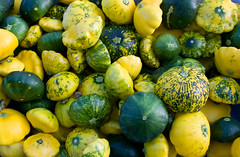
You can grow winter squash from seed and the plants will grow well outdoors in the UK during summer and early autumn. Squash can be damaged by frost so bear this in mind. However they store well so winter squash are a garden crop worth growing from seed.

Sowing Seed of Winter Squash

  • Sow individual seeds an eighth of an inch deep in 3″ pots filled with good seed or cutting compost.
  • Sow at the beginning of May and keep in the greenhouse or on a warm windowsill.
  • If the weather turns cold put them in a propagator set at 22-30 degrees C.
  • During the first half of June harden the plants off and transplant them when the roots have filled the pots.
  • Germination is quick 7-10 days and is reliable with fresh seed.
  • Do not exclude light as this helps germination.
  • Read More Read More

Growing Pumpkins and Squash

Growing Pumpkins and Squash

To calculate the circumference of a Pumpkin use Pumpkin Pi

Squash

On Halloween I am not alone in writing about growing Pumkins and some of my notes are from Sarah Ravens recent article in the Telegraph.

Pumpkin Growing Tips

  • Sow seed vertically into very rich soil.
  • Pinch out all the growing tips in mid August and keep doing so to send energy into fruiting.
  • Keep well watered and the soil full of humus.

Pumpkin Varieties for Next Year

  • Crown Prince is a large heavy Pumpkin with blue-green skin that can exceed 10lb in weight.
  • Kabochas F1 hybrids and Sunspot are good orange skinned varieties.
  • Butterboy, Sunburst, Sweet Dumpling and Uchiki Kuri seeds are on offer ref TL840 with Crown Prince in a mixed pack of 5 from the ‘Squash Offer’ Rookery Farm Holbeach PE12SG 0844 7704653
  • Read More Read More