Help with Growing Persicaria

Help with Growing Persicaria
Persicaria
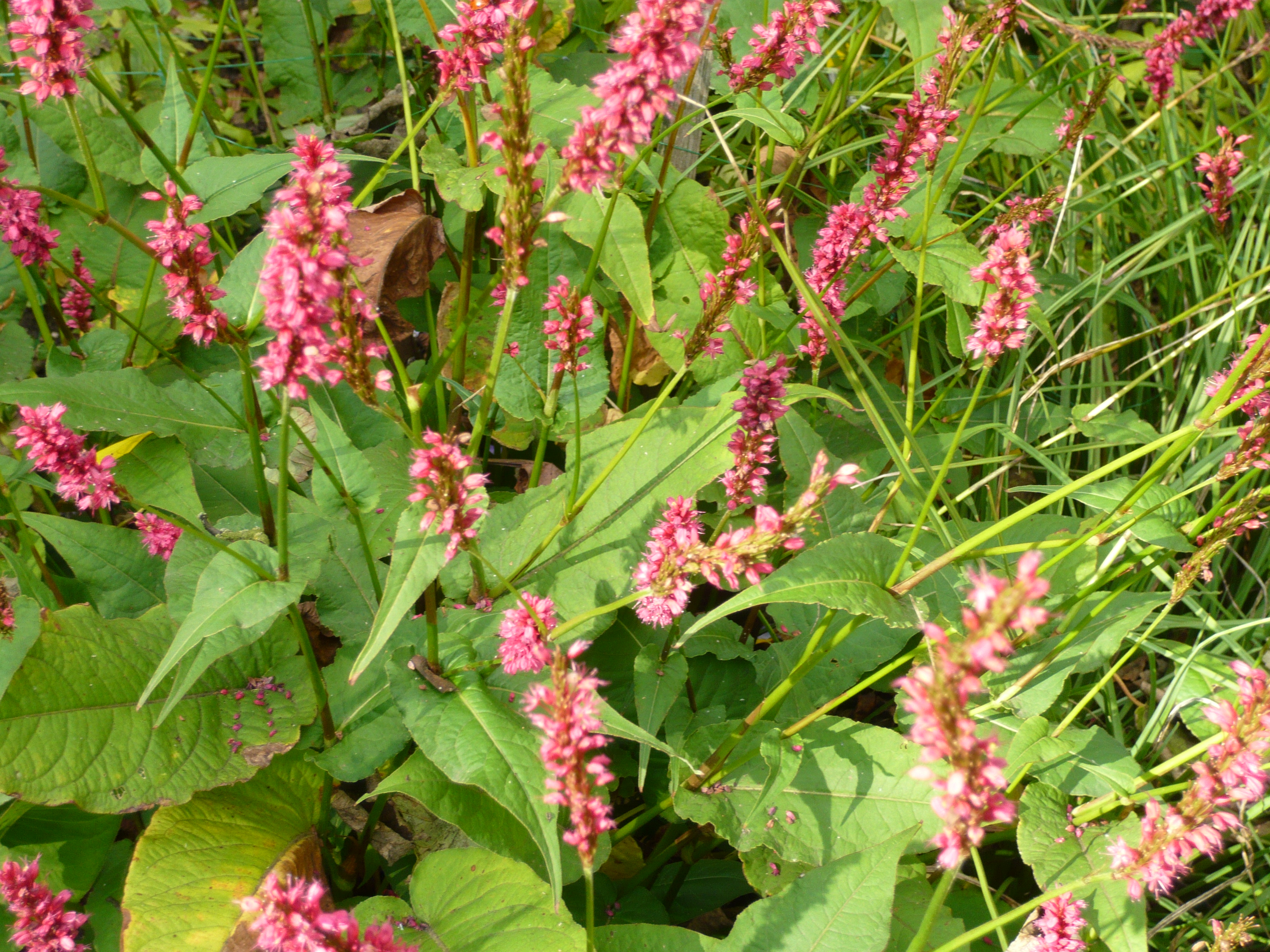
Available in Red Pink and Mauve shades there are many versions of Persicaria to grow in your garden.

Help Chosing Places for Growing Persicaria

  • As moisture loving plants Persicaria are used in boggy areas or near water.
  • Most Persicaria have creeping stems and bottle brush flowers that form good ground cover.
  • There varieties suitable for the rock garden and even aquatic ones for the pond.
  • Some varieties look good in a cottage garden or as part of a mixed border.

Help Selecting and Growing Persicaria

  • Dead head spent blooms by pulling off the flowering stem at its base to encourage further flowers throughout the summer.
  • Whilst Persicaria prefer moist soil most will tolerate dry conditions but won’t spread in those circumstances.
  • Propagate by division, splitting larger clumps in autumn or spring.
  • Persicaria nepalensis is low creeping ground cover for shade. Boldly patterned leaves turn redder in the sun.
  • Persicaria amplexicaulis “Blackfield” has slender flowers in very deep red.
  • Persicaria virginiana Variegata is grown for its variegated leaves
  • Persicaria polymorpha has large pointed leaves and white heads of frothy flowers in May.
  • Persicaria affinis “Superba” or Dimity AGM has pink flowers and leaves that turn red in autumn
Persicaria bistorta
Persicaria are from the family Polygonaceae which includes the weed like Polygonums. However the herbaceous species named above make good garden plants.

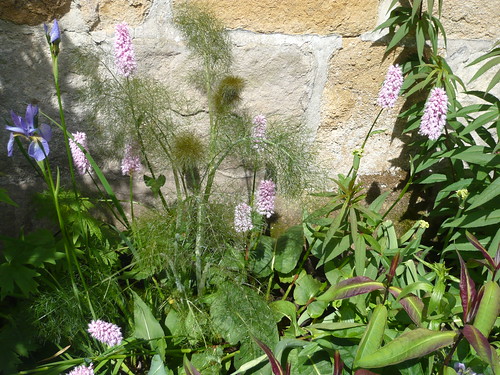
Like many flowers Persicari bistorta repays close attention. From afar the flowers look small and unexceptional but close too they are frilly and delightful tubes of flower power.
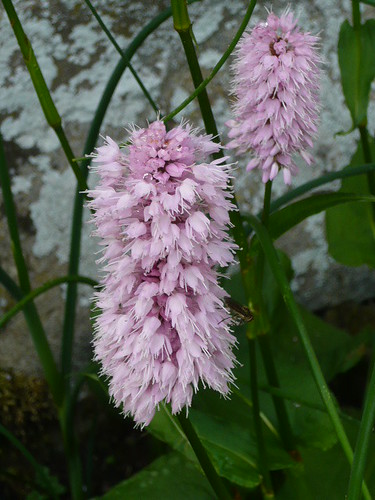
Persicaria bistorta

The RHS says ‘Persicaria can be annuals, herbaceous or evergreen perennials or sub-shrubs with simple leaves and small bell-shaped white or pink flowers in long-lasting spikes or panicles’ and have awarded an AGM to Polygonum amplexicaule ‘Fire Tail’
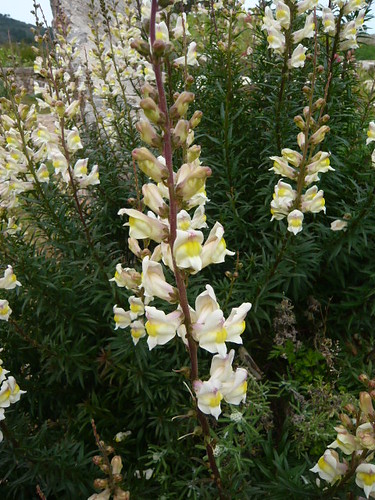
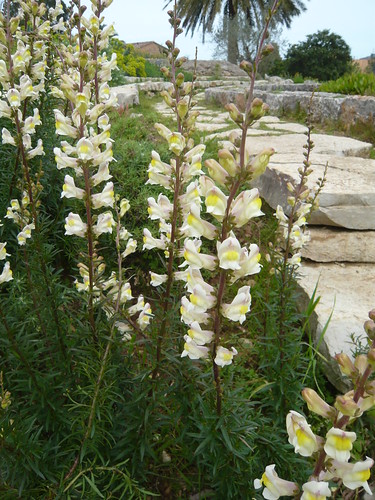
Antirrhinum siculum in Soller

Antirrhinum siculum in Soller

Antirrhinum siculum

The Sicilian Antirrhinum is yellow in flower and has thin atypical leaves.
These pictures were captured in Majorca at the botanic Garden at Soller.

Wild plants of Malta has the best description, history and morphology and I would recommend you check it out if you are interested in Antirrhinum siculum

Antirrhinum siculum

Somehow I doubt the plant will grow in Yorkshire. I will stick to my own Snapdragons

Growing Blueberry – Vaccinium

Growing Blueberry – Vaccinium

2014 was another year of poor cropping for me. Time to put my blueberries in the sun and keep picking wild bilberries just in case!

Blueberry is part of the family of acid loving berry fruit that includes Cranberry, Bilberry, Whortleberry, Lingonberry and Huckleberry. Given the right conditions you can grow a succulent sweet crop of Blueberries in your garden.

Blueberry Varieties

  • Blueberry Bluecrop pictured above as fruit start to develop. This is a reliable and readily available variety that produce fruit in mid-summer. Plants are upright and can grow to 6′ tall and 4′ wide.  It has excellent orange and copper leaves in autumn.
  • Blueberry Duke AGM has long lasting fruit and a good yield. Flowering later than other varieties it seldom suffers from late frosts.
  • Blueberry Bluegold is a smaller plant that can also be grown as an ornamental shrub or in pots and produces very tasty berries in August. The fruit has a longer life than most varieties.
  • Other varieties include ‘Earliblue’ an early ripening variety with medium, light blue berries, excellent sweet flavour and impressive autumn colour. ‘Bluetta’ is a compact variety, with a spreading habit, producing a medium-sized, light blue berry. ‘Patriot’ is a high-yielding, vigorous, hardy variety. ‘Coville’ is the latest cropper with large fruit that can be left on the bush for a long time before dropping.

Blueberry Growing and Cultivation Tips

Read More Read More

Erica arborea – Tree Heather – Albert’s Gold & Estrella Gold

Erica arborea – Tree Heather – Albert’s Gold & Estrella Gold

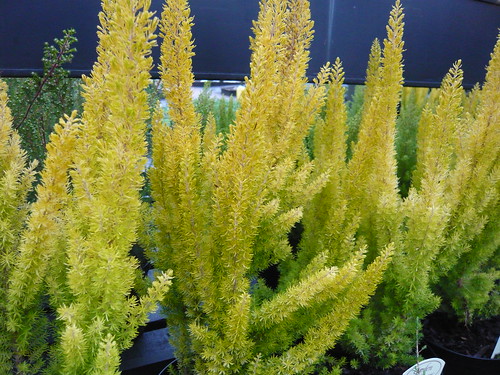
Higher than wider the tree heathers originated from the Mediterranean area but produce stately plants in the UK.

Erica arboea Alberts Gold

Erica arborea ‘Albert’s Gold’ is a heath with sparse, slightly scented white flowers in Mar-May. It is generally grown for the yellow foliage that is brightest in winter and spring.

Albert’s Gold was originally found as a sport on Erica arborea alpina by Albert Turner. This also flowers white during spring in close cylindrical inflorescences but with mid-green foliage. Collected in central Spain by the German, Georg Dieck, over 100 years ago!

Both varieties have an AGM and grow 3 feet high with a 2 foot spread

‘Estrella Gold’ according to the UK Heather Society has ‘white flowers in profusion from April-May, with lime green foliage with bright yellow new growth. Broad compact habit. Hardy. Found in Sierra da Estrela, Coimbra, Portugal in 1972 by R. Zwijnenburg and introduced first in the Netherlands.’ Its strong colour contrast helped earn it an AGM.

Growing Christmas Roses and Hellebores

Growing Christmas Roses and Hellebores

Pink & White Hellebore

What are Hellebores

  • Helleborus niger is the latin name for the Christmas Rose, the white flowered Hellebore.
  • Hellebores are hardy, evergreen perennials that grow 12 to 15 inches tall.
  • Hellebores have shiny, dark green leathery leaves but poisonous roots.
  • Each flower stalk bears a single 2 to 4 inch white bloom sometimes tinged with pink.
  • Hellebores should be planted in partial shade or under deciduous trees that allows them to receive winter sunlight.

Growing Tips for Hellebores

Purple in the Garden

Purple in the Garden

Look at colour in a new light. Purples look stronger in autumn with the lower less intense light levels.
Butterfly bush

Purple pigmentation is a combination of red and blue. The proportions affect the intensity of the purple colouring. This Buddleia has a large number of small flowers and other varieties can verge on a pink colouring.

Geranium

Read More Read More

Successful Watering in your Garden

Successful Watering in your Garden

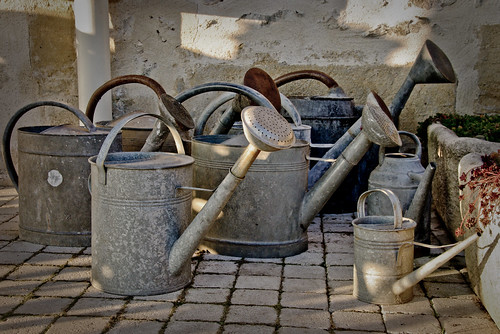
Watering can be the key to  success in the garden and with your houseplants. Not surprisingly plants without water die !  Plants can drown with too much H²O so watering is a skill worth learning.
It sounds so easy when you are told to ‘water your plants’. Well so it is but there is many a slip twixt watering can and lip. Remember you are watering the soil not the leaves.

Conserving Water in the Garden

  • Dig in bulky organic matter to increase the water carrying capacity of your soil.
  • Keep the surface mulched to avoid evaporation.
  • Keep soil weed free. Weeds compete for moisture and evaporate through their leaves.
  • Wind increases evaporation so build wind breaks.
  • On sloping land sow across the slope reducing run off and soil errosion problems.
  • Plant water hungry plants together where rainfall will be highest. Do not bother to water lawns they will recover from most drought conditions when it rains.

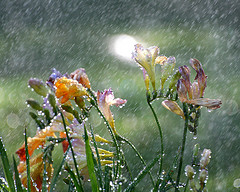
freesia-in-the-rain

I was taken with the though of best tips for watering a garden after a chance discussion. Last night at the Bridge club (or the pub afterward) I was asked about the different growth rates of apparently identical plants. Mike and I put it down to water so here are my top tips

Watering Tips

  • God’s own water is best! If we could arrange a steady drizzel from dusk to dawn through summer our gardens would be lush and our crops juicy and large. A slow steady rain (rather than a thunderstorm) will build up moisture in the soil without water logging or running off too quickly.
  • God’s own water is second best as well. By that I mean rain water caught in a bucket or barrel to be watered in by can or sprayer when needed. I collect rain water off the greenhouse roof (as it may dissolve more chemicals off an asphalt surface). Either way the rain water is softer and more balanced than tap water and is at surrounding temperature when used.
  • I try not to use water from the barrel on seedlings to minimise damping off (rotting caused by microbes).
  • Sprinklers or hose pipes need to be given chance to provide a good soaking so I believe in the longer and slower method so the water can really penetrate the top 4 inches or so of soil. A quick splash can do more harm than good bringing roots to the surface.
  • Read More Read More

Grow Romantic Red Flowers

Grow Romantic Red Flowers

Lust

There is a romantic red flower for virtually every month of the year. Even if your husband or partner fails to deliver the romantic bunch on St Valentines day you can grow your own and pretend.

Christmas time produces red flowers or at least sepals on the Poinsettia and following that in January, Cyclamen persicum are available in strong red colours.

Tulip

The bulbs of Amaryllis that you planted at Christmas will be flowering by February and March is my favourite time for Primulas which are available in red with a catchy yellow eye.

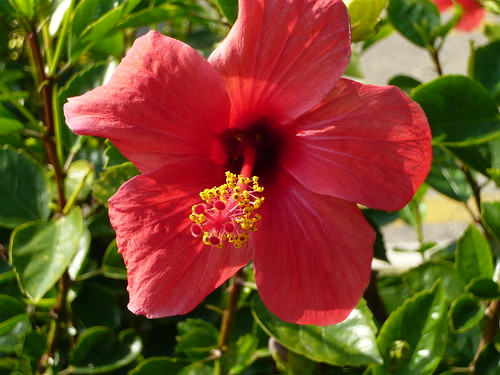
Hibiscus

Also an early flower for indoors why not seek out an April flowering red Orchid variety Nelly Isler. May will have seen Camellia japonica ‘Adolphe Audusson’ come and go. With June reserved for Peonies we are half way through the romantic red flower year.

Read More Read More

Benefits of Dead Heading Flowers

Benefits of Dead Heading Flowers

Benefits of Deadheading Flowers

Dead heading Flowers is a simple but effective way to gain a longer flowering period from your plants. Snip off or pinch out old flowers as soon as they have ‘gone over’. Those flowers have done their bit for the flower gardener and it is time to make room for new flowers.

Benefits of Dead Heading Flowers

  • When a plant starts to set seed, it automatically stops producing more flowers to focus its energy on developing the seed. If you cut off the dead flowers before they have time to set seed then this shuts off the signal enabling a longer flowering period to be enjoyed.
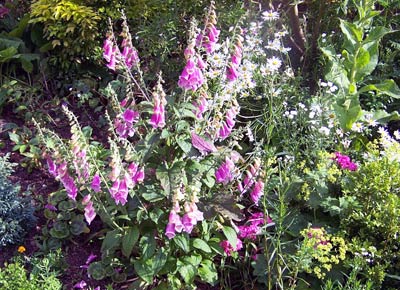
  • Dead heading can create a bushier more attractive plant. In the foxglove above, the traditional spike has been replaced with numerous side shoots creating a unique look as well as an extended flower season.
  • Some plants particularly annuals die after flowering and deadheading may prolong their life.
  • Dead heading keeps a plant tidy. Old flowers may attract rot or disease.
  • Dead heading stops unwanted self sowing of seeds from profligate species.
  • Dead head even if you do not expect more flowers as it will direct energy into the plant and not reproduction.
  • Read More Read More

Gerbera us a Smile

Gerbera us a Smile

Gerbera smile

Gerberas often make us smile but this flower is trying to smile for us. Like my jokes it is nothing to laugh at.

A popular house plant the Gerbera has radiant, single or double flowers. They look like their relatives the  daisy family. Best known for the range of strong colours you often see one stem in a vase. The flowers last well as cut flowers and are a regular feature in florists arrangements. They also make a colour full display on this web page.

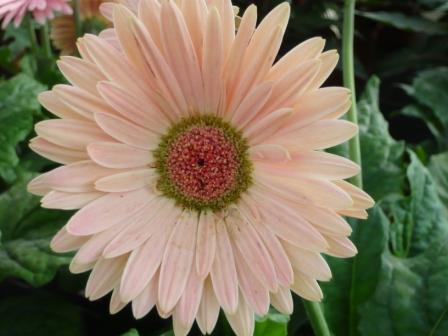
The ray floret petals are a pale salmon with a distinctive and typical centre.

A couple of doubles, a doppleganger of a Gerbera

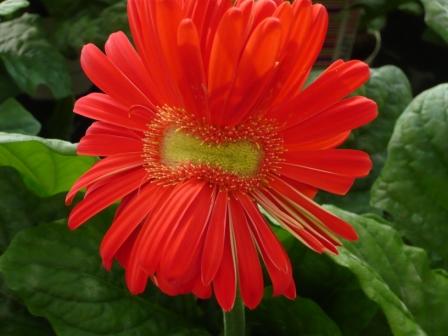
All the central disc florets are open on this orange Gerbera

For some more pictures of Gerbera try