Browsed by
Category: Tips Hints and Ideas

Help for the new and not so new gardener

Cure for Blind Bulbs
Cure for Blind Bulbs

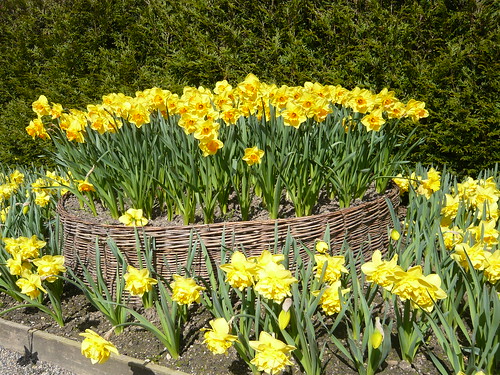
daffodil in willow display

Plants that grow leaves but fail to flower are called ‘Blind’. Often in bulbs such as daffodils, this blindness happens after several successful seasons of flowering.
A crop of strappy green leaves is not what most gardeners aspire too.

Prevention is Better than Cure for Blindness

  • Overcrowding as bulbs multiply congests the plants. Split large clumps and replant when the foliage has just died down.
  • Plant bulbs deep enough. Shallow planting can cause bulbs to be blind. Soil depth 2-3 times the height of the bulb should be above the tip of the bulb.
  • Feed the bulbs with Growmore in spring or a high potash feed if growing in containers.
  • Dry conditions can cause blindness. Water thoroughly and regularly after flowering until foliage dies down naturally.
  • Help bulbs regenerate their strength by leaving leaves on plants and taking seedheads off.
  • Do not knot or tie up the leaves let photosynthesis maximise the bulb size for next year.
  • Do not plant too late in the season and expect a good flower crop.
  • Not true blindness but pests can eat the buds or damage the bulbs so cover with mesh if you are troubled.
  • Young offsets need time to build up to flowering

Some plants are blind for more serious reasons related to their biology. Life can be too short to work on a plant that heredity has decreed it will not flower.
Chose floriferous varieties.
Allow enough time to see if young or recalcitrant plants will flower better in later years.

Other Causes Other Plants

  • Conditions during seed production, as well as during post-harvest processing of the seed can increase blind plants.
  • Germination and growing conditions can have an effect on the occurrence of blind plants.
  • Genetic conditions can have an impact.
  • Blindness in tomato and chillie plants is a disorder concerning the growing point.
Tips for Looking After Hanging Baskets

Tips for Looking After Hanging Baskets

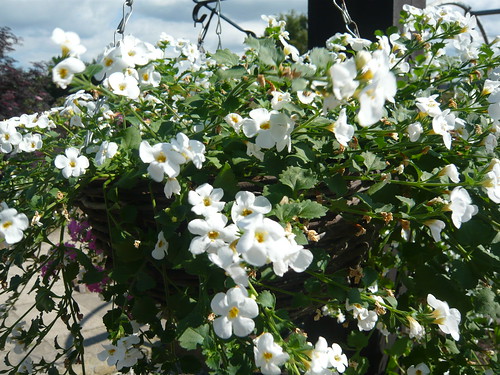
golden acre gardens leeds

These tips may seem commonsense but they are always worth repeating.

Tips For Good Hanging Baskets.

  • Water early in the day ‘and or’ in the evening. Give plants a good drink regularly.
  • After 4 weeks in the same compost the nutrients will be reduced and you should add liquid feed. I use half strength fertilizer with every watering.
  • Many hanging basket plants will self deadhead but if you have zonal geraniums in the basket they will benefit from nipping the deadheads off.
  • Turn the basket round, if one side near a wall for example, is growing less well.
  • Look out for aphids on the soft lush growth.
  • If you get unexpected gaps in leaf or bloom you can still  put in new plants.

Hanging Basket Holidays

  • If you go on holiday you need to think about care of your baskets whilst away, even just for a weekend.

    Read More Read More

Shallots for Showing

Shallots for Showing

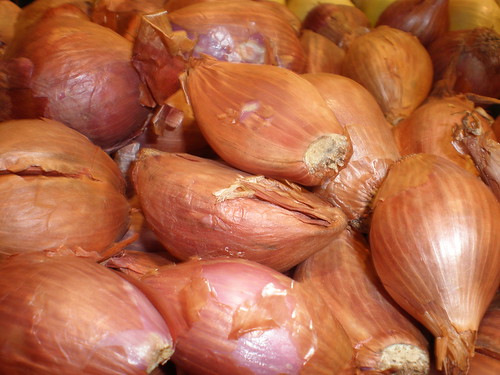
Many shows have 2 classes for Shallots. Small pickling Shallots and ‘Giants’.

Showing Shallots

  • Grow Dutch Yellow for a ‘judge pleasing’ variety or raise Russian Red from seed.
  • Display small shallots in bowls of sand, sawdust or special boxes  for the ‘Giants’. The aim is to keep the bulb in formation.
  • Pickling Shallots should be less than an inch across the waist and uniform.
  • Harvest a few weeks before the show and ripen-off in the sun during the day, bringing them in during the evening.
  • The end of May is a good time to thin Shallots being grown for showing. Carefully remove the center bulb from a cluster without disturbing the remainder.

Other Shallot Varieties

  • Prisma F1, Golden Gourmet or Red Sun are even growers.
  • Pesandor, Jermor and Vigarmor tend to be tubular shaped.
  • Thompson Morgan have good supplies for next season. Place your order when you see what has won this years show.

Show Standards

  • Local shows may have arbitrary judging standards for Shallots.
  • The majority of bulbs often end up misshapen or bulging out, not having good form.
  • The large exhibition type shallot is now awarded a maximum of 18 points because of the degree of difficulty in achieving a perfect specimen.
  • In the  RHS show handbook  ‘shapely bulbs of good form” are considered best.
  • The NVS judges guide goes even further and states that ‘single bulbs of good shape with circular outline’ are meritorious.

Soil Tips for Growing Vegetables

Soil Tips for Growing Vegetables

159

Is your soil so poor nothing will grow in it? No I didn’t think so because weeds will grow anywhere!

Improve Your Soil

  • Rotted farmyard manure, dug in each year, will boost your soils fertility.
  • The rotted farmyard manure breaks down to humus that opens up clay soils and holds moisture in sandy soils.
  • You need to replace the nutrients taken out of the soil by this seasons crops and that is where an annual dose of farmyard manure comes in.
  • Cover the veg-patch with black polythene over winter. This stops goodness leaching out, stops weeds and warms the soil in spring.
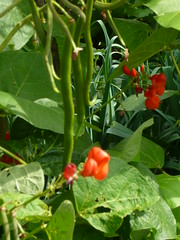
  • I also trench the Runner Bean rows with an extra bottom covering of manure to hold extra moisture.
  • Add lime for growing Brassicas but Potatoes love the slight acidity that often comes with farmyard manure.
Dividing Daffodils to Increase Flowering

Dividing Daffodils to Increase Flowering

daffodil

When bulbs get cramped for space they throw up leaf not flower. To improve the flowering from congested clumps of Daffodils they can be divided in June.

How to Divide Daffodils

  • Tip out the bulbs grown in pots and clean away loose compost.
  • Lift clumps from the border with a spade.
  • Tease apart the bulbs, discard very small or misshapen bulbs.
  • Grade the bulbs by size, the larger bulbs should flower again next year.
  • Smaller bulbs need to be grown on to increase their size – put them 2″ deep in a pot of John Innes No2.
  • Improve the soil before replanting with compost, leafmould and a balanced slow release fertilizer.

For bulbs naturalised in grass, wait until autumn. Strip back the turf then divide the bulbs.
Handle fresh bulbs with care as they bruise easily and that can cause rot.
After replanting water the ground and mulch over the planting spot.

Other Bulbs to Divide

  • Glory of the Snow or Chionodoxa – Divide after foliage dies; plant 3 inches deep.
  • Muscari or Grape hyacinths – Divide in summer replant 3 inches deep.
  • Tulips – Divide after foliage dies and plant 6 to 8 inches deep.
  • Scilla – Divide in summer, plant larger species just below soil, others 3 to 4 inches deep.
Pricking Out Guide

Pricking Out Guide

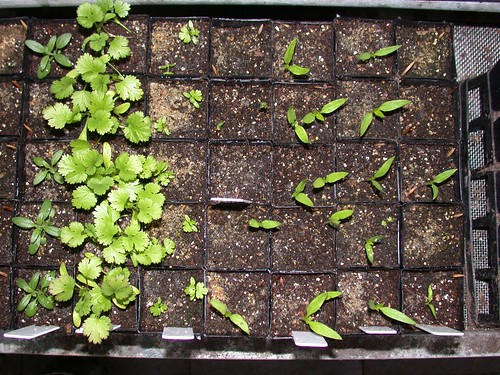
Plants grown from seed need to be given space to grow by ‘Pricking Out’ or thinning.
This process gives young plants space and nutrient necessary for healthy growth.

Guide for Pricking Out

  • For seeds grown in seed trays, ‘prick out’ the seedlings as soon as they are large enough to handle.
  • Use a small tool or dibber to loosen the seed compost and lift out the seedling.
  • Hold by the first green leaves not the roots.
  • Plant in rows in a new tray of multi purpose compost using a dibber to make holes. Firm the compost around the plant.
  • Space the seedlings 1-2 ” apart depending on the vigour/size of the plant you are growing.
  • Water using a watering can with a fine rose.
  • Shade from direct sunlight for a couple of days.

Other Pricking out Activities

  • Prick out into modules to save time and further root disturbance when planting out.
  • Bigger plants like Tomatoes, Cucumbers, Dahlias etc can be pricked out into individual pots.
  • I put Mesembryanthemums direct into the garden after hardening them off.
  • Seedlings grown in Jiffy pots are best potted into there own plant pot.
  • When starting off sow in modules or cells. Seeds can be sown individually or in small number where the weaker seedlings can be sacrificed to allow the strongest to grow. (Thinning out).

Seeds sown direct into their final position in the garden may need to be spaced. Pinch or pull out seedlings that are cramped, to leave a space between your selected plants for growing on. Carrots and plants that don’t tolerate root disturbance are treated this way.

Seeds sown in a garden seed bed can be pricked out if required but I sow them thinly enough to be able to just move them once into the final growing position.
Some flower mixtures are best just broadcast and left to grow where they germinate.

Tip
If you are growing a seed mixture transplant a range of seedlings not just the largest. Often different coloured flowers grow differently at the seedling stage.

Movement in Your Garden

Movement in Your Garden

095

The day was still and the only movement was the lazy (none PC) smoke drifting from a brushwood fire but it made me think of movement in my garden.


Natural Movement.

  • Grasses have grown in popularity with prairie planting creating drifts of fine plumes of seed heads wafting in the breeze.
  • Fine leaves, particularly the well coloured Acers, are one of my favourites.
  • The fast running and gurgling stream provides stimulation to several senses at the same time.
  • Tall thin plants like bamboo are grown for their ability to move in a breeze. Verbena bonariensis and tall back of the border plants are also useful
  • Visiting birds and insects are great for movement. Make sure your garden attracts them.

074

Man-made Movement

Read More Read More

Daffodil and Narcissus Tips for May

Daffodil and Narcissus Tips for May

Deadheading

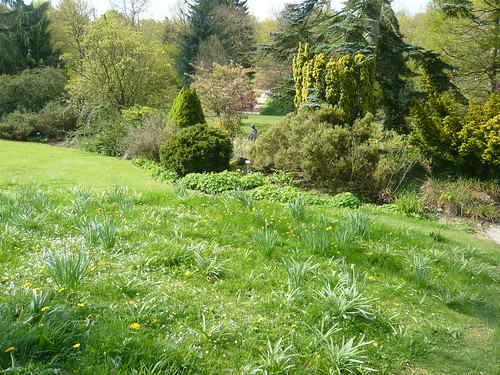
These Daffodils growing in grass have naturalised successfully and don’t get deadheaded but in your garden deadheading is a good idea.

May Activity for Daffodils.

  1. Pinch or cut off the seedhead before they swell to channel energy into bulbs.
  2. The leaves are busy converting sunlight and nutrients into sugars and stronger bulbs for next year.
  3. Do not cut off the leaves of Daffodills until they die back
  4. Apply a dilute liquid feed via the leaves with a good spray of fertilizer.
  5. As the leaves yellow at the end of the month you can split large clumps of bulbs. Replant 5-6″ apart in new soil or revitalise existing soil.
  6. When replanting do not bury the old foliage.
  7. Mark where your best Daffodils are so you do not dig them up by mistake.
  8. Plan  where  and what Narcissus you are growing next year.

daffodil in willow display

Shade Loving Perennials a Top Ten

Shade Loving Perennials a Top Ten

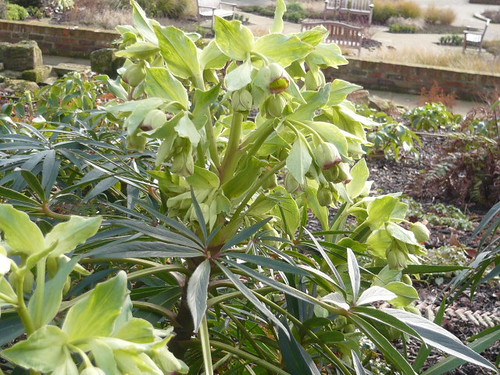
Helebore

Plants that thrive in the shade also tend to be heavy drinkers. Here is my top ten list

Top Ten Shade Loving Perennials for the UK

  1. Bergenia varieties including Bressingham White, Baby Doll, Rotblum and Bergenia cordifolia
  2. Hosta varieties including Aureo marginata, Moerheim, Halcyon, Wide Brim and Hosta venricosa.
  3. Dicentra varieties including Boothmans variety, spectabilis and formosa Luxuriant.
  4. Astilibe varieties including Deutchland, Europa, Fire Ostrich Plume and W M Buchan
  5. Alchemilla mollis
  6. Epimedium varieties including Roseum, Pinck Colchicum and Sulphureum
  7. Helleborus Oriental hybrids or species, cyclophyllus, foetidus and purpurescens.
  8. Polygonatum giganteum or multiflorum
  9. Pulmonaria varieties including Mary Motram, Dora Bielefeld and Roy Davis.
  10. Tellima grandiflora and grandiflora purpurea

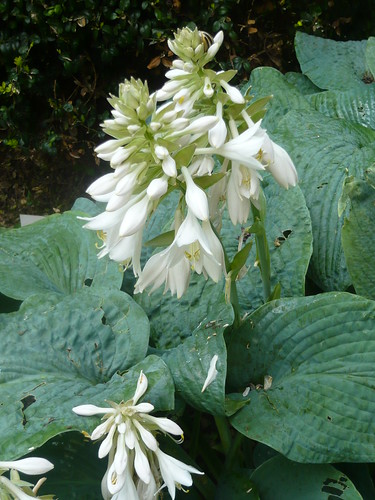
Host flower slugged

Most gardeners have a shady spot so I hope this list gives you some ideas for new varieties to try growing. Of course most of these plants will tolerate some sunshine but then need even more water to thrive.

Shade Loving Ground Cover Perennials

  • Sweet Woodruff or Galium odoratum thrives in alkaline soil
  • Anemone nemorosa Robinsoniana has a carpet of ferny leaves and white flowers that all die down in summer
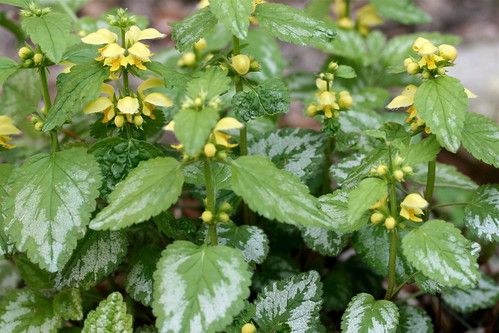
  • Lamium galebdolon dead nettle a scrambling, variegated evergreen.
  • Symphytum grandifolium or dwarf comfrey has leaves that make good compost
  • Saxifraga spathularis or St Patrick’s Cabbage is evergreen but not as cabbage looking as some gardeners.
  • Vincas minor Getrude Jekyll

Lamium

Credits
Lamium by Shotaku CC BY-NC-ND 2.0

Book Cover
Planting the Dry Shade Garden: The Best Plants for the Toughest Spot in Your Garden by Graham Rice
Dry Shade Perennials a Top Ten
Best Shade loving plants

Spring Shrubs Forsythia and Flowering Currant

Spring Shrubs Forsythia and Flowering Currant

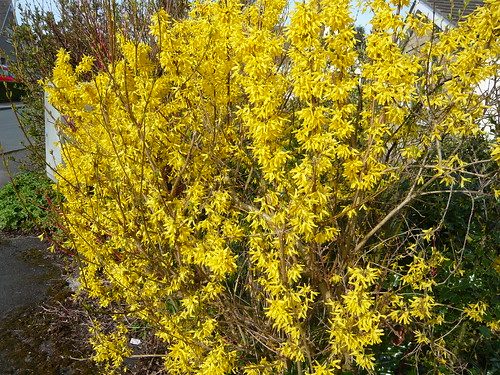
Forsythia

Forsythia is now in rampant bloom around our village. The sunny yellow flowers compete with the Daffodils for a place in the yellow spectrum of colour.

Blossom arrives before any leaves on the twiggy growth from earlier years. This cloaks the shrub in a mass of yellow blossom that really takes some beating. Only the very old wood has not got blossom this year and I will be tempted to encourage new twiggy stems by selective pruning when the flowering has finished. This will only be a light trim like they say at the barbers not a No 1.

Forsythia grows 1-2 feet per year from cuttings taken in late spring when the wood is green. Push 6 inch stems into a gritty soil preferably with some peat added as they like acidic soil. The shrub grows to 7-10 feet tall and almost as wide if left untended but it is then open and erring towards straggly, so I recommend the post flowering trim.

Flowering Currant

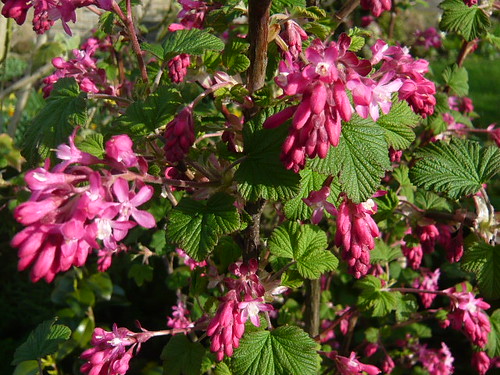
Flowering Currants also called Ribes sanguineum are also early spring blossoming shrubs. The sprays of flowers are like racemes of red or dark pink that are on show as the scented grey green leaves start to open. There is also a light pink variety that is a strong grower reaching 10 feet tall if left to its own devices.It is best kept at a 4-5 foot height.

Some better know varieties include ‘King Edward VII’, with red flowers, ‘Pulborough Scarlet’, also with red flowers and ‘White Icicle’, with white flowers.

Pink Ribes

Tips for Spring Shrubs

  • Prune after flowering. This encourages new flowering wood to grow for next year.
  • Take cuttings to propagate new shrubs in spring or early summer.
  • Mulch shrubs after summer rain or a good watering to see them through a dry summer.
  • Both Flowering Currants and Forsythia are east shrubs to grow.

Forsythia