Browsed by
Category: Tips Hints and Ideas

Help for the new and not so new gardener

Lupins their Pests and Diseases

Lupins their Pests and Diseases

Dirty great clumps of greenfly can infest your Lupins.

lupin

Lupins can be grown from the seed you collect.
If buying a potted plant see what the colour and spike is like before you buy. A good plant will last several years with little fungal problems.
If you want a second flush of flowers it is best to dead head the spires of blossom. Deadheading saves energy in the plant.

Lupin Problems and Treatments

  • Slugs like the tender shoots and snails seem to have attached themselves to the stronger leaves this year in my garden. I need a lot of grit around the base of the plants before they start to grow or to buy some nematodes as the weather improves.
  • Green fly gather in great quantities on my second flush of blooms and need to be washed off in soapy water or a systemic insecticide used.
  • Read More Read More

Miniature Daffodils and Narcissi Tips

Miniature Daffodils and Narcissi Tips

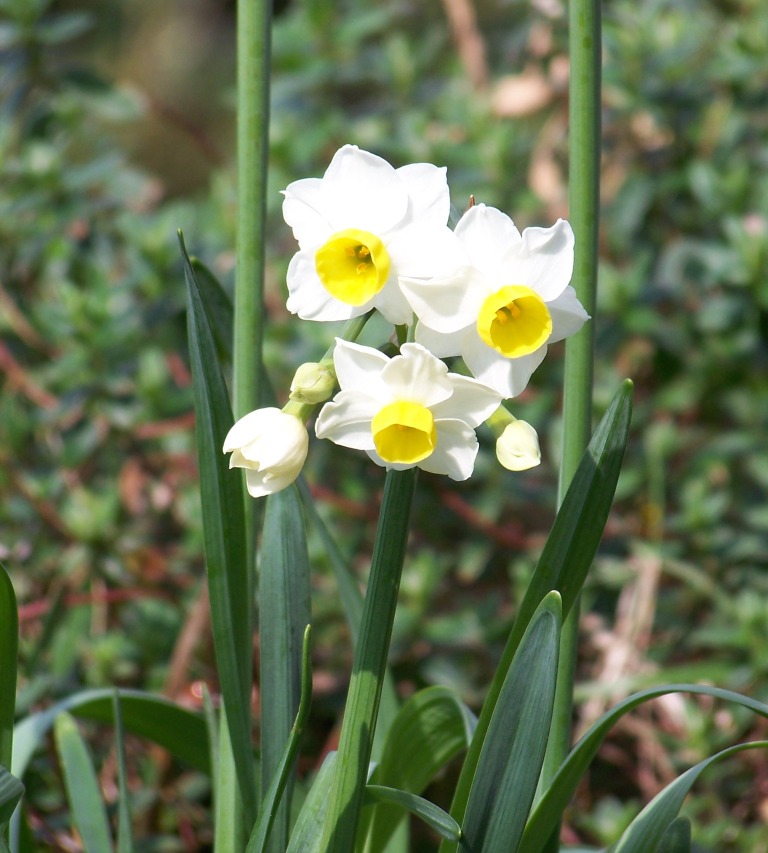
Good things come in small packages and that applies to Daffodils for house and rockery.
canaliculatus

Miniature daffodils grow from 4 inches to just short of a foot. Varieties Minnow, Toto and Canaliculatus have several flowers on the one stem and are particular favourites of mine. Try growing some in pots in the cold greenhouse as welcome additions to your alpine plants.

Tips on Minature Daffoldils

  • Look in spring for successful varieties that you may want to buy for planting this Autumn.
  • Buy pots in bloom this spring so you know what you are getting. Deadhead before the seedheads start to develop and feed the bulbs with a high phosphate feed.
  • One of the smaller varieties is Bulbocodium Conspicuous, yellow hooped petticoat at 4 inches tall with golden yellow flowers.
  • Read More Read More

Pinch these Pinching Out Tips

Pinch these Pinching Out Tips

Annuals, shrubs, fruit and flowers can all benefit from a bit of pinching out.
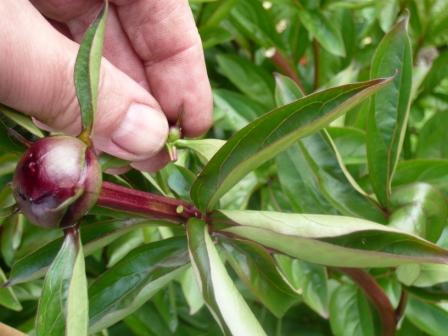
may12-049

Pinch out for Shape

I am still nervous about pinching out the growing tips of plants but I am getting better. You want your plants too look good and perform well and sometimes nature benefits from a bit of help. Your aim is to channel energy where and when you want it. So try it by using your fingers to pinch out the growing tip(s) or stalks and branches you don’t need.
One idea behind pinching out is to get the shape of a plant right – we are happy to prune a shrub to get the right shape . In extreme cases we pollard or pleach trees to control unwanted growth and encourage growth where we want it. So why not shape a soft plant like a Pelargonium (Geranium) or wallflower that you want to be bushy.

Pinch out for Flowers or Fruit

Japanese Anemone – Autumn Wind Flowers

Japanese Anemone – Autumn Wind Flowers

Anemone japonica are not the cheap and cheerful flowers from corms but a special group of autumn flowering perennial plants that grow  3-4 feet high. Planted in June they will flower this year on long stately stems in a range of rose, pink and the clear white with yellow boss of Honorine Jobert (see below).

The leaves are dark green and new growth breaks through in June to produce ever increasing sized plants. The large, long lasting blooms float above the deep green foliage which dies back in winter.

Honorine Jobert

Tips for Japanese Anemone

  • Increase stock by taking root cuttings. A 3”-4” length of root laid horizontal on compost and lightly covered will root and sprout a new plant.
  • Read More Read More

Agapanthus White African Lily

Agapanthus White African Lily

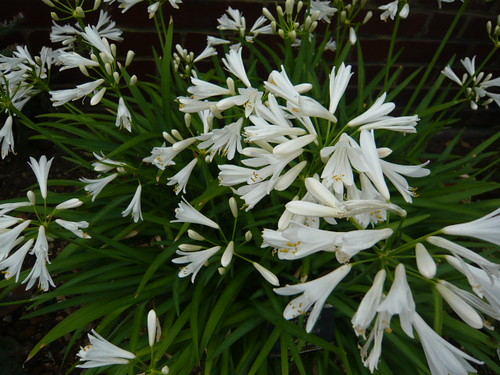
Agapanthus 'alba'
Agapanthus are one of the trendy flowers of this decade. The ball shaped umbrels are masses of tubular flowers in blue, violet or white. The deciduous sword shaped leaves grow from a bulb and root clump. Since new vvarieties have been bred to be hardy it has been practical to move Agapanthus from the cold greenhouse into pots and now into the border.

Gardeners Tips about Agapanthus

Read More Read More

Arum and Calla Lily – Zantedeschia

Arum and Calla Lily – Zantedeschia

Lily the pink and many other colours amongst the Zantedeschias
zantedeschia

Arum lily or Calla Lily called Zantedeschia are available in an increasing number of shades and varieties. This Zantedeschia rehmannii can be grown to advantage in a terracotta pot that will show off the perfect spathes or funnel shaped petals.

Zantedeschia Tips

  • Arum Lily is the common name for the hardier outdoor variety. Usually white or pink.
  • Calla Lilys are often the less hardy but colourful varieties in white, yellow, pink, red or purple and are easy to grow from bulbs.
  • Zantedeschia have heart shaped leaves often with decorative spots.
  • Zantedeschia will flower for long periods throughout the summer with dramatic and exotic shaped flowers.
  • They are not frost hardy so they should not be planted out until after the end of May in the border or pots. I bury the pots to fill odd gaps and can easily bring them indoors in winter.
  • Grow them in one and a half litre pots with loam-based compost such as John Innes No 2 and plant the rhizomes just showing at the surface of the container with the eyes of the rhizome uppermost.
  • Water freely through the summer and feed with a balanced liquid fertiliser every two weeks until the flowers have faded.
  • They make exotic houseplants as well as summer border or container plants.
  • Read More Read More

Gardeners Tips for Choisya

Gardeners Tips for Choisya

You pays your money and you takes your Choysia- ternata, pearl or sundance it is up to you.

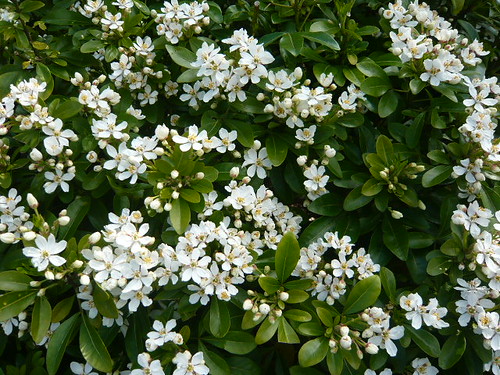
Choysia

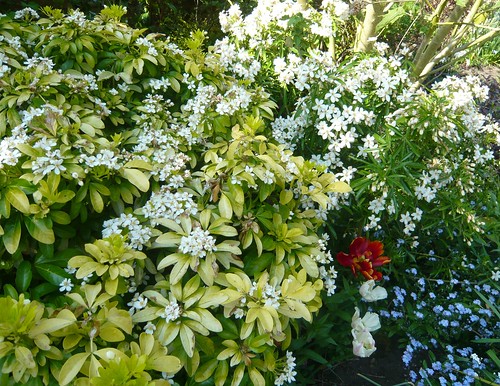
This Choisya ‘Sundance’ is an evergreen shrub grown from a young shoot cutting. The plants are trouble free and create a dome shape 4-5 feet high and spread in a similar number of years.

  • Grown mainly for the bright yellow of the new leaves they can be nipped brown with late frosts. Such damaged, scorched or wing burnt leaves should be cut off.
  • The small star shaped white flowers in April and May are very aromatic. A second flush of flowers may be obtained in Autumn.
  • Leaves also smell of basil or a bit citrusy if crushed
  • Choisya ternata ‘Aztec Pearl’ commonly called Mexican Orange blossom has narrower divided leaves and I find it is a bit thin in habit. The flowers are more numerous.
  • Choisya ‘Sundance’ is quite dense and the leaves, even when they have turned green, remain attractive and glossy.
  • Choisya will stand partial shade and can be used as part of an informal hedge
  • Propagate in Summer or Autumn, cuttings are easy to grow
  • Prune to keep in shape and cut out a third of the branches to renew from the base when needed.

Gardeners Tips 2011 Choysia

Best Pond Tips

Best Pond Tips

Water Lilies
If you are thinking and planning to get the best out of a new or rejuvenated pond than consider these quick tips

Design Tips

  • Design your pond so there are shelves around the edge of the pond for shallow and marginal plants. Water Lilies need to be planted at least 18″ deep.
  • If your pond has sheer sides you may want to grow marginal plants by submerging some staging (a weighed down inverted box). This can also be used as an escape route for amphibians to get out of the pond.
  • Keep good pond hygiene by preventing leaves and debris falling in the pond. Every two or three years have a good clean out reintroducing a small quantity of sludge at the bottom to get the process going again.
  • Locate the pond where you can see it preferably in a sunny position well away from any Pine trees. Koi fish need a shaded location.
  • Ornamental ponds may be best located in an elevated position to avoid run off filling the pond.

Book Cover

Planting Up

  • Plant in containers that you can hook out for plant maintenance. You can use a wire coat hanger on a stick if you use a basket with open loops. Invasive plants are constrained by the basket and you can rearrange the planting during the year.
  • Use good garden soil or special compost for planting and put a heavy layer of gravel on the top of the soil.
  • Unconfined plants can look more natural and are often wild life friendly but less showy as ypour best plants need to be containerised.
  • Consider a mix of Deepwater, Floating, Marginal and Oxygenating plants. Deepwater plants like cooler water and the floating leaves create this in a way that supports more life forms and restricts blanket weed.
  • Water hyacinth absorbs pollution particularly from fish waste. Skim off and compost excess plants as they multiply.
  • Bog plants and waterside plants are optional depending on your design and space. For a bog look in drier soil use Hostas and Bearded Iris or Iris Pallida that look like Bog Iris.

Book Cover

Mail Order Plants Feed Back

Mail Order Plants Feed Back

I buy various seeds and plants direct or via the internet and am a sucker for mail order, promotions and mind numbing mail shots – yes they do work on me at least!
Begonia Rex
Experiences 2013
Van Meuwen
I start with a bad experience with Van Meuwen. The first purchase of plug plants was OK and although the plugs were very, very small with almost no soil, they did grow away.
I was then emailed to buy a special limited offer of plants for £4.99 but I was charged on my credit card £13.99 the full price. A good job I looked and checked. Umpteen emails and technical problems at their end eventually elicited a promise of a refund.
Many weeks later and the next credit card statement had no refund so back to the email.
A cheque arrived today with no apology but that is as much as I expected.

Vita Sementi is a sister brand of Van Meuwen as is Vernons Geraniums which I have had several good plants from in the past. All these businesses are owned as divisions of Branded Garden Products Ltd by Thompson & Morgan one of our key sponsors. I hope they sort out the Ipswich business for next year.

Wallis Seeds
I buy from Wallis because you can get bigger quantities and the plain seed packets are saving the cost of photography and colour printing.
Last year I included one packet that was out of stock and they held back the whole order until I spoke to the team. The owner called me back to apologise and ask what I would prefer him to do. Great service.
This years supply arrived promptly and in good time for my new sowing. A company with good service that I am pleased to use again.

Comfrey for Free Fertiliser

Comfrey for Free Fertiliser

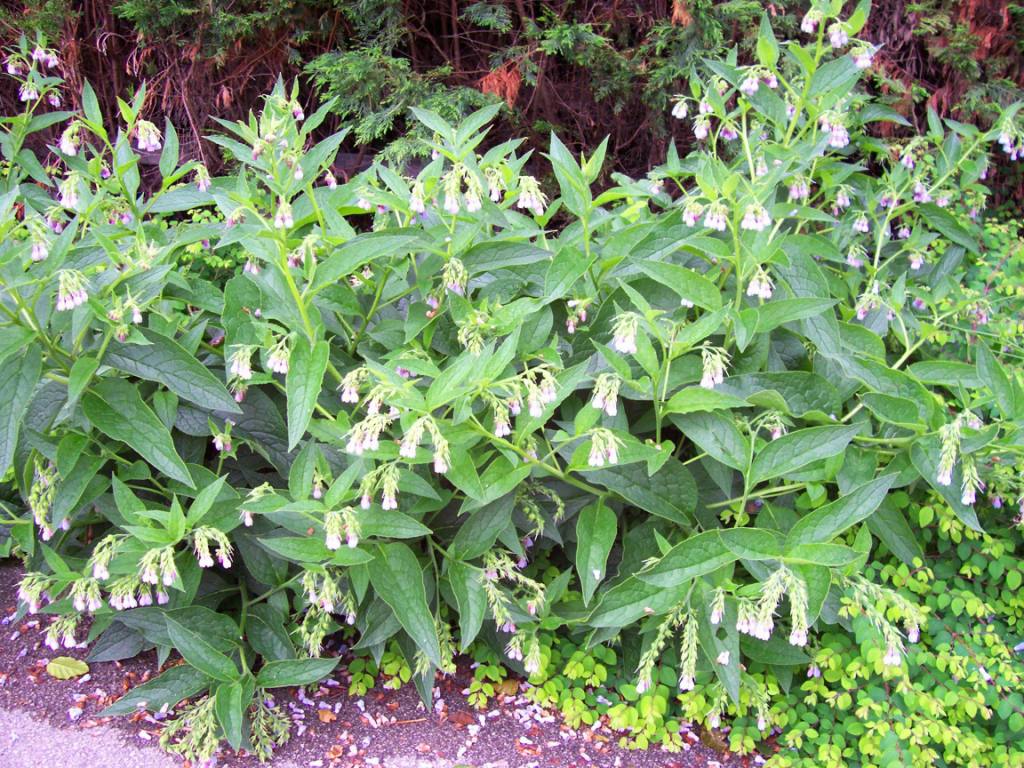
Comfrey leaves can make good balanced organic fertiliser for free.

comfrey

Since the 19th century Comfrey has been used as a fertiliser but the Henry Doubleday Institute in the 1960’s found it contained comparable amounts of fertiliser to commercial products. Comfrey contains high levels of Nitrogen for leaf growth, Phosphorous for roots and germination and Potassium for fruit and flowers.

Tips on Using Comfrey

  • I put a large handful of Comfrey leaves in my water butt and 3-4 weeks later the resulting ‘Tea’ is great for Tomatoes, Beans and general purposes. I mix them with a lot of water but if you make a concentrated tea it can be diluted prior to use.
  • Spare Comfrey leaves can go on the compost heap to provide vital nutrients and help heat up the pile to speed decomposition.
  • If you crop the Comfrey you should be able to get three cuttings in a season.
  • The first cutting of Comfrey in spring can go at the bottom of the furrow into which you are planting Potatoes.
  • You can also chop the Comfrey leaves and use them as a mulch before your potatoes get too much foliage.

Read More Read More