Browsed by
Category: Tips Hints and Ideas

Help for the new and not so new gardener

Taking Cuttings for Beginners
Taking Cuttings for Beginners

gera

Rooting cuttings of your favourite plants can help you get more plants for free. Here are some simple tips for beginners to get you started.
If in doubt I push odd cuttings into soil in a corner and hope. It is surprising what will root and grow.

Types of Cutting

  • Soft wood cuttings are made from new shoots and tips that are soft and tender in spring. Dahlias, Chrysanthemums, Penstemon, Fuchsia, and Aubretia can be rooted this way
  • Semi-ripe cuttings are taken mainly in summer when the young shoots have just started to turn brown and harden at the base. Pelargoniums, Forsythia, flowering currant Escallonia are just some plants that will root with this method
  • Hard wood cuttings taken in autumn will take a bit longer to root but are used for roses, dogwood, black currants and many shrubs

General Tips

  • The day before taking cuttings give the host plant a good watering.
  • Choose strong healthy stems. Keep in a plastic bag whilst you collect other cuttings so they do not dry out.
  • Remove the lower leaves and trim to just below a leaf joint.
  • Place cuttings in a pot of cutting compost or soil with some sharp sand added.
  • Keep humid and add bottom heat where possible.
  • Adding grit to compost can stimulate roots

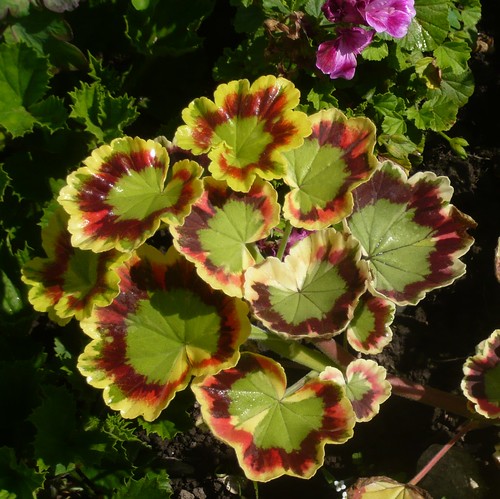
Tips for Soft Fleshed Plants eg. Pinks, Penstemon & Geraniums

  • When cuttings are rooted pinch out the growing tip to get a bushy plant.
  • Keep cuttings out of direct sunlight.
  • Cuttings should  be taken in spring and summer.
  • Cuttings should be 2″-5″ long depending on variety and available material.

Tips for Taking Hardwood Cuttings of Trees and Shrubs

  • Cuttings taken between July and October for semi-hardwood cuttings, and between September and March for hardwood cuttings produce the best results.
  • Cuttings take between two to twelve months to root well.
  • Hardy plants should be rooted in containers outdoors or in cold greenhouses.
  • Select  mature sections from the current growth at the base of the stem without  flowers, fruit or seed heads.
  • Cuttings can be 5-15″ long with at least two leaf joints attached.
  • How to take cuttings for big shrubs

Beginners Cutting Tips

  • These general tips are about stem cuttings but you can also take cuttings from leaves, roots, and buds for some plants. Check links to specific plants for special requirements. You can root some plants by placing the bottom of the cutting in water.
  • You can use a rooting hormone to encourage cuttings but I don’t and have tended to take more cuttings to compensate for failures.
  • A heated propagator will be useful if you intend taking a lot of cuttings.
  • Take enough cuttings so you do not have to worry if many of them fail to root. (But I bet you surprise yourself.)
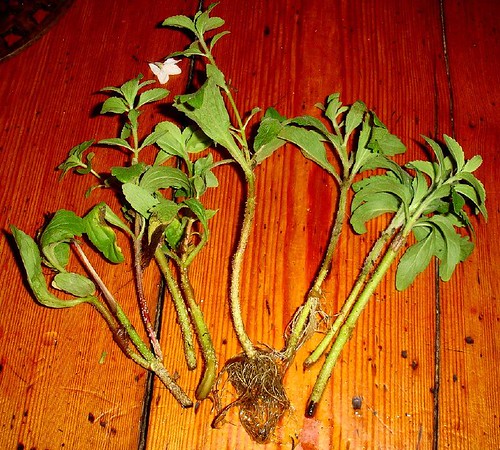
Stevia cuttings after 18 days in water : bouturage de stevia après 18 jours

Credits
Gooseberry cuttings by net_efekt CC BY-NC 2.0
Stevia cuttings after 18 days in water : bouturage de stevia après 18 jours by hardworkinghippy CC BY-SA 2.0

Killing Slugs with Kindness

Killing Slugs with Kindness

I grow slug food, not deliberately but that seems to be the fate of my Hostas. Now is a time to kill off the juveniles slugs before they start laying eggs for overwintering and I am considering organic nematodes that you just water in. Mix up a paste in a watering can, water in and young slugs will be killed in a matter of days.

Buy ‘Natural organic control’ slug killer for less than £10 or for a large pack at £17.95from Amazon

Help other natural predators particularly birds, hedgehogs and frogs to eat your slugs and their eggs. Keep the soil loose and tidy up dead organic material but provide safe havens for the predators. Nemaslug is harmless to children, pets and wild life only killing slugs.

It may be too late for this years Hostas which are now a ‘harvest festival for slugs’ but I shall have revenge.

Clematis as slug food

Do not feed your slugs and snails on your Clematis

Even in this wet summer there are better plants for them to snack on

Try the inverted grapefruit skin as I prefer to drink beer not drown slugs

Garden Control of Invasive Weeds

Garden Control of Invasive Weeds

Do not let the little blighters get a foot (or root) hold in your garden. Gardeners need to be on their guard when it comes to controlling pernicious weeds as little plants invade quicker than you imagine.

Top Ten Invasive & Pernicious Weeds

  1. Japanese Knotweed is a big thug – a really big thug! Beware!
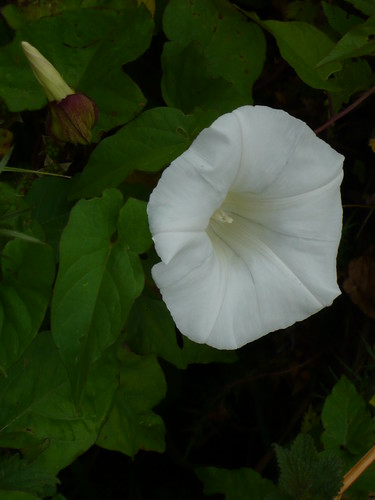
  2. Convolvulus or bindweed (above)that grows as a twining climber and throttles the host.
  3. Mares (or horses) Tail a plant from the age of fossils, it is so hard to destroy once you have a colony.
  4. Giant Hogweed Heracleum mantegazzianum is covered by legislation and quite dangerous due to the burning effect of the sap.
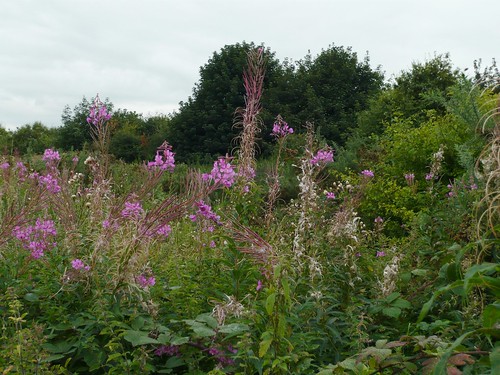
  5. Rosebay Willow Herb once more feared than is now the case see picture below.
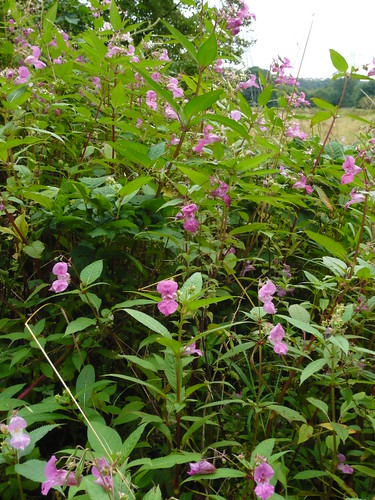
  6. Himilayan Balsam the new plant we love to hate, introduced by Kew gardens in the 1830’s. link
  7. Thistles of all sorts and varieties if not selected by the gardener
  8. Brambles particularly the hedgerow varieties with very small fruit and thus no redeeming features.
  9. Aquatic weeds named by RHS as invasive including New Zealand pygmy weed (Crassula helmsii) and Parrot’s Feather Myriophyllum aquaticum, Fairy fern, Floating pennywort , Nuttall’s pondweed, Curly waterweed and Curled pondweed
  10. Take your pick from Dandelion, Nettle, Buttercup any plant growing anywhere you didn’t want it to grow. Let us know your view

Rosebay-Willow Herb in flower and seed.
Tips for Controlling Invasive Weeds

  • Prevention is better than cure. Do not let them seed
  • Do not take plants or soil from the wild and take care with seed.
  • Dig up at the first sign of growth.Dig out all the root and I mean all!
  • Do not compost flowers which may contain seeds nor roots.
  • Cutting down or digging up weeds and burning the waste plant material are useful, low-tech means of control.
  • Pulling up Himalayan balsam before the plants flower is the most effective method of control. Cutting plants down before they flower can result in a more bushy plant that produces even more flowers. Young growth may be more susceptible  to weed killers.
  • Spraying invasive weeds with herbicide is the most effective form of treatment currently available. It can however take several years to get rid of some invasive species.The effectiveness depends on the type of herbicide used.
  • Apply sodium chlorate crystals to the hollow cut stems after cutting back is said to be effective. But be careful as sodium chlorate is highly soluble and any spillage can affect nearby plants.
  • Impermeable membranes like black plastic work on most plants by denying light and water. Unfortunately Japanese Hogweed can push through the toughest barrier.

Let us know if you have a fool proof method  – this fool needs all the help he can get!

Below Japanese Knot Weed in a clump and a thistle ready with seeds.

Weedkillers

Book Cover

Roundup Weedkiller concentrate

Book Cover

Handy spray gun,

Himalayan balsam is enemy number one at Otley Chevin where this invasive weed is chocking our natural flora. Locals have been recruited to help with ‘Root it Out’ events to stop the spread of these seed propagated plants.
I have has seedlings in my garden as has my badminton partner but fortunately they are easy to up root if you get them before they seed.

Recognising Himalayan Balsam

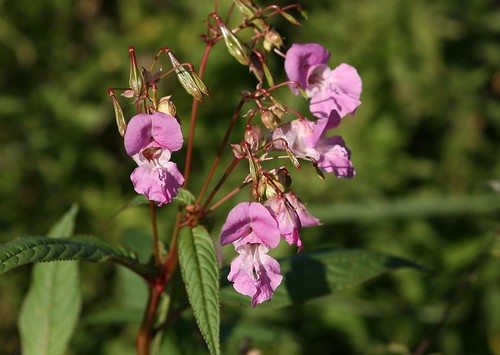
  • Himalayan Balsam is common on river banks with reddish coloured stems and dark green lance shaped leaves with jagged edges.
  • The brightly coloured flowers that are usually in variable shades of purplish-pink from June to October up to 6 feet in height.
  • The plant is annual and lasts for one year and dies at the end of the growing season.
  • Himalayan Balsam can produce around 2,500 seeds in explosive seed pods that throw seeds over 20 feet away from the original plant. The seeds can last in the ground for several years.

Himalayan Balsam
Treatments to Kill Himalayan Balsam

  • Do not allow invasive weeds to set seed.
  • Pull out the shallow rooted plants as soon as you see them.
  • Cut off below the last node near the ground and they shouldn’t regrow.
  • Animals can safely graze on the plants.
  • Himalayan Balsam should be sprayed in spring before flowering with Gylphosphate based weed killer

Book Cover Book Cover

Sprayer and Weedol by Amazon

Photo Credits
Himalayan Balsam by Deanster1983 CC BY-ND 2.0

Why do they grow ‘Shamrocks’ in Ireland?

Because St Patrick took all the ‘real rocks’ away so the snakes couldn’t hide.

Top 10 Small Gardens

Top 10 Small Gardens

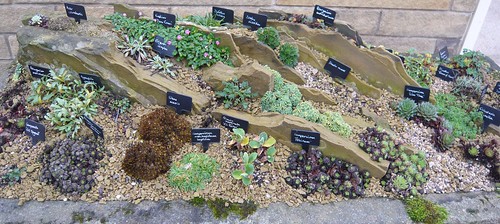
Alpine Trough

You can grow an interesting garden in an old sink, trough or container that you have to hand. In the case of the photograph above all the plants chosen were small compact alpines. They include small varieties of normal garden favourites such as Asters, Pinks (Dianthus), Campanula, Gypsophilia, Primula, Sempervivum and Pelargonium (Geraniums).

Types of Small Garden

1. Container
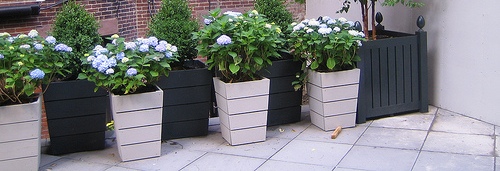
A collection of plant pots on hard standing can look exceptional. The choice of plants is massive, fruit trees, trailing annuals, bulbs, conifers the list is endless. Hanging baskets also fit in this category of containers and as an idea try a herb garden in a basket near your kitchen door.

2. Window boxes
If you have ever seen Swiss Chalets in summer they will probably have been brimming with red geraniums and brilliant trailing flowers. Free window box plans are available for DIY experts to try and make their own.

3. Bonsai

Read More Read More

Weed Control Tips and Water Avens

Weed Control Tips and Water Avens

Don’t let your weeds seed – wildlife and wind will do the job of importing weeds anyway.

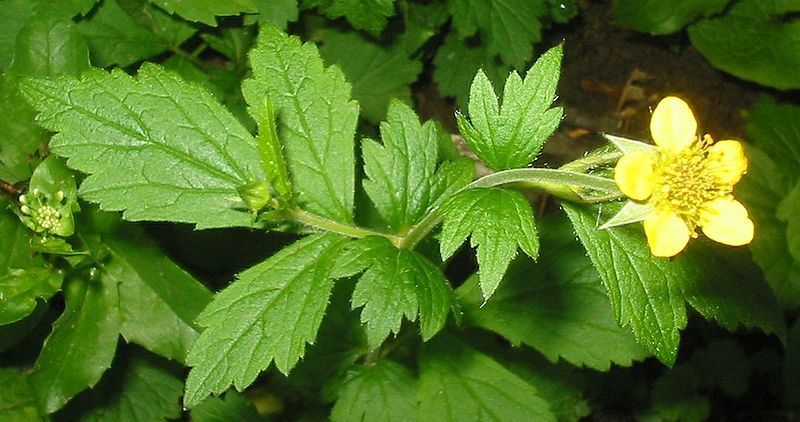
wood-avens

I am suffering this year from a pernicious weed called ‘Avens’ part of the Geum family. It comes in two sorts the yellow flowered Wood Avens  Geum urbanum and the pinker flowered  Water Avens Geum Rivale. They seed freely and there-in lies the problem as individually they are innocuous but when they spread around they become a pest.

Weed Control Tips

  • Do not let weeds run to seed and disperse or you will have them for years.
  • Do not put seed heads in the compost bin, if the heat fails to kill them you will end up spreading them around far better than mother nature can do.
  • Hoe the soil as young annual weeds emerge. Good housekeeping will keep the number of weeds down.
  • Remove the root of weeds to stop them re-emerging. Avens are shallow rooted but the stalks will just break off so you need to loosen the soil and pull out the roots.
  • Think of any plant in the wrong place as a potential weed and remove or kill the flowering thugs amongst your plants. ( Forget-me-nots and some Poppies are a weed in my garden.)
  • Beware imports of exoitic plants that become weeds. Water Avens is an escapee from pond plant situations
  • Read More Read More

Greenhouse Shading

Greenhouse Shading

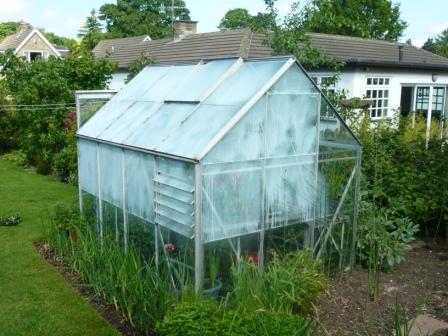
cool-greenhouse

Two or three hot days and I am glad I had already shaded my greenhouse from the sun.

It bis easier to remove in Autumn if you apply the cool-shade on the inside. For years I have struggled to clean the high apex from the outside!

Why Shade Your Greenhouse

  • Direct sun can bleach the chlorophyll out of plant leaves and leave them scorched.
  • Burnt and dehydrated plants will be distresses and will fail or perform badly.
  • Greenhouse trap heat and you can have too much of a good thing.
  • Keep the heat down but allow the maximum amount of light.

How to Shade your Greenhouse

  • The cheapest method I have found is to use Coolglass a powder you mix into a suspension and paint or spray on.
  • Old fashioned whitewash with a bit of size to make it stick is an old gardeners tip.
  • The aim is to keep down the heat whilst still getting the light so a thin covering is best.
  • You can use shade netting and there are many varieties available. Horticultural fleece may provide enough shade.
  • Roller blinds or wooden slatted blinds can be adjusted to suit the conditions each day.
  • Automatic blinds can be installed to suit many purses (that are reasonably full to start with).

Other Related Tips

  • Keep up the humidity in your greenhouse. In the morning and during very hot days I pour water on the floor.
  • Water plants at night so they can take up a drink for half the day and are turgid in the morning.
  • Avoid splashing the plants if watering during the heat of the day.
  • Remove the shading later in the year (end August) to help the last tomatoes ripen.
  • I only paint the South East and West faces of the greenhouse as you can see in the photo.
Soil Testing Kits and Patio Stuff

Soil Testing Kits and Patio Stuff

Book Cover

Test your soil (from each area of your garden) for acidity or alkalinity so you know what plants will thrive.

Chemical Tests
Mix a sample of soil with water. Add the test solution or capsule of test chemicals and watch the colour develop. Read off the colour of the liquid against the chart supplied that gauges alkalinity, neutral, acid and very acidic levels on a scale a bit more refined than the old litmus test from school.
The above kit is available from Amazon and is more detailed and comprehensive in that it also tests nutrient levels of NPK potassium/potash, phosphorus and nitrogen.

Probe Tester
These devices are supplied by Draper and others for checking soil pH levels, moisture content and light intensity. The tester comprises two 210mm long probes, three way selector switch (moisture/light/pH) and easy-to-read dial gauge. Uses solar power, so no batteries required.

Pation Improvers

Patio
Patio

Unfortunately, my patio doesn’t have an underlay to stop weeds coming through, so it is necessary to get the old hoe out and skim off the weeds. Actually it is quite a relaxing job. Also I use the hoe to scrap off some of the moss which starts to grow on the patio.

If you really want to get your patio clean and return it to its original bright condition, you will want to invest in a proper patio cleaner. This Karcher 300 effectively cleans the patio without spraying dirt up onto the walls and your trousers. If there is a heavy build up of moss, you might want to scrap this away first. It is relatively easy to use and at £33, relatively good value for providing one of the easiest ways to clean your patio. It’s easy to forget the original colour of your patio and also how much brighter the original colour can be.

Book Cover Patio Cleaner at Amazon.co.uk

Patio Cleaning Chemicals

Patio Cleaner Liquid at Amazon.co.uk

Patio Cleaning at Amazon
RHS Service
The RHS provides a Soil testing service for a fee details can be found on the Soil Analysis Service web page.

Shade and Dry Areas

Shade and Dry Areas

Try the shade test. If you can’t see to read then plant a fountain as no plants are likely to thrive.
If you can only just read then try Ivies, ferns, mosses, box, Ruscus aculeatus an evergreen shrub or craggy moss & lichen covered stones.
Under a deciduous tree spring bulbs, berberis and some clematis may be good doers.
Lightly wooded areas are havens for hostas, hellebores, solomons seal, trillium and choisya amongst others.

Dry Shade is one of the least hospitable places in the garden but some flowering perennials will thrive. A modicum of sun or light will suffice to provide this more interesting top ten.

Top Ten Dry Shade Perennials

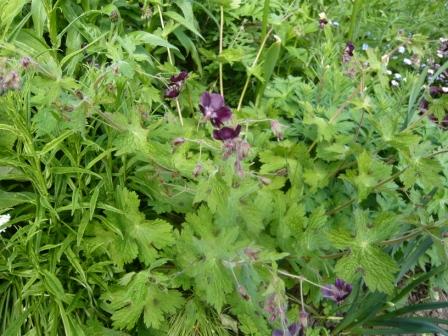
Poppy

1. Convallaria majalis or Lily of the Valley will provide scented bell shaped flowers and spread from underground shoots
2. Meconopsis cambrica Welsh Poppy with single yellow or orange flowers has fern like foliage
3. Lamium maculatum or the Spotted Deadnettle is semi-evergreen.
4. Geranium macrorrhhizum or Balkan Cranesbill has magenta flower sprays and covers the ground quite quickly.

Read More Read More

Accidents with Seeds

Accidents with Seeds

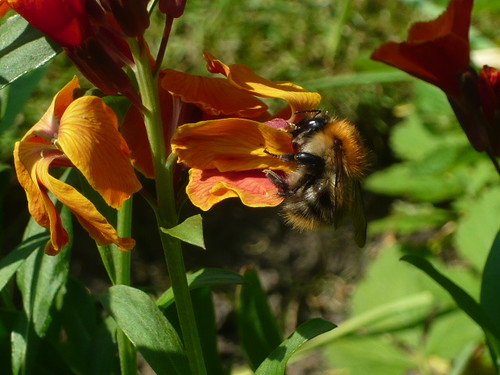
Oh to Bee a Wallflower

Things often go wrong in the garden so it is a change when serendipity takes a hand.

Recent Accidents
In my greenhouse I have a permanent, slatted wooden bench. I must have been careless with some wallflower seeds which have fallen close to the glass, grown and flowered.
Every morning for weeks I have gone to open the doors to air the greenhouse and been confronted by a wonderful smell. If I had planned to get a scented greenhouse I could not have done better.
I will now try more scented accidents but will stick to one scent at a time with wallflowers featuring again next spring.

A different seed accident has taught me a painful lesson. My compost got contaminated either at the supplier or in my potting shed.
I keep my compost in old waste bins and leave the top open when I am using the compost regularly.
To a bag of compost I add sand or John Innes depending what  am growing. This years first batch of seeds grew rapidly but every pot has grown a crop of weeds.
Fortunately I used all the contaminated compost before I realised the problem and later sowings in fresh compost were fine.


Occasionally even the best seed packet retailers make a mistake with the contents or plant description. Don’t assume it is always your fault.

Action for the future

I must not mix  one bag of compost with another.
Buy the same brand of trusted compost everytime (I used five different ones this year).
Put a lid or cover on the compost to stop insects, seeds and fungus causing problems.
Not storing paper envelopes of seed on the shelf above my compost.
Plan ‘accidental’ seed sowing in interesting places.


  • Whilst in the aluminium greenhouse I strung a firm wire across from the knee high screw holes as part of my intended support for tomato plants later in the year.
  • During the hot spring I have damped down the greenhouse to improve humidity. I used the hose pipe on fine spray from the doorway to water the seed trays.
  • I am ready to harvest the small carrots I have grown in the greenhouse where the tomato plants will go.
Garden Clippings

Garden Clippings

As I search for sensible articles and reports on various garden subjects I collect a range on odd bits of information. Not knowing what is helpful I hope at least one of the following gardeners tip is of use but let’s see how we go.

Trendy flowers are fads waiting to be superceeded. Three years ago I highlighted the grass Calamagrostis x acutifolia Karl Foerster, Euphorbia cyparissias Fens Ruby, Dogwoods and Gillenia trifoliata. (They grow 6′, 3′, 4′, and 18″ respectively). Who grows them now?.

Organic items that have been slow to compost on my bin this year have been egg shells, avocado skins and stones, spiky top leaves of pineapples plus those green biodegradable plastic bags sold for indoor compost collecting. 12 months should have been long enough but have patience.

Clumps of Primroses and Primulas that have finished flowering can be lifted and divided by pulling apart good sized pieces that should already have rooted. Keep them moist and planted in some shade. If plants are too small to divide mulch them with organic matter to bulk up for next year.

Aubrietia should be sheared hard after they finish their display. A new cushion of foliage will help keep the plants growing for years without feed as Aubretia have no liking for rich soil.

Read More Read More