Browsed by
Category: Fruit, Vegetables & Herbs

Tips on growing good Fruit, Vegetables and Herbs

Different Fruit Goji and Honey Berry
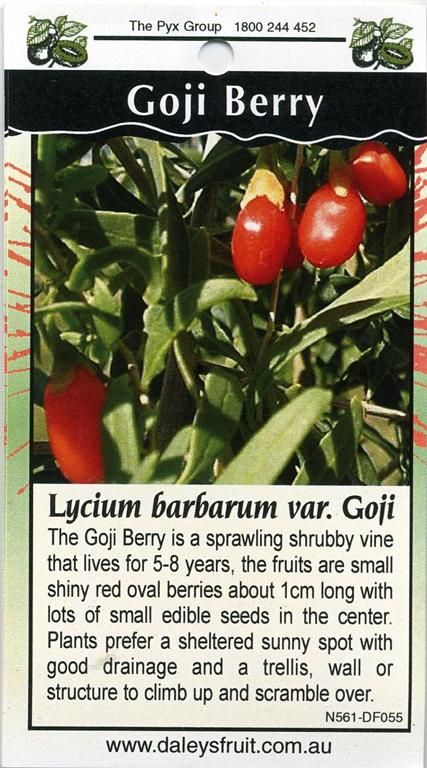
Different Fruit Goji and Honey Berry

Goji berry seeds

If you are a gardener that likes to try something a bit different then there are two less common fruit that you can consider even in England.

Goji Berry was the health craze of last year and you can grow this ‘Superfruit’ in your own garden from seed or more rapidly from a 2 year old plant. Shrubs grow to 6 feet tall and have trumpet-shaped white or purple flowers in July August. They can be grown in a border and if pruned to 4 feet they create a thick bush with ample fruit. Coming from the Himalayas, once established, they are hardy and can take even poor soil conditions fruiting best in full sun. The berries will set in autumn and ripen to sweet, juicy, red fruit with a shiny in appearance. The flowers will continue to bloom until the first frosts.
Gemeiner Bocksdorn in German Lycium barbarum or the Goji berry is a memeber of the Solanaceae family the fruits of which are often poisonous eg Potato.
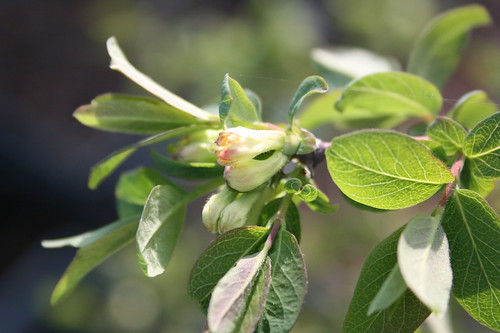
Honeyberry flowers 3
Lonicera Caerulea Honey Berry in Flower.

Honey Berry are varieties of edible Lonicera that produce sweet blueberry like fruit that have been eaten for ages in their native Siberia. Fruiting early in the year from June the plants are long lived. For good pollination it is worth planting varieties Lonicera Kamschatika and Lonicera Caerulea together. Not all Lonicera berries are edible so buy your stock from a reputable nursery.
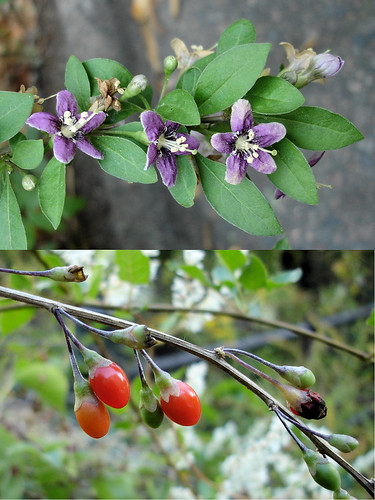
Gemeiner Bocksdorn

Photo Credits
Honeyberry flowers 3 by Fluffymuppet CC BY-NC 2.0
Duke of Argyll’s Teaplant (Lycium barbarum) by Phil Sellens, CC BY 2.0
Gemeiner Bocksdorn by Gertrud K. CC BY-NC-SA 2.0
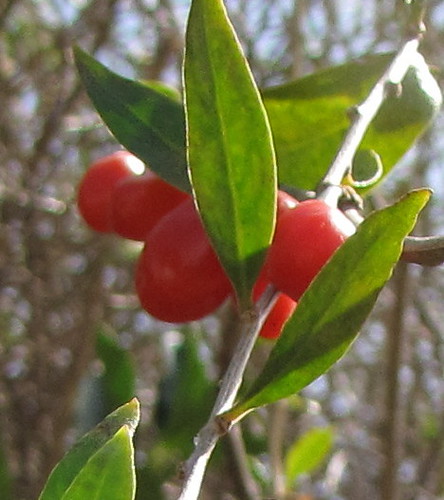
Duke of Argyll's Teaplant  (Lycium barbarum)
Duke of Argyll’s Teaplant (Lycium barbarum)?
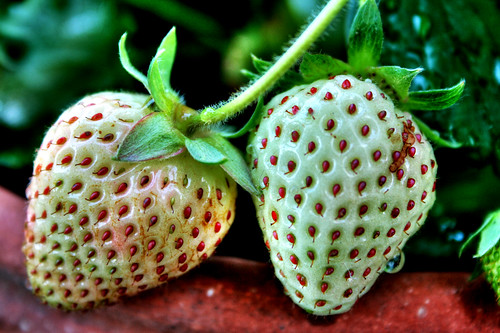
Pineberry – The White Strawberry

Pineberry – The White Strawberry

Nature: Unripe White Strawberries

Suttons Seeds and some supermarkets like Waitrose want us to experiment with white strawberries. A contradiction in terms as strawberries are strawberry coloured. I am not usually keen when a retailer pushes a product in my direction and it will be sometime before I consider growing white strawberries deliberately.

White Strawberry or Pineberry

  • White strawberries are a special breed of strawberry that taste a bit like pineapple. For differentiation they are now called Pineberries but they are a hybrid of Fragaria chiloensis and Fragaria virginiana.
  • Pineberries start off green, gradually turning paler as they ripen. By the time the deeply set seeds turn deep red, the white fruit is ripe.
  • When the fruit is almost totally white but studded with red seeds it should be sweet and juicy enough to eat. The fruit is normally ready in May.
  • The colouring is the reverse of the usual strawberry with white seeds on a red fruit. Flowers and plants are similar in appearance
  • Pineberries are slightly smaller than most commercially grown strawberries a bit less than an inch in diameter.
  • Best grown in a greenhouse with fruit lifted from the compost with straw or coir.
  • Gardeners Tips
    See out other article Growing Juicy Red Strawberries

    credits
    Photo kingdesmond1337 CC BY-NC-SA 2.0

Help with Garlic Growing

Help with Garlic Growing

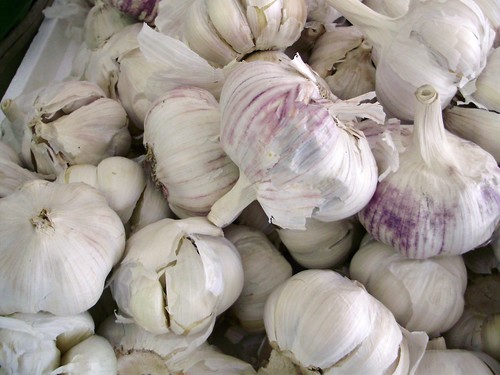
Garlic

You will not need a lot of help growing Garlic if you select UK Garlic bulbs that are appropriate for our climate. Buy from seed merchants rather than use the greengrocers supply which may be a tender overseas variety. Plant separate cloves in rich soil from now until January but sooner the better.

There are two main types of Garlic with either hard necks or soft necks both are fine with many varieties and flavours.

Help Growing Garlic

  • Garlic should be planted in a sunny spot during October or November so that they form a good root system before winter.
  • Garlic will stand at least 10 degrees of frost and needs cold weather to help it form cloves next year.
  • Garlic needs plenty of phosphate for root growth before planting, a little nitrogen in March to develop the leaves and help it photosynthesise and plenty of potash to harden off.
  • Break up the bulb into cloves and plant each one 1-2″ deep ‘nose up roots down’.
  • Leave 5-6″ between each planted clove.
  • When planting use the outer cloves with one rounded and one flat side from each head. The inner cloves, which are square or triangular should be used in the kitchen.
  • The best crops will be produced on light well drained soil.


Help Gathering Garlic

  • Water the plants regularly from spring. Stop watering a month before harvesting
  • Gather the crop in June or July.
  • The garlic with soft necks will bend over like an onion when raedy to be cropped. Hardnecked garlic should be picked when the leaves start to change colour.
  • Snap off any flower spikes as soon as you see them. Eat them in stir fries as revenge for taking energy from your plants.
  • Store Garlic in the dry. They are fine in platted ropes like the old French onion sellers.

Help Am I too Late to Plant Garlic

  • You can plant Garlic in frost free soil until January.
  • If you need to plant them later than January then, according to the National Vegetable Society, ‘the early root system can be enhanced by a form of chitting. Half fill a cardboard toilet roll tube with damp compost and set a clove on top. Stand the tubes indoors on capillary matting for a week or two, so that the roots start into growth. Once the roots emerge from the bottom plant the clove, tube and all, as soon as soil conditions permit.’

Help Selecting Garlic Varieties for the UK

  1. Solent Wight – a heavy cropper with large cloves
  2. Albigensian Wight – spring or autumn planting good keeper
  3. Purple Wight a ‘hard neck’ best used fresh as it is a poor storer
  4. Long Keeper large white bulbs to harvest in July from autumn planting.
  5. Early Wightanother ‘hard neck variety’ with AGM in purple variety
  6. Luatrec Wight fat pink cloves with white outer skin and a good keeper.
  7. White Pearl autumn planted will store reasonalble well.
  8. Pink Lady a pink skinned bulbs and gloves that can be eaten raw.
  9. Germidore softneck variety that is well adapted to British conditions. Produces large, white bulbs with a mild but rich flavour.
  10. Chesnok Red a hardneck variety from Georgia with attractive purple striping and a lovely, full-bodied flavour. Lovely choice for baking as it has a lovely creamy texture. Great for garlic bread!

Elephant Garlic would be in many best top ten lists but is closely related to the Leek side of the allium family see Gardeners tips

Note  Bulbs of various varieties are from available from Thompson & Morgan

Credit photo ‘Garlic, food, roadside market, farmer’s market, culinary, cooking’ by mullica, on Flickr

Help Growing Globe Artichokes

Help Growing Globe Artichokes

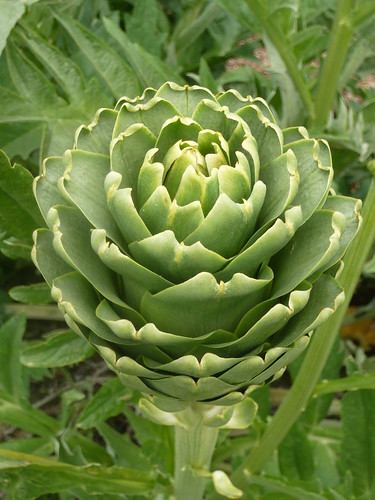
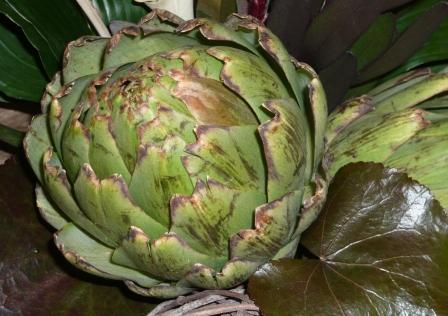
Globe Artichoke or Cynara cardunculus is a perennial thistle with an edible flower head. If you need help growing Globe Artichokes remember the plants grow 6-10 feet tall with arching, deeply cut, silvery green leaves.
Do not confuse Globe with Jerusalem Artichokes the later are root vegetables related to Sunflowers not Thistles.

Globe artichoke

Globe Artichoke Growing and Cultivation Tips

  • The globe artichoke requires a rich sandy well manured soil. It prefers a warm sunny site.
  • Seeds should be started off inside and transferred outside once the soil is warm. Alternatively sow seeds outdoors in free draining soil in mid spring when the soil has warmed up.
  • The globe should be planted in rows three feet apart with two feet between each plant.
  • After harvesting the main head, secondary heads will appear and these too can be used.
  • In cold areas, cover the plant with a mulch of straw, compost or bracken to protect it through the winter.
  • It crops in the second year after sowing.

‘Green Globe Artichoke, Concerto F! hybrid and other seeds are available from Thompson & Morgan
Globe Artichokes grown from seed can take a long time to mature and it is easier to buy ready-rooted suckers to plant in the spring.

Globe Artichokes
are architectural plants growing 5 feet tall and make big clumps of arching, jagged silvery leaves that are at home in the border or veg patch.

Artichoke
Cynara scolymus blown open

BBC Tips on Growing Globe Artichokes include
‘In the first year, plants need to put all their energy into making growth.
Remove any flowerheads as they form.
In the second year, allow the edible heads to develop for harvesting in summer.
Pick the bud at the top first, when it’s large and swollen, but before the scales have started to open. ‘

globe-artichoke

Globe Artichokes, are related to Cardoons. The thistle like plants, 2-5 feet tall, are grown for their edible flower buds. Normally raised from rooted suckers taken in spring or sown in April and transplant the following spring at least a foot apart. The delicious traditional green heads can be eaten cooked or raw.
The flowers develop in a large head from an edible bud about 3-6 inches diameter with numerous triangular scales. The individual florets are green-purple. The edible portion of the flower buds consists primarily of the fleshy lower portions of the bracts and the base, known as the “heart”. The immature flowers in the center of the bud is called the “choke”.

Though technically perennials which normally produce the edible flower only during the second and subsequent years, certain varieties of artichoke can be grown from seed as annuals. Some varieties produce a limited harvest at the end of the first growing season even in regions where the plants are not normally winter hardy. This means that home gardeners can attempt to produce a crop without the need to overwinter plants. The recently introduced seed cultivars ‘Imperial Star’, ‘Northern Star’ and ‘Green Globe’ or ‘Purple Globe’ are organic varieties.

The plants have enough character to be grown in an ornamental garden if space is limited.

Herbsville a Home for Herbs

Herbsville a Home for Herbs

I grow Herbs in a herb wheel and I call this home from home ‘Herbsville’. You can design your own herb home – it is a snip!

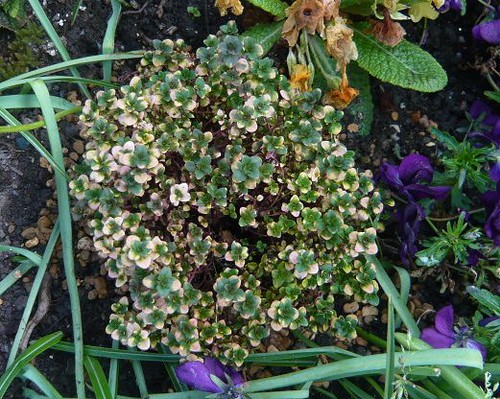
Golden thyme

Herbs can be grown in a wide variety of situations.

  • Windowsills with 3 ” pots are fine for quick growing herbs you want to snip for the kitchen.
  • I have an old cast iron wheel and the spokes separate out 6 herbs. The larger varieties tend to grow over onto the other sections but the appearance is fine. Rather than call this a herb wheel I have christened it ‘Herbsville’.
  • You can interplant your veg patch or rockery with a range of herbs.

Oil Based Herbs including Lavender, Thyme, Lovage, Rosemary, Sage and Bay are perennial plants

Water Orientated Herbs like Basil and Dill are best treated as annuals

Of the other herbs, Chives & the Onion family need renewing from bulb stock but will last several years.

Parsley gets leggy but can be kept over winter.

Cherville, tarragon, summer savory, oregano, cilantro, marjoram, chervil and  mint are all herbs that can be grown in your herb garden with a small amount of effort.

Spices such as cardamom, star anise, juniper, coriander seeds, nutmeg, cinnamon, cumin and  cloves are all native to hot and often tropical climates. They are not for the average garden in the UK.

See also Top 5 Herbs for Pots and Growing a Bouquet Garni

Apple Spray Programme

Apple Spray Programme

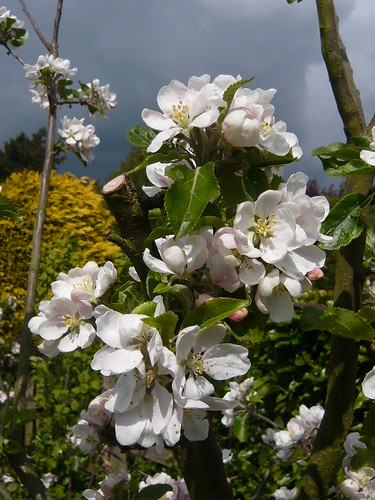
Apple blossom

Apple trees can fall prey to a variety of problems.  Start spraying now!
This programme will control capsid, sawfly, wooly aphid, winter moth and codling moth insects. It also should help prevent or treat scab and mildew.

When to Spray

  • When dormant in winter I sprayed with Mortegg tar oil until it was banned by the EU. Now you need to buy a winter wash.
  • At bud burst spray a combination of Tumblebug and a fungicide like Systhane.
  • Again as green buds then pink buds appear a similar spray is needed.
  • At petal fall the worry is aphids so another spray may be needed.
  • For codling moth infestations spray Tumblebug once a month from mid June.
  • I do not spray once the fruitlets have set.
  • Savona is a fatty acid based non-toxic spray that kills by contact and leaves no residue

Organic Spraying

  • ehow have a list of spray methods that use such organic products as oil, copper sulphate, sulphur, Bacillus thuringiensis, and pyrethrin. Only nthe last of these would I think of as organic. see link
  • Best solution is no solution to be sprayed. Grow resistant varieties and wrap fruit in paperbags to keep insects off.
  • Make your own solution from garlic water or one of these recipies
  • Grease bands are worth placing on the trunks of trees each autumn.
Mini Veg for Growing from Seed

Mini Veg for Growing from Seed

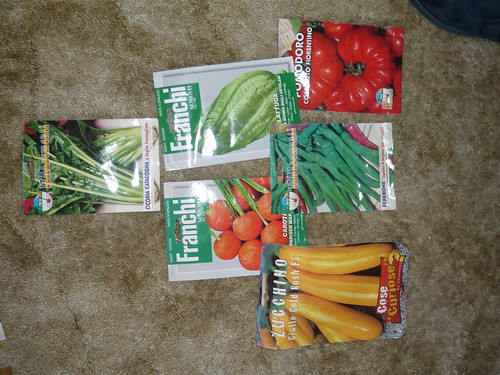
seeds 004

Some Mini Veg varieties are naturally suitable for growing in pots or small spaces.
Some are best when picked young and small.
Planting close together and picking or pulling as they develop produces tender mini veg.

Thompson & Morgan sell a mini veg collection or a range of these and other varieties to select from.

Cherry Tomatoes

  • Gardener’s Delight a national favourite
  • Sun Gold- orange fruit
  • Sun Baby -yellow fruit
  • Tumbler for hanging baskets
  • Gartenperle for containers and baskets

Lettuce

  • Minigreen an iceberg variety
  • Little Gem and Jewel are cos varieties
  • Tom Thumb – butterhead type

Peppers

  • Redskin F1 sweet pepper
  • Mohawk F1 sweet pepper
  • Friggitello sweet pepper
  • Etna – chilli pepper
  • Thai Dragon- chilli pepper
  • Fiesta- chilli pepper
  • Apache- chilli pepper

Brassicas

  • Dutchy and minicole Cabbages
  • Fribor and Showbor – Kales
  • Frostie and Pixie – Spring cabbages
  • Freedom and Graffiti – Cauliflowers

Leeks

  • Carlton F1
  • Flextan
  • Volta
  • Oarsman  our finger thick pick

Carrots

  • Adelaide – F1 finger
  • Nelson- F1 finger
  • Rocket- F1 finger
  • Carson – conical

Growing Tips

  • Try to maintain even and consistent watering
  • Grow in the sun and give week soluble feed
  • Pick young, what you need to eat and leave the rest growing on
  • Careful cropping will provide m9ini veg for sometime
  • Try a similar formula for growing mini veg such as Courgettes, Beetroot, Aubergines and Turnips.

Thompson & Morgan sell a mini veg collection or a range of these and other varieties to select from.

Tips for Growing Garlic

Tips for Growing Garlic

Garlic is hardy and needs a spell of cold weather. Plant it with the first frost to trigger its splitting mechanism. This encourages good roots and helps the bulbs to form.

Keys to Success with Garlic

  1. Good quality Garlic sets
  2. Autumn Planting
  3. Good drainage
  4. Fertilise during growing season

Tips for Garlic Culture

  • Pick a well drained sunny spot and rake down to a fine tilth.
  • Split the garlic into individual cloves – you will get about 14 cloves from a good head.
  • Dibble the cloves in every 6″ covering lightly.
  • Leave the plants to slowly root and shoot over winter.
  • From March onward liquid feed every month.
  • For bigger cloves pinch out any flower heads.
  • Harvest and dry in July august as soon as the tops start to wither.
  • If planting late ie February or March then leave the tip of the clove above soil level and feed and pinch out regularly.

Today I have planted a row of Cristo a strong flavoured garlic and one of Solent Wight. For information on more varieties read Top 10 Garlic
For more read Tricks to get great garlic
To buy a selection of Garlic at Thompson & Morgan click here.