Browsed by
Category: Fruit, Vegetables & Herbs

Tips on growing good Fruit, Vegetables and Herbs

Growing Asparagus in UK

Growing Asparagus in UK

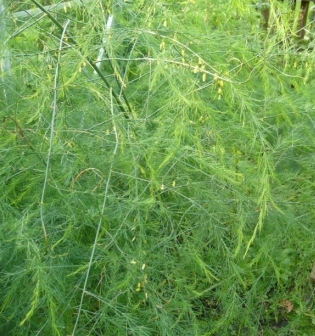
American culture and British cultivation ideas conflict over Asparagus. I will follow the British method of cutting the old ferns in Autumn to about 5cm and mulching. In America, in anticipation of heavy snows, they leave the ferns to protect the plant crowns. My bed will be in its third winter and next spring will see my first crop.

I planted Asparagus varieties Dariana and Gijnlim in a new bed prepared for the purpose.

Read More Read More

F1 Seeds and Hybrids

F1 Seeds and Hybrids

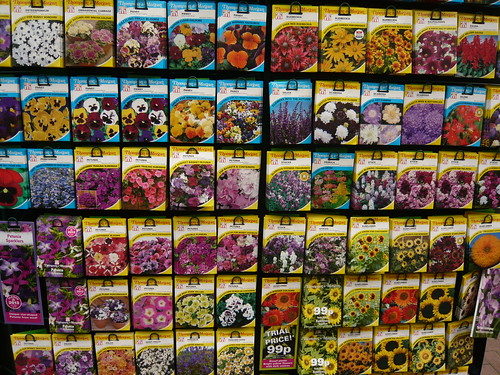
seed packet

What is F 1 Seed

F1 seeds are the result of crossing two pure lines to create the desired result. If one plant has good habit and poor flower and another has good flower and poor habit they can be cross fertilised so that resulting seed may produce plants with good habit and good flowers (the opposite may be true with all the worst features but they are weeded out in the F1 process). A pure strain of each parent is first selected by pollinating the best examples with themselves. When a good pure strain is achieved the resulting plants will be cross fertilized by hand to produce F1 seed. This is one reason F1 seed is more expensive than other hybrids.

Benefits of F1

Tips for Growing Mini Vegetables

Tips for Growing Mini Vegetables

Small fresh vegetables taste nice and often have a superior texture. The supermarket versions are expensive and often have lots of food miles attached to them so try growing your own.

Mini Veg Tips

  • You can plant them close together as they will be picked earlier, –
  • Harvest early and often, even small varieties will get bigger as they bage –
  • Choose seed that is appropriate look for baby, mini or patio in the title-
  • Turnip, fennel andkohl rabi can produce spindly roots if the soil is not kept moist
  • Carrot varieties to try include ‘Nantes’, ‘Amini’, ‘Mignon’, ‘Minicor’
  • Cut courgettes and squash when small at least 3 times per week, to increase yields.

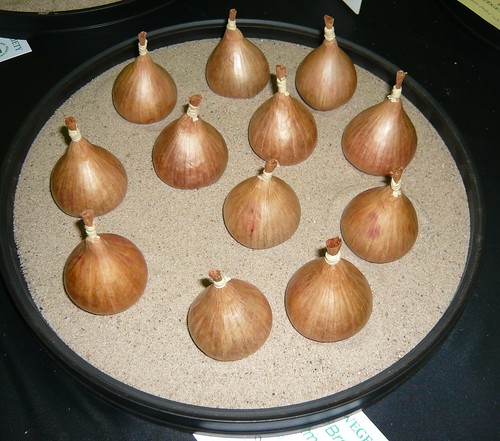
Onions on show

Read More Read More

Herbs in the Border and Kitchen

Herbs in the Border and Kitchen

long tom herbs

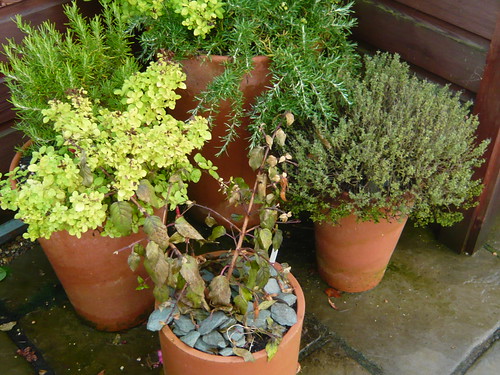
Traditionally herbs are grouped together in a special area of the garden or in special pots like these ‘long toms’. You can try mixing ornamental herbs amongst perennials or with Bay, Lavender and Rosemary amongst shrubs.

Focal Points with Herbs

Angelica is happy in semi-shade and reaches over six feet tall. The green candied stems of Angelica archangelica, with huge fine cut leaves are used to decorate cakes. Alternatively try bronze coloured Angelica silvestris Vicar’s Mead.

Fennel is another tall focal point plant with green or bronze foliage. This perennial likes sun and flowers yellow with edible seeds.

Read More Read More

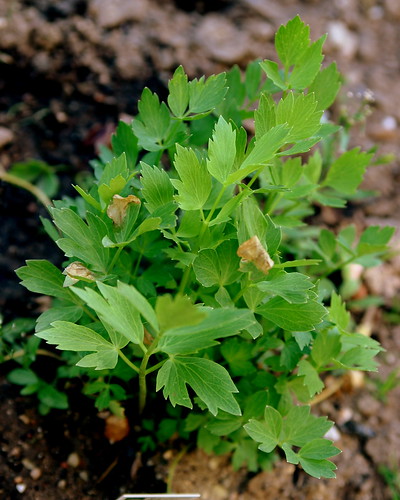
Lovage a tall Perennial Herb

Lovage a tall Perennial Herb

LOVAGE

What is Lovage?

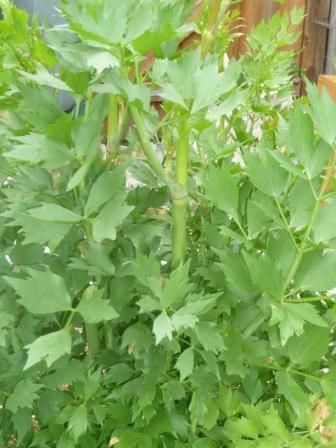
Lovage is a long lived herbaceous perennial herb that grows up to 4-6 feet tall.
The leaves are a grey green and architectural in appearance.
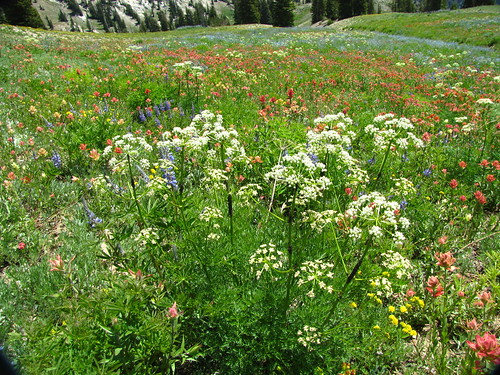
Lovage flowers yellow in an ‘Umbel’ and the seeds that follow can also be eaten or used in bread or as a spice.

Uses for Lovage

Lovage has a distinct aroma similar to celery but with Indian spice notes.
All parts of Lovage can be eaten and the stems can be used as you would celery.
Lovage is made into a wine liqueur and in soups, stews or as a roast vegetable.
Lovage is believed to have medicinal properties for sore throats.

Cropping Lovage

A healthy Lovage (Levisticum officinale) plant can spread in a clump 3 feet wide and such a plant needs space perhaps at the back of a border. One plant can provide all the leaves and stems a family would need. If leaves are the main requirement give the plant the ‘Chelsea Chop’ and cut down flowering stems before they blossom so encouraging new leafy growth.

Growing Lovage

Grow Lovage from seed or root divisions from an existing plant. 
They like plenty of water and space to grow.
Lovage prefers a sunny position.

Lovage - Liebstöckel
Photo credits
LOVAGE by Fool-On-The-Hill CC BY-NC 2.0

Lovage – Liebstöckel by yashima CC BY-SA 2.0

Growing Chilli, Sweet and Hot Peppers

Growing Chilli, Sweet and Hot Peppers

Help Growing Peppers

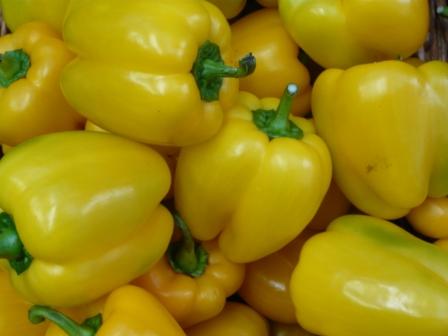
    • Sweet Bell peppers ripen from Green to Yellow, Orange, Red or Chocolate colour.
    • Average plant height is 30 inches and most varieties can be grown in 8 inch pots from seed which takes 1-3 weeks to germinate. Hotter varieties may take a bit longer.
    • Pinch out the growing tip to get laterals and give plants plenty of support
    • A nitrogen feed helps young plants followed by tomato food once flowering starts.
    • Peppers need a long growing season
    • Orange Bell is a productive plant producing typical ‘blocky’, thick walled fruits with delicious sweetness. The fruits start green, ripening to a gorgeous orange.

Hot Chilli Peppers

  • None Bell peppers have conical, curved or long tapered fruit. Arousa is used in Spanish Tapas and Conquistador can be dried then ground to make Paprika
  • Extreme heat is found in the seed oil. Flesh is hotter at the shoulder than the blossom end.
  • Capsicums Chinese are some of the hottest Chilli Peppers around. Seeds from 10 Habanero vaieties and  Scotch Bonnet are able to compete with C. annuum ‘Tepin’ and C. frutescens ‘Zimbabwe Bird Pepper’ for the hottest seeds around.
    Available from Thompson Morgan a seed, Chilli and vegetable specialist.
  • Jalapeno are a traditional early strain popular in tex-mex cooking. They are a mid range heat.
  • Georgia Flame sounds like a good variety for a salsa with thick crunchy flesh.
  • Heat can vary even on the same plant so test several to find a varieties you like.

Gardeners Tips
Naga types need heat to germinate
Cayenne types are generally quite prolific.
Bell peppers have no heat and are ideal for salads, stir fries and stews

Book Cover
The Complete Chilli Pepper Book: A Gardener’s Guide to Choosing, Growing, Preserving, and Cooking

Growing Varieties of Eggplant -Solanum melongena

Growing Varieties of Eggplant -Solanum melongena

Aubegine

The Solanum family includes peppers, potato, tomato and even deadly nightshade as well as our aubergine (Eggplant). The small flowers all look similar but the resulting fruit are quite different.

Aubergines Varieties to try

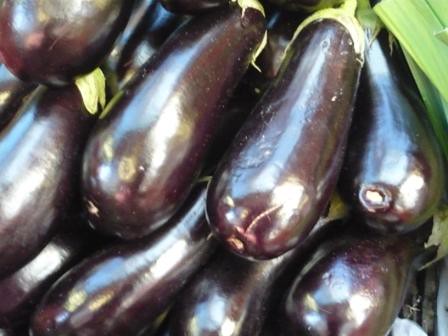
  • Aubergine ‘Antar’ fruit can be dark purple and are a satisfying 9” long
  • Aubergine ‘Moneymaker’ produces good, early crops whether it is grown in the greenhouse, in patio containers or outdoors. The Height and spread is upto 24”. The purple fruit are long and slender with an excellent flavour.
  • Dwarf Baby Belle F1 should have lots of 2” fruit on a 20” plant
  • Red Ruffled also more prolific fruit but bitter and used for Asian cookery
  • ‘Florida High Bush’ Aubergine has an upright branching habit and carries its fruit well off of the ground. The white flesh is delicious grilled, baked or fried.
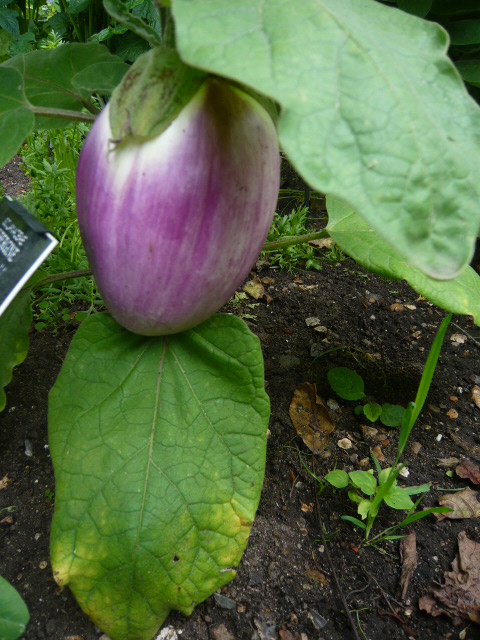
  • Aubergine ‘Listada de Gandia’ produces a large and early crop of stunning, white streaked, purple skinned, oval fruits up to 6” in length.
  • There are 15-20 different varieties of eggplant mainly of Asian origin.

Other Eggplants
Thai long green is one of the modern thin skinned varieties that should grow well in the south of the UK.
Diamond Eggplant is mild with no bitterness and coming from Russia it should thrive in the UK
Aubergine ‘Black Beauty’ is an heirloom variety worth considering.
Aubergine ‘Prosperosa’ produces spherical, ribbed, pale purple fruits with firm, flavoursome flesh. This Sicilian heritage variety has a mild flavour and no bitter after taste

Aubergines from Thompson Morgan
Read tips for growing Aubergines

Aubergine

Blight in Blighty from Sky News

Blight in Blighty from Sky News

Veg growing gardeners get it in the neck for growing potatoes. Emma Birchley the East of England Correspondent for Sky News’ has got a new blight story, it is either feast or famine when it comes to the potato.

Late blight of potato

‘Allotment holders who fail to deal with blight-ridden potato plants have been blamed for spreading the fungal infection to farmers’ fields.

If it is not detected, blight can destroy crops and the spores can quickly spread 30 miles or more in the wind.
Tackle it the right way and it can be controlled, but the Potato Council says some home and allotment growers are failing to spot the signs in time.

“If someone on an allotment has a blighted plant, a single leaf on that plant can produce 120,000 spores,” said the organisation’s director Rob Clayton.

“They can blow around in the wind and in warm, wet conditions they can infect neighbouring plants, neighbouring allotments and the whole neighbourhood.”

The muggy, damp conditions of this summer have been the perfect breeding ground for the fungal infection.

Susanna Colaco has had an allotment in Cambridge since 1986. She has never known a year like it for blight. But she is angry that the finger is being pointed at growers like her.

“I think allotment holders are very responsible.
“On this site we purchase certified seed stock from our allotment trading hut and we are very careful that at the first sign of blight we inform all the members on site and ask them to remove foliage and to be vigilant.”

That foliage must then be burnt, deeply buried or binned. It can even go in the council’s compost bin as the contents are heated to a high temperature.

But infected leaves or rotten potatoes must never be put on the compost heap.

“If somebody throws a rotten potato on a compost heap at this time of year it can sprout … and it can kick off a whole cycle of infection from next year on,” said Mr Clayton.

Late blight, as it is known, or phytophthora infestans, is the type which destroyed vital potato crops in Ireland in the mid-19th century causing the Great Famine. A million people died.

Farmers expect to lose around 7% of their crop to blight, but this year the loss is predicted to be more like 10%.
And the usual £55m cost of coping with the fungal infection is likely to increase to around £80m.

Potatoes are already 11% more expensive than they were this time last year and the price is expected to rise significantly higher as the impact of the increased farming costs filter through to the shops and markets.’ Thanks Sky

Blighted potatoes

You can get blight buster potato tips and information for gardeners here….
Photo Credits
Blighted potatoes by Kai Hendry CC BY 2.0
Late blight of potato by Ben.Millett ‘This is a Dark Red Norland potato tuber that is infected with late blight (the disease that caused the Irish Potato Famine), caused by the pathogen Phytophthora infestans. If you start peeling a potato and see this, consider yourself lucky that the soft rot hasn’t set in yet. Although this disease looks bad (it is bad), what makes it particularly bad is that it allows other pathogens, such as the bacterium Erwinia carotovora, to get in and ‘ CC BY-NC-ND 2.0
Funky Growing

Funky Growing

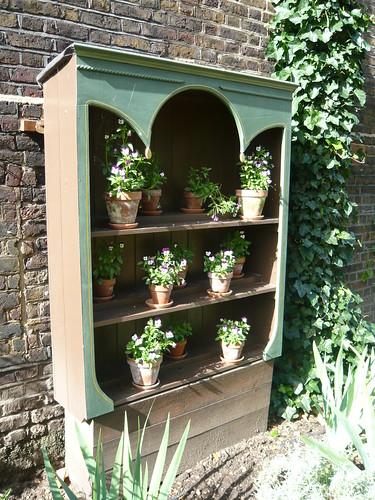
Going to the theater used to mean a trip out to see actors performing. Then someone built a stage to show off Auriculas and they called this an Auricula theatre.
Victorians and Edwardians grew some fine plants shown off in these neat custom built arenas like the one at the Geffrye Museum in London.

London liverpool st 132

So what has this to do with funky veg or the Hot Chilli & Sweet Pepper Kit by Plant Theatre – 6 Different Varieties to Grow?. Well I have given it away as these are products sold by Plant Theatre and available as gifts via Amazon.

More About Funky Veg

The kit is promoted as a really novel gift and would work for gardeners or cooks with just a window box.
The kit contains 5 distinctive and unusual vegetables including the following varieties: Purple Carrot seeds, Yellow Courgettes seeds, Stripy Tomatoes seeds, Red Brussels Sprouts seeds and Multi Coloured Brightlights Swiss Chard seeds
Also included in the box are: 5 starter growing pots made from peat 5 peat blocks which expand when watered 5 plant markers and Sowing & Growing Tips.
All the seeds are of UK origin.
I would be a bit worried about the extent of the companies disclaimer of responsibility which says ‘The germination and growing results are the purchasers responsibility and depend on many factors such as planting time, seed depth, watering, light and weather conditions. These factors are out of Plant Theatres control and Plant Theatre or any company selling this product can not be held responsible for non germinating seeds. This kit is deemed as a novelty gift and is sold as such.’
A cynical gardener may think they doth cover their muddy footprints too much.

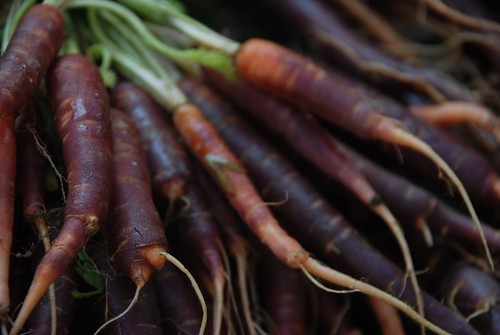
cosmic purple carrots
Cosmic (and funky) purple carrots by kthread CC BY-NC-SA 2.0

Feed your Fruit Trees so your Fruit Feeds You

Feed your Fruit Trees so your Fruit Feeds You

Think of all the fruit your trees and shrubs produce and then equate that to the goodness that must have been taken out of the soil. Now consider the effect of heavy and continuous rain that leaches away nutrients particularly nitrogen and potassium. So a bit of extra feeding is in order. This can only help your fruit trees and bushes feed you with juicy fruit.

Why Feed Fruit Trees

Healthier bushes and trees produce bigger and healthier fruit.
Correct feeding encourages blossom and flowering.
Feeding helps create disease and drought resistance making your plants stronger.
Feeding replaces the goodness taken out by heavy cropping.
Mineral deficiencies can be corrected such as the yellowing between the leaf veins in early summer due to magnesium deficiency. For that use a foliar spray of Epsom salts with a teaspoon of washing up liquid as a wetting agent.

Feed your Soil to Feed Fruit

Sandy soils have an open structure that allows water and nutrients to drain through quickly. Mulch with well rotted compost to improve the soil structure whenever you can.
Clay soils are slow to dry out (or warm up in spring). If they are waterlogged the nutrients dissolve into the ‘soup’ but that drains out as the soil dries just when the fruit need feeding. Again compost helps the soil structure.
Sour soil will compact forcing water to run away. It mat also become covered in moss. Clean up the area and again add a well rotted organic mulch.

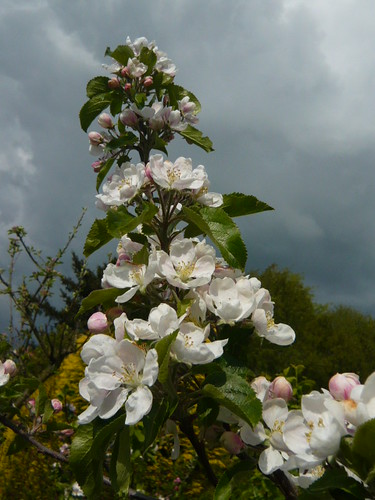
Apple blossom

Gardeners Tip Feeding Fruit Trees

Soft fruit need high amounts of potassium for bud and fruit development.
Stone fruit, pears and apples need potassium and extra nitrogen.
Sulphate of potash or rose fertiliser in granular form is a vital feed. Add a top dressing, of 1 oz per square yard, to the surface of well forked soil around the rooting area which is just beyond the branch canopy.
Feed in late winter when the soil is moist and the fertiliser can be taken up as the fruit start to grow.
Use liquid tomato feed or other high potash content liquid feeds in summer for a quick boost.
Apples like nitrogen so feed with Growmore at 5oz per square yard or use sulphate of ammonia if the soil is in poor condition.
Think about each individual tree’s needs and treat it to a mulch and feed accordingly.
Phosphates are usually available to your fruit from most garden soils most of the time!
Avoid over feeding that creates sappy on sustainable growth. An annual feed is more than enough if your soil is in good heart.

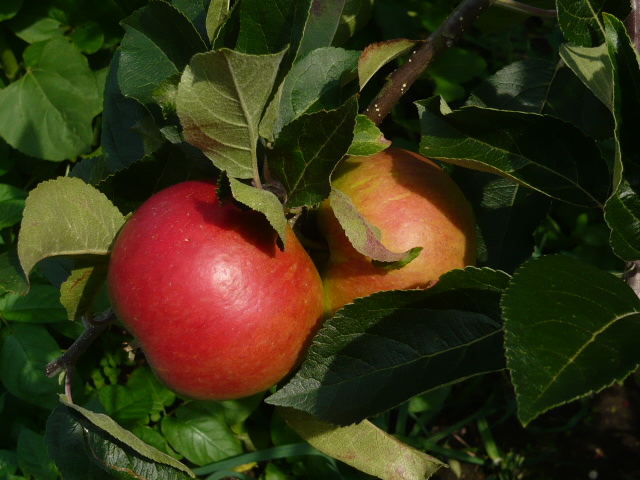
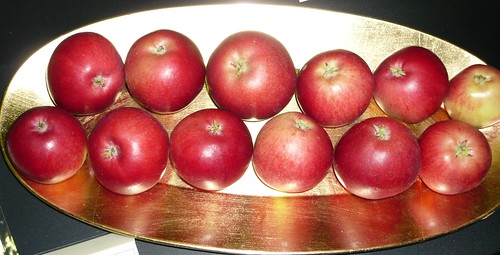
Autumn apples