Browsed by
Category: Flowers and Plants

Annual, perennial and interesting flowers with advice on culture, information, tips and recommended varieties

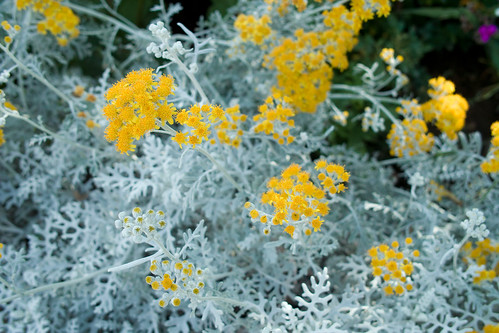
Cineraria senecio – Silver leaf for gardens
Cineraria senecio – Silver leaf for gardens

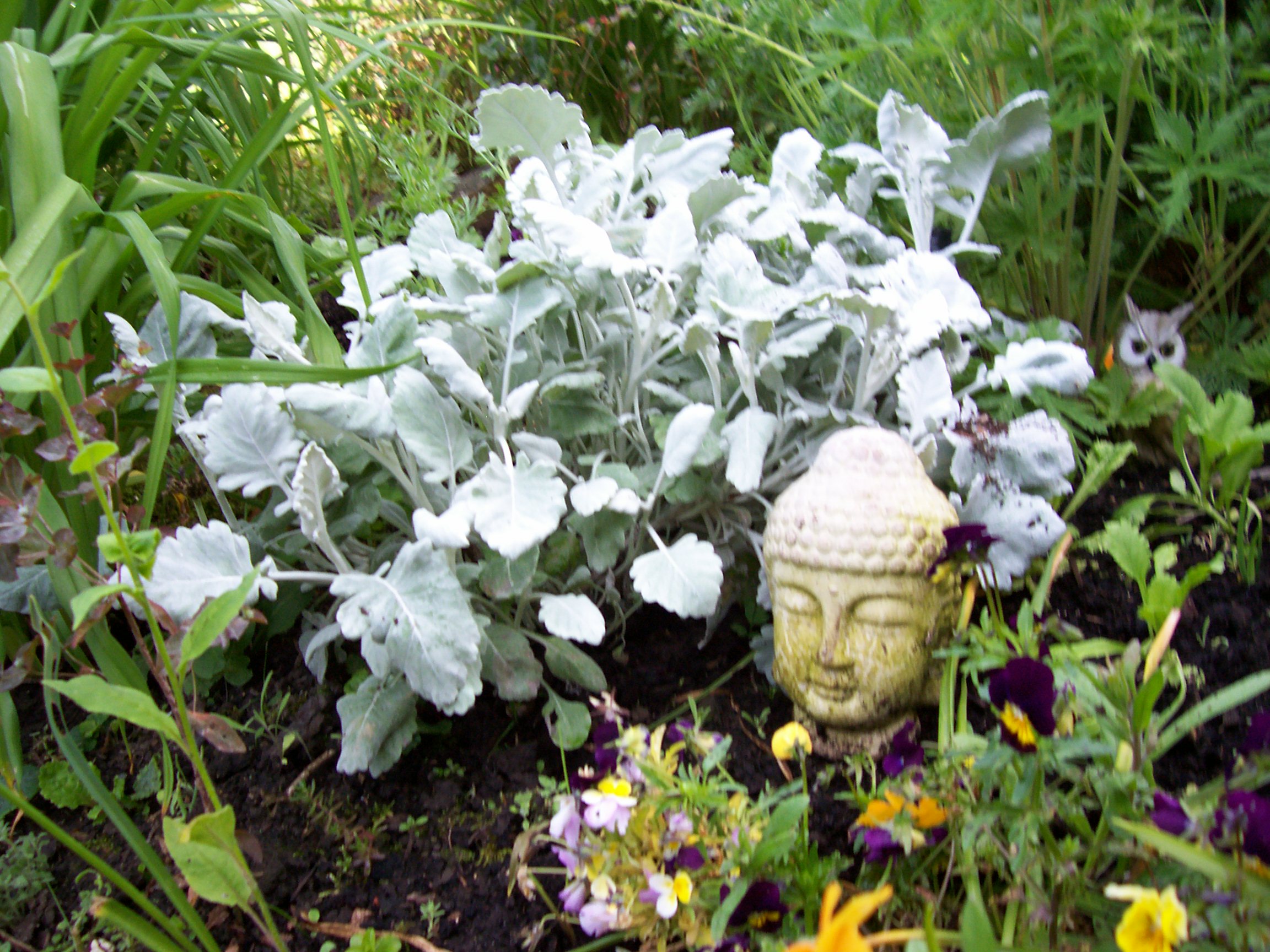
Senecio cineraria

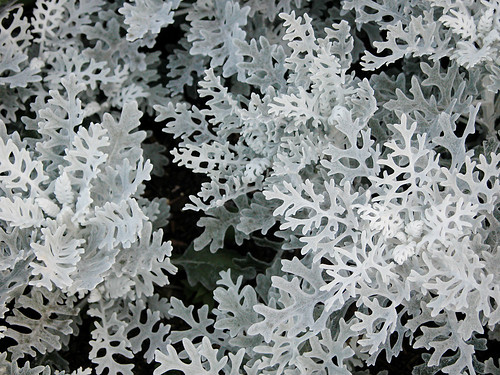
The silver leaves of many Cineraria are almost white in amongst this greenery. The plants are grown as annuals for the leaf colour and shape. As the leaves grow older they become more deeply cut and lose the oak leaf shape to be more fern like. Keep removing long and old growths and pinching out prior to flowering to encourage more leaf formation.

  • The plants flower yellow and grow easily from seed.
  • Try Maritima varieties Silver Dust or the taller Candicans
  • Cuttings can be rooted successfully
  • The plants will often last 2 or 3 seasons but become very leggy
  • The colour looks good in formal beds and is often used in parks and gardens
  • Leaves get a dust or powdery bloom

les fleurs (Senecio cineraria)
The Cineraria is related to the ragwort family and contains 50 different species including the multi coloured house plants varieties.
Ragworts produce yellow daisy like flowers similar to those shown above.
Varieties and Named Species

Cineraria Silver Dust has slightly lobed leaves.
Cineraria Dusty Miller has a powdery white meal on the stalks.
Other names Senecio maritimus, Senecio candicans, Cineraria maritima
Cineraria silver ragwort ‘Cirrus’ has rounded leaves and a more tidy habit.

Photo credits
Senecio cineraria by Carl E Lewis CC BY-SA 2.0
les fleurs (Senecio cineraria) by yukop CC BY 2.0
Autumn Flowering Rudbeckia

Autumn Flowering Rudbeckia

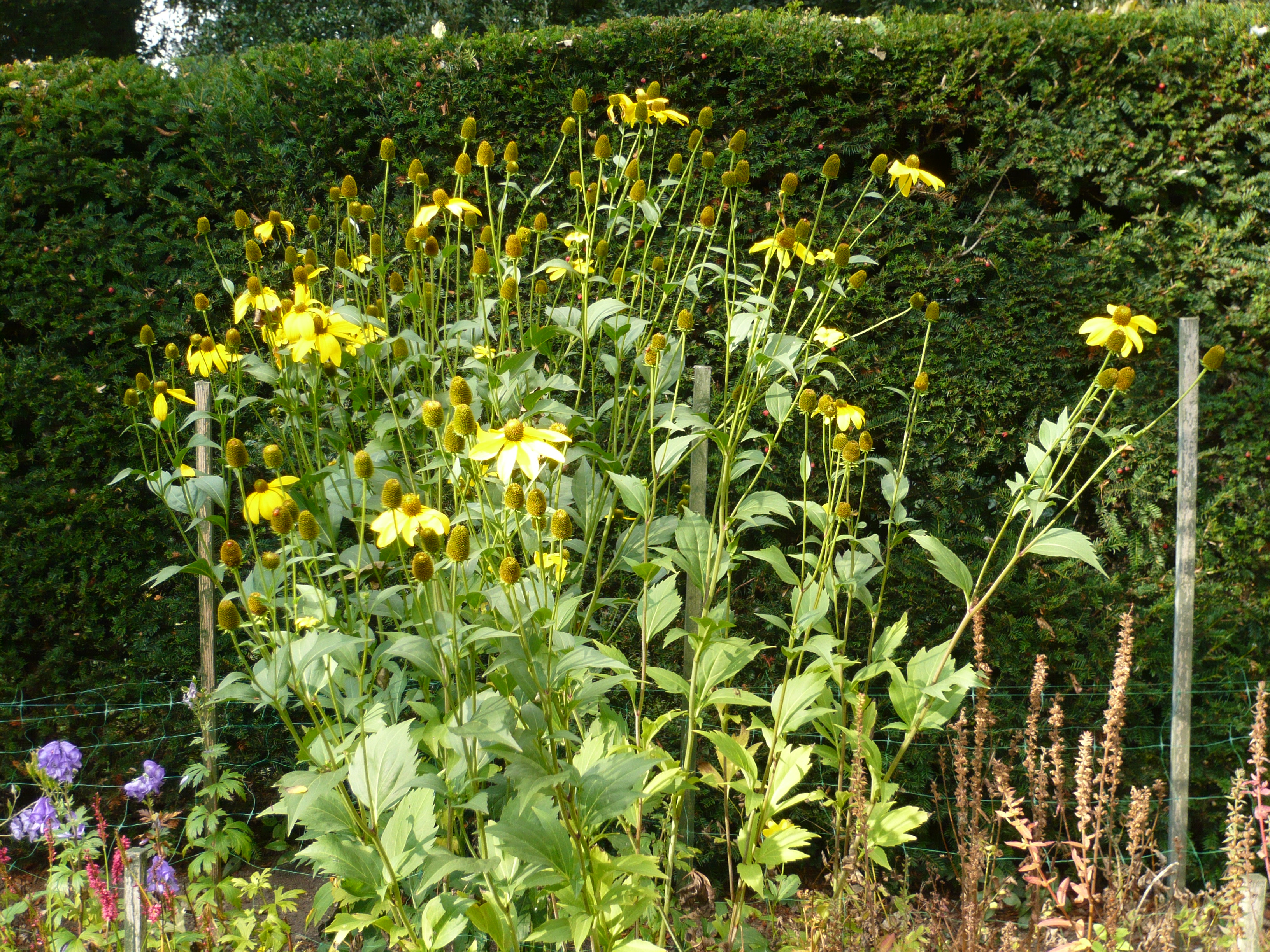
Rudbeckia Herbstone

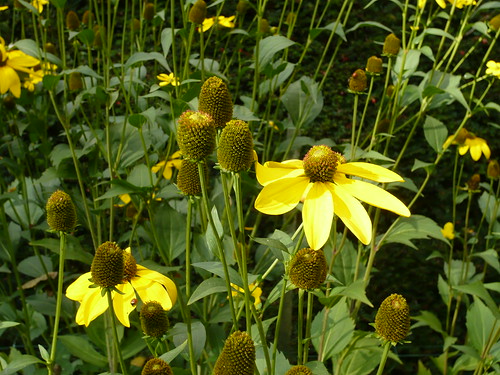
I expect my Rudbeckia to be well behaved 3 foot high plants. These Rudbeckia laciniata ‘Herbstone’ (AGM) were in excellent fettle in the late autumn sunshine and with a bit of support were growing 6-7 feet high in a compact clump. The upright branching stems and bright yellow ray-florets make ideal cut flowers.
I particularly like the conical floret discs that will form the seed heads, they look good in this photograph.

Read More Read More

Allotment Neighbors

Allotment Neighbors

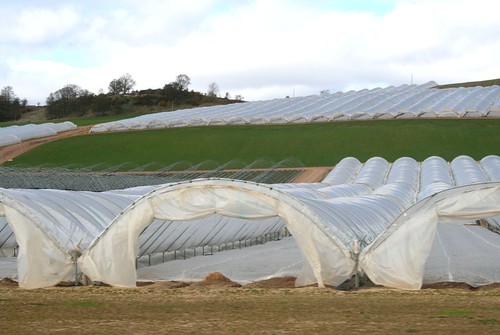
I would like to introduce the new lady on my allotment Ms Poly Tunnel with her daughter Annet. Poly tunnel may be ugly but it is invaluable in a large garden, small holding or allotment.

Poly tunnels in spring
These poly tunnels look like they are breeding faster than any plants. At least the ground is not a total mud bath like many gardens this autumn. A group this size probably needs planning permission but a more suitable garden variety will be OK without.

Read More Read More

Herbs in the Border and Kitchen

Herbs in the Border and Kitchen

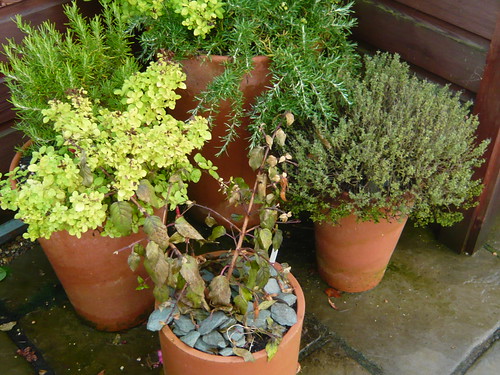
long tom herbs

Traditionally herbs are grouped together in a special area of the garden or in special pots like these ‘long toms’. You can try mixing ornamental herbs amongst perennials or with Bay, Lavender and Rosemary amongst shrubs.

Focal Points with Herbs

Angelica is happy in semi-shade and reaches over six feet tall. The green candied stems of Angelica archangelica, with huge fine cut leaves are used to decorate cakes. Alternatively try bronze coloured Angelica silvestris Vicar’s Mead.

Fennel is another tall focal point plant with green or bronze foliage. This perennial likes sun and flowers yellow with edible seeds.

Read More Read More

Magnolia Growing

Magnolia Growing

Magnolias take their time to produce the best show of blooms but the wait is worthwhile.

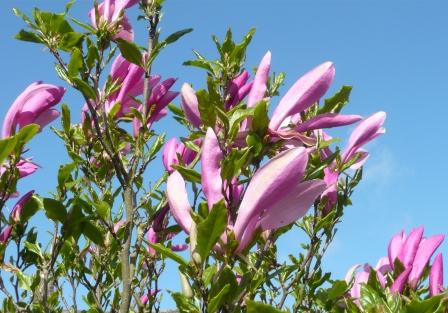
magnolia-sky

Not content with looking marvelous the clear blue sky added to the attraction of this 6 foot high Magnolia Liliflora nigra in my neighboughs garden.

Magnolia fossils have been found from 20 million years ago before bees were around for pollination. That is why the many Magnolia species developed very tough flowers able to avoid damage from the beetles that pollinated them. Their flowers are thick and strong without distinct sepals or petals but a hairy shell around the buds.

Magnolias come in a wide variety of sizes from large specimen trees to small shrubs. They can be evergreen or deciduous and flower mainly in spring but with some later varieties. Flower colours vary from whites to pinks and purples with some yellows. Vegatatively propogated Magnolias should flower in the second or third year.

Magnolias cause few problems for gardeners except losing blossoms in a late spring frost. This can be avoided by planting, in locations that are protected from late frost, or varieties not blooming until the danger of frost has passed. Plant in April and mulch regularly until well established. Magnolias favour well drained slightly acidic soil but M. stellata, M. kobus, M. sieboldii and M. wilsonii. are all suited to alkaline soil.

Other Selected Varieties
Evergreen Magnolia Grandiflora Charles Dickens is a favourite for growing up a wall with flowers upto 12 inch across whilst M. Delavayi will flower in late summer or Autumn in a similar position.
A trendy favourite is Magnolia stellata star magnolia one of six Japanese species. It has a compact, twiggy habit ideal for smaller gardens, and flowers that can be white or pink.

Read More Read More

Growing Good Snowdrops

Growing Good Snowdrops

If snowdrop leaves are showing can the delicate white flowers be far behind?

IMG_3667

Snowdrops for me signify the end of Winter rather than the coming of Spring. Tucked under this hedge row the snowdrop is left to multiply naturally by seed and by division.

Tips for Growing Snowdrops

  • Transplant snowdrops as soon as they finish flowering and have visible leaves. This is when they are ‘in the green’ and is the safest time to plant snowdrops. Many bulb suppliers sell them in the green.
  • The small bulbs are prone to dry out and these dry bulbs do not grow on as successfully as snowdrops in the green.
  • Read More Read More

Lamiums- Deadnettles

Lamiums- Deadnettles

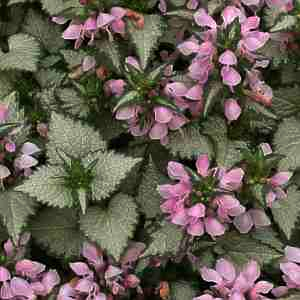
This family of herbaceous perennials can make attractive ground cover with its wide variety of foliage. Plant in dry ground between shrubs that give some shade from hot sun. Starting to flower in May many varieties go on until the first frost and p[rovide much needed pollen for bumblebees.

Lamium Pink

Gardeners Tips Growing Lamiums

Perennial Garden York Gate Adel

Perennial Garden York Gate Adel

white-hebe

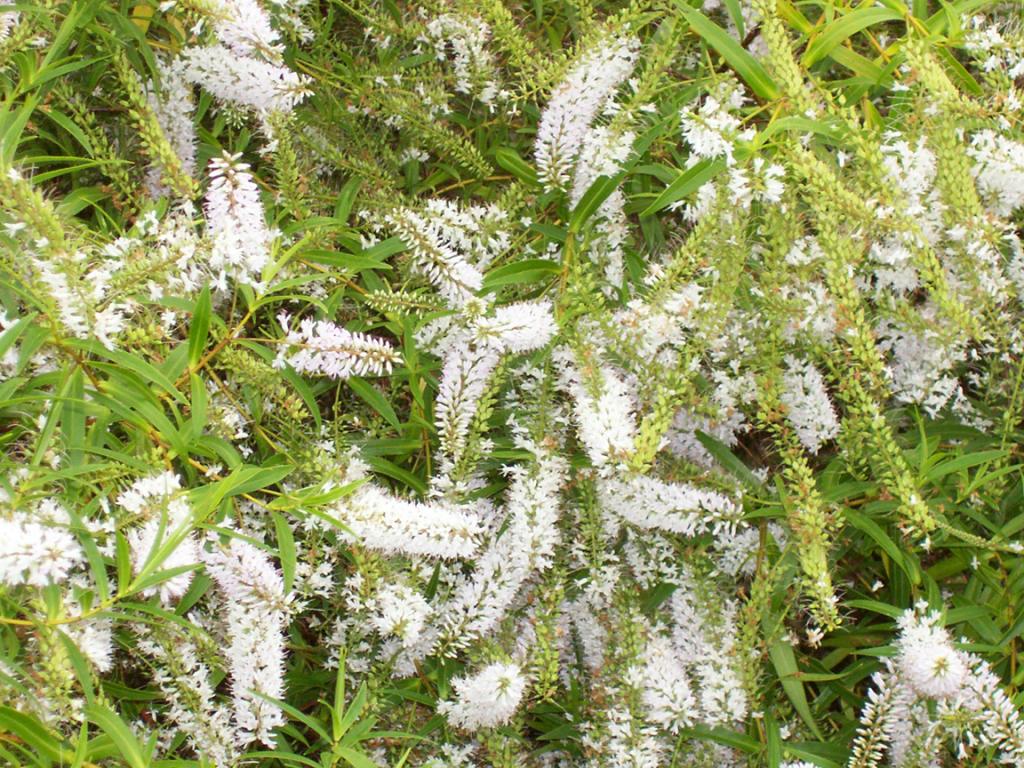
Perennial is the name of the Gardeners Royal Benevolent Society the charity for ‘Helping Horticulturists in Need Since 1839’. They have an interesting programme of events for 2009 and a selection of garden related gifts to support the charity. Last summer I visited Perennial’s own garden near Leeds called York Gate and found the volunteers very attentive and helpful. Best of all was the plants propagated from within the garden that were available for sale at economic prices.

York Gate

Approaching the garden through an old church yard in Adel and straight down a short lane you cross the narrow road into the one acre garden.

Read More Read More

Lovage a tall Perennial Herb

Lovage a tall Perennial Herb

LOVAGE

What is Lovage?

Lovage is a long lived herbaceous perennial herb that grows up to 4-6 feet tall.
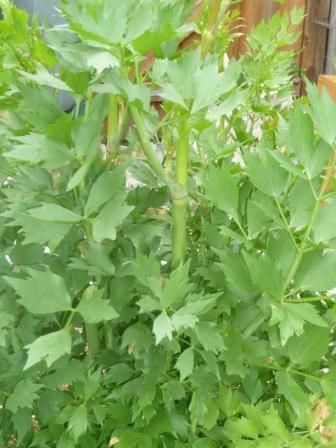
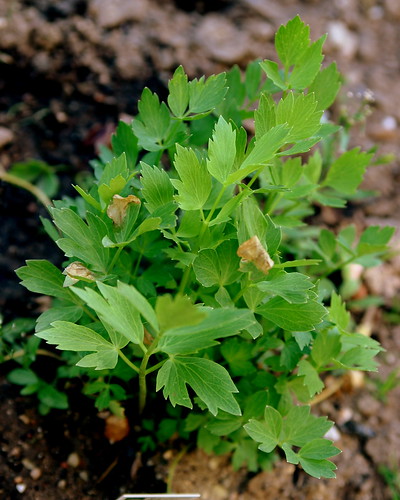
The leaves are a grey green and architectural in appearance.
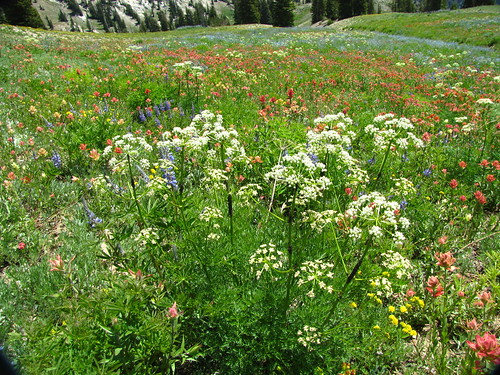
Lovage flowers yellow in an ‘Umbel’ and the seeds that follow can also be eaten or used in bread or as a spice.

Uses for Lovage

Lovage has a distinct aroma similar to celery but with Indian spice notes.
All parts of Lovage can be eaten and the stems can be used as you would celery.
Lovage is made into a wine liqueur and in soups, stews or as a roast vegetable.
Lovage is believed to have medicinal properties for sore throats.

Cropping Lovage

A healthy Lovage (Levisticum officinale) plant can spread in a clump 3 feet wide and such a plant needs space perhaps at the back of a border. One plant can provide all the leaves and stems a family would need. If leaves are the main requirement give the plant the ‘Chelsea Chop’ and cut down flowering stems before they blossom so encouraging new leafy growth.

Growing Lovage

Grow Lovage from seed or root divisions from an existing plant. 
They like plenty of water and space to grow.
Lovage prefers a sunny position.

Lovage - Liebstöckel
Photo credits
LOVAGE by Fool-On-The-Hill CC BY-NC 2.0

Lovage – Liebstöckel by yashima CC BY-SA 2.0

Christmas Roses for Christmas Hellebores

Christmas Roses for Christmas Hellebores

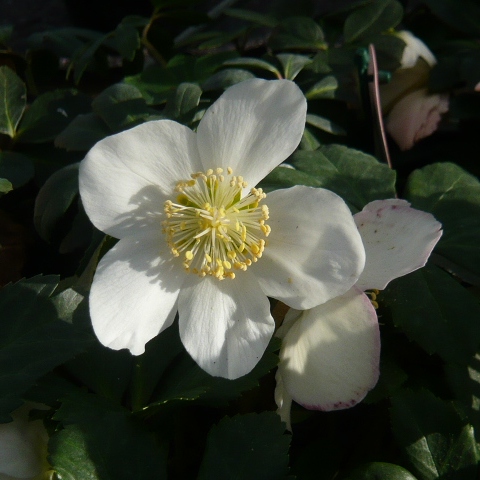
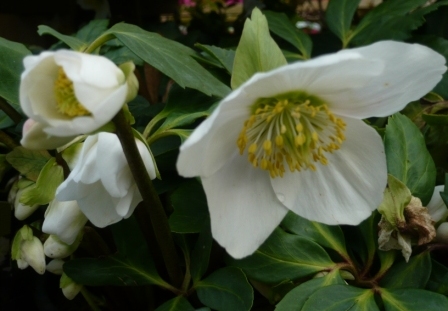
Christmas Roses will soon be with us in the garden. If you still haven’t removed the old leathery leaves from last year you can trim them off so the flowers are visible. After flowering lighter green leaves will grow to reinvigorate the plants roots.

Hellebores have a medieval reputation for preventing witchcraft and are also called the Christmas Rose or in some parts of the country Virgin’s Mantle. In addition to the traditional white Helbore niger there are many new varieties and colours to grow.

Selected Varieties
From the Lady series, Hellebore Red Lady, Hellebore Pink Lady, Hellebore Blue Metallic Lady, (a hybrid orientalis Hellebore )
Hellebore Picotee Double Ellen flowers a light delicate attractive pink and Double Ellen White has green outer to the petals.
Ashwood nurseries have a good list of specie and hybrid Hellebores
Hybrids from Thompson & Morgan
Gardeners Tips
Plant now in October for a magic touch of flower power when even snowdrops are still to flower
Plant in dappled shade with moist but not boggy soil.
Rabbit resistant which is a bonus near us.
Mulch in spring to keep up the humus levels.