Browsed by
Category: Flowers and Plants

Annual, perennial and interesting flowers with advice on culture, information, tips and recommended varieties

Iris from Bulbs as Opposed to Rhizomes
Iris from Bulbs as Opposed to Rhizomes

George Iris

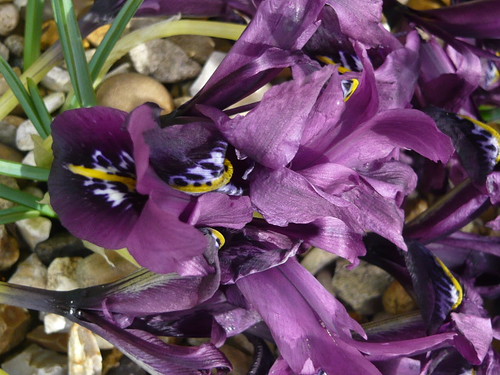
Dutch Iris or Iris reticulata are small bulbs for pots or rockeries.
Flag Iris are big and blousy and grow from Rhizomes.
These pictures of different Iris are grown from bulbs.
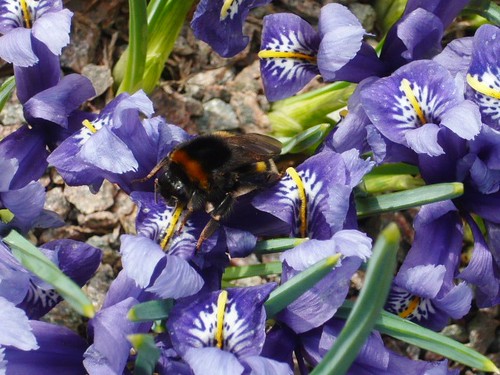
Iris B

The reticulata group produce narrow, triangular leaves and a single, slender bloom per bulb.
Flowers are principally in shades of blue and purple, often with an attractively contrasting orange or yellow mark at the top of the fall.
Iris histrioides ‘George’ is proving to be a good Iris shown top.
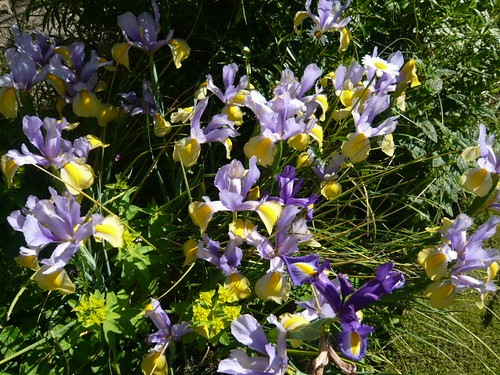
Iris Frans Hals

Iris Franz Hals above or you could try the unusual Iris ‘Katharine Hodgkin’ below. Its exotic colouring of cream overlaid with a blend of light yellow and greeny-blue comes from its parents.
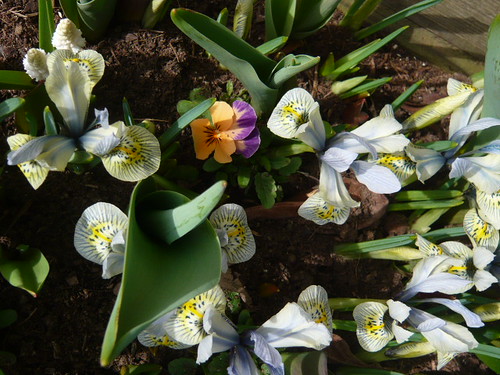
Iris joker

Read our other article Tips for Growing Spring Iris

Biggest Aspidistra in the Toilet

Biggest Aspidistra in the Toilet

Palma Loo

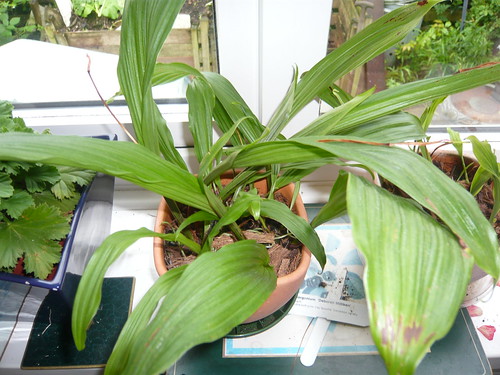
On holiday in Majorca I spotted this potted Aspidistra plant marking the way to the toilets. It is fitting that it was located at The Banys Àrabs, or Arab Baths.
These baths are a remnants of Palma’s Moorish past and include the lush gardens of Ca’n Fontirroig. Although very small the gardens are home to Sardinian warblers, house sparrows, cacti, palm trees, and a wide range of flowers and ferns.

Aspidistra

  • Aspidistra is a popular foliage plant, grown as a landscape plant in shaded spots in areas with mild winters.
  • It is better known as the middle class Victorian must have as a houseplant.
  • They’re grown for their ability to survive neglect and very shady conditions, indoors and out.
  • In Japan, leaves of this species have traditionally been cut into pieces and used in Bento and Osechi boxes to keep each food separated.
  • I have never seen one in flower but with 90+ species listed in wiki they must reproduce somehow

Also read about Bomb Proof plants
Moorish bath

Odd Aspidistra Facts

  1. Aspidistra elatior can also be called the Cast Iron Plant and was made famous by the Gracie Fields Song ‘The Biggest Aspidistra in the World’
  2. Aspidistra are native to China and Japan but were popular in Victorian England as a house plant amongst the dark and sooty atmosphere
  3. Aspidistra belongs to the lily family
Do Not Over Feeding House Plants

Do Not Over Feeding House Plants

Leaf at the expense of Flower

Pamper your plants by all means but resist the urge to over feed.

Doubling up on the plant feed or recommended concentration level will not help your plants. They wont grow bigger and better, quite the opposite.

Plant Responses to Over Feeding

  • A strong dose of fertilizer will ‘burn’ or cause browning of the tender leaf tips and margin of the leaves.
  • If the nitrogen level is too high the growth will be soft, sappy and may lead to total collapse.
  • Fertilizer salts can build up in pots as the feed is never totally used or absorbed.
  • Delicate feeder roots are then damaged by the greater concentration of undissolved minerals which can kill a plant.
  • Browned off leaf tips and distorted or stunted leaves are a result.
  • A white crust of salts on the top of pots or compost is a sign of over feeding. This crust can burn the most delicate of plants to death.
  • Unbalance feeding can cause the plant to react in a disproportionate way such as growing leggy or too leafy.
  • Feeding through winter is generally a mistake. If plants aren’t growing naturally then do not force feed them!


Over Watering reminder Plants can drown! Some go limp and can be revived other ‘pop their clogs’ and you get no second chance.
Roots need nurishment and air. Water helps one but can remove the other from soil.

Young plants can often get all they need from commercial compost for several months.  Seedlings need even less feed.

Do not add a slow release fertilizer then use your weekly liquid feed.

Fertilizer companies want to sell more fertilizer so  many proprietary feeds can be diluted by half and still be effective. Match the quantity of feed to the size of your plant, you wouldn’t give a toddler a 5 course banquet.
Cyclamen Indoor and Outdoor

Cyclamen Indoor and Outdoor

Hederefolium

I admire Cyclamen more and more as the years go by.

I am currently in awe of the indoor cyclamen that my wife obtained around Christmas time. The volume of strongly coloured flowers has been phenomenal on the Persian cyclamen. We have stopped watering them expecting them to rest through summer but in one case the plants have been reinvigorated.

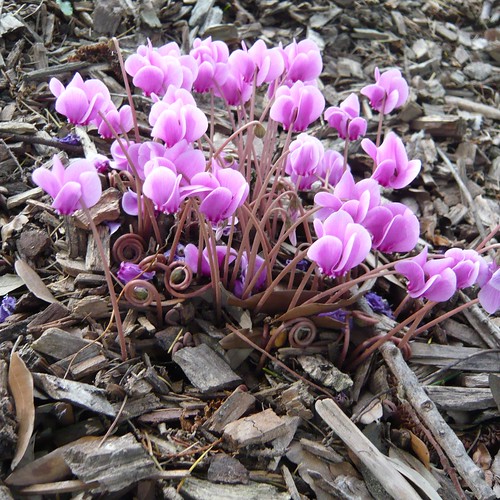
Cyclamen coum

Cyclamen coum are hardy plants. The Persian varieties will not withstand frost.
I lay the pots on their sides so the plant can die back slowly.

In late autumn I bring them back into the light and give them a gentle watering and light feed. Hopefully I will then get a new showing of these super flowers.

Keep regularly watered whist in growth. I find it better to water from the bottom to prevent the corm from rotting.

coum Cyclamen

There are now 22 recognised species of Cyclamen. It is said that at least one variety is in bloom for every month of the year.
Cyclamen grow in a range of areas and environments from beech woodland, alpine meadows and windowsills through scrub and rocky areas. This tuberous family of plants are predominantly from North Africa, Turkey and Mediterranean areas.

Top Cyclamen Species

C. balearicum
C. colchicum
C. graecum
C. africanum

Read More Read More

Feed and Water Your Fruit Trees

Feed and Water Your Fruit Trees

Plum

March is a good time to feed your Pears, Plums, Greengages and Blackcurrants.

  • To boost your trees into growth they will appreciate a nitrogen feed.
  • A general feed like Growmore or VitaxQ4 is easy to apply.
  • A surface mulch of well rotted animal manure will also help.

Watering Tips

    • If spring is dry water the plants gently with a bucket of water onto the roots. repeat every fortnight if needs be.
    • Any watering should be dome before mid day.
      water well the weather is clement not in anticipation of a night frost.
    • Water pears for the first six weeks after blossoming. They are usually grafted onto thirsty root stock.
    • Try to keep water away from the trunk or woody stems to prevent rot.
    • Newly planted trees need watering for the first year.
    • If you have dry sandy soil mulch for the first three years to help retain water.
    • Water the first year after transplant after that they are on their own.
    • You want the trees to build deep roots so they are self sufficient for water.

Blackcurrants are a shallow rooted so weed by hand.

  • Blackcurrents are prone to frost damage on the flowers.
  • Varieties called Ben…. flower a but later or you can cover with horticultural fleece.

March is still a good time to plant new fruit trees and bushes. As the soil warms up they should grow away quite well.

Marguerite or Purple Ronnies

Marguerite or Purple Ronnies

Madiera mch11 109

Daisy is the name applied to many flowers of the Asteraceae or Compositae family. Flowers in this group include Aster, Bellis daisy, or Sunflower family plus Chrysanthemum, Gerbera, Calendula, Dendranthema, Argyranthemum, Dahlia, Tagetes, Zinnia even Lettuce and many others.

Marguerite is botanically called Chrysanthemum frutescens meaning shrubby. Native to the Canary Isles, they have been cultivated in England since 1699 as a white and sometimes pink flower.

Madiera mch11 107

These plants are especially common in open and dry environments where these purple plants were found.
The yellow centre attracts all the pollinating insects that the plant needs to reproduce seed.

Madiera mch11 108

Nuts and Drupes

Nuts and Drupes

Book Cover

True nuts include Pecan, Sweet Chestnuts, Beechnuts, Acorns, Hazel nuts and Hornbeams. True nuts are a simple dry fruit with one seed in which the seed case becomes very hard on maturity. True nuts do not split apart like Brazil nuts or horse chestnuts but the seed and the fruit are one and the same.

Peanuts are not nuts, it may be hard to believe but they are peas or at least part of the Pea family. If you compare the pods of peas and peanuts you will see what we mean. Monkey nuts, groundnuts, Manila nuts, earthnuts and goobers are all just other names for peanuts.

Walnuts are not nuts but are botanically called ‘drupes’. This is a fruit with a fleshy outer coating enclosing a hard shell that contains a seed. Cashew nuts are drupe seeds from the poison ivy family and the seed lining contains an irritating lining. Almonds, pistachios and pine nuts are not nuts either.

Coconuts must be nuts then, no I am afraid not they are another drupe. Nor do coconuts contain coconut milk but coconut water. Coconut milk is made by grating the flesh into water then straining it.

Macadamia nut is just a creamy white kernel and Brazil nuts are seeds in a pod.

Drupes are also fleshy fruit, such as a peach, plum, or cherry, usually having a single hard stone that encloses a seed which may be why they are also called stone fruit.

Resources

QI researched by Molly Oldfield & John Mitchinson

Succulent Rosette Rock Plants

Succulent Rosette Rock Plants

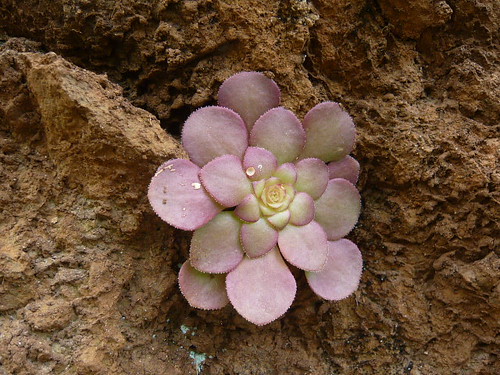
Botanically we refer to a rosette as a circular arrangement of leaves with all the leaves at a single height. On Succulents these rosettes usually sit near the soil.

Madiera mch11 050

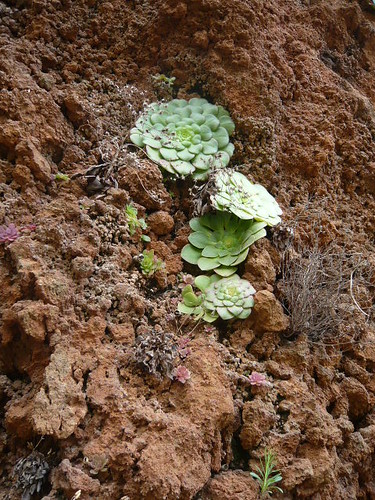
The succulent Echeveria can drive you up the wall. High on a rock face these plants cling to the rock with little support from their roots. On Maderia the ground was former volcanic rock and seemed porous.

  • Echeveria are drought-resistant, although they do better with deep watering.
  • Most will tolerate shade and some frost, although hybrid species tend to be less tolerant.
  • Foliage is arranged in a rosette in a variety of shapes and colors.
  • Flowers will appear on the top of stalks that grow from between the leaves.
  • Suitable for crevise gardens or a rockery.

Book Cover

Other Rosette Forming Succulents

Madiera mch11 052

Read about Growing Echeveria and check out Australian site  The Succulent Garden

Rice – No1 World Food Crop

Rice – No1 World Food Crop

Wheat is grown in large part for livestock but the majority of the world population survives on rice as its main food source.

There are thousands of varieties of rice preserved at the International rice research institute. (IRRI). There are potentially 120,000 cultivated rice species of Oryza sativa the grass that produces rice.

The IRRU Heirloom Rice Project is an initiative in the Philippine’s Department of Agriculture (DA).  The project aims to enhance the productivity of and enrich the legacy of heirloom or traditional rice handed down for generations.

China India and Indonesia are the largest producers by weight and the biggest consumers. Thailand is the biggest exporter of rice as a food.Most production is done by transplanting seedlings to give plants a head start over weeds. Dwarf rice has been bred as part of the doubling of yeilds over the last 25 years. It is the shiny white kernel and embryo that is left after the milling has scraped the layers of bran from the seed hull. The bran has a range of uses including cattle feed, cooking oil, soap and pharmaceuticals and medication.

As well as sushi and sake rice is used in American brewing like Budweiser

Royal Bridal Flowers

Royal Bridal Flowers

Madiera mch11 135

White was the order of the day for Kate Middleton’s bridal bouquet.

Previous Royal Weddings

  • The Queen chose white Orchids in 1947.
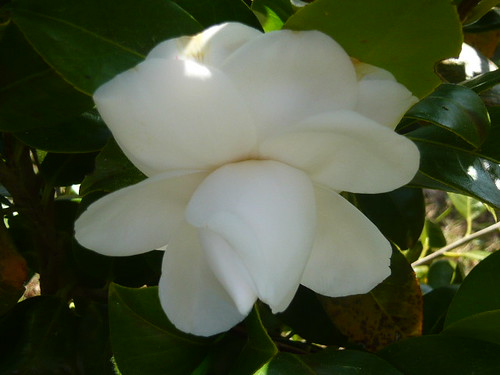
  • Diana The Princess of Wales had Gardenias and Stephanotis the waxy strongly scented white flowers.
  • Princess Anne stepped most out of line with cream Roses, White Heather for luck and Scotland, plus the strongly scented Lily of the Valley.
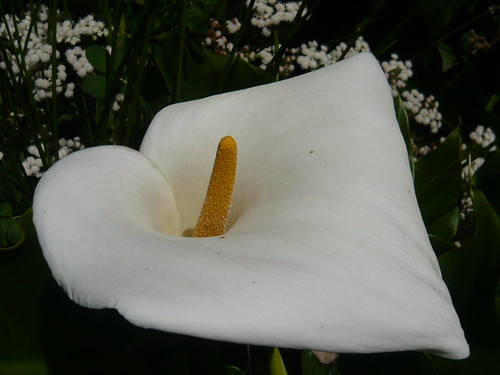
  • The Countess of Wessex had Arum lilies, Fressias for scent and again Roses.
  • Sarah Ferguson carried a bouquet with perfumed Gardenias, cream Lilies, pale yellow Roses, Lilies of the valley and a sprig of myrtle.
  • Camilla Duchess of Cornwall was slightly different in adding grey and cream Auriculas to a traditional bouquet.

Madiera mch11 171

Turn your arrangements into botanical works of art – here are some examples and clubs you could join.

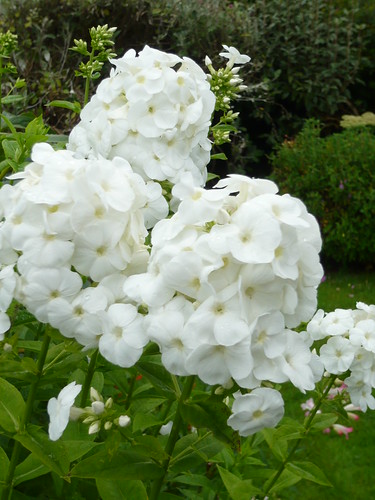
For a recommendation that is a bit different but scented and locally grow Kate could try Phlox. Something for her future father-in -law to talk too during the lengthy ceremony.
Phlox