Browsed by
Category: Flowers and Plants

Annual, perennial and interesting flowers with advice on culture, information, tips and recommended varieties

Tips for Growing Giant Vegetables

Tips for Growing Giant Vegetables

Book Cover

This is one of the many books in my collection but the only one to focus on growing big, bigger and biggest vegetables. If you want to grow giant vegetable for exhibition or to get large crops then there are many pointers in ‘How to Grow Giant Vegetables’ by Bernard Lavery and below.

If you want to see 14 feet long carrots or parsnips, the 28 pound radish or the monster cabbage weighing 120lbs then encouragement to join the monster vegetables growing movement may be our gardeners tip for you in 2011.

Starting with Giant Vegetables

  • A good big one will beat a good small one and that applies to seed so consider what you sow. Good genetic potential will grow good plants.
  • Pumpkins are a good starter vegetable as a heavy weight can be achieved in the first year. It is also fun to see them grow by inches every day.
  • You need to learn by experience so you improve growing conditions, feeding and watering based on your own observations.

Large Crops from a Small Garden

  • Harvested whilst still in peak growing condition, giant vegetables taste every bit as good as smaller varieties.
  • Read More Read More

Greenhouse Wind Protection Tips

Greenhouse Wind Protection Tips

(image source)

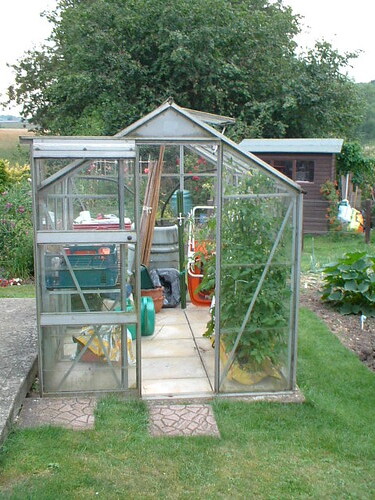
Greenhouses are particularly vulnerable to wind damage but here are a few tips to help you improve your glasshouses survival.

Tips to Protect your Greenhouse in Winds

  • Instal your greenhouse in a position that is as sheltered from the prevailing wind as possible. Shelter your greenhouse by situating wind breaks, fences or hedging in the way of the prevailing winds.
  • Avoid areas that look sheltered but are wind tunnels and do not put under trees or where broken branches may fall on the glass.
  • Put in concrete foundations and anchor your greenhouse base securely. Then bolt your greenhouse to the base just as securely.
  • Buy the strongest greenhouse you can afford. The bigger proportion of your total bill you spend on the basic frame the stronger the greenhouse will be.
  • Keep up to simple maintenance, check clips, S hooks and rubber sealing strips if fitted.
  • If anticipating strong or gusty winds make sure that your doors and windows are closed and will stay closed . Put loose equipment away so it doesn’t blow around.
  • After heavy winds check your greenhouse. If some clips have moved this may weaken the fixing of the pane and later it may blow out in a comparatively mild wind.
  • Clips can be kept in place by putting some silicone sealant around them.
  • If glass does blow out of your greenhouse block the hole as quickly as possible even if it’s just with a blanket held on with clothes pegs. You need to stop the wind getting in and causing further damage.
  • Do not  try to repair your greenhouse whilst it is still windy. Take great care of broken glass and dispose of safely.
  • If despite your best efforts your greenhouse is destroyed check you house insurance it may be covered.
Solanum Winter Cherry

Solanum Winter Cherry

It is the season for houseplants and this Solanum capsicastrum was raised from seed probably in a Dutch hothouse for the UK’s pre Christmas market.

What to do with your Winter Cherry

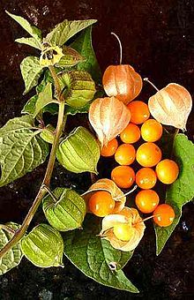
  • Like most Solanums related to the nightshades these attractive berries are poisonous. Do not confuse them withthe edible  Cape Gooseberries – Physalis peruviana that looks similar.
  • Keep the plants in good light or the berries/fruit will fall off and leave the plant bare
  • If your plant is in flower with insignificant white blossom mist spray to encourage the fruit to set. The green berries will then turn orange-red
  • Keep the plants moist and regularly fed and the berries will remain for many months
  • Compost the plant when the berries drop – they are not worth saving
  • Other common names include Jerusalem Cherry or pseudocapsicum but they are not related to Cherry or Peppers
  • Do not confuse with Indian winter cherry known as Indian Ginseng

Cape Gooseberries Physalis peruviana below

new-picture

Late Bulb Planting

Late Bulb Planting

Blue bulbs

Apart from late Tulips I think it is best to leave spring bulbs out of the ground – the end of November is too late even though you can buy very cheap bulbs.

Nevertheless I will plant some bulbs in pots.

  • The trick is to get some decent roots as soon as possible. The flower will already be in the bulb and need support and encouragement to excel in bloom.
  • Plant bulbs in a pot, water and keep in a cool dark spot.
  • Bring out into a cool greenhouse, window box or under the house eaves after Christmas. Provide maximum light.
  • I have just planted a lot of species crocus bought on the cheap. All I needed to do was avoid damaging the early sprouting corms.
  • Do not use rich compost or add any fertilizer.

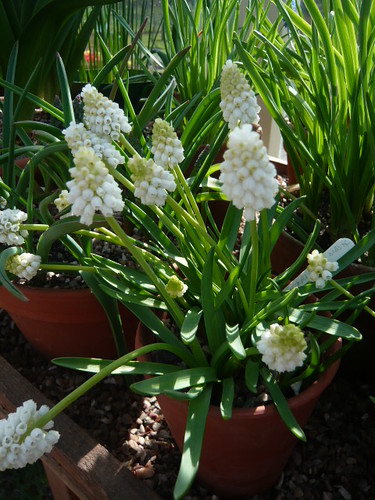
Muscari alba

Read More Read More

Growing Dactylorrhiza Madeira & Marsh Orchids

Growing Dactylorrhiza Madeira & Marsh Orchids

Dactylorrhiza foliosa

Dactylorrhiza foliosa sometimes named the Madeiran Orchid or Dactylorhiza foliosa

Dactylorrhiza Species

  • Dactylorrhiza elata is from the Mediterranean region. It has an AGM implying it is hardy and easy to grow. the purple cone of flowers from April reaching 2 feet high.
  • Dactylorrhiza alpistris has interesting leaf markings but only grows 10″ high.
  • Dactylorrhiza incarnata, flowers slightly later.
  • Dactylorrhiza majalis and Dactylorrhiza praetermissa  the Marsh Orchids appreciate damp, not waterlogged  ground and are reasonably vigorous.
  • Dactylorrhiza foliosa  (shown above)  has several large spikes of pink-purple, individually large, flowers.
  • Dactylorrhiza Maculata or Fushii  are “Spotted Orchids” with lovely purple flowers in April to June.

Growing Tips

  • Dactylorrhiza are strong growers and flower freely in damp garden conditions.
  • They are suited for a damp spot, in full sun, without shade or for growing in pots.
  • Orchid seed needs the presence of   microscopic fungi for germination and whilst Dactylorrhiza seed freely they are best propagated by division.
  • Dactylorrhiza wants an open, moisture retentive, neutral compost.
  • The reason for the name, Dacty (finger) Rhiza (root) is immediately apparent when you see the tubers. The new tuber is produced at the end of the growing season as an appendage to the old tuber that produced this years flower spike in mid to late May.

Read More Read More

Sweet Pea Seeds or Plants

Sweet Pea Seeds or Plants

Sweet Pea Heathcliff

I have had a disaster this year with my sweet peas sown last Autumn. They didn’t fare too well in the cold greenhouse. I gave them a long root run but probably didn’t give them consistent watering and TLC. So by spring they were thin specimens with lacy leaves eventhough I had pinched them out. Because they didn’t look too good I didn’t feed them up and cosset them but just plonked them in the ground. Well it serves me right and I have a very poor showing at the moment.

Next year will be different and I have already made plans and placed an order for 36 plants from Unwins ‘Super Fragrant Collection’. which consists of Heathcliff, Bobby’s Girl, Valentine, Southampton, Scartlett, and Lively Lassie. I will take delivery in March or April 2009 of healthy plants grown by a nursery. As I have paid good money for them I will take great care, prepare the ground and look after them. Hopefully we will get the sun to make them excel.

Unwins are Sweet Pea specialists and the plant collections I could have chosen include Showbench, Cut flower, and Mixed unnamed collections. They also do plentys of seed varieties and mixes. So for me next season it is plants over seeds (but may be I will do some seeds as well). I am not yet ready to join the National Sweet Pea society but if I do well with my plants I may well do so

Alpine Success at Lower Levels

Alpine Success at Lower Levels

You do not need to garden on top of a hill or mountain to have an Alpine garden but it helps.
Alpine plants tend to have deep roots and a deeper dislike for wet around their necks. Many alpines are bulbs and use other tactics to survive harsh conditions. For every generalisation there is an exception and this book gives you a better insight into Alpine plants.

Book Cover
Success with Alpine Gardening by Graham Clarke

The Alpine Garden Society is one of the best organisations that I belong too. Their seed catalogue contains thousands of varieties that members can obtain for free or nominal amounts. The magazine is both travelogue and garden informative. Give the AGS a try

Dwarf Hostas for your Garden

Dwarf Hostas for your Garden

Hosta tip – keep a cordon sanitaire of rough gravel or broken egg shells around plants to deter slugs.
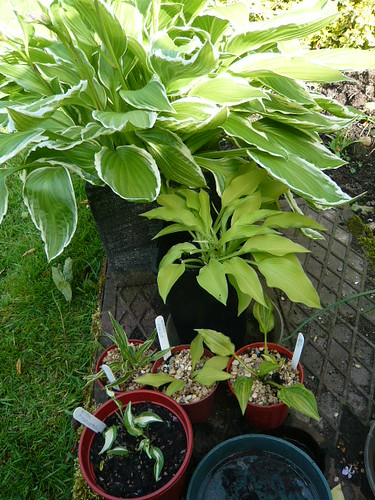
Call them miniature, small, dwarf or even bonsai Hostas these little darlings will give you bucket loads of pleasure. many dwarf plants are difficult to cultivate and retain but I find Hostas are hospitable and accommodating

otley show hostas 048

I have just taken to small Hostas having bought a couple cheaply at a local fete.
From the RHS library I borrowed ‘The Book of Little Hostas, 200 Small, Very Small and Mini Varieties.’ and already had a couple of other Hosta books but no small plants.

I realised that I was not going to aim for a massive collection of varieties as breeding is introducing new cultivars at a prodigious rate.
So my intention is to grow and display a selection of varied, colours, shapes and sizes and see how I get on.

First Small Hosta Acquisitions

  • Hosta venusta ‘Masquerade’ A popular variety by all accounts that originally grew in mountainous regions shaded by rocks. It should create a 6″ high dense mound of tear drop shaped, textured leaves. They have a creamy white center and bright green edges to the leaves with purple/blue summer flowers.
  • The next variety is labeled ‘a mame’ a variety I can’t find in any reference book. As I know the grower I can ask if I have read the label incorrectly or if it is an unregistered name. The young plant has leaves of green with yellow edges.
  • Hosta pulchella ‘Stiletto’ is another well known variety in hosta circles. The roots are rhizomatous from one of the smallest species. I am told to expect tiny mounds of thin rippled, wavy leaf of satiny mid-green and cream fading to white on the edges . The flowers will be purple all being well. Other varieties from this species include Wiggle Worms, Shining Tot or Kifukurin Ubatake.
  • Hosta Hydon Sunset will have heart-shaped yellow leaves. It is a fast grower needing some sun for good yellow color. Flowers lavender-purple.
  • Hosta gracillima is a species that I have yet to acquire.

Growing and Displaying

  • I am exercised about how to display the hostas so will grow them in pots this year and look for interesting containers.
  • I am looking for ideas to keep them in pots or a raised environment for the longer term.
  • Soil should be slightly acidic with an open texture and water retention capacity.
  • Roots of small hostas are shallow and benift from a mulch.
  • A raised bed seems to be a good idea when I want a display in the main garden.
  • Hostas survive well from frosty conditions but freezing and thawing can create too much water to encourage rotting. For that reason a mulch will protect your plants through winter.
  • Do not over feed. If soil is poor or gets impoverished try a slow release fertiliser.


Sources

Read More Read More

Kill Moss and Algae on Paths

Kill Moss and Algae on Paths

Book Cover

Winter and during wet weather are the worst times for moss and algae growth which makes paths wet and slippery. Slippery surfaces are unsightly and dangerous and need treatment.

Physical Removal

  • Algae can be removed by a pressure washer or stiff brush.
  • Dislodge moss between paving by running a sharp knife along the cracks.
  • Use a stiff wire brush on block paving. Try buy a long handled wire brush to save your back.
  • Choose a dry sunny day so the surface has a chance to dry.

Chemical Treatments

  • Most moss and algae treatments are biodegradable since harsher chemicals are banned by the EC
  • Path Clear products in concentrate or ready to use are available from amazon
  • Natural fatty acid products like Bayer Advanced moss killer use acetic, pelargonic and fatty acids.

Read More Read More

Spider Plant

Spider Plant

What you need to know about Spider plants

Chlorophytum comosum variegatum

  • Whilst Spider plants are common and oft forgotten houseplants a bit of LTC (tender loving care) will produce grand specimens.
  • Spiders are voracious eaters and that is also true of Spider Plants so give them plenty of nitrogen based fertiliser.
  • Spider plants are also called Chlorophytum comosum variegatum – quite a mouthful or another name is St Bernards Lily. Or you could call it ‘Boris’
  • Healthy leaves look good. Keep plants moist for good foliage
  • The flowers are small often insignificant white blossom.
  • Happy plants produce off-spring in the form of baby plantlets at the end of runners.
  • Runners are easy to put in a pot with compost to grow new plants.
  • Repot in loam and feed the fleshy root system
  • Read More Read More