Browsed by
Category: Flowers and Plants

Annual, perennial and interesting flowers with advice on culture, information, tips and recommended varieties

Saxifraga a Collectors Dream

Saxifraga a Collectors Dream

There are enough different saxifraga within the genus to satisfy the most ardent plant collector and breeder.
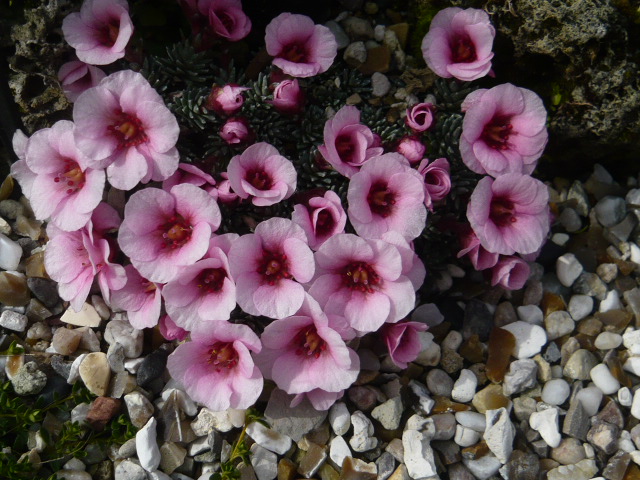
Saxifraga Karels Carpet

There are over 300 identified species and a great number of hybrids referenced in to sixteen separate sections.
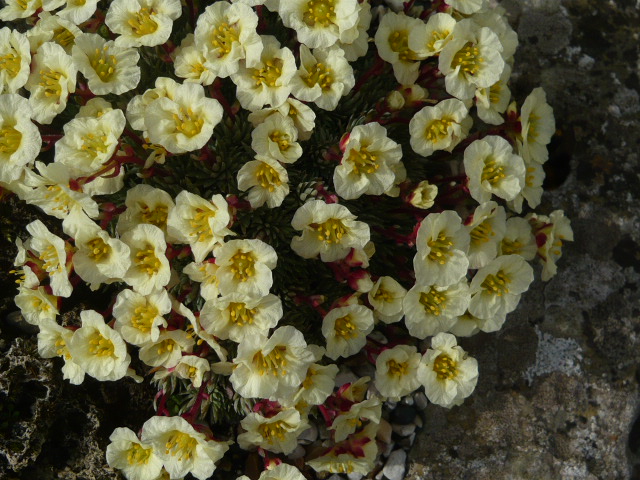
Saxifraga  burseriana  ‘Sulphur’

Then in addition some of the main sections will hybridise and there are numerous variations to collect.
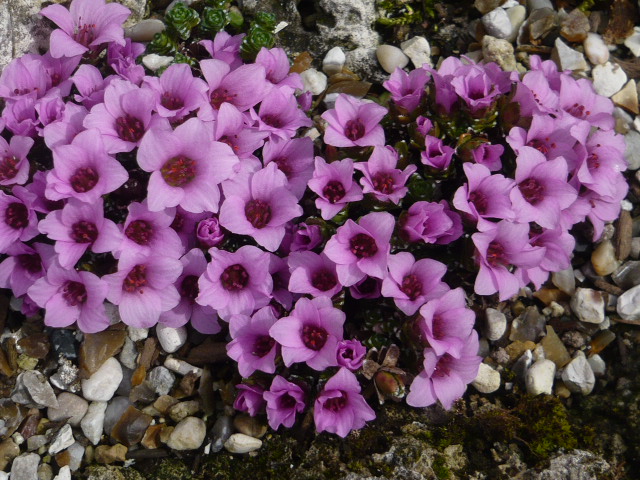
Kabschias and  Englerias are quite similar hybridising like mad. They flower early in pots or tufa crevices. Silver Saxifrages Ligulatae, Dwarf Cushion Porphyrion, London Pride Saxifrages Gymnopera and Mossy Saxifrages are other groups to collect.
National Collections & Societies
  •  The Plant Heritage National Collection of Kabschia Saxifrages is housed at Waterperry. The curator, Adrian Young, says ‘a huge band of followers are attracted by their size and compact habit as well as the beautiful flowers’.
  •  Cambridge University houses the National Collection of European Saxifrage in the Mountains House
  • The Saxifrage Society membership is a very reasonable at a fee of £10 per annum.
  • The Alpine Garden Society
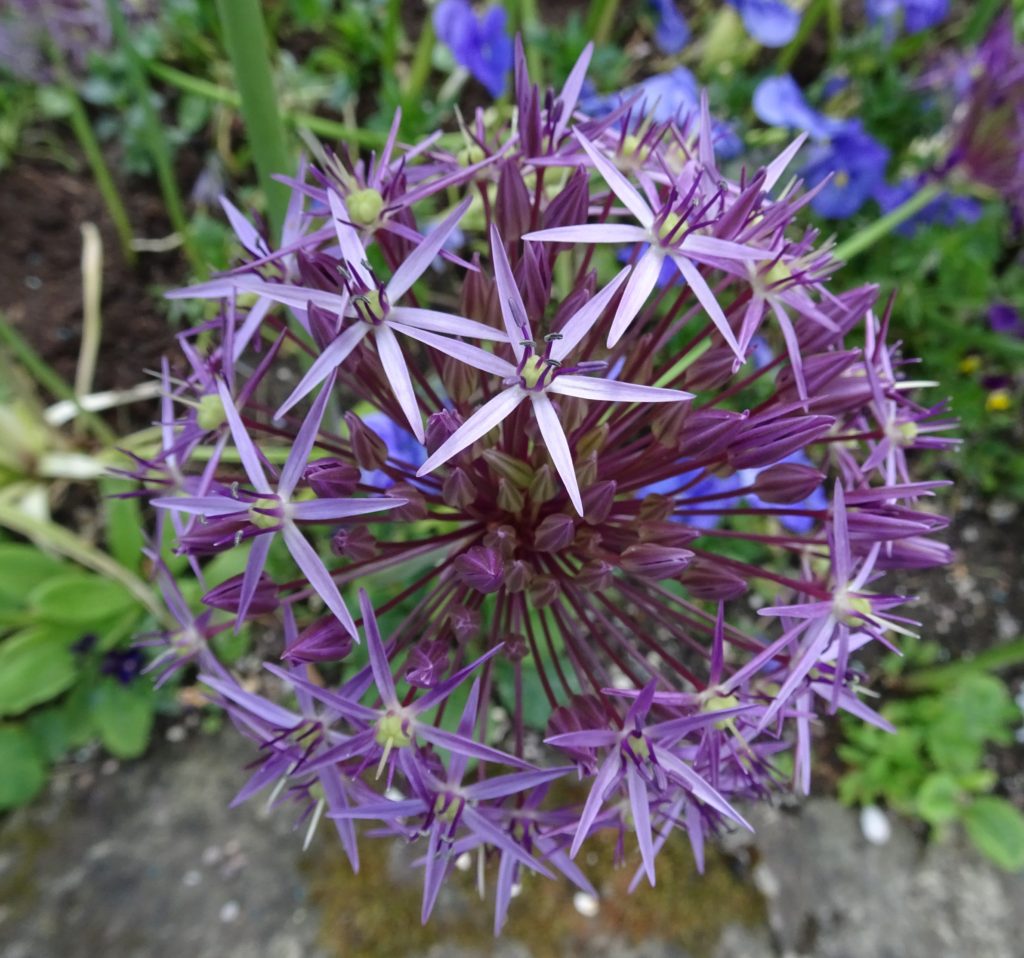
Quick Facts about Allium christophii

Quick Facts about Allium christophii

Allium christophii, common name Star of Persia or Persian onion. Perhaps they have dropped the religious ‘h’  to become Allium cristophii as a nod to the Iranian roots.

Three Quick Facts about Allium christophii

  1. The clusters of ‘stary’ flowers look good in a vase, dry beautifully and hold their form for years.
  2. This allium is attractive to butterflies but not pests.
  3. Grow your own Allium christophii, by collecting seed sowing them when just ripe or  remove offsets in autumn. You get three seed capsules from each star flower.


Storage Rot of Tubers and Bulbs

Storage Rot of Tubers and Bulbs

Bulbs that are stored over winter can be susceptible to rot and fungus. To avoid problems check them regularly and remove and destroy any that are effected.

Ornamental bulbs, tubers and corms that may be affected include begonias, gladioli, tulips and dahlias. Edible crops that can be affected include potatoes, onions and garlic. You will know about rot when you smell some of these .

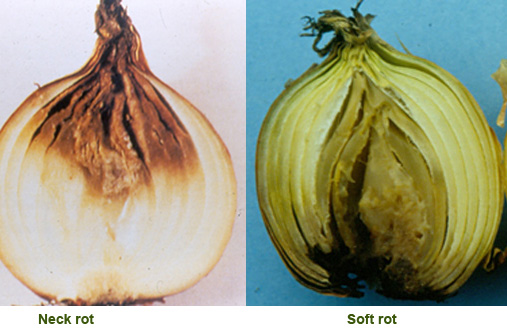
Onion Rots Ontario Ministry of Agriculture, Food & Rural Affairs

Types of Bulb Rot

  • Damp conditions help grey  botrytis or blue/green penicillium fungal rots.
  • Damaged items allow bacteria to enter the bulb and grow.
  • Post-harvest rots are also caused by fungi and bacteria from the soil or from infections in rotting leaves prior to harvesting.
  • Species specific fungal attacks can cause gladioli core rot, tulip fire, onion neck rot and others.

Storage Tips

  • Harvest carefully, damaged goods rot quickest.
  • Clean off soil and  dry off excess moisture. I then wrap some bulbs in newspaper.
  • Look for signs of black seed-like sclerotia of botrytis.
  • Discard any with signs of soft soggy tissue.
  • Store in dry cool conditions on clean storage trays. Leave space so bulbs do not touch and spread any disease.
  • Dust with a sulphur based inhibitor.

Sack rot and cart it off but not to your compost heap!

Courgette Fruit Problems

Courgette Fruit Problems

Courgettes

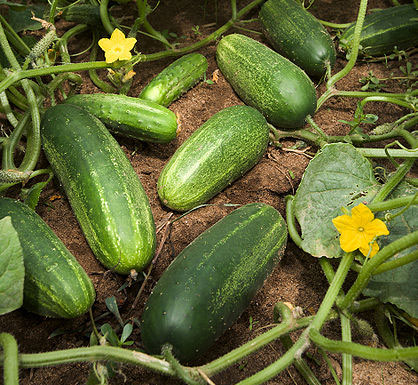
Curcurbits are members of the 965 species gourd family that includes Marrows (Courgettes), Cucumber, Melon, Pumpkin and Squash.  

Courgette Fruiting

Plants produce both male and female flowers. The male flowers grow on a thin erect stem. Female flowers are recognisable because they contain an ovary within a swelling behind the yellow flower. Male flowers grow above the vine with a central stamen containing pollen with which to fertilise the female.

The fruit grows behind the pollinated femail flower eventually sheding the petals. Left to grow the courgette will continue into a marrow sized fruit. Some small varities have now been bred to produce small fruit.

 What can go wrong:

  1. Male flower production will be favoured by low temperatures and or excessive shade. Give plants enough space. Choose a warm sunny position.
  2. At the start of flowering often only male flowers grow. As days lengthen both flowers should be formed.
  3. Fruit only swelling at the neck near the top indicates incomplete pollination due to cold or lack of insect visits. Remove these fruit to avoid end rot and shriveling.
  4. Too many fruit on a plant will encourage shriveling and rotting of fruitletes. Remove all useable fruit as soon as possible.
  5. Fruit allowed to grow to maturity as marrows will switch off the cropping as the reproduction is done.

Pollinating Tips

  • Encourage insects to help move the mature pollen. Avoid insecticides.
  • Wind can help pollination but the flower petals are more designed for insects making a funnel shape .
  • In a greenhouse or cold frame the gardener can remove a male flower and manually transfer the pollen from male to female by tapping the male flower above the ovary.
  • Do not pick male flowers  for hand pollination until the pollen is mature.
Biennial Apple Trees

Biennial Apple Trees

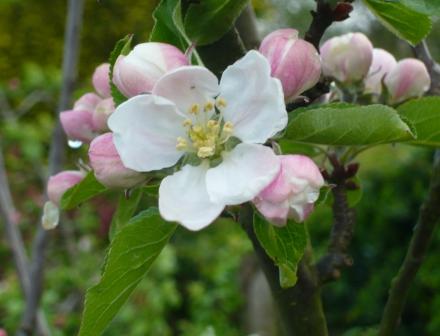
An apple a day is not possible if you only get an apple every other year and that is the fate of some trees. Biennial bearing or a high crop followed by virtually no crop is not the sort of apple production a gardener needs.

Causes of Erratic Fruiting

  • Some types of apple cultivars are more prone than others to fruiting only in alternative years. Beauty of Bath and Laxton’s Superb naturally tend to fruit biennally.
  • Trees can be tipped into biennial mode by frost when no pollination takes place.
  • No crop, high crop, no crop becomes learnt behaviour
  • Heavy crop during an on year depletes the resources and the tree takes a rest or year out
  • Keeping too much old wood reduces new wood and can lead to biennial bearing.
  • Cropping patterns are internally regulated by the tree.

Solutions to Erratic Apple Bearing

  • Select varieties and pollinators with care.
  • Thin out the flower clusters leaving only 10% of the flowers to shock the tree and modify its behaviour. It may take several seasons.
  • Water your trees and look after them during both years.

Other Comments

  • Apple trees  initiate flower buds for next season’s crop in the current season.
  • An alternation of large and small crops can be caused by competition between the current season’s crop and the coming season’s flower buds.
  • Seed-produced hormones from the developing ovules have an inhibitory effect on flower development. Apple may be prone to this floral inhibition.
Trace Elements and Garden Chemicals

Trace Elements and Garden Chemicals

The main trace elements and micronutrients are molybdenum, manganese, zinc, iron, boron and copper plus calcium for tomatoes. These elements are best provided as water-soluble chelate salts rather than granules.

 Interesting Facts about Seaweed

  • In addition to the trace elements there are another 60 or so chemicals in seaweed.
  • Seaweed extract is a concentrated elixir to use as a foliar feed or root stimulant.
  • Seaweed is a organic fertiliser containing bio stimulants and iodine
  • Over time seaweed acidifies and slowly adds iron to the soil.
  • Seaweed in is already added to Doff tomato feed
  • Gardeners near the coast have used seaweed as a soil improver for centuries.
  • Seaweed contains plant hormones called cytokinins, mannitol and auxins.

Turning Flowers Blue

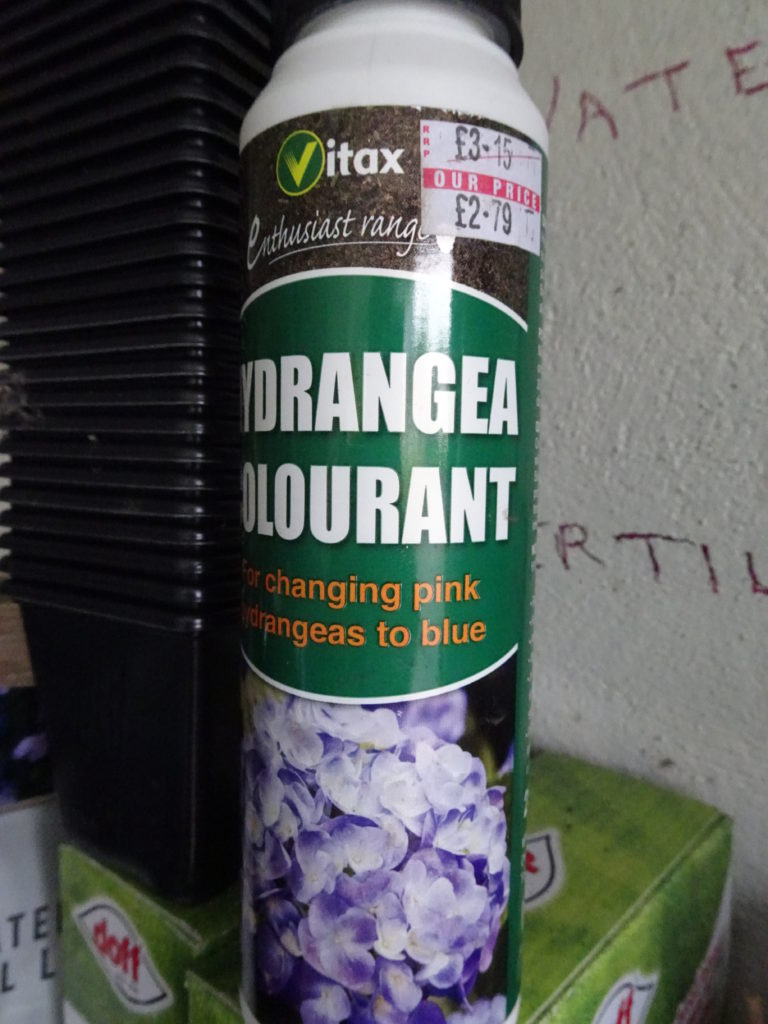
  • The litmus test for plant colourants is generally can they turn flowers from pink or red to a pleasing blue.
  • Hydrangea plants will be blue in acidic soil and pink or red in neutral or alkaline soil.
  • Colourant with aluminium and iron salts turns pale pink florets pale blue and red flowers purplish.
  • Soil acidifiers help make micronutients available
  • Fertilizers containing phosphate salts that typically convert  metal ions into insoluble solids  are of no nutritional value to the plants. A chelating agent that keeps these metal ions in a soluble form.

Other Garden Chemicals

  • Lime is used to increase the ph in the soil to help vegetable crops.
  • Sequestrine plant tonic is a soluble tonic for acid-loving ericaceous plants
  • Baby bio indoor fertiliser liquid has an organic content including  uric nitrogen.
  • Growth and root promoting hormones are now far more frequently found in a gardeners dispensary.
  • Bio- stimulants and flowering enhancers are used in commercial nurseries for plants sold through garden centers and supermarkets.


Alstroemeria Interesting Facts AKA Peruvian Lily

Alstroemeria Interesting Facts AKA Peruvian Lily

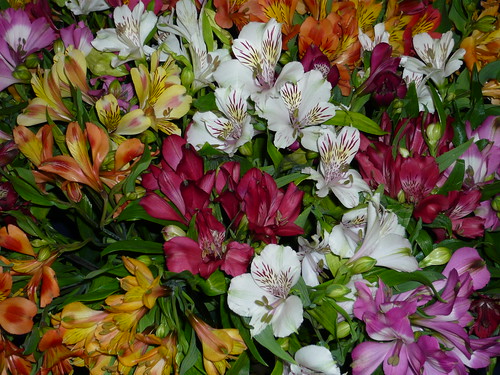
Alstroemeria are a herbaceous perennial with mid-green, lance-shaped leaves and terminal clusters. Petals often have distinctive markings. They originate from Peru, Brazil and mainly Chile which also earned them the name ‘Lily of the Incas’

Interesting facts about Alstroemeria

  • They are well known as a cut flower due to the bright colours and long vase life often of over 2 weeks.
  • When picking the flowers do not cut the stems but pull them vertically with a bit of white subsoil stem. This encourages more flowers through the year.
  • Species and varieties can vary from 12 inches high to 6 feet tall.
  • After extensive breeding there are many new varieties in colour, petal shape and style.
  • The genus has 50 species of tuberous rooted perennials only a few of which are hardy in the UK
  • Sap from the foliage may cause skin irritation
  • Grown in a large deep pot the plants bulk up successfully providing a good display and flowers for the house.

Alstromeria

Alstromeria are available from Thompson & Morgan  

Succulents for the Outdoor Garden

Succulents for the Outdoor Garden

Succulent Excellence

Succulents demonstrate the ability to adapt and survive in the harshest of environments. They are well known for growing in dry inhospitable locations such as desert areas.  As shown in the range of families in this plant group there is an astonishing variety of size, shape, form  and colour to be found.

Book Cover

‘Succulents for the Contemporary Garden’ is focused on the use of succulents in the garden rather than indoor cultivation. It ignores spiky cacti but covers many varieties of herbaceous Euphorbias.

The book contains many excellent photographs of old favorites along with a range of less-common plants with their striking forms and unusual colors.

Mesembryanthemum, Lithops and Conophytum are depicted but, according to succulent grower Terry Smale, it is an error to have ignored shrubby genera such as Ruschia.

Some Succulent Families

  • Agavaceae
  • Aponcynaceae
  • Asclepiadaceae
  • Bromeliaceae
  • Crassulaceae
  • Euphorbiaceae
  • Liliaceae
  • Mesembryanthemaceae
  • Purtulacaceae
  • Plus some from families Sumacs, Aster, Begonia, Morning glory, Gourds, Cycadales, Orchids, Peperomiaceae even vines.


Good Bugs Bad Bugs

Good Bugs Bad Bugs

Bug eyed but not spritely.
Book Cover

During May we featured several common garden pests and bugs. Now before we leave the subject a few more comments.

You can get more by experience or via a book, magazine and further online info sites. eg cut-flower insects and mites

Experience of Bugs
Book Cover

  • If you garden for any length of time or even like to have a bunch of flowers in the house you will be bugged at some stage.
  • Stressed plants can be susceptible to aphids. you should see my lupins after a water shortage.
  • Insects at all stages of their life feed on something and they are likely to affect some of your plants. You should see my stripped French Marigolds at the moment. They were only planted in the greenhouse to keep the white fly off the tomato plants!
  • Slugs and snails and puppy dog tails or at least 2 out of the three will chomp through unprotected plants. My rhubarb has even succumbed this year to holey leaf, still we can’t eat that bit of the plants.
  • Sgt Pepper is the only beatle number I want in my garden not Colorado Beetle or Cucumber Beetle. So far so good but that is tempting fate.
  • My first early potatoes will be picked next week and I hope to have escaped cutworm, wireworm,  tuberworms  flea beetles and sundry maggots. Again tempting fate.

Good Bug

  • Some may think the only good bug is a squashed bug I beg to differ.
  • All gods creature have a place in the choir- some sing loud some sing higher …………
  • Ladybirds other than harlequin ladybirds (Harmonia axyridis) are known for eating aphids so I know which I want in the garden.
Wild Daisy Species

Wild Daisy Species

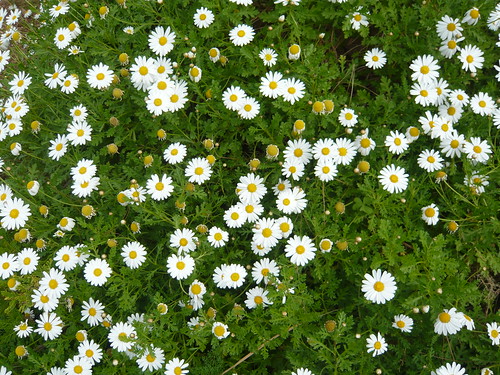
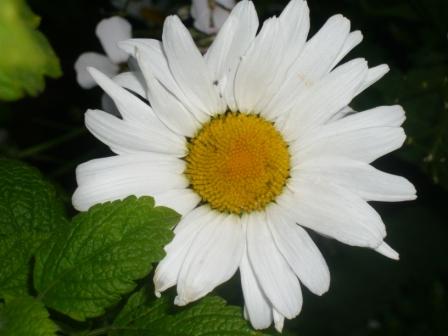
Native daisies are are normally white petaled with yellow florets/capitulum and come from one of the following families.
Tanacetum ferulaceum

A Range of Daisies

Leucanthemum vulgare or Oxeyed Daisy is a meadow plant that can form a clump of large flowers in the garden from may to september.

Tanacetum parthenium or Feverfew – an aromatic plant with light green leaves and small flowers in July & August.

Tripleurospermum inodorum or Scentless Mayweed grows 2 feet high with 1″ flowerheads that have less noticable petals from june to october.

Matricaria recutita or Scented Mayweed is smaller and less prolific in flower than the scentless cousin, flowering may-july.

Bellis perennis – Daisy is the traditional low growing plant with white or pink daisy flowers

Anthemis arvensis or Corn Chamomile is a tall aromatic plant with leaves that are woolly underneath.


Oxeye Daisy

Both the common names and the scientific, botanical or Latin name can provide information and an indication of the Daisy qualities.