Browsed by
Category: Flowers and Plants

Annual, perennial and interesting flowers with advice on culture, information, tips and recommended varieties

Rhododendron Birds

Rhododendron Birds

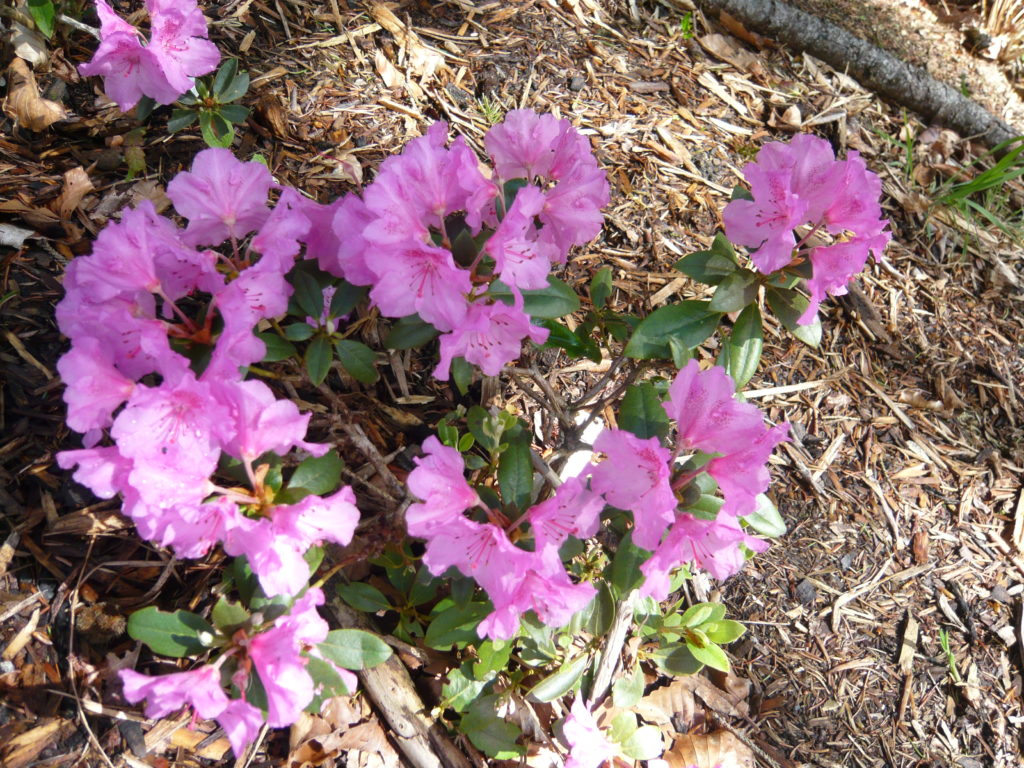
Widgeon

Rhododendron Widgeon was been beaten to a great post by Jo Hanslip on insane journal

‘The Glendoick Bird Hybrids

The Bird series of dwarf rhododendrons were developed at Glendoick Gardens, in Scotland, and are classified as Dwarf Lepidote Hybrids.

The great plant hunters Ludlow and Sherriff returned to Britain in the 1950s. George Sherriff and his wife started a garden only 50km away from Glendoick and they became great friends of the Coxes. On an early visit to their home, Ascreavie, Peter Cox spotted a dwarf yellow-flowered rhododendron species with enormous bowl-shaped flowers for the size of the plant which turned out to be … Rhododendron ludlowii.

The Sherriffs allowed Peter to take some pollen home, which he applied to R. chryseum …  In due course, the hybrid R. ‘Chikor’ was selected and named from this cross and … given an Award of Merit by the Royal Horticultural Society.

A chikor is a game bird and this started the theme of naming all dwarf lepidote hybrids after birds, another prime interest of Peter’s. From then on, several dwarf crosses were made every year with Kenneth Cox starting to make his own crosses in the early 1980s. There are now 30 Glendoick birds which are popular with gardeners and rhododendron collectors in many parts of the world.

BRAMBLING 90cm. New Glendoick hybrid with brightest pink flowers in multiple clusters in April. Fine dark foliage.
CHIFF CHAFF 60cm. Masses of creamy yellow flowers in early May. A neat bush with handsome dark foliage. One of the original bird hybrids, raised in the 1960s.
CHIKOR 30cm. Bright yellow flowers in May. The first Glendoick Bird hybrid. Compact twiggy growth. Needs cool roots & good drainage.
CRANE 75cm. Creamy-white flowers in April. Hardy, very free-flowering and easy to please. One of the best white dwarf hybrids.

Read More Read More

Edible Hedges You Can Grow & Pick

Edible Hedges You Can Grow & Pick

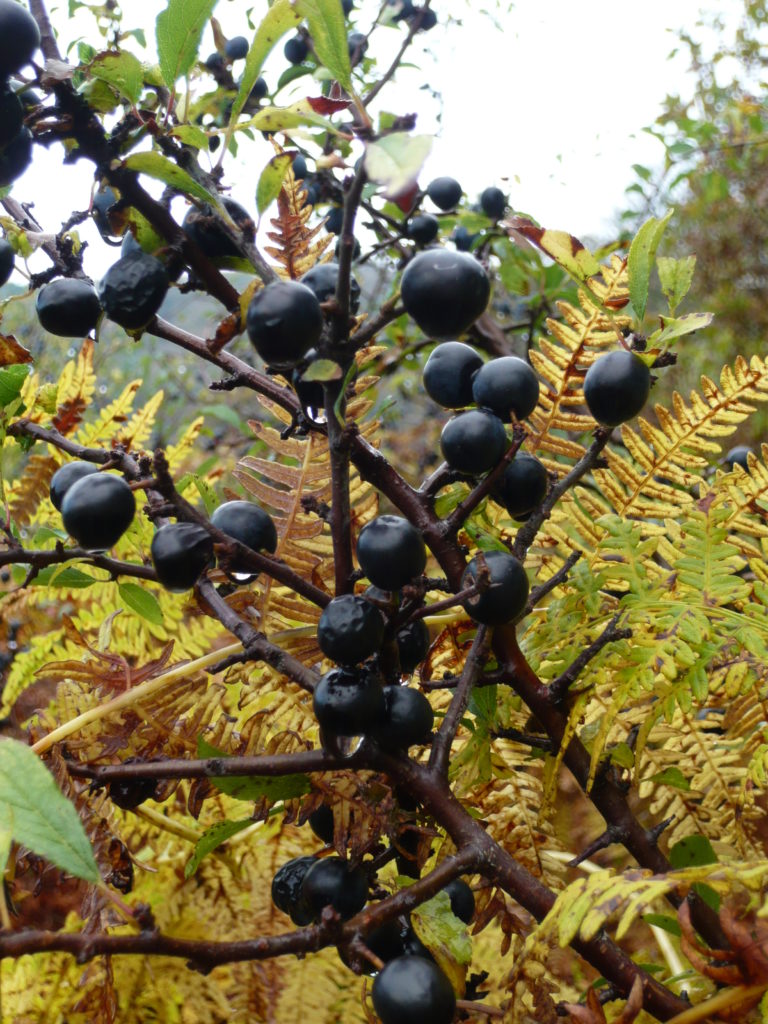
Sloes and damsons are in good supply this September in your local hedgerows. I have relied on my own blackberries this year but from the train window yesterday there were masses of plump black fruit for picking.

Forage amongst the book shelves to get a cornucopia of edible wild plant ideas.

Book Cover
You can plant your own edible hedge now until late March which will give you a supply of edible fruit and berries for years to come. Bare rooted plants are very reasonably priced.

Easy Step by Step Hedge

Clear the ground to remove weeds and old roots by digging or using Glyphosphate based weedkiller. Leave for a few weeks.
Pick a frost free day and when ready to plant put bundles of bare rooted plants into a bucket of water to give them a drink.
Mark out the line of the hedgerow bearing in mind you will want two staggered rows of plants. You can put down mulch matting and plant through it if you wish.
You will need 4-5 plants per square yard.

Read More Read More

Contorted Stems for Ikebana Flower Arranging

Contorted Stems for Ikebana Flower Arranging

Winter Interest

Growing Corkscrew Hazel for Flower Arrangements

  • Corylus avellana Contorta is also known as Harry Lauders Walking Sticks or Corkscrew Hazel
  • It is a slow growing deciduous shrub that can grow to 20′ wide and 25′ high when mature.
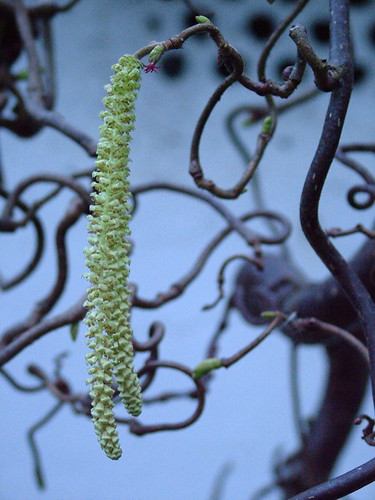
  • Corkscrew Hazel looks best in winter and from February-March there are pendant male catkins on the bare branches.
  • Propagation is best done by layering branches.
  • When in leaf the mid green leaves give an ugly deformed appearance.

Special Tips for Flower Arranging with Corkscrew Hazel

  • Use the twisted stems and bare twigs in winter arranging.
  • Twigs in bridal bouquets can add movement and interest.
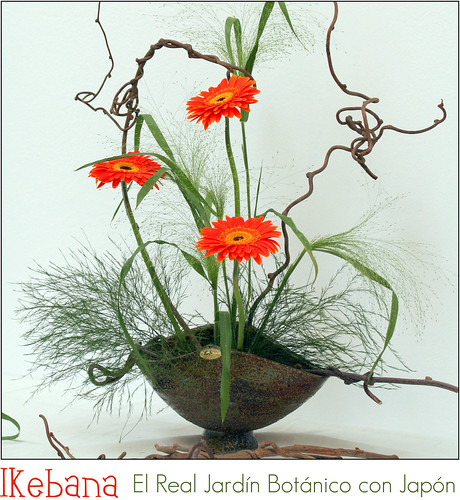
  • Corkscrew Hazel are popular as a base for Ikebana
  • Catkins will gradually lengthen and become more yellow when kept in water for several weeks.
  • Twigs can be dried and used year after year. They can also be painted for Christmas.

Spring

A full array of books on Flower Arranging and related subjects is available from Amazon. You will find more advice and artistic inspiration amongst this selection.

Special Tips for Flower Arranging with Contorted Willow

  • I have included Contorted Willow with Corkscrew Hazel as the issues, effects, tips and methods are quite similar.
  • Twigs and stems can be dried and used several times or be sprinkled with glitter for Christmas.
  • The cut twigs will last several weeks and eventually the willow leaves will open on the stem.
  • Contorted Willow is available under several names including Salix matsudana Tortuosa (Salix babylonica tortuosa), Salix x erythroflexuosa or common names Dragons Claw and Tortured Willow.
  • Salix the Willow family are more vigourous than the Corylus Hazels

Contorted Willow
Credits
Ikebana by M. Martin Vicente CC BY-NC-ND 2.0
Corylus avellana ‘Contorta’ by Stadtkatze CC BY-NC-SA 2.0
Spring by David Davies CC BY-SA 2.0
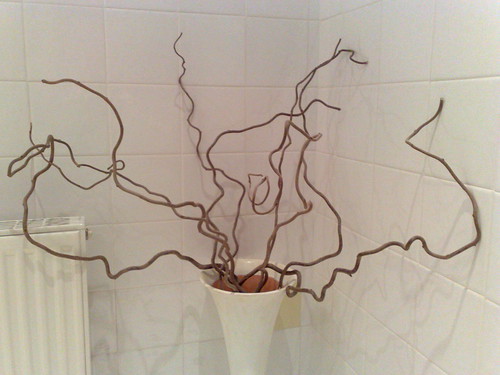
Contorted Willow by touring_fishman CC BY-NC-SA 2.0

To grow a generic mix of flowers for arrangements and bouquets check out Thompson & Morgan

Book Cover
Ikebana: The Art of Arranging Flowers by Shozo Sato and Kasen Yoshimura

Corkscrew Hazel and Contorted Willow are plants that both produce twigs that add movement and style when flower arranging. Mix with just one type of flower as less is generally more with Hazels and Willows.
Turn your arrangements into botanical works of art – here are some examples and clubs you could join.
Ikebana
Corylus avellana Contorta the Corkscrew Hazel aka Harry Lauder’s Walking Sick first discovered in 1863. Slow growing eventually reaching 20′ high and wide unless pruned for flower arrangements. Autumn cob nuts produced. Hazel catkins in spring. Cut twigs last well in water


  • willow leaves will lengthen. Catkins will open and yellow pollen will show
  • twigs can be dried by hanging upside down then used year after year.
  • twigs can be painted
  • use for christmas decorations, bridal bouquets
  • mix with flowers cut at different heights
  • Contorted Willow   Salix matsudana tortuosa aka S. babylonia var pekinensis, Dragons Claw, Tortured or Corkscrew Willow fast growing hardy deciduous tree
  • Salix x eryroflexuosa branches of rich chestnut colour and a ocher -yellow trunk – also hardy
Bindweed Wild Flower Varieties

Bindweed Wild Flower Varieties

The bindweed family comprises of several varieties seen as wild flowers in the UK together with some other species including convolvulus and polygonum. They can be a nuisance in the garden with brittle roots that make them hard to eliminate.

BEST LEFT IN THE WILD!

Field bindweed (Convolvulus arvensis)

Wild Bindweeds

Calystegia soldanella – Sea bindweed pink flowers with white stripe may-Aug

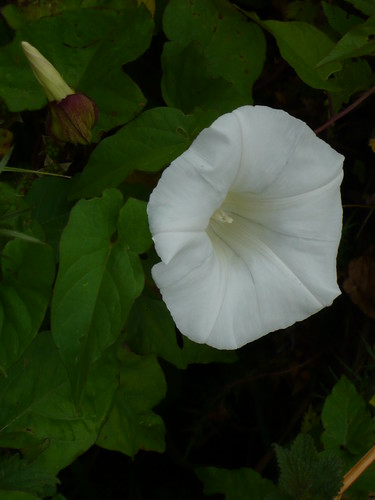
Calystegia sepium  – Hedge bindweed  or  Bellbine, Rutland Beauty, Hedge False Bindweed, Wild Morning Glory with white funnel shaped flowers June-Sept

Calystegia silvatica – Large bindweed with white or pink striped flowers

Black bindweed is part of the dock family Polygonum convolvulus few flowers in pale green

 Convolvulus arvensis – Field bindweed

Calendula Calendar

Calendula Calendar

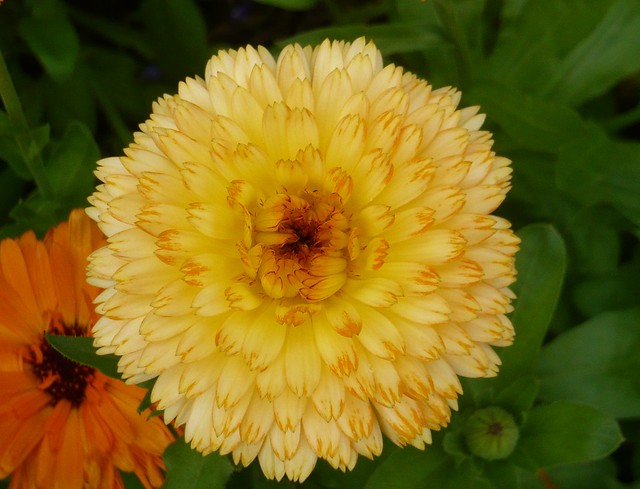
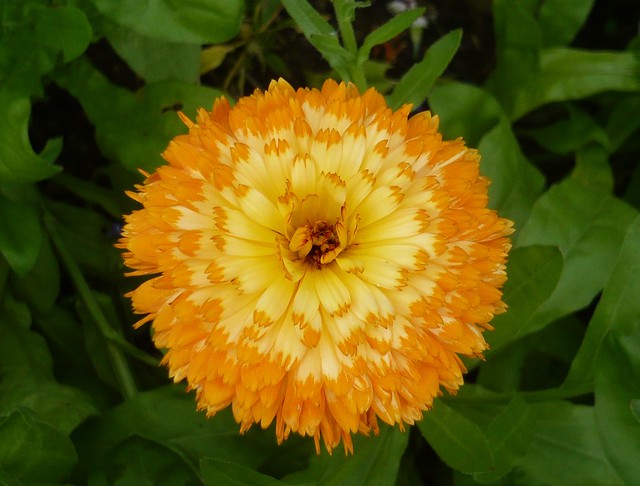
Menston Calendula

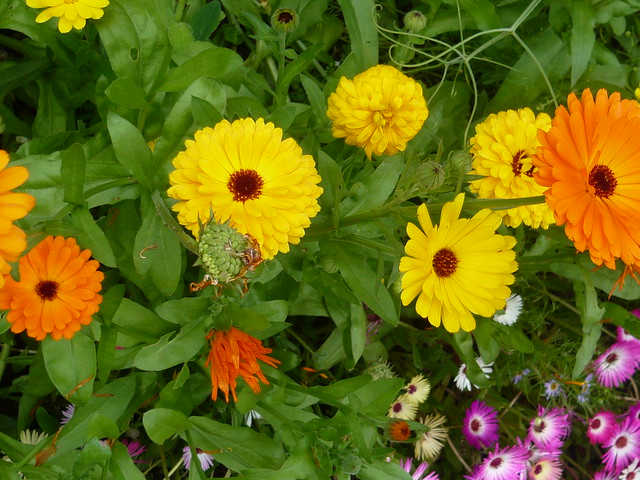
Orange or Yellow are the signature colours of Pot Marigolds more correctly named Calendula officinalis.

Pot Marigolds are typically grown as an annual or biennials but can be cultivated as a short-lived perennial.

Calendula are also called  English, Field Marigolds, Scotch marigold or Ruddles but are unrelated to African or French marigolds.

Menston Calendula

Varieties to Consider

  • Golden Princess;
  • Orange Princess;
  • Calypso Orange;
  • Radio;
  • Triangle Flashback with double flowers in shades of apricot-pink with a maroon 
  • Deja Vu
  • Pacific Beauty a mixture
  • Sherbet Fizz

Menston Calendula

Grow From Seed

  • Sow in autumn to over winter or start indoors before the last frosts.
  • Avoid warm propagation temperatures, as they will produce weak plants.
  • Keep the seeds covered with soil, as light inhibits germination.
  • After germination good light will help create bushy plants

They may look like daisies because they come from the same family asteracea

Hosta Little Tips

Hosta Little Tips

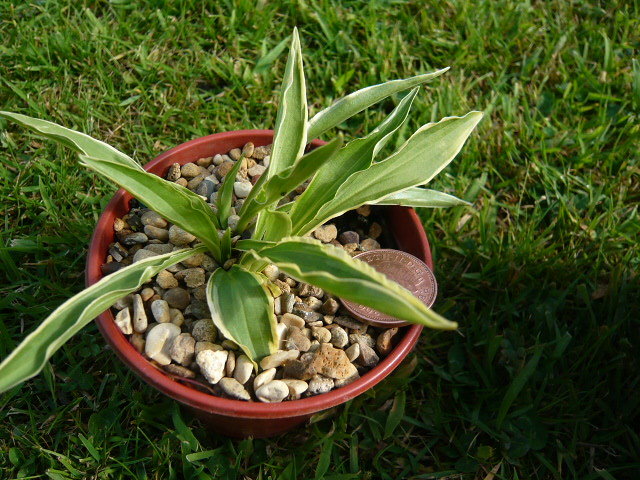
otley show hostas 035

I am no great fan of large leaved hostas probably due to lack of space in my garden where I prefer to grow other plants. However the dwarf varieties are easy to get on with.

An alternative name for Hostas is Funkia. That appeals to me and helps describe how the plants can create congenital abnormalities and abnormal formations. (Teratology).

Small Hosta Tips

  • There are a host of varieties to start to growing and collecting may become an obsession. There are 49 named varieties of ‘mouse-ear’ varieties alone.
  • Water well in spring even before the first leaves show. Roots need water particularly as the light increases.
  • The better the roots the better the plants will display.
  • In spring restart the plants with slug bait, slow release fertiliser and a mulch.
  • A weak solution of Tomorite makes a good foliar feed.
  • Epsom salts will provide needed magnesium when the leaves have hardened in early summer.
  • Water  lightly  in autumn to fatten up the roots for winter.
  • Allow plants to make good clumps. Leave for 3 years or so before dividing. I tend to be too impatient dividing to get more plants.
  • Encourage flowers and collect seed to increase your stock.
  • The more light a hosta gets the more water it needs.

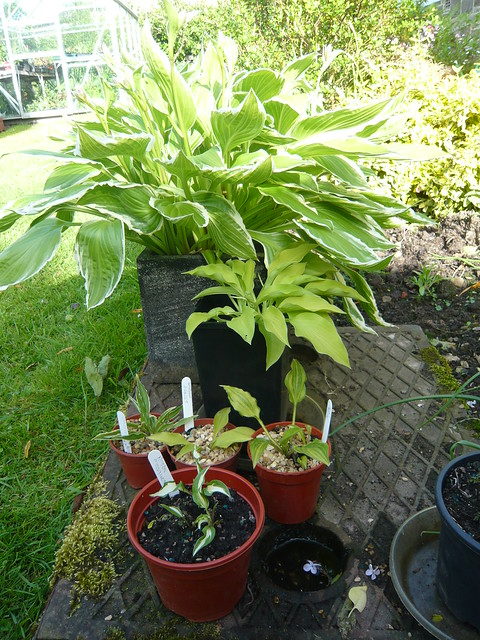
otley show hostas 050

Carnation Street

Carnation Street


Green fingers held this wet carnation still for a photograph of the captivating colour scheme. I have loved carnations for over 60 years but never really got on top of growing or breeding for showing.

Carnations through the Ages

  • Dianthus caryophyllus have been around for over 2000 years well known to the ancient Greeks. Since that time they have been bred into a vast range of varieties.
  • Standard Carnations are the large single headed varieties grown in a greenhouse environment.
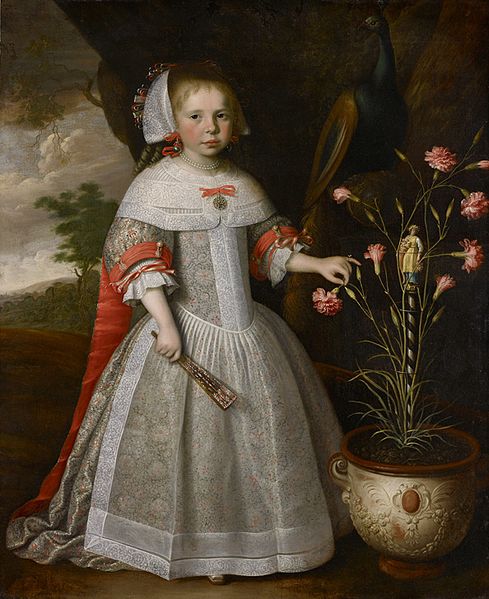
  • Hardy border carnations of the sort by family grew in their little cottage the 1950’s. These are the family of carnations that were depicted in old Flemish paintings.

Jan Albertsz Rotius – A Four-year-old Girl with a Pot of Carnations – 1663

  • Perpetual flowering carnations well-loved by the florists who sold these by the million as one of the longest lived cut flowers. Now overtaken by supermarket and garage forecourt sales of bunches in plastic.
  • Vintage varieties  have been very popular in bridal bouquets for years
  • Spray carnations have multiple flowers per head by removing the terminal bud and leave the side buds to flower.
  • Pinks have smaller flowers than carnations and either single or double.


The British National Carnation Society   growing the flowers of the three main types of Dianthus – Pinks, Border Carnations and Perpetual-flowering Carnations.

Help Plants Through a Wet Winter

Help Plants Through a Wet Winter

Plants can drown when roots are left in wet soil for protracted periods. Short immersion whilst dormant is seldom fatal but saturated soil drives away the oxygen needed by plants to help them transpire.
Also in winter some plants are prone to root rot Phytophthora or rot off at soil level.

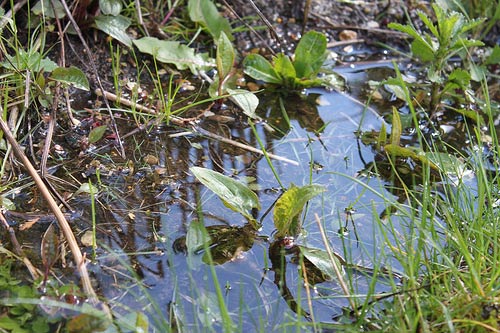
waterlogged garden

Not Waving but Drowning

Selecting Appropriate Plants for Wet Winters

  • Avoid silver leaved or grey perennials.
  • Mediterranean hot arid loving plants and many alpines do not like our cold, wet winters.
  • Pot plants that suffer quite easily and can die include Orchids, African Violets and other fleshy rooted plants.
  • Bog lovers, Hydrangeas, Cornus, Dogwoods and Hosta are just some of the plants that may thrive through a wet winter.

Improving Survival Chances

  • Wet soil is created by compaction or because of a high water table and poor drainage.
  • Incorporating grit or pea gravel as a surface mulch will help keep the base of the plant drier.
  • Plant on top of a slight mound
  • Improve drainage by spiking, trenches and with soak-aways or land drains.
  • Avoid compacting the soil by walking on the ground when it is wet.
  • Work your soil and dig in organic matter during the other seasons.
  • Spring flooding is especially dangerous when plants and roots start to respire. Divert excess water and be prepared

Pot Grown Plants

  • Lift pots off the ground with pot feet or onto bricks.
  • Lay pots on their side to avoid excessive rain settling on the center of the plants.
  • Improve drainage by incorporating perlite and coarse grit in the compost.
  • Move pots under cover or into a rain shadow.
  • Put a slanted pane of glass or cloches over special plants. Allow air to circulate.
Selecting a New Apple Tree

Selecting a New Apple Tree

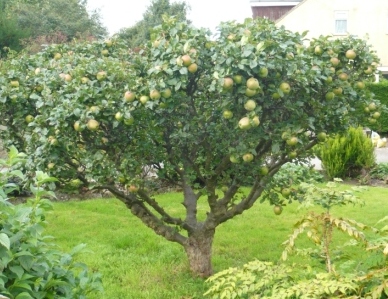
There are over 7000 different varieties of apple tree including those classed as eaters, cookers, crab or cider apples. 10% of these are available from RHS plant finder recommended nurseries.

Horticultural Considerations

  • Your apple tree should last a long time and be fruitful and satisfying. It is worth taking care to get the selection right.
  • The growth and size of your tree will depend to a large extent on the ‘rootstock’. The most common rootstocks are M27 5-6 feet tall, M26 8-12 feet tall and MM106 12-18 feet tall.
  • Some varieties of apple in clay based soil may grow slightly quicker and larger than an apple planted on light, sandy or chalky soil.
  • Most apple trees need another cultivar to pollinate their flowers and set fruit. It must flower at the same time. Triploid trees are very poor pollinators.
  • Some varieties are more disease resistant than others. Seek out award of garden merit AGM varieties or discuss with a specialist nursery.

Personal Selection Criteria

  • Warm country imports from supermarkets often have less flavour than your home grown apples.
  • Autumn apple days are held around the country and can offer a wealth of local advice. Sample tasting may be possible or you can select trusted well known favourites.
  • How you want to grow your tree can affect the selection. A trained espalier tree or cordon grown on a slant, a ballerina tree grown in a large pot or a ‘step over hedge’ tree are currently popular in designer gardens. The choice is yours but plan now for planting later this autumn.
  • Two year old trees will cost more but crop sooner than maidens.

Bromeliad, Vriesea and Guzmania

Bromeliad, Vriesea and Guzmania

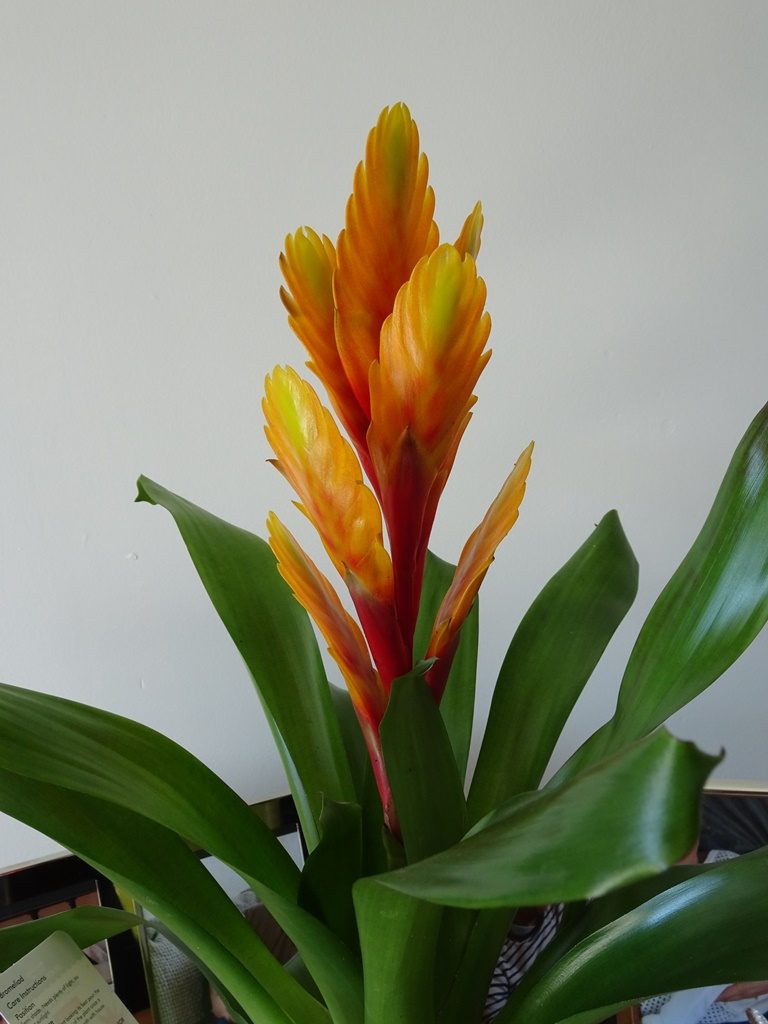
Most Bromeliad of the thousands of species are tropical plants. In the UK they make good house plants and pot plants for a conservatory. Others plants in the same family are the  genus including  Aechmea, Neoregelia, Vriesea and Guzmania

Bromeliad Care

  • The foliage  grows in a natural rosette of sword shaped leaves.
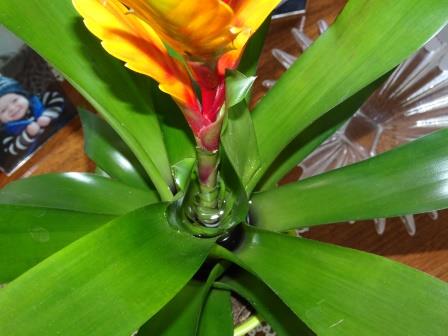
  • A central cup of leaves catches water in the plant’s natural habitat. In the home just top up this cup with soft water once a week. Over-watered  can cause root rot.
  • Use a liquid feed once a  month but not via the cup.
  • Avoid direct sunlight but the plants need plenty of light. Semi-shade is ideal.
  • Keep the air humid by putting the pot in a saucer of gravel.
  • The brightly colored leaves are  called bracts.
  • After flowering the Bromeliad may start to produce offsets called pups.

 Water in the ‘cup’
Kew 092
Guzmania