Browsed by
Category: Flowers and Plants

Annual, perennial and interesting flowers with advice on culture, information, tips and recommended varieties

Gardening Holidays to Dream About

Gardening Holidays to Dream About

Real gardeners don’t want to go on holiday between April and September as there is too much fun to be had in the garden at home. There are other matters that come into play and well planed holiday can also give a keen gardener new interests and ideas.

Temptations are now wide spread in the form of organised tours
Alternatively you can make your own arrangements which retains flexibility and the opportunity to please other members of the family. In addition to UK resorts like  Cornwall and the Scilly Isles there are many hidden gardens in The Languedoc region of France, Monet’s Garden at Giverny, Gardens of Tuscany, the Italian Lakes, Sorrento, Ischia,  and Green Spain to list but a few.

Grow Dog’s Tooth Violet or Dog’s Tooth Lily

Grow Dog’s Tooth Violet or Dog’s Tooth Lily

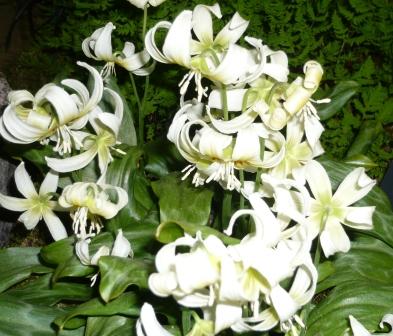
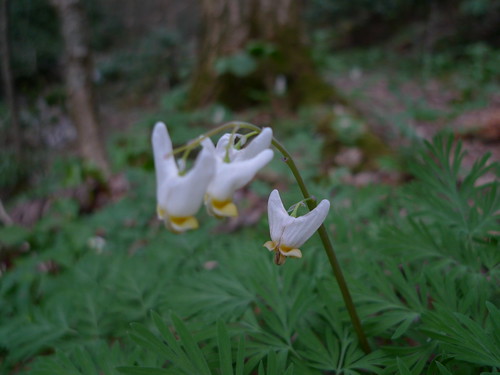
erithonium-2

Dog’s tooth violets are lilies that grow wild in cool shady locations and flower in spring. They can be grown to good effect in your garden.

What is a Dog’s Tooth Violet

  • The dog tooth violet belongs to the genus Erythronium and is a type of lily not a violet.
  • It gets its common name from the white oblong corm that resembles a tooth and the flower which resembles a violet.
  • Other names include trout lily, snow lily, Fawn lily or an adder’s tongue.
  • Dog’s Tooth Violets grow in shady cool conditions and flower at their best during March & April.

Varieties of Dog’s Tooth Violet

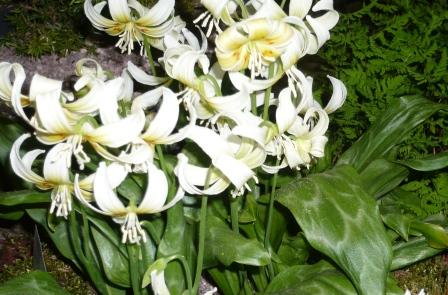
    Erythronium californicum ‘White Beauty’ is the easiest Dog’s Tooth violet to grow with its white flowers and a yellow centre. It is a classic spring flowering bulb with their Turk’s cap flowers that are an eye catching white. They delight in a humus rich soil either acid or alkaline and are good in dappled shade under deciduous trees in a soil that dries out in Summer. They like growing in similar conditions to Snowdrops, Trilliums and Cyclamen with which they partner quite successfully.

    Erythronium revolutum
    grows about 1 foot tall and has pink flowers. . The colour in this Dog’s Tooth Violet varies and it is worth getting a strongly coloured and vigorous form such as ‘Knightshayes’ Pink’. Buy seeds from Thompson & Morgan

    Japanese dog's tooth violet

    Erythronium ‘Pagoda’ is quite a vigorous hybrid which is easily grown with lemon yellow flowers and bronzed foliage. It has large leaf growth and looks a bit untidy after flowering but is amongst the best Dog’s Tooth Violet for trouble free growing. Citronella is another yellow variety to grow for naturalising.

    etithonium-3

    Erythronium Dens Canis (Dog’s Teeth) can be bought in mixtures and are excellent for naturalising given the right conditions of moist partial shade. They tend to be lower growing than the other species mentioned above and are often found in the wild.

    If you want to know more about Erythronium they are well covered in Gardening with Woodlands Plants

    Read about Sweet Growing Violets
    Book Cover

    Dog Tooth Violets

    Credits
    Japanese dog’s tooth violet by kamonegi_jp CC BY-NC-ND 2.0
    Dog Tooth Violets by RobMan170 CC BY-NC-SA 2.0

Senicio Daisies of the Pericallis Genus

Senicio Daisies of the Pericallis Genus

Last year I looked at the naming for one of my good doers under the title ‘Senetti, Cineraria or Senicio? No Pericallis’. Pericallis is the small genus of Daisy like flowers and Senicio is the name I will use until I know better.
I updated the post with my growing and flowering experience.

Now I have some colourful photographs of related Daisy plants growing as indoor pot plants.

sennico 026

Daisies with salmon petals with white inner rings and yellow pollen are one of my favourites.

sennico 024

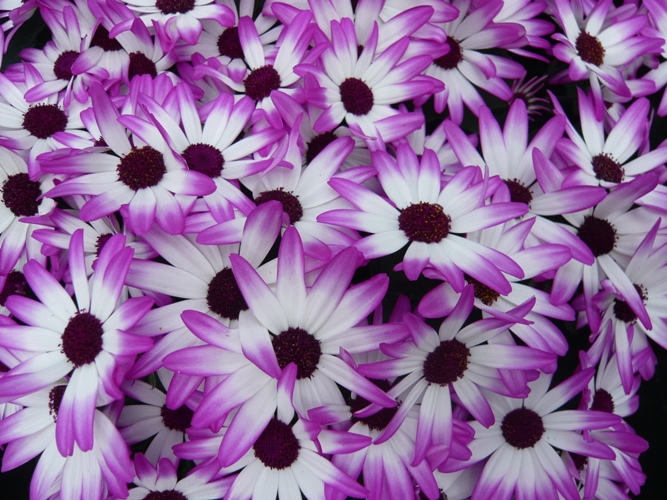
Senicio Daisies come in a variety of strong colours including deep pinks above, purples and electric blues.

sennico 021

Pericallis is not a common genus in horticultural use. These Daisy like plants have been bred of retail sale when in full flower so in those circumstances they need a trade name.

sennico 023

Whatever the name the inner disc displays the Compositae attributes of the daisy family.

sennico 018

Shocking Pink almost fluorescent pink on the plant below.

Senicio

Red Shoots of Growth

Red Shoots of Growth

Yes it seems strange but some of the new spring shoots in the garden are deep red.

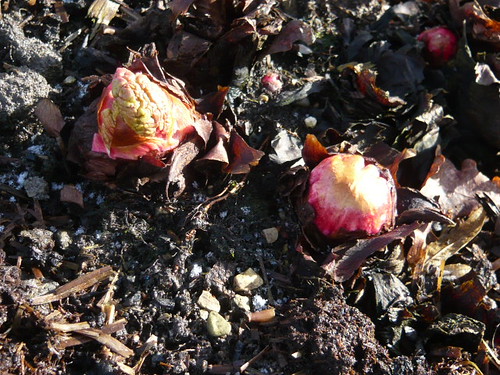
Rhubarb buds

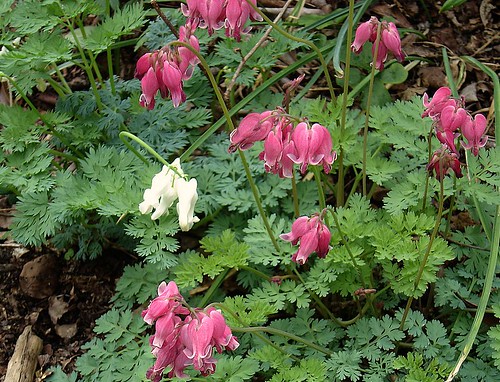
The bleeding heart or Dicentra Formosa is growing rapidly from red shoots to red stalks the plant will soon blossom with the heart shaped flower.

The strongest red and my favourite is the shoot of the paeony. When they are just breaking through the ground the look like little short domes of  a strong glossy red. Well established plants produce a large number of shoots which augers well for a show of blossom in June.

I have just seen frondy red stalks from a spirea in a neighbour’s garden and the red buds of my Rhubarb have just shot in to bright green leaf with swelling red stalks.

Don’t let anyone tell you spring is only for the yellows, look around at soil level and I hope you will agree.


Top Peony Photographs & Images

Top Peony Photographs & Images

Peony
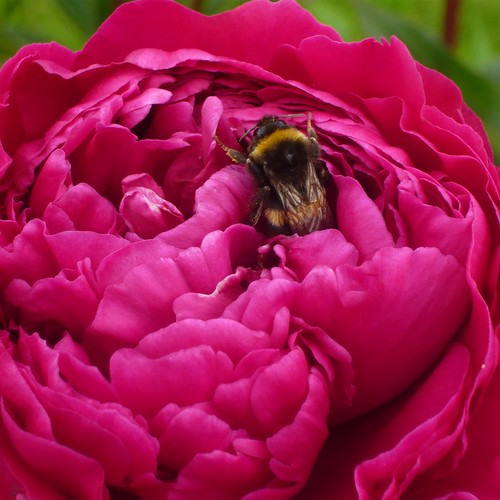
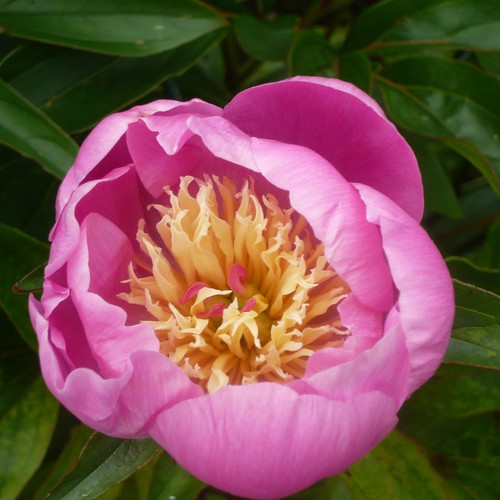
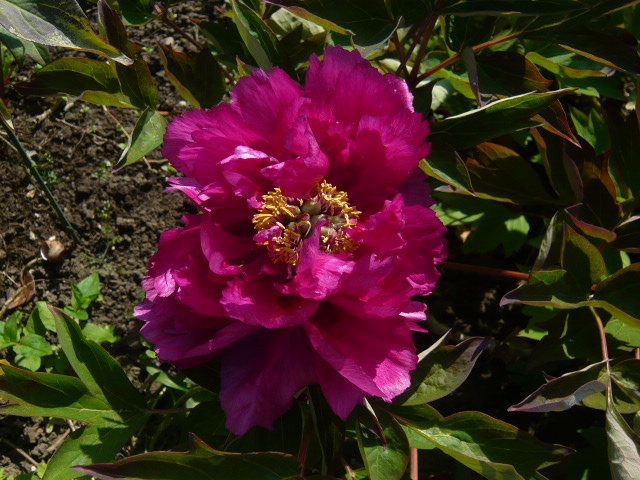
Busy bee image on my favourite magenta flowering Peony.
‘Peonies, Peony, Paeonia, Paeoniaceae In Profusion’ a Peony by any name would photograph as well!

Peony

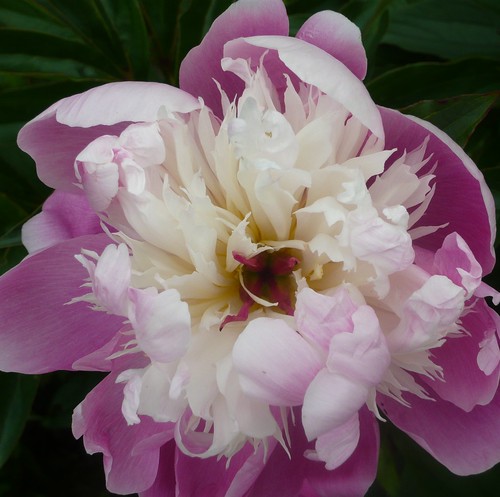
Peony lactifolia a Bi-colour with pleasing habit and photogenic quality.

Peony

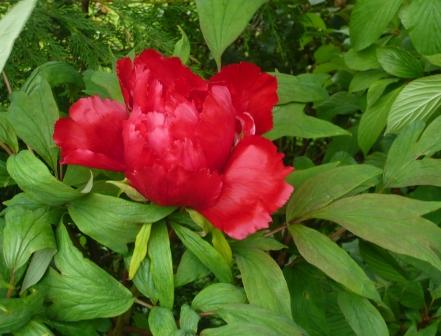
A single Peony that shows how well red flowers contrast with green leaves.

Frank Newbold peony

Peony Frank Newbold

Peony

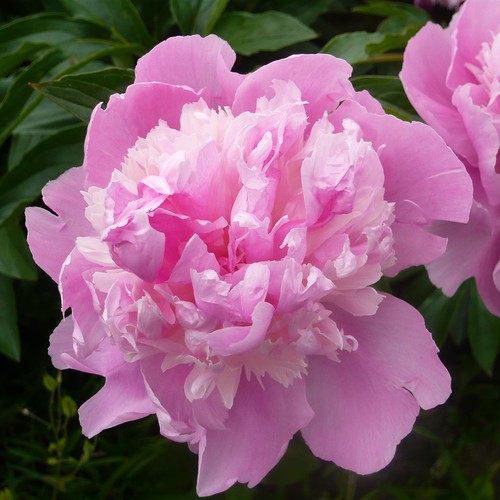
Peony Sarah Bernhart a fluffy pink photograph.

Peony Lutea

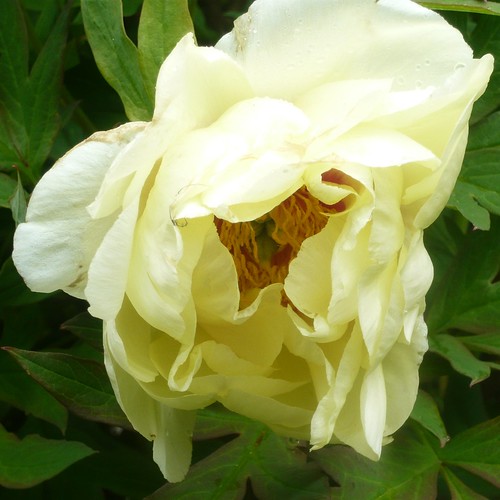
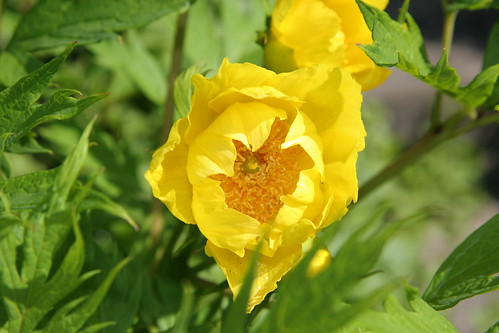
Peony lutea the parent of many Peonies and the best yellow image by far.
Growing Peony or Peonies

Tree Peony

peony

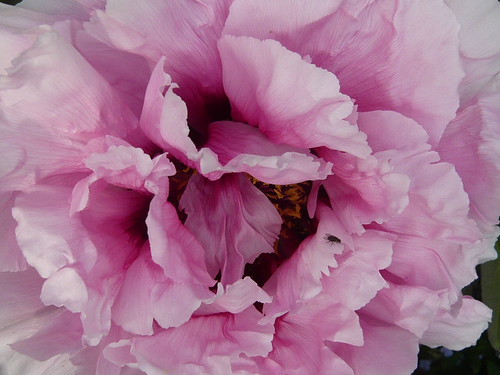
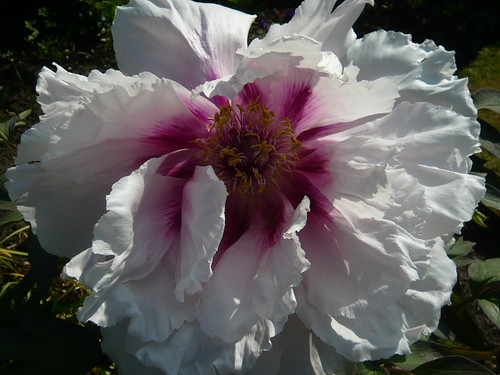
Intensly coloured, dinner plate sized flowers are an image to behold.

Peony

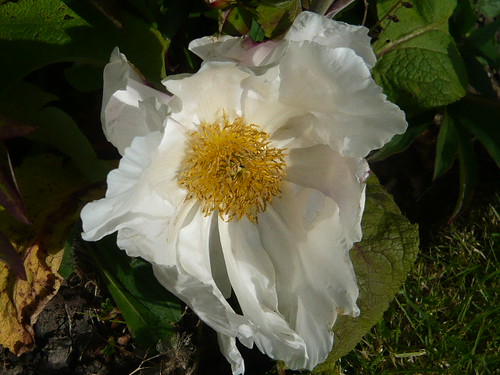
Pure and white from a root stock. Growing Tree Peonies

Peony

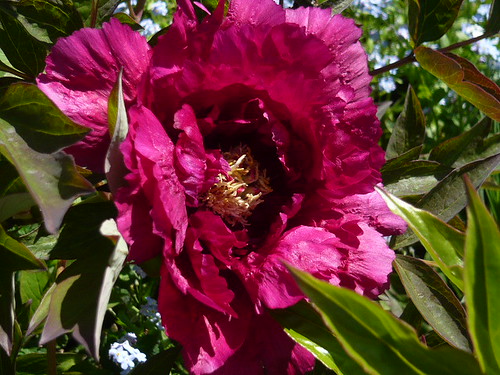
Less scented but still vivid photographs from this deep red-maroon.

Tree Peony
Photograph credit Tree Peony by webmink CC BY-NC-SA 2.0

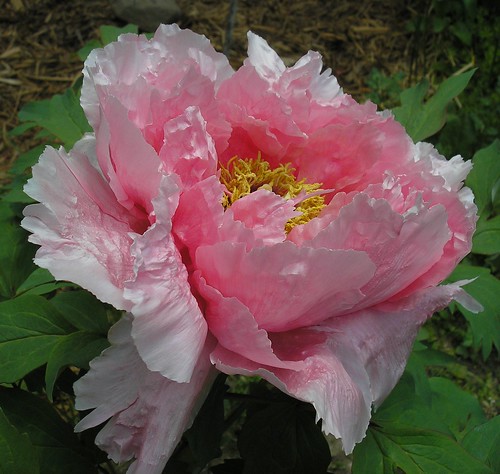
Pink Tree Peony

Photograph credit Pink Tree Peony by buttersweet CC BY-NC-SA 2.0

Book Cover
The Gardener’s Peony: Herbaceous and Tree Peonies by Martin Page
‘Over 200 photographs accompany detailed plant descriptions that will provide an invaluable reference source to peony enthusiasts….. Peonies are virtually unrivalled in a their ability to bring impact and drama to a garden. Once established they flourish for decades, bringing large quantities of flamboyant blooms in a magical range of hues and outstanding, often finely cut foliage. This informative guide highlights the best peonies for gardeners, paying particular attention to the tree peonies, herbaceous hybrids and the latest cultivars of Paeonia lactiflora. The Chinese have been growing tree peonies for 1600 years but these exotic plants still make a novel addition to the Western garden. A full-size plant bearing dozens of flowers is an awesome sight and the selection here includes the best of the Chinese and Japanese cultivar ranges, the classic hybrids and the sought-after hybrids raised by Arthur Saunders in the 1930s that range in colour from yellow to mahogany-red. Enthusiasts of herbaceous peonies will delight in the selection of Paeonia lactiflora cultivars along with the new complex hybrids between P. lactiflora, P. wittmanniana and P. macrophylla. Over 200 photographs accompany the detailed plant descriptions to provide an invaluable reference source. Advice on buying peonies along with detailed cultivation requirements for the individual groups will ensure success in the garden, while information on the history of peonies, conservation issues, and morphology complete this authoritative review. ‘

Also by Martin Page The Gardener’s Guide to Growing Peonies
Book Cover

Book Cover
Peonies: The Imperial Flower by Jane Fearnley-Whittingstall lavishly illustrated with paintings and photographs which are both informative and appealing.


The Peony Society formerly the British Peony Society link

Tree Peonies like Dinner Plates

Tree Peonies like Dinner Plates

tree peony

Fantastic, traffic stopping flowers at least 12 ” across are a wonderful feature of some Tree Peonies.

Tree Peonies

  • These slow growing shrubs reach around 4 foot high and wide.
  • They are drought tolerant but should not be made to compete with larger trees for water.
  • They are reasonably easy to grow in deep loamy soil.
  • In China they are mountain plants so survive our winters quite well.
  • Grafted shrubs are available in garden centres. They may send up suckers of herbaceous peonies that need cutting out (the leaves are greener and are not as finely cut as tree peony leaves).

Varieties of Tree Peony

  • I bought some varieties 2 years ago ‘Yu Lou Dian Cui’, above, looks white with pink overtones and ‘Shan Hu Tai’ is a strong pink really a red.
  • P Delavayi bears scented crimson flowers on 5′ stems whilst P lutea ludlowii has yellow flowers.
  • A good selection of Tree Peonies and Peony lactifolia are available from Peonies Thompson & Morgan

tree peony

Old Comments on Tree Peonies

Tree peonies These shrubs grow to about 4 foot square and are drought tolerant. Do not provide extra water or allow the roots to suffer from too much competition from other trees. P Delavayi bear crimson flowers on 5′ stems whils P lutea ludlowii has yellow flowers. They are reasonably easy to grow in deep loamy soil. In China they are mountain plants so survive our winters quite well. Grafted shrubs are now freely available in garden centres. I bought two varieties this weekend ‘Yu Lou Dian Cui’ what looks like a white with pink overtones and ‘Shan Hu Tai’ a strong pink. I have nipped out the flower buds that were showing and will wait until next year to see what colours I get.

Other Peony Comments
I am fond of the double peonies that flower so extravagantly in June. Over the years the plants give a great deal of pleasure lots of colour and a light and welcome spring perfume. That is not to say the single and specie Peonies are not also worth a place in the garden.

  • As plants mature they bulk up well and produce ever larger numbers of stalks and flowers.
  • Peonies dislike root disturbance and take a while to settle down
  • Provide a rich deeply dug soil well manured before planting and you will be rewarded for years
  • Water in dry summers and top dress in Autumn this well rotted compost
  • The single varieties include a yellow type Peony Mlokosewitchii
  • 6″ White flowers with yellow stamen P. Lactiflora varieties are readily available
  • The pink P. Sarah Bernhardt has an AGM award for the large scented blooms
  • The strong reds of the common Peony are very good for a cottage garden
  • Blooms make good cut flowers
  • Float one flower head in a bowl of water for an interesting table centre piece

Peonies and special fertilizer from Thompson & Morgan

Tidy Up Your Untidy Bluebells

Tidy Up Your Untidy Bluebells

spring

Bluebells can become invasive in the garden and become too much of a good thing. The bulbs go deep down into good soil and if you want to remove them they must be dug out totally. The white bulbs throw off little bulbils and they will grow back unless you clean up the soil to at  least 12 “. If your garden veers towards the more formal you may wish to tidy up by removing the bluebells.

After flowering the leaves of Bluebells loose the turgid nature and spread in a slimy manner over an 18″ diameter inhibiting other follow-on plants. To tidy up I pull up the clumps of leaves, stalks, seed heads and all to clear the ground. They come up very easily breaking off from the bulb and leaving that for future years. If I do it early enough the bulbs will weaken and flowers be poorer next year but as you may guess I am no great lover of Bluebells except in woodland situations.

Varieties of Bluebell


Spanish Bluebells
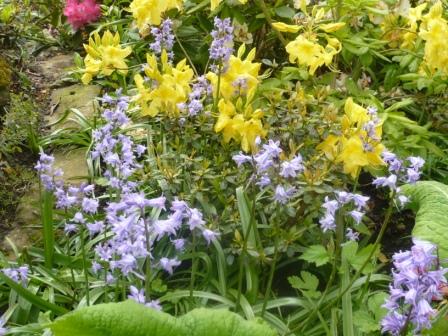
Hyacinthoides hispanica are more invasive and are pushing our own native species out. If the flower spike is stiff and upright, flowers broadly spreading and petals usually not rolled back with clear blue Anthers you have Spanish Bluebells Hyacinthoides hispanica. They are unscented. Italian Bluebells Hyacinthoides italic are quite similar but less invasive.

English bluebells Hyacinthoides non-scripta have narrow leaves with scented flowers of straight-sided bells, petals that are rolled back (recurved) and Anthers which are creamy-white. The nodding, violet-blue flowers of these hardy, native bulbs attract insects to their delicately scented flowers. Bluebells grow best under the dappled shade of deciduous trees. It is illegal to take these plants from the wild, they must be acquired from a reputable source.

There are also hybrids of the two key varieties and most of my Bluebells must be the Spanish variety so out they will come.
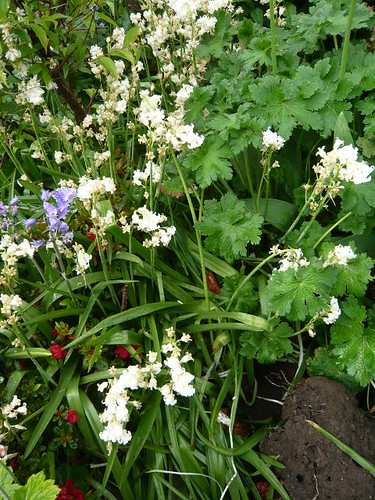
White Bluebells
These White Bluebells are running to seed. Take off seed heads to stop profligate self sowing.

Naming The Bluebell

  • The botanic name is now Scilla campanulata and you can often buy bulbs under this name.
  • Previously they were classified as Endymion who was a mythical Greek. Endymion campanulatus, Endymion hispanicus, Endymion patulus, and Scilla hispanica have also been used.
  • Another common name ‘Wood Hyacinth’, seems to describe the plant and its preferred location.
  • There are now many hybrid ‘Bluebells’ mixed with these white bells with names that indicate the colour eg Mount Everest (white) and Azalea (pink).

Bluebells look and smell marvelous in a deciduous wood but the Spanish bluebell in your garden can be a thug that needs tidying up after flowering. If after all this you wish to buy Bluebells you can do so from Thompson Morgan

See also bluebells in flower

bluebells

Where to see Native Bluebells

Hackfall Wood Ripon.
Trench Wood Worcester
Winkworth Arboretum Surrey

Ashridge Estate, Berkhamsted, Buckinghamshire

Calke Abbey, Derbyshire

Duncliffe Wood, Stour Row, Shaftesbury, Dorset

Heartwood Forest, Sandridge, Hertfordshire

Burroughs Wood, Ratby, Leicestershire

Credenhill Park, Credenhill

Hardcastle Crags, Hebden Bridge, West Yorkshire

Coed Cefn, Chrickhowell, Powys, Wales

Glen Finglas (Brig o’Turk) Trossachs National Park, Scotland

Bluebells in Woods

Violas Tug at the Heart Strings

Violas Tug at the Heart Strings

Viola profusion

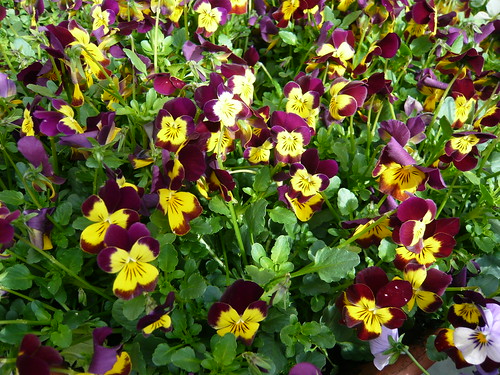
Music to a gardeners ears from the Viola – no strings attached!

Viola profusion

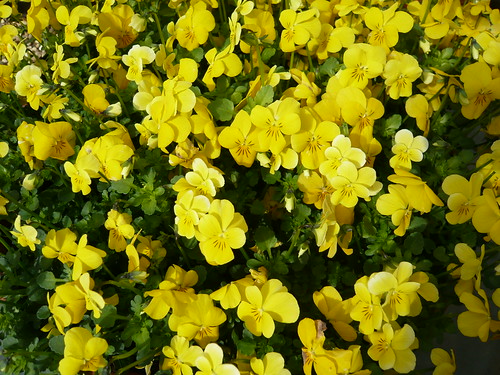
A proper eyeful and no joking!
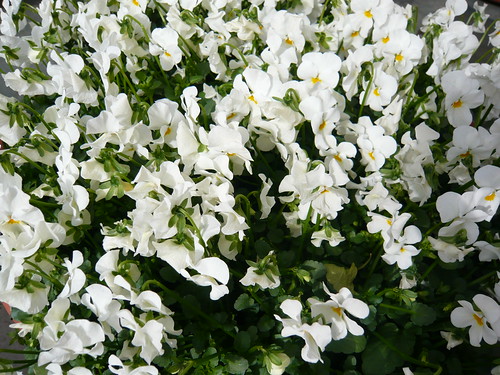
Viola profusion

Blue Violas generally have the best scent!

Ilkley 002

Massed bands of white Violas for the purist.

Spring Shoots of Dicentra

Spring Shoots of Dicentra

green-shoots-of-spring

The economies of the world are waiting for a sign of the green shoots of a spring recovery. This Dicentra plant shows that not all good things are green and I love to seek out red shoots amongst my plants.
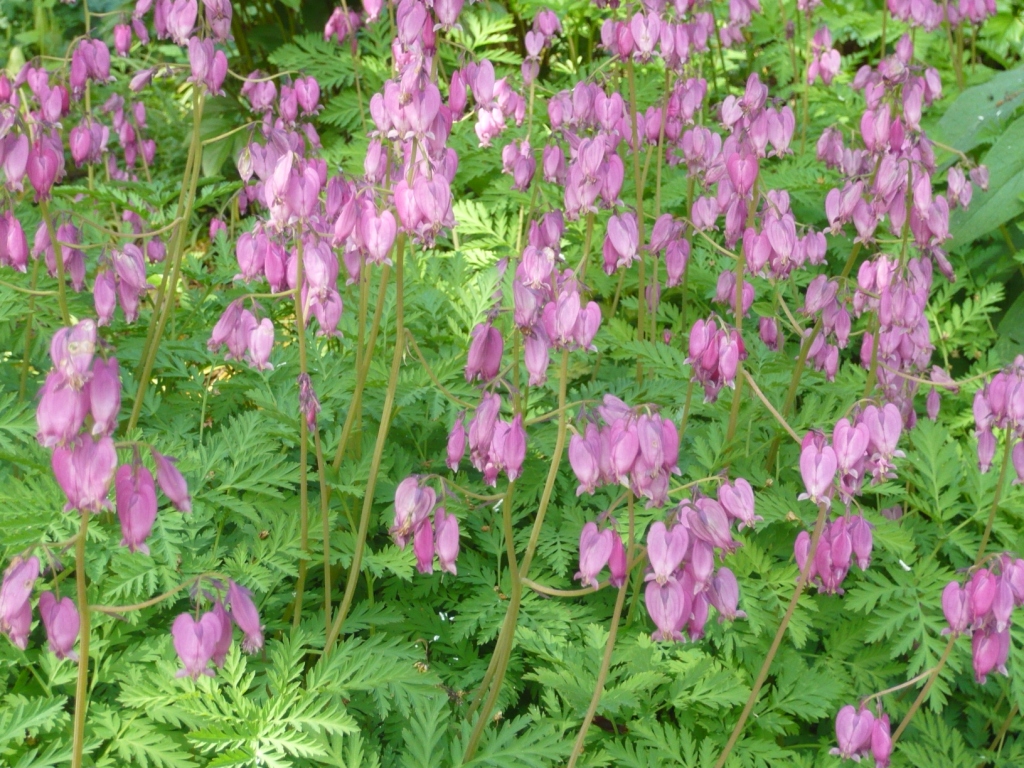
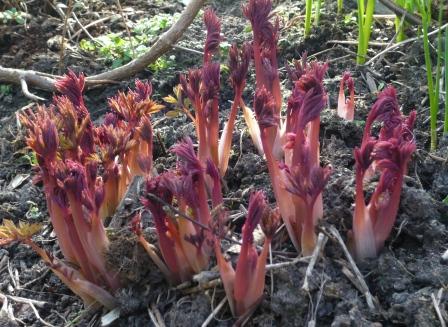
Other notable red shoots come in spring from the herbaceous Peonies and from Rhubarb plants but back to the Dicentra family or bleeding heart for a moment. The plants are easy to grow and reliable perennials whose clump grows each year. They resent disturbance so are hard to split for propagation but root cuttings from the edge of clumps are not too hard to strike.

Dicentra King of Hearts & Ivory Hearts

Dicentra Varieties to Try Growing

  • Dicentra spectabilis is the variety above that will flower with dark pink heart shaped flowers. There is also a white version sold under the unsurprising name of Alba but this is generally Dicentra eximia.
  • Dicentra formosa has cherry-red hearts that dangle like lockets on arching stems above mounds of fern like foliage. Also nicknamed Dutchmans Breeches.
  • Bulb forming Dicentra cucullaria and Dicentra canadensis are cream or white in flower but retain the distinctive Dicentra fern like foliage.
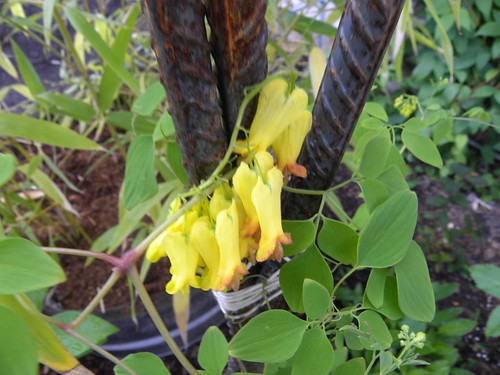
  • Dicentra scandens is a yellow flowered climbing species that I not found to be hardy.
  • There are 19 species of Dicentra from America and Asia.

Dicentra scandens

Growing Tips For Dicentra Formosa

  • The finer leaves grow well on the edge of woodland.
  • The grey leaved forms are OK under deciduous trees or shrubs but will stand more sun and can be used in alpine gardens.
  • Heavy clay soil needs improving with sharp grit and a granular feed in early spring.
  • The outer edges of plants are more vigorous than the centres. Use these to form new plants.

Dicentra cucullaria

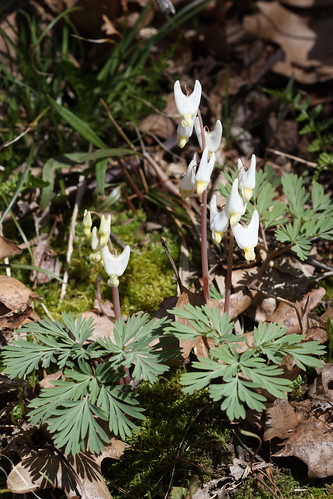
Dicentra cucullaria (Dutchman’s breeches) is a flowering plant in the family Fumariaceae, native to North America. It occurs mainly in the eastern half of the continent, from Nova Scotia and southern Quebec west to eastern North Dakota, and south to northern Georgia and eastern Oklahoma; there is also a disjunct population in Idaho, Oregon and Washington. It typically grows in rich woods. The common name Dutchman’s breeches derives from their white flowers that look like white breeches.’

Dutchman's breeches - Dicentra cucullaria

Credits
Dicentra King of Hearts & Ivory Hearts by peganum CC BY-SA 2.0
Dicentra scandens by gnomicscience CC BY-NC 2.0
Dicentra cucullaria by aposematic herpetologist CC BY-NC 2.0
Dicentra cucullaria by dmott9 CC BY-ND 2.0


Herbaceous Helenium

Herbaceous Helenium

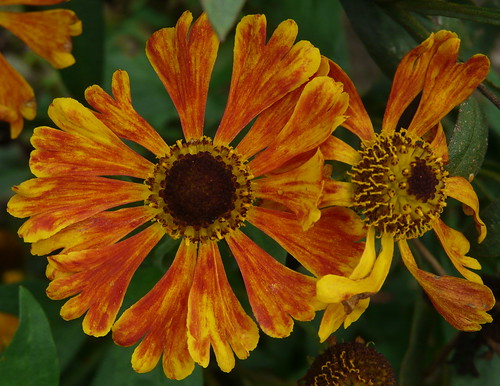
HÉLÉNIUM

Helenium are a mainstay of the herbaceous border generally flowering from late summer into late autumn.
The colour range is warm and at times fiery with reds, browns, oranges, yellows and bi-colours. Very appropriate for the season and easy to grow from seed.

Common Names

  • Commonly known as Helen’s flower as they are believed to have been watered by Helen of Troys tears.
  • Some species are also known as Sneezeweed as the dried ground leaves were used in USA as a form of snuff.
  • There are 39 accepted species with over 220 known names.

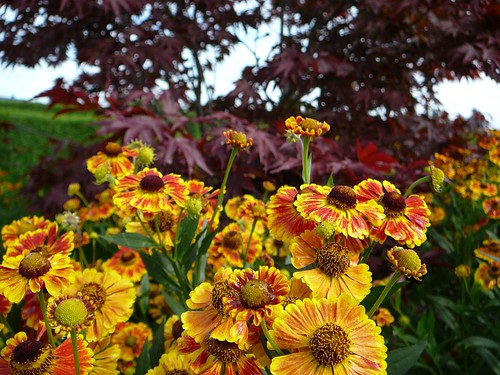
Impression, Helenium "Waltraut"

Specific Varieties and Cultivars

  • Helenium Sahin’s Early Flowerer (agm) opens with rich golden ray-florets and a central brown disc-floret. It fades to burnt orange over time.
  • Helenium Ruby Thuesday is a new compact introduction with rich red florets
  • Helenium Wyndley grows to about 32″ with yellow florets overlayed with brown and orange.
  • Helenium autumnale ‘Sunshine Hybrids’ is a mixture of seed offering a dazzling colour range of flowers Height: 2-4ft.

Helenium autumnale, Sneezeweed

Growing from Seed

  • Sow February to June or September to October.
  • Germinate at 55-59F on the surface of a good free draining, damp seed compost.
  • Place in a propagator or seal container inside a polythene bag until after germination which usually takes 14-21 days.
  • Do not exclude light at any stage, as this helps germination.
  • Grow on in moist well drained soil.

Credits
HÉLÉNIUM by Mary.Do CC BY-NC-ND 2.0
Impression, Helenium "Waltraut" by e³°°° CC BY-SA 2.0
Helenium autumnale, Sneezeweed by KingsbraeGarden CC BY-NC-SA 2.0