Browsed by
Category: Articles

Gardening articles that may not include tips

Peas are Legumes Too

Peas are Legumes Too

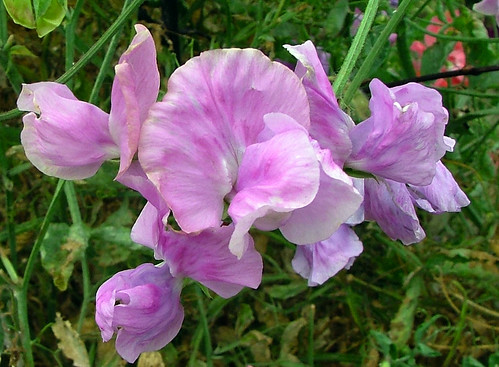
What do beans, lupins, lentils, wisteria, peanuts and clover have in common? They like peas are all from the legume family.

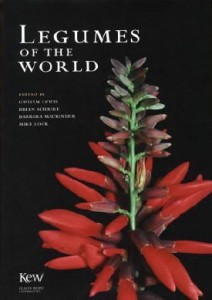
Despite photographing this plant if I could identify it I would not need to buy ‘Legumes of the World’ by Gwilym Lewis, Brian Schrire, Barbara Mackinder, and Mike Lock available from Kew
legu

‘This is the first comprehensive guide to world legumes, describing and illustrating all 727 genera. Legumes contribute enormously to the world’s economy – through food and drink, pharmaceuticals and medicine, biotechnology, building and construction, textiles, furniture, horticulture, paper and pulp, fertilizers, chemicals, pest control and ecotourism. This book spotlights as yet untapped economic potential and for the first time places genera in a modern systematic framework.
Containing over 1,000 illustrations – colour photographs and line drawings – this is a lavish yet much needed reference for botanists and other professionals involved with legumes.’ Ordered from Kew Books at Kew gardens this book costs a marrowfat sized £59.95 but it is still cheaper than Amazon.

Other Resources

Read More Read More

Best Pond Tips

Best Pond Tips

Water Lilies
If you are thinking and planning to get the best out of a new or rejuvenated pond than consider these quick tips

Design Tips

  • Design your pond so there are shelves around the edge of the pond for shallow and marginal plants. Water Lilies need to be planted at least 18″ deep.
  • If your pond has sheer sides you may want to grow marginal plants by submerging some staging (a weighed down inverted box). This can also be used as an escape route for amphibians to get out of the pond.
  • Keep good pond hygiene by preventing leaves and debris falling in the pond. Every two or three years have a good clean out reintroducing a small quantity of sludge at the bottom to get the process going again.
  • Locate the pond where you can see it preferably in a sunny position well away from any Pine trees. Koi fish need a shaded location.
  • Ornamental ponds may be best located in an elevated position to avoid run off filling the pond.

Book Cover

Planting Up

  • Plant in containers that you can hook out for plant maintenance. You can use a wire coat hanger on a stick if you use a basket with open loops. Invasive plants are constrained by the basket and you can rearrange the planting during the year.
  • Use good garden soil or special compost for planting and put a heavy layer of gravel on the top of the soil.
  • Unconfined plants can look more natural and are often wild life friendly but less showy as ypour best plants need to be containerised.
  • Consider a mix of Deepwater, Floating, Marginal and Oxygenating plants. Deepwater plants like cooler water and the floating leaves create this in a way that supports more life forms and restricts blanket weed.
  • Water hyacinth absorbs pollution particularly from fish waste. Skim off and compost excess plants as they multiply.
  • Bog plants and waterside plants are optional depending on your design and space. For a bog look in drier soil use Hostas and Bearded Iris or Iris Pallida that look like Bog Iris.

Book Cover

Berberis Decidious or Evergreen

Berberis Decidious or Evergreen

Berberis

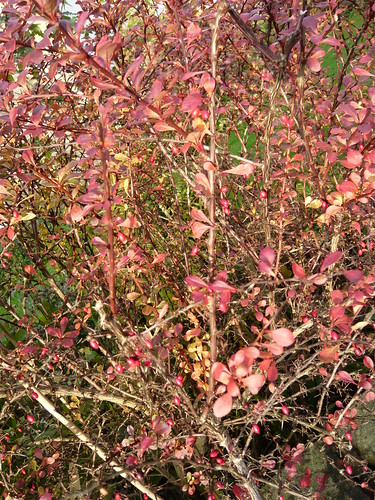
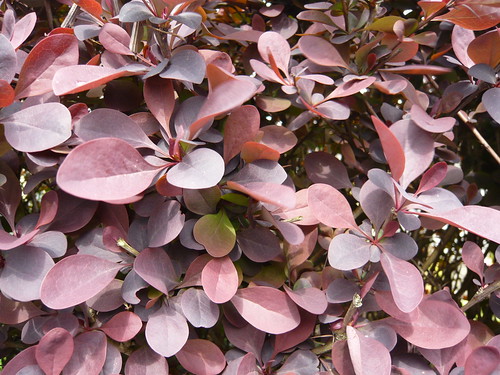
Your Berberis may loose their leaves or remain evergreen through winter. This purple leaved variety, Berberis Thunbergii has turned from very dark to red coloured leaves and after another frost they will be gone. The red berries wont last long either as they are feeding small birds which have already thinned them out. The spines will remain as a deterrent to unwanted intruders and fresh new leaves will reappear in spring.

Best evergreen varieties include Berberis candidula x carmine, Berberis dawinii (flowering orange see below) or one of the hybrid Berberis stenophylia.
Berberis and bee

Best for red or blue-black berries, include Berberis aggreata, Barbarossa, Micrantha, Berberis microphylla and Berberis buxifolia. Berberis vulgaris which used to be eaten in Victorian times plus Berberis heterophylla and Berberis darwinii are all worth considering for cooking or eating dried.

Best yellow flowered Berberis Dictyophylla, Berberis Koreana and Berberis darwinii.
Chose other Berberis varieties

With literally hundreds of species and varieties to select from you can experiment with a Berberis that is just right for your location. Many varieties are extremely prickly so be warned

Berberis

Book Cover

Decorative Bark on Trees

Decorative Bark on Trees

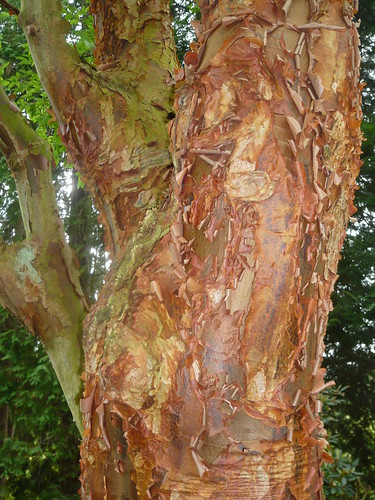
For texture and visual interest do not ignore bark. Some of my favourite trees have captivating bark that looks good through all four seasons.


When the leaves fall you get a chance to inspect the bark on your trees and shrubs. Some bark is outstanding and worth growing for it’s own sake.

Five Trees for Decorative Bark

Acer griseum, paper bark maple, the outer bark peeling in papery flakes to show the copper-colored inner bark; opening leaves bronze colored, turning red or orange in autumn.

Paper-bark birch has shining white bark with large leaves turning pale gold in early autumn, making it more useful than other birches with colored stems.

Read More Read More

Plant Plants Together

Plant Plants Together

Massed planting, grouping and organised beds are just some ways of putting plants together to optimse impact.

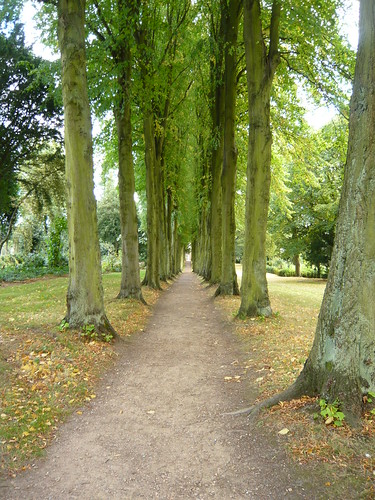
Sometimes a single plant looks a bit weak or out of place on it’s own but a group of one variety can vastly improve the overall image of your garden. This row of Lime trees is planted close together with a fairly narrow path in between but the effect is visually strong whatever the season.

Tips to Use Plants Together

  • When planting shrubs it is often said that groups of odd numbers 3, 5, and 7 have positive effects. There is more harmony and they are easier on the eye that way.
  • Read More Read More

Ornamental Horse Chestnuts Shrubs

Ornamental Horse Chestnuts Shrubs

Grow your own conkers but small may not win too many conker contests.

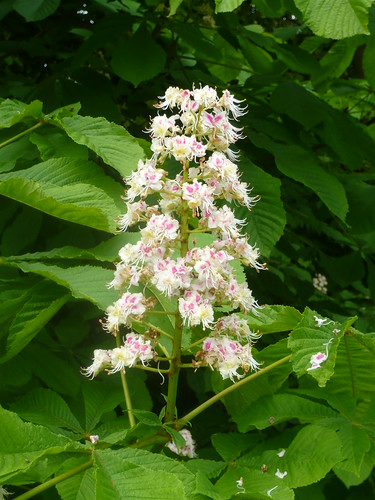
Most people recognise the large ornamental Horse Chestnut trees with the palm-shaped leaves and spring racemes of flowers that lead to conkers in Autumn. Unless you have a large paddock or personal woodland it is unlikely that you grow Horse Chestnuts (Aesculus Hippocastanaceae) but the family contains some smaller varieties.

Aesculus x mississippiensis and Aesculus mutabilis are large shrubs or small trees with flowers that are dark red and yellow.
The Aesculus pavia in USA is called the Dwarf Red Buckeye tree. It is early to leaf and starts blooming when it is just 3 feet tall. This 3-10′ deciduous tree is a wonderful little red flowering tree to plant at the edge of a woodland garden or as the focal point on the curve of a path.
Aesculus Parviflora or Bottlebrush Buckeye is an attractive shrub, up to 10 feet high. The white flowers are borne in erect spikes or racemes.
Aesculus sylvatica is a rounded shrub or small tree, up to 25 feet high and wide that has yellow to reddish coloured flowers on the spikes.

Buckeye is the State flower of Ohio and has its own web site

Book Cover
Not particularly a gardening book Horse Chestnut ‘is a study of the commonest species in Britain. Do you know why it is called the ‘horse’ chestnut and that it is used in shampoos and how you take it on holiday with you? British forces would not have kept Germany out of England during the First World War without this tree. There would not be a State of Israel without it either. Remember learning Under a Spreading Chestnut Tree? Well who wrote it and how many versions are there? Bet some of you have played ‘Conkers’ but how old is the game? Which artist has painted the tree more than any other and do you know about ‘Chestnut Sunday’ in Bushy Park?’

Who is Growing in Your Garden?

Who is Growing in Your Garden?

Flower varieties are often named after famous personages – Queen Elisabeth is probably one of the best known. Her is just a selection of others.

Terry Wogan,  King Edward VII, Charlies Angels, Alan Titchmarsh and Charles Unwin all have had Sweet Peas named after them and that is a lot easier to say than Lathyrus Odoratus. So surprise your neighbours with a patch of Terry Wogans or 3 Charlies Angels.

Leucanthemum x superbum ‘Esther Read’  now referred to like many Shasta Daisies just as Esther Read was first grown from a stolen railway embankment as a single daisy crossed with the bigger Chrysanthemum maximum by Horace Read. The Read family were plantsmen for over 200 years but it was in 1931 that this plant of it’s time was exhibited. Now the name is eponymous although the original cultivar is seldom available you may have an Esther Read derivative in your garden.

John Baggensen was brought up in his family nurseries in Cardiff and Pembury Kent before introducing a widely used honeysuckle Lonicera nitada ‘Baggensen’s Gold’.

Read More Read More

A Top Ten of Green Flowers

A Top Ten of Green Flowers

Book Cover

‘Green Flowers: Unexpected Beauty for the Garden, Container or Vase’ by Alison Hoblyn is a book celebrating all that is best with green flowers. If you want to splash out on a second book try ‘Emeralds: 1000 Green Flowers and 500 Choice Green Foliage Plants’ by Karen Platt’. Who would have thought there were so many green flowers  to choose from.

Green flowers make a good foil for stronger colours on other plants and also generate a lot of interest in their own right. Flower arrangers love green plants and many traditional flowers like Chrysanths and Carnations have been bred for cutting but many florists flowers are died to look green so beware.

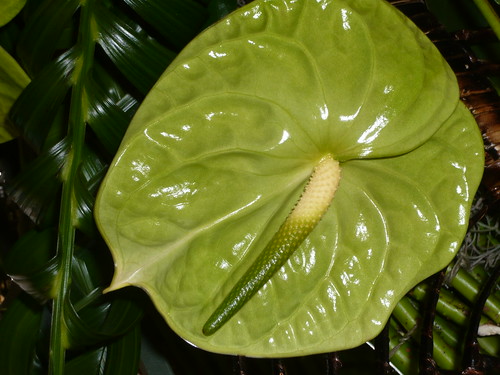
Green Anthurium

Top Ten Green Flowering Plants

  1. Hemerocallis the Day Lily variety Green Flutter gets our list off to a yellowish green start as shown on the book cover.
  2. Ribes laurifolium Mrs Amy Doncaster is a strong growing lime green flowering currant. It is evergreen and a strong performer that attracts bees. One of my all time favourites.
  3. Alchemilla mollis or Lady’s Mantle is a free flowering easy to grow (free seeding thus harder to control) small perennial with light airy grey-green flowers.
  4. Hecquetica epipactus has flowers or what look like flowers. Six green petaled “daisies” with domed yellow centres sit on the ground in tight clumps sometimes with a slight yellow colouring in part of the petal or bract.

    Read More Read More

Lobelia for Water Gardens

Lobelia for Water Gardens

Lobelia are a lot more than the trailing edge plant associated with Alyssum.

lobelis-

Some members of the Lobelia family love water and are happy to be submerged in your pond or pool others like to be planted in moist margins. These Lobelia are the hardy perennial and half hard perennials described below rather than the blue and white annuals we grow as children.

Lobelia Senssilifolia

Flowers in glorious blue to purple and has elegant lance shaped leaves growing to 2 feet tall and making a tight clump. Plant in soil and in up to 2 inches of water and propagate by division. It should not need special winter protection.

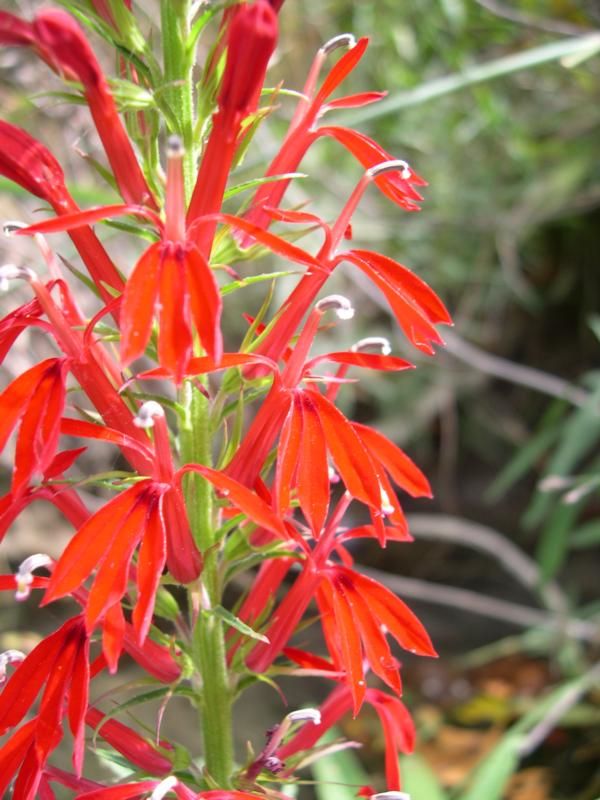
Lobelia cardinalis and ‘Dark Crusader’

The cardinal flower has striking dark red foliage made even more spectacular by a  profusion of scarlet flowers in August. The 3 feet high plants may need staking and in winter they should be moved  to drier conditions so it is best to plant in a deep planting basket. The plants like moist soil and semi-shade when growing . They work well with Hostas for contrast in shape and colour.

Lobelia Queen Victoria

Read More Read More

Shopping for Your Garden

Shopping for Your Garden

Buyer beware garden supplies are big business and garden centres need to be good at taking your money when the conditions are right.
spring 019

Equipment and Materials
For the essentials, eg. spade, secateurs, trowel and fork buy the best tools and equipment you can afford. Save money by not investing in the nice to have but unessential items until you find they are indispensable (if ever).
Landscaping and design lines can be a lot cheaper at a builders merchant than a garden centre. Plan what you need and buy in bulk.

Plants in Growth
Trees and shrubs need to be healthy and well grown because you don’t want to be changing them once planted. Buy and plant at the right time of year from a reputable and appropriate supplier.

Read More Read More