Browsed by
Category: Articles

Gardening articles that may not include tips

Firethorn or Pyracantha For Berries

Firethorn or Pyracantha For Berries

Snape pyracantha

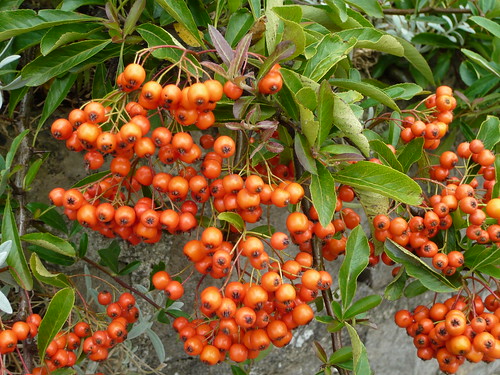
Pyracantha, can be a neat shrub with attractive flowers and magnificent red, yellow or orange berries. The white flowers in summer are followed by autumn and winter berries, in fact my shrubs are still in berry this March.

Growing Tips

  • Train  your Pyracantha against a wall or fence or as a specimen plant.
  • Clipped regularly Firethorn, or Pyracantha as it is correctly known, also makes an excellent evergreen hedge.
  • Plants will grow in most fertile garden soil  in sun or partial shade.
  • Avoid  water-logging but if near a wall or hedge water your plants in dry spells.
  • Berrying may be reduced in shady sites or against north-facing walls.
  • Plants grow 5-10 feet high and wide if unrestricted.
  • A general purpose spring feed and mulch is welcome.
  • Propagate from cuttings or seed that may not come true to the parent plant.


Pruning and Clipping

  • Pyracantha flowers on shoots produced the previous year so avoid trimming off too many flowers. Try to retain as much two-year-old wood as possible.
  • Pyracantha has long, sharp thorns hence it’s common name Firethorn. It can be used in a hedge to deter unwanted visitors
  • When overgrown, Pyracantha can be heavily pruned  to get back into shape.
  • Prune to make the berries more visible and to keep the plants in shape.
  • Shorten all sideshoots that grow from the main framework in late summer. Stop just short of the clusters of berries   about two to three leaves from the base of the side shoot.
  • While young shoots are still flexible so tie them in or train to form shapes.
  • Trim Pyracantha hedges a couple of times between spring and the end of summer

Read More Read More

Shrubs to Screen Walls

Shrubs to Screen Walls

file 1 027

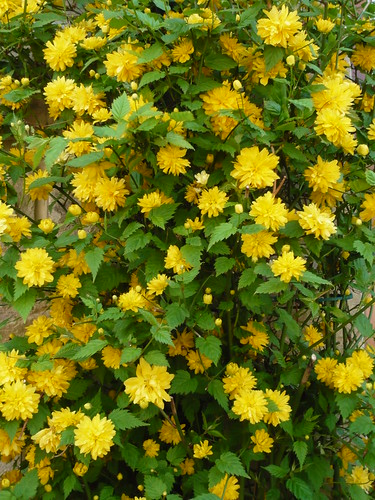
You can just make out the wall behind this flowering Kerria Japonica. There are other plants to screen walls but the soil is likely to be dry and impoverished so chose with care.

Kerria Japonica
Planted towards the back of the border this shrubs habit can be scruffy looking and the serrated foliage is rather un-interesting. Kerria loves sun but is drought, heavy clay soil and exposed location tolerant.
Kerria is a tough plant suitable for problem areas that makes it ideal for fast growing screening.

Arbutus unedo
Wonderful all-rounder with reddish stems and good bark, glossy leaves, Lily-of-the-Valley flowers and unusual strawberry-like fruits.

Hippophae rhamnoides, Sea Buckthorn
Lovely silvery leaves and bright orange berries.

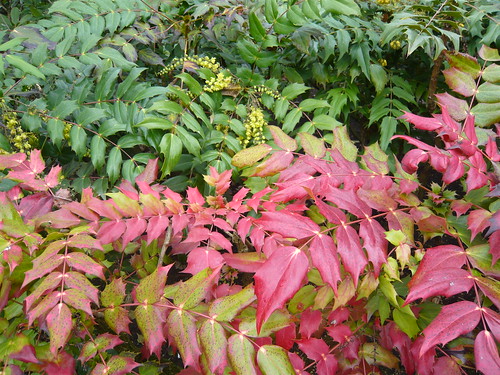
Mahonia leaves
Mahonia x media Charity
Vigorous architectural shrub with glossy pinnate leaves and scented yellow flowers in winter.

Daphniphyllum macropodum
Seldom grown evergreen, best grown in shade. Large, handsome leaves and scented greenish flowers.

Fatsia japonica
Often sold as a houseplant but perfectly hardy. Huge palmate leaves give a jungly effect. Does well in shade.

Buddleja davidii ‘Dartmoor’
Fast growing shrub with gorgeous magenta-pink flowers in branching panicles. Great for butterflies and sometimes retains its leaves through winter.

Clematis montana Tetrarosa.
Useful for larger areas that need covering. This Clematis montana provides a spectacular burst of colour in late spring with large flowers an a delicate scent.

Ligustrum ovalifolium ‘Aureum’ or golden privet
Common, but very undervalued — the ‘sunshine’ shrub.

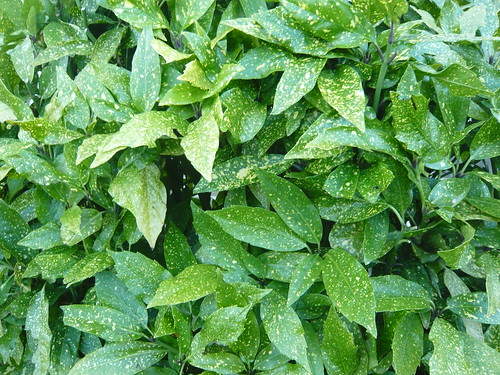
Aucuba japonica ‘Crotonifolia’ or spotted laurel
Tough but handsome with gold splashed leaves and large red berries.

Spotted Laurel

Tomorrows post will discuss Pyracantha


Blue Leaved Plants and Shrubs

Blue Leaved Plants and Shrubs

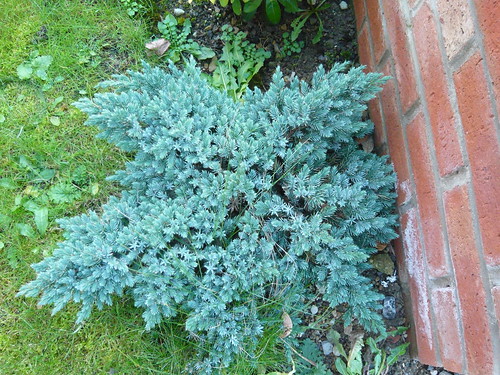
Prostrate Juniper

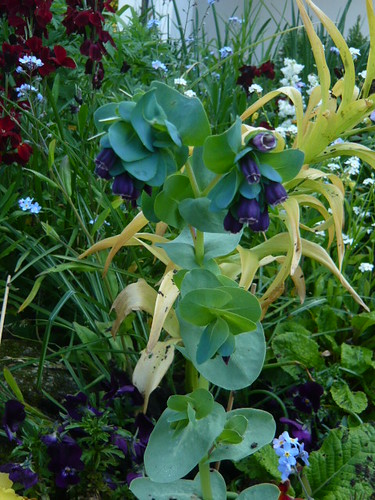
Blue is not the colour you associate with foliage but if you can bend your eyes just a little around the silver – grey through to green spectrum there may be some surprises.

In Praise of Blue Foliage

  • A very distinctive colour attracts the eye in a uniformly green garden
  • Blue works very well with dark coloured leaves such as purples
  • Blue tends to increase the perceived depth of view making blue recede.
  • A fine blue line separates glaucous leaves and silver foliage.
  • Perception of colour is best left to the beholder

Blue Leaved Primulas

  • The bloom or farina on may primulas can look blue. See the Primula kewensis at the foot of the page.
  • Auriculas often display the blue dust.
  • Primrose ‘Arctic Blue’ has deep green leaves but on a frosty morning their foliage turns to shades of icy blue

c

Perennial Plant selection from The Oregon

Hedgerows Worth Watching

Hedgerows Worth Watching

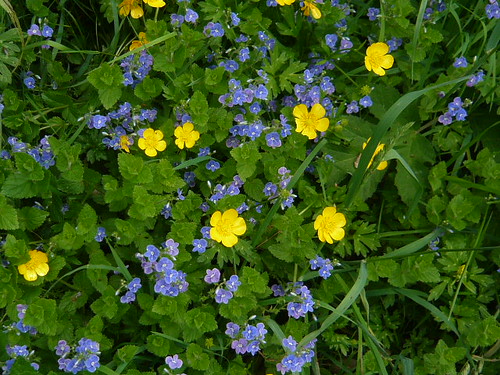
Hedgerow flowers

January started the year quite well with a few early snowdrops and the remnants of primulas. February will be even better snow permitting. Leap forward to June which is a spectacular month for flowering hedgerows and particularly in the under-storey.

Identifying plants whilst out walking as a child, was my first introduction to the environment and natural gardening. There is still a buzz seeing a plant growing in the wild that some careful gardeners has subsequently developed for the garden or nursery trade.

Why not under-plant your garden hedges with native species of hedgerow flowers. The trick is to leave them undisturbed, unfed and untreated with chemicals. I would bank up the soil to start your hedge’s lower storey.

Hedgerows by County

  • I nominate Somerset as my favourite hedgerow county but I would like to know what other UK counties can lay claim to be hedgerow county 2010.
  • Cornish hedgerows have a soil banking (so that helps the smaller plants) with a rocky top and shrubs.
  • Devon hedges are similar to Cornwall but with turf on and at the top of the banking.
  • The Yorkshire Dales tends to have dry stone walls rather than hedges but the understorey plants can still be attractive.
  • In Perth, near Blairgowrie, is the tallest and longest hedge on earth. Meikleour Beech Hedge, planted in 1745, is 98 ft in height and nearly half a mile long. (I wouldn’t want to trim it).

Book Cover

‘Hedgerows, moors, meadows and woods – these hold a veritable feast for the forager.’ and all is laid bear in the River Cottage Handbook. Book link

The English Hedgerow Trust provided this apposite quote from Shakespeare.

I know a bank whereon the wild thyme blows
Where oxlips and the nodding violet grows
Quite canopied over with luscious woodbine
With sweet muskroses and with eglantine.


For a bit of fun read Copper Beech Hedges
Green Garden Habitats

Gardeners Year for Organic Fruit and Veg

Gardeners Year for Organic Fruit and Veg

Book Cover

‘Organic Fruit and Vegetable Gardeners Year, The A Seasonal Guide to Growing What You Eat’ by Graham Clarke

Yesterdays Gardeners Question Time on radio 4 featured many questions on this subject. The main advice that appealed to me was to concentrate on growing more fruit. (We all more likely to take the advice we want to hear.)

Gardeners Tips on Organic Fruit Growing

Organic Principles
Organics should sustain and enhance the health of soil, plant, animals and humans as one.
Organic growing is based on ecological systems and cycles that are worked with and sustained.
Organic gardening should be done in a precautionary manner to protect the health and well being of current and future generations.
Organics promotes the concept of fairness with regard to common environment and life opportunities.

Soil Fertility

Chemical fertility is the availability in the soil of all the elements, nutrients, ions,   traces and inorganic chemicals that plants need to grow.
Biological fertility includes micro organisms that help nutrient recycling’ including fungi, bacteria and protozoa that clean up bacteria. It also covers macro organisms such as arthropods that break down organic matter in the early stages of decomposition, worms that help drainage and aeration and nematodes that help in various ways but   occasionally act as pests.
Physical fertility is the mix of sand, silt and clay that makes up the soil and determines texture, ability to hold water and sustain life.

Weed Management

Read More Read More

Dangerous and Mind Altering Plants

Dangerous and Mind Altering Plants

Many plants have dangerous components, leaves, seeds and roots. Some of the most dangerous must be grown under government license.
Below are notes on just a few plants to avoid eating.

Mandrake is one of the most poisonous plants that is known. The specimen above is grown under strict control with a fence around it. A member of the nightshade family, Mandrake also contains atropine, scopolamine, apoatropine and hyoscyamine that affect brain functions.

Strychnine, the deadly poison, is produced from the beans of Strychnos ignatii. It is also found in the orange fruit and nuts of Strychnos nux vomica.

Ricin is a poison found naturally in the seeds of the Castor oil plant that also produces the oil that is fed to babies. Ricinus communis ‘Gibsonii’ has red-tinged leaves with reddish veins and pinkish-green seed pods but there are other Castol oil plant varieties.
If castor beans are chewed and swallowed, the released Ricin can cause injury.
Ricin can be made from the waste material left over from processing castor beans into castor oil.

Mescaline is a hallucinogen compound made from the small, spineless cactus Lophophora williamsii or Peyote. It is also present in other cacti including Echinopsis peruviana.
Mescaline is also found in certain members of the Fabaceae bean family.

Book Cover

Read More Read More

Edgeworthia Gardeners Tips

Edgeworthia Gardeners Tips

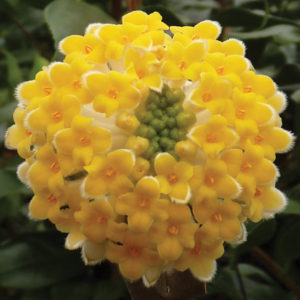
Edgeworthia is a genus of shrubs that flower in small clusters of scented 4 petaled flowers tightly packed to form a ball shape. The genus is related to the Daphne family and can be grown in the UK with similar treatment and success.

You can get a long display as they flowers open progressively from winter through February until it leafs up in spring. Varieties may be evergreen or deciduous.

Key Tips

  • Avoid waterlogged soil and soil prone to drying out.
  • Plants grow well around other shrubs without being too enclosed.
  • Despite being called the Paper tree it only responds well to light pruning to retain shape.
  • Buy when the plants are in leaf so you can assess it’s health

Growing Characteristics

  • Plants mature to a height of  5ft by 5ft in a rounded shape.
  • Plants  would survive  in a greenhouse or conservatory if your garden is too exposed.
  • Flowers are in terminal clusters opening in January February before the leaves.
  • Leaves of the deciduous varieties are lance-shaped, dark green and 6ins long.
  • The bark is  cinnamon-coloured with papery flakes.   Bark was used in the manufacture of high-quality paper for Japanese banknotes.

Edgeworthia Varieties

  • Edgeworthia chrysantha produces a tight yellow ball shaped flower on a leafless stem
  • Edgeworthia chrysantha ‘Rubra’
  • Edgeworthia chrysantha ‘Red Dragon’ as the name implies has fiery red flowers when fully open
  • Edgeworthia papyrifera is also known as the paperbush
  • Edgeworthia chrysantha Grandiflora is reputed to have larger flowerheads

Plants are available from Thomson and Morgan (credit the Photo) and Burncoose

50 Best Seed Merchants and Catalogues

50 Best Seed Merchants and Catalogues

Since I put this list together 7 years ago but I have now started to favour Kings Seeds (Suffolk Herbs) for my vegetables. I also get many more seeds from clubs and organisations rather than merchants.

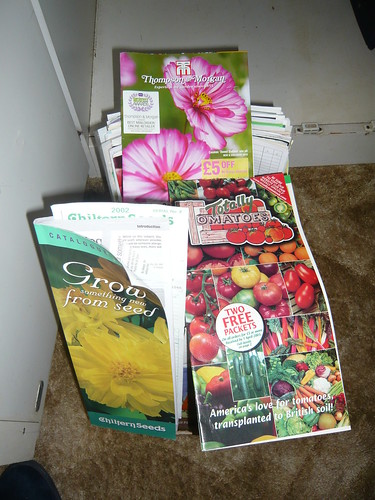
Seed catalogues


My Regular Suppliers

Thompson-Morgan have 2206 different packets of seeds. Their catalogue is one of the most colourful and once on their list you get regular offers. They are a good partner to Gardeners Tips and if you buy via our link we get a small commission that helps with our costs – Searchable T&M site.

Wallis Seeds have a new web site and are based in   Chelmsford Essex . I like buying by weight for some varieties that I can scatter willy-nilly so 15 gms of Calendula ‘Pacific Beauty’ and ‘Art Shades’ are on the way .

Chiltern Seeds of Ulverston Cumbria   www.chilternseeds.co.uk have  a 220 page densely packed catalogue.  They are good for providing Latin names and  flowery comments on each variety.

Vegetables Seed Suppliers

Read More Read More

Grow a Low Allergy Garden – Scent and Smell

Grow a Low Allergy Garden – Scent and Smell

Hay fever and Asthma attacks can be brought on by Scented Plants as well as pollen or Fungal Spores. Histamin problems can also be exacerbated by scent and smells in the garden.

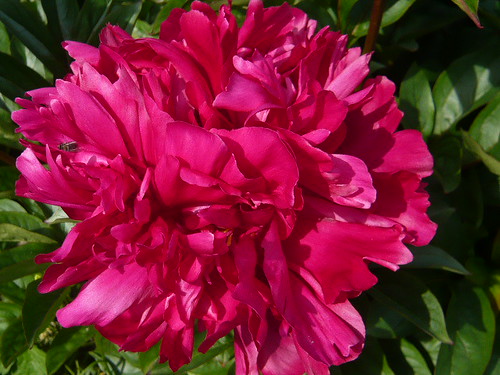
Peony

Tips to cut Spores and Fungus

  • Ferns reproduce by sending out millions of spores from under the leaves. If you suffer then do not grow any ferns.
  • Fungus and mould are common names for a large variety of mycelium like Alternaria that grow on dead and rotting plants. They reproduce by light invisible spores that are distributed in the air usually in late Summer and Autumn.
  • Reduce the concentration of spores by good husbandry, keep rotting plant matter to a minimum, don’t use bark as a mulch, dustbin infected leaves and more drastically remove hedges that collect spores
  • Compost heaps are home to fungus and ideally should be avoided if you are allergic but a closed system rather than an open pile will be better.
  • Spent mushroom compost can be an allergy disaster – don’t use it.
  • Organic compost and mulch may be a problem but coconut shell is probably one of the lower spore hosts. Compost in a closed container.

Scented Plants are generally pollinated by insects feeding on the nectar. This can include wasps and bees so if you are allergic to stings avoid such plants. Some people are sensitive to a range of smells and perfumes or just the scent of one plants such as a lily or honeysuckle and in this case choosing plants for a garden can be an issue.

  • Aromatic leaved plants like many herbs only give off a scent when brushed or crushed so it may be worth growing herbs but take care with Lavender.
  • If you are allergic to Daisies you will also potentially be allergic to Asters, Chrysanthemeum and other members of the same ‘compositae’ family.
  • Don’t sniff individual plants
  • Many double flowered varieties attract pollination by colour and have less scent.
  • Fruit attract wasps so if allergic to stings don’t grow them or have another member of the family grow them well away from windows into the house.
  • Some allergies are related to individual plants like Strawberries and Tomato so watch for individual reactions and root out offenders.
  • Deciduous trees have more pollen than evergreens.

For a short video watch
Read more about pollen in a low allergy garden

Some top tips from the Asthma society of Ireland for creating an allergy friendly garden include;

1. Choose plants that are pollinated by bees, the pollen is heavier and sticky and therefore stays on the bees rather than floating around the garden.
2. Avoid wind pollinated plants which disperse copious amounts of pollen into the air.
3. Avoid plants which are intensely fragrant as they can be a trigger for allergies and asthma.
4. Choose female plants, as they produce no pollen. Sterile male plants are also a good choice.
5. Grass is a major pollen producer so mow your lawn regularly, before it flowers.
6. Wear a mask when mowing lawn or trimming hedge.
7. If possible replace your lawn with gravel
8. Replace organic mulches with inorganic mulches
9. Avoid ornamental grasses in your planting schemes.
10. Remove hedges which harbour dust, pollen grains and mould spores which can trigger asthma and allergy symptoms.

Streamside Gardens to Delight

Streamside Gardens to Delight

fast-stream

If you are lucky enough to have a stream running through your garden you can plant many colourful plants at the side.

Plants for a Streamside

  • Primula Candelabra hybrids look special in spring and early summer. The flowers appear on the 18 inch stems in tiers of red, yellow and orange.
  • Many Iris varieties are at home by the side of water. The Siberian Iris sibirica can be yellow, white, purple or blue and the sword shaped leaves grow well in moist soil. Iris laevigata flowers purple and can grow right at the margins with its feet in 3-4 inches of water.
  • For soft greens, Alchemilla Mollis grows almost anywhere in my garden and Hostas also like a moist soil.
  • Astilbe can be a fine herbaceous plant with fern like foliage and plumes of frothy flowers.
  • For a bit of annual colour you could sow Mirabilis jalpa the Four o’clock flower growing to 3-4 feet tall with some Impatiens accent series for a lower grower.
  • Bugle is good for ground cover Ajuga reptans Burgundy Glow for blue flowers and tricolured leaves. Persicaria superba has pink flowers later in the year and spreads well.
  • For a tree in acid soil the Amelanchier is hard to beat with flowers, berries and coloured autumn leaves or the Spotted laurel and Black Pussy Willows both like a moist soil.

Other Tips for Gardening by a Stream

  • Plants that prefer dryer conditions should be planted higher up the banking.
  • Give plants enough space to develop, the moist and humid conditions will generally encourage lush growth.
  • Beware fast flowing streams and those likely to over flow there banks lest they wash away your prize plants.
  • Foliage and texture can be as important as colour but a bright splash (no pun intended) of yellow or bright white can be reflected by the water.

harlow-carrHarlow Carr Candelabra primula by the stream 2008.

Read more about Wild Iris on Gardeners Tips.