Browsed by
Category: Articles

Gardening articles that may not include tips

Red Acer Shrubs

Red Acer Shrubs

Problems with Red Acers

  • Red leafed plants contain less Chlorophyll, the green pigment that’s instrumental in photosynthesis. These shrubs have less substance in the leaf which can be thin and papery.
  • The leaves are prone to wind damage and will turn brown on the edges quite easily. This wind burn or desiccation is unsightly and can be quite damaging.
  • Thin twigs without leaves are dead and need to be pruned out
  • Acers grow extremely slowly.
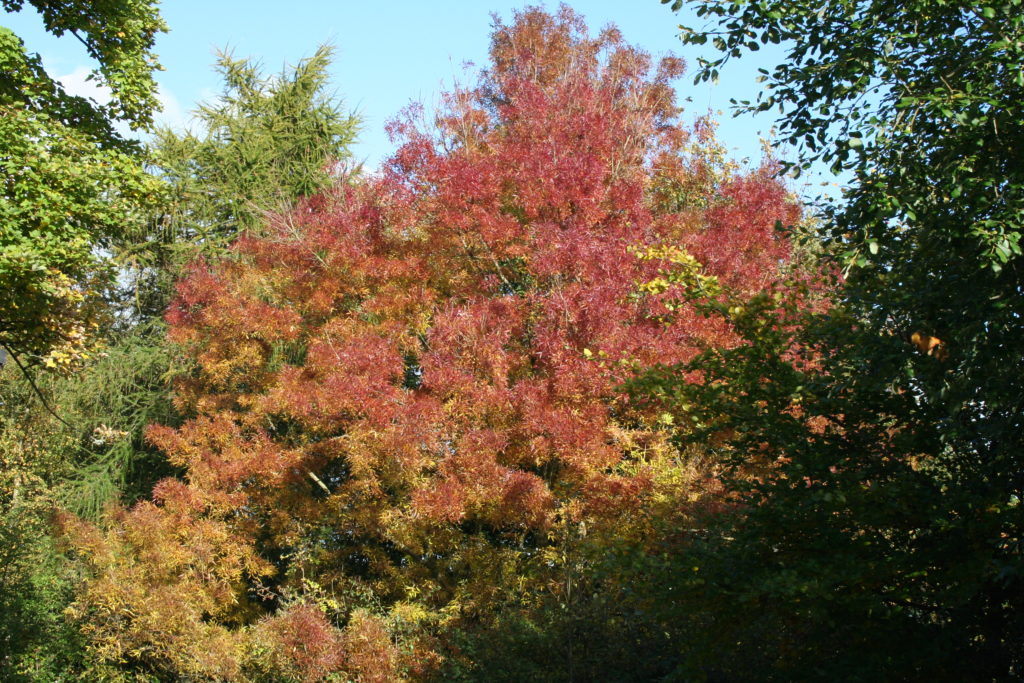
  • Some Acers have young green leaves that change over time and only turn deep reddish-purple in summer and scarlet in autumn.

Environment for Acers

  • Acers are hardy but avoid windy areas and frost pockets. Shelter from late frosts.
  • Acers prefer sheltered, sunny or partial shade.
  • Some varieties of Japanese maples are OK in a large plant pot.
  • Soil needs to be neutral or slightly acidic.
  • Grow in moist but well-drained soil.
  • Keep away from bright sunlight.

Red Acer Varieties

    • Lower growing palmatum cultivars work well in mixed plantings
    • Red Pygmy grow best in moist but well-drained soil, away from bright sunlight
    • Amagi shigure is also called Purple Passion.
    • Try  Acer Palmatum Katura or Acer Palmatum Little Princess
    • Acer Palmatum Shishi-gashira is a small red  Japanese maple.

Studley Royal Water Garden

Studley Royal Water Garden

Fountain Abbey

In the Georgian period of the 1700’s John Aislabie set about landscaping a water garden at Studley Royal near Ripon. Today it is a verdant green garden with ornamental lakes, cascades and vistas to take the breath away. There are temples, follies, St Marys church and several buildings within this World Heritage site. Not least of the buildings is the 12th century Fountains Abbey a crucial part of the landscape.

Things to look out for

  • Spring plants include Primroses, Cowslips and Oxlips.
  • Summer plants include Orchids, Pinks, Scabious
  • Autumn and winter interest comes from the tree colours and snowdrops
  • Wild flower meadow on the walk into Ripon
  • Deer in the parkland

Octagon Tower at Fountains Abbey

Environment

  • Soil is limestone and sandstone in a lowland setting.
  • Despite being distant from the East and west coasts the site is only 330 feet above sea level.
  • The site was well chosen by the Cistercian monks 1000 years ago.
  • The first indication of a water garden was the monk’s fish pond that was used to cultivate supper.
  • The land is managed by the National Trust and a team of volunteer gardeners.
A Weed Worth $Billions – Seaweed

A Weed Worth $Billions – Seaweed

Comfrey juice concentrate or nettle juice stink but Seaweed extract is a weed to feed your garden. In fact seaweed is arguably the best weed in your garden.

Seaweed is an algae generally living in saltwater. There are over 10,000 species in green, brown and red.

Uses and Benefits of Seaweed

  • Seaweeds are important ecologically and are an important source of oxygen. 70% of the worlds oxygen comes from photosynthesis of algae and plankton.
  • Seaweed is an important food in Indonesia and the far east where Nori and Kelp are cultivated to make one of the largest  aquaculture industries.
  • Most seaweed grows in low-lying rocky environments on the shoreline. All those anchored to rocks or the seabed are safe to eat.
  • Seaweed is a source of chemicals with medicinal and industrial uses including processed foods such as  yoghurt, health drinks and agar for German beer .
  • Seaweed as a soil conditioner has been used in Ireland for many years bulking up earth on thin limestone soils. It is organic and can be added to compost heaps but let rain wash out excess salt first. In Europe seaweed is used, mixed in layers with sand and soil, for growing Potatoes and Artichokes. Unless you live very close to the sea you are unlikely to have access to large quantities so you may use a commercial liquid concentrate.
  • Concentrated Seaweed is used at high dilution rates. It is reputed to help plants avoid stress and resist frost. The natural hormones amino acids and beneficial carbohydrates in Seaweed help plant growth and strong root systems. The seaweed extract helps the take up of trace elements.
  • Seaweed can be used  to remove undesired nutrients from water such as ammonia, ammonium nitrate, nitrite, phosphate,metals and CO2.  Nutrients are  consumed by the seaweed which can then be harvested.

Tips for Use by Gardeners

  • Use a very dilute solution of SM3 seaweed extract as a foliar feed.
  • Seaweed retains water and is slow to decompose so use as a winter mulch.
  • Use it on vegetables and see if your crop yield is better
  • Soluble Seaweed Extract Powder is non-toxic, harmless and a designated fertilizer for organic farming.

Types of Seaweed

  • Red and brown algae are almost exclusively marine seaweeds. Green algae are also common in freshwater.
  • Green algae including river species and red algae are recognised as being in the Kingdom Plantae.
  • Brown algae with 1800 species includes Kelps  range from the Arctic to New Zealand.
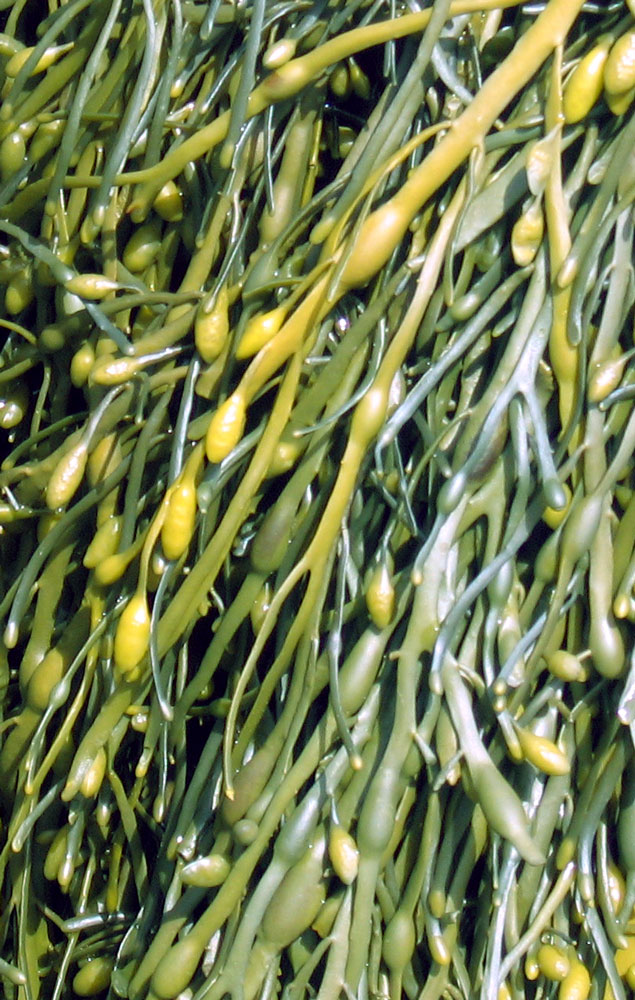
  • Wracks or Fucus species are common in the UK with other brown seaweeds Saccharina latissima and Bladerlocks.
  • Sea Grapes (green caviar) and Sea Lettuce Ulva are popular green seaweeds
  • Eucheuma, Dulce, Carola and Ognonori are edible red seaweeds
  • Sargassum is floating plankton like seaweed.

Brown algae Ascophyllum nodosum cc 2.5

Perennial Begging

Perennial Begging

The Gardeners’ Charity is registered with the charity commission as no.1155156 – GARDENERS’ ROYAL BENEVOLENT SOCIETY. Most gardeners know it as ‘Perennial’. As befits a charity that has been helping horticultural workers for over 175 years it has built up some sizable reserves £43m plus 19 premises and two gardens at the last count. Rather a lot of investments to fund annual payments of only £3.6m or circa 80% of annual income from donations, trading and legacies. (Figures for 2016 are awaited.)

Flush with cash reserves and a conservative spending policy, poor gardeners and horticultural workers should be able to feel some comfort. In a recent mailing I was solicited to donate £25, £50 or £100 in addition to supporting the (expensive) product catalogue. This request wont germinate and bear fruit with me until they are more down to earth and do more for the horticultural workers and families.

The objects of the charity are
1.1.1 the relief and assistance by such means as the trustees shall determine to be appropriate in each case of gardeners or persons who are or who have been in like employment or occupation of those closely involved in gardening or related activities or those training to be gardeners or persons of like occupation and their spouses or widows/widowers or unmarried partners and/or immediate dependants in necessitous circumstances or in circumstances of poverty, illness, disability (whether mental or physical) or old age; and /or
1.1.2 the advancement for the public benefit of education and training in or relating to horticulture or gardening; and/or
1.1.3 the provision, maintenance or assistance in the provision and maintenance of gardens and open space for training, rehabilitation and other charitable purposes for public benefit and in particular the preservation and maintenance of gardens of historic and/or aesthetic importance to be enjoyed by and made available to the public at large;This can include debt advice and financial support to people employed in or retired from the horticultural industry who find themselves in difficulties arising from financial difficulties, ill health, disability, or old age.

The charity employed 38 staff and over 200 volunteers at December 2015.

Growing all Sorts of Stuff

Growing all Sorts of Stuff

Book Cover

Why You Might want to Grow Edible Stuff

  • Food stuff is top of the list in Mazlow’s hierarchy of need.
  • ‘Growing your own’ to feed the family has been a priority for centuries.
  • Farmers, market gardeners and smallholders all contribute edible stuff as do allotment holders and the majority of gardeners.
  • Windowsills, greenhouses, conservatories and sunny sheltered spots can be used to grow tomatoes and salad crops for example.
  • Herbs add taste to many dishes  and  basil, mint, parsley, rosemary and chillies,  are all stuff you can grow quite easily.
  • Stuff called Curcurbits such as courgettes, squash, pumpkins and cucumbers are comparatively easy to grow with a bit of shelter and warmth.
  • Tasty specialties are now more commonplace but Pineapples were grown in special stove houses in the 17th and 18th centuries.

What Other Stuff You Might want to Grow

  • Man can’t live by bread alone so aesthetic stuff needs to be grown to feed the inner man.
  •  Flowers and decorative plants come in all shapes and sizes. Cacti, Holly, Ivy and poinsettia are seasonal stuff you can try.
  • Stuff for indoors includes a range of bulbs and windowsill plants. Old Aspidistra and other evergreen leaved plants have a reputation of cleaning the air. A reputation probably earned when we all had coal fires.
  • Growing stuff in a formal manner from a large landscape to a small Knot garden can be time consuming but rewarding.
  • Organic and environmentally friendly grown stuff has its own reward.
  • Forestry, heath and heather, parks and pleasure grounds all serve a visual or emotional purpose.

How to Grow Stuff

You will have guessed it – read the book!

Botanical Gardens and Botanics

Botanical Gardens and Botanics

Definitions and Scope

Botany is the science of plant life. In other descriptions it is the study of plant science or plant biology. A botanist is one who studies botany.

A botanic is a drug or medicinal preparation obtained from a plant or plants. 

Botanic gardens are institutions holding documented collections of living plants for the purposes of scientific research, conservation, display and education.”

Oxford Botanic Gardens and Magdalen College Tower.

This garden, the oldest in the UK was founded in 1621 as a physic garden growing plants for medicinal research

The original Cambridge University Botanic Garden (CUBG) was founded in 1762  with the larger site opening in 1846. It provides inspiration for botanists, gardeners and the public with an array of 8000 plant species. As a university garden it has a resources for research and teaching based on a collection of living plants labelled with their botanical names. CUBG is one of 1600 heritage-listed gardens  which are based on ‘designed’ landscapes, rather than on planting or botanical importance.

Chelsea Physic Garden was established as the Apothecaries’ Garden  in 1673

Birmingham Botanical Gardens

Durham University Botanic Garden plus other University led botanic gardens at Leicester and Bristol

Ness Botanic Gardens

Royal Botanic Gardens Kew

Sheffield Botanic Garden has been restored  with  different garden areas with plants from all over the world, this 19-acre Gardenesque-style botanical garden is a diverse one to visit. As with other good botanic gardens it holds National Plant Collections in Sheffields case Weigela, Diervilla and Sarcococca.

National Botanic Garden of Wales

Belfast College Park, Botanic Avenue

Jardim Botânico, Rio de Janeiro, Brazil  contains exotic plants in a massive 137-hectare garden’

Singapore Botanic Gardens founded  in 1859 has Singapore’s  National Orchid Garden holding a collection of more than 1,000 species and 2,000 hybrids of orchids

Other large cities have notable botanic gardens including Sidney, New York, Kirstenbosch, Padova, Munchen and Montreal.

Botanic Labeling

cyclamen cilicium

Botanic label and specimen containing the  family name Myrsinaceae, or the myrsine family and origin S W Turkey. The species name Cyclamen Cilcium, the forma as two cultivars have been named but there are many similar wild forms. The number is the accession number 4 digits show the year the plant was first acquired  then last four numbers are sequential numbers.

Myrsinaceae is a rather large family from the order Ericales, that includes Cyclamen among 30+ genera.

RHS Plant label information downloadable

Book Cover

Book Cover

Hibiscus senensis

Hibiscus senensis

The flamboyant Hibiscus senensis is now readily available as a housplant from garden centres. This yellow flower was growing on an Italian road side.

In a conservatory this evergreen is a neat rounded shrub. Good drainage and light are required for good flowering but plants can have a very long life.

If you want to know more about the species of Hibiscus you could do worse than read a book ‘Hibiscus Hardy and Tropical Plants for the Garden’ by Barbara Taylor Lawton extracts of which can be found here.

Botanical Illustration and Gardener’s Art Books

Botanical Illustration and Gardener’s Art Books

Book Cover

For something a bit different this book on botanic art covers some of the unusual colours from black flowers, plants and seaweed like strange green, blue and puce pink.

Contemporary Botanical Illustration with the Eden Project: Challenging Colour and Texture by Rosie Martin and Meriel Thurstan

For more see below

Alternatively look at the illustrations in Mr Marshall’s Flower Book

Book Cover

Books from the art world

The quality that you might expect from Kew

Book Cover

For a how too guide I am currently using this library book as my step to step guide.

Book Cover

Read More Read More

Marianne North Botanical Traveller

Marianne North Botanical Traveller

Book Cover

Botanical Traveller

‘Marianne North, an unmarried middle-aged Victorian lady of comfortable means, set off in 1871 on her first expedition to make a pictorial record of the tropical and exotic plants of the world. Marianne produced more than 860 paintings which are housed in a special gallery at Kew.

Biographical Notes

  • Marianne North was born in 1830 in Hastings where her father was a well to do member of Parliament.
  • She traveled  with her father until his death in 1871 after which, at the age of 41, she visited North America, Jamaica and Brazil.
  • In 1875 she visited the Americas, Japan, India, Ceylon, Australia, New Zealand and South Africa. Later visiting Java, Seychelles and Chile. All the while she was painting the species and specimen plants she discovered.
  • A variety of plants were painted in situe and five were named after her.
  • The majority of her paintings were given to Kew Gardens and she funded and organised  a gallery in which to display them.
  • The gallery is unusual because it contains 832 paintings almost her entire work.
  • The Marianne North Gallery is one of the most popular attractions of Kew Garden and the paintings still remain in their original Victorian arrangement.
  • Whilst in USA she became friendly with Edward Lear, U.S. President Grant, and Charles Darwin. Julia Margaret Cameron photographed her in Ceylon.
Mangrove swamp Royal Botanic Gardens, Kew; (c) Royal Botanic Gardens, Kew (book); Supplied by The Public Catalogue Foundation


Quick Guide to Chelsea Designers & Gardens

Quick Guide to Chelsea Designers & Gardens

Book Cover

‘Take Chelsea Home’ by Chris Young shows the “Best Garden Design from the Chelsea Flower Show”. Below is a brief preview of the 2010 gardens and designers.

  1. Tom Stuart-Smith; The Laurent-Perrier a champagne of gardens featuring a woodland of birches.
  2. Roger Platts; The M&G garden roses for the main sponsor.
  3. Sue Hayward; The Stephen Hawkins MND garden with unusual plants.
  4. Pual Stone; Place of Change a large community design.
  5. Leeds City Council; Hesco garden trying to pretend Leeds is  a tourist destination.
  6. James Wong;  Malaysia tourism garden, now here is a tourist destination.
  7. Robert Myers; Cancer Research garden, charities normally perform well at Chelsea.
  8. James Towillis; The L’Occitane garden a landscape of Provence.
  9. Andy Sturgeon; Daily Telegraph garden with international plants
  10. Thomas Hoblyn; F&C Investments garden that should grow better than the investments.