Browsed by
Category: Articles

Gardening articles that may not include tips

What is the RHS Good For?

What is the RHS Good For?

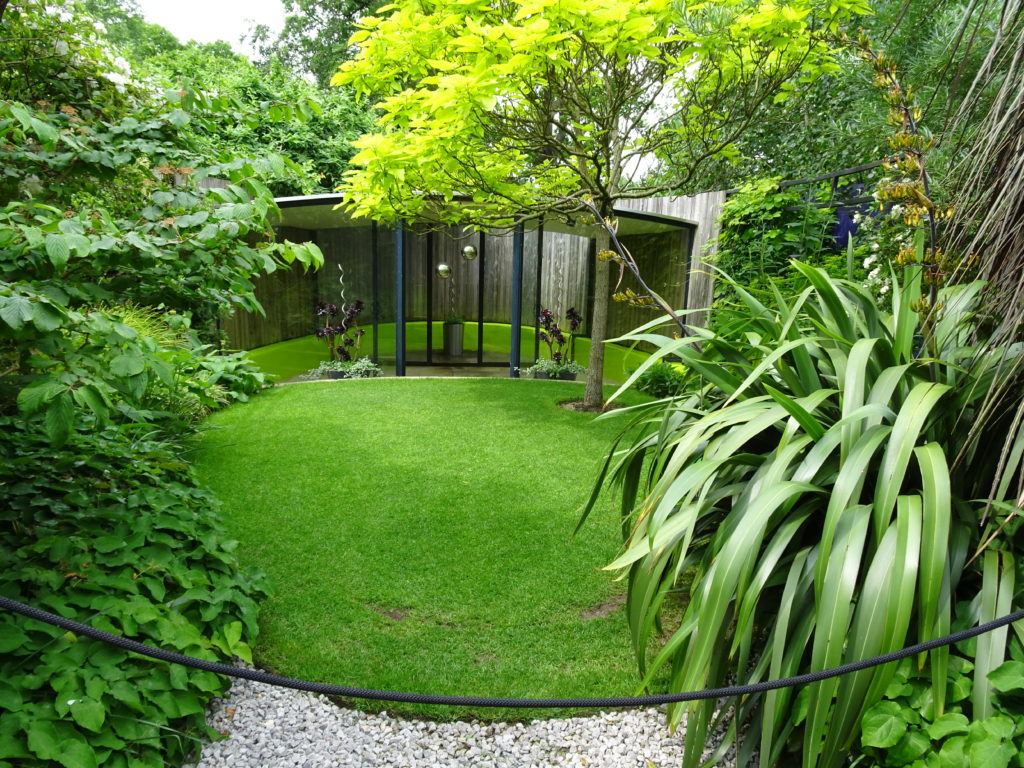
Diarmuid Gavin Garden Recreated

I declare an interest as I have a love hate relationship with the Royal Horticultural Society. As a national institution and registered charity I would prefer if it were more inclusive and less overtly commercial. Since rejoining after a few years break I expected to start this note on the negatives but based on the last few months that would be wrong so I leave them and my personal views to the last paragraph.

Where is the RHS Excelling

  • With an international horticultural reputation the RHS makes a strong  contribution to British culture, tourism and education sectors.
  • The society is working harder than ever to increase the connections with children, schools and communities.
  • The open sharing of knowledge through multiple channels is priceless.
  • Campaigning and acting as a catylist with other organisations is creating a bigger impact with Greening Grey Britain, Britain in Bloom, National Gardening week, and the RHS Campaign for School Gardening.
  • It is summer and the gardens are all looking in good fettle. The developments at Harlow Carr since the society took over from the Northern Horticultural Society demonstrate the strength of the RHS.
  • Gardening qualifications, scientific developments, libraries, partner gardens and plant trials are not headline grabbers but contribute to the membership ‘feel good factors’.

 Negatives or ‘What The RHS is not Good For’

  • As a charity benefiting from the tax breaks and ‘public’ support is it fulfilling all the requirements to enjoy this support.
  • The society has £96 million held in cash and investments which is well in excess of the annual income of £73m. Even bearing in mind the new garden in Salford this seems excessively conservative.
  • On one level the RHS is a glee club for the county and wanabee set. Evidenced by all the luvvies at Chelsea where social climbers out number horticultural climbers and scramblers.
  • There is an appearance of commercial and personal vested interests & cliquishness.
  • The Chatsworth flower show could be renamed a clothes show with flowers.
  • My experience as a volunteer at the RHS was frustrating due to the corporate ethos and management of the time (2005-2009).


Yew Tree – Taxus baccata

Yew Tree – Taxus baccata

Yew

Yew are used in many contexts and can feature in natural or formal situations. In the 18th century species of Taxus were brought to the UK from America and Asia to add to our native Taxus baccata. There are now many cultivars of upright, pendulous and ground cover forms of Yew.

Garden Uses of Yew

  • Yew provide evergreen structure to your garden
  • Hedging is an important garden use creating a dense living wall or sculptable feature.
  • Yew is famous for its use in topiary with its ability to take on shape and form and last for many decades.
  • Mounds can be planted with an upright yew underplanted with ground cover Yews.
  • Dwarf varieties of our native Yew include Corleys Coppertip and Dwarf White.
  • Specimen trees can be grown from Taxus baccata varieties such as Dovastoniana, Amersfoort and Fatigiata Aureomarginata
  • In a small garden select slow growing forms of Taxus baccata

Cultivation Tips

  • Yew can withstand hard or even drastic pruning.
  • For a slender upright growing Yew try a Japanese for Taxus cuspidata ‘Robusta’ as a change from the Irish yew. Train young plants to a single stem.
  • Prune annually in late summer. To substantially reduce a hedge cut in April and do half the tree one year and the other half the following season.
  • Well suited to chalky and lime stone soil but not too fussy.

Irish Yew

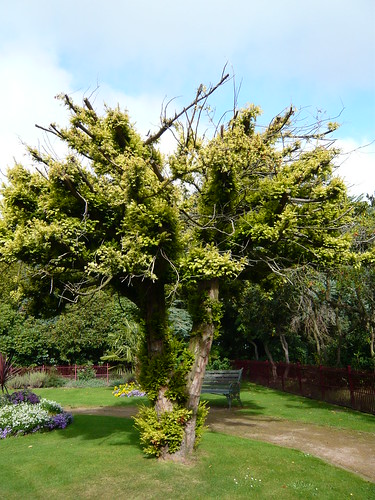
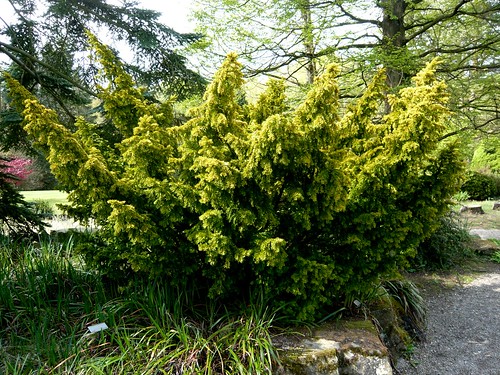
Golden coloured Yew

See Also

Yew Root and Branch Review

Old Yews

Grandchildren and Gardening

Grandchildren and Gardening

Book Cover

Gardeners are keen on offspring in the garden when they come from their own propagation. That may not always be the case with grandchildren except in controlled circumstance.
Grandma saw a youngster eating a slug and rather than be critical asked ‘what does that taste like?’ After a pause the kid replied ‘worms’.

Safety of Children in the Garden

  • You can be too prescriptive about musts and don’ts. Commonsense is crucial and grandparents can help teach that to the kids.
  • Garden tools can be very sharp and need to be used correctly, carefully and kept under your supervision.
  • I am prone to leaving items in the garden to trip over and rakes can jump up and hit the unsuspecting. Now grandkids are visiting I am tidying up before after and during the visits.
  • Learning by experience will cover stinging nettles, irritating sap, prickly roses and some other plants to avoid. A warning or two (hundred that is) will still fall on deaf ears – I still get stung and pricked!
  • Not everything belongs in a child’s mouth but  most plant matter will not cause too much harm. However look out for poisonous seeds, Laburnum, Monkshood and anything you grow that you know to avoid eating.
  • Water is seductive and ponds dangerous. I know you will put up protection near open water and remember water and electric tools don’t mix

Keeping Grandchildren Amused

  • If you get rostered into child minding on a regular basis it is worth setting up regular garden related tasks the kids can get involved with.
  • Get them kitted out with waterproof clothes.
  • Don’t push too hard it may put off the next generation of Throwers and Titchmarshes. We may find routine gardening fun but kids may need a bit extra and activity changes every 20 minutes or so.
  • Gardening has lessons for all of us and the kids have a lot to learn from you and your garden or open air classroom.
  • There are lots of lists of easy to grow plants from large easy to handle seeds like sunflowers, Peas and beans but they take ages (eons in kid time) to show life much less crop. The old standby mustard and cress are more reliable.
  • Plant pots, containers, baskets and boxes are all small areas where kids can have there own ‘patch’ so to speak.


Garden Sky and Colour Effects

Garden Sky and Colour Effects

What colour is the sky? A strange question too a gardener perhaps but there are good gardening reasons for asking.

  • The standard answer from a young child would probably blue and that is what we want in summer as a sign of good weather. In winter it may indicate a spell of sharp frosty days. The sky takes on a deeper blue hue that saturates colours from mid morning to late afternoon.
  • Harsh mid day light produces high contrast between light and shadow. This depend on weather condition, because on a cloudy day the light is diffused.
  • An overcast sky is a result of no direct sunlight moisture in the atmosphere or air pollution that causes haze and the sky to appears to be pale blue or even milky white.
  • In the early morning or at sunset your sky can be red, orange, purple and/or yellow  but where I live, too often it seems  to be grey. These colour  arise from the absorption or not of various parts of the  spectrum. This also has a profound effect on how you see the colour of flowers.
  • Blue and white colours are called cool temperatures that tend to recede in a picture. The warm colours of yellow through to red come forward to the viewer.
  • Clouds are seldom if ever white, have a very close look and you will see lots of shades. Grey may predominate but the variety of shades will be multitudinous.
  • Colour temperature is measured in Kelvins

Other Sky and Plant Pictures

Read More Read More

Trust Woodland to Supply Timber

Trust Woodland to Supply Timber

What do Acute Oak Decline, The Red Squirrel Survival Trust and the silviculture reduction of oak rotation from 140 years to 100 years have in common? I can think of two or three answers around the work of the late Peter Goodwin.

Peter was from a family of cabinet makers and with Lewis Scott founded the Woodland Trust a charity focused on forestry and users of the different types of wood. The trust is a fount of knowledge about our native trees, tree planting advice and woodland based education.

Book Cover

Acute Oak Decline (AOD)

  • AOD is an aggressive disease which can result in high levels of tree mortality within 5 years of diagnosis.
  • Like chronic Oak decline, AOD affects pendunculate and sessile oak trees that are over 50 years old
  • AOD is caused by a pathogenic bacteria that attacks the trunk of the tree causing a dark, sticky fluid to ooze from cracks or lesions in the bark.
  • Trees may also suffer from canopy dieback, similar to that in chronic oak decline.
  • Chronic Oak Decline is a less vociferous disease caused in part by insect damage caused by the leaf roller moth caterpillars .
  • The Woodland Trust has sponsored research into the problems and potential treatment.

The Red Squirrel Survival Trust

  • The American grey squirrel is a destructive pest that has displaced many colonies of red squirrels.
  • By keeping reds and greys apart, red squirrels can be allowed to thrive protecting the biodiversity of Britain’s native woodlands.
  • Other activities of the trust include establishing new red colonies across the UK wherever feasible and funding research.

 Ancient and veteran trees

  • The British love ancient trees, the stories associated with them, cultural connections and historic uses of timber for dwellings ship building etc.
  • The number of ancient trees in the UK (127,595) is exceptional. Many look special and support rare fungi, plants and animals.
  • Visit the Woodland Trust’s  Ancient Tree Inventory to find ancient trees near you. ‘You’ll be able to record one that is missing or search the database for the largest or oldest trees in any part of the UK.’
Beat Garden Blues and Bee Happy

Beat Garden Blues and Bee Happy

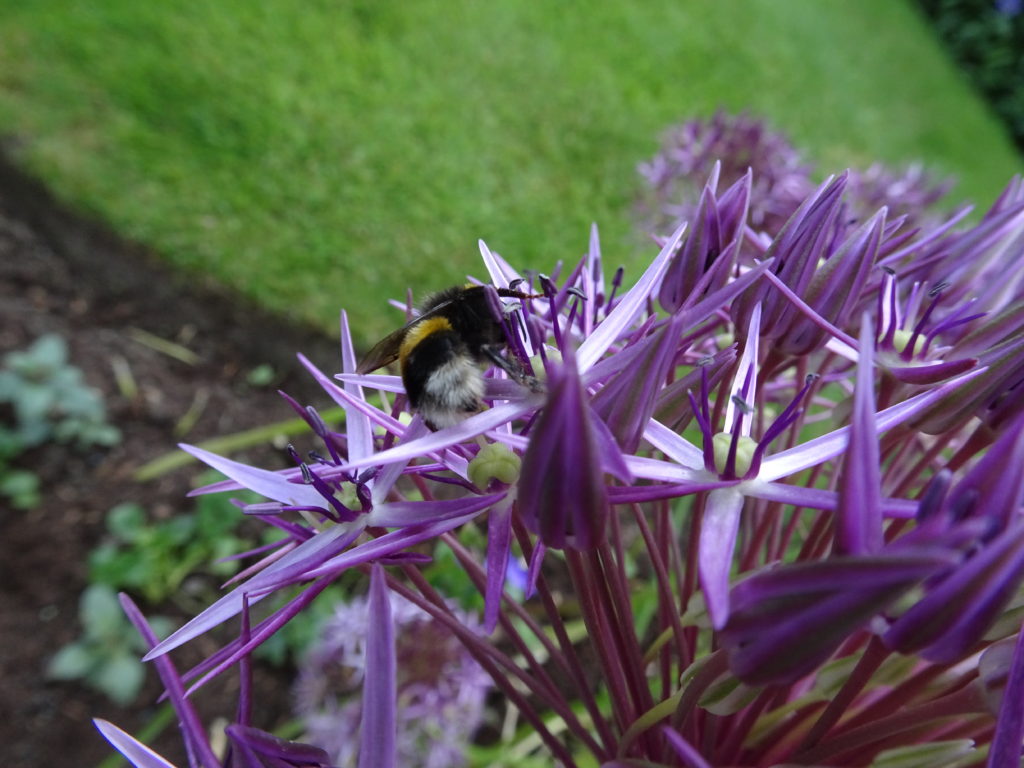
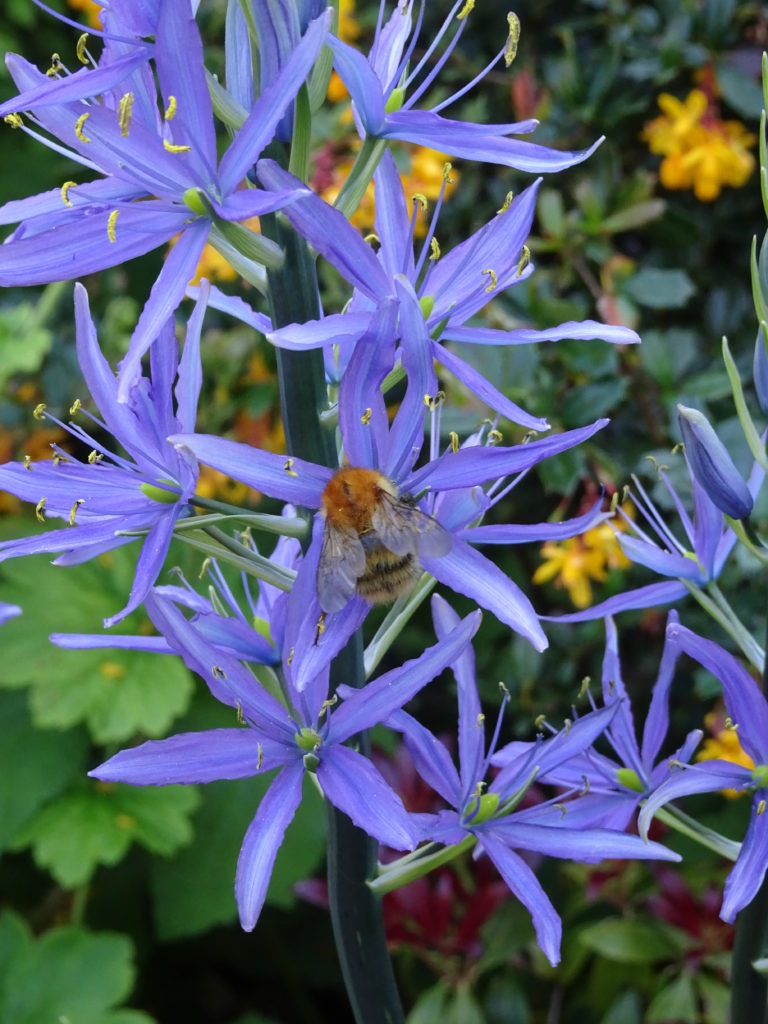
Rumour that Bees are in terminal decline is not borne out in my garden this year. The Bees seem very happy on the blue flowers and I am happy as it gives me an excuse to show some more blue photographs (of flowers!).

It is hard to be ‘blue’ when your senses are fully engaged.

  • Creating a buzz provides a new sensory experience in the garden and it make a change from the sound of wind and the patter of rain.
  • On the other hand I have just felt the pain from pruning a very prickly leaved Berberis that will now have fewer blue berries for the blackbirds later this year.
  • The Californian Lilac below is exuding its share of perfume to scent the nostrils.
  • I can barely wait for the Blueberry and Bilberry season to deliver the taste of my favourite fruit. I can’t think of a blue vegetable unless you count purple sprouting broccoli but if I have missed your favourite let me know.
  • ‘Seeing red’ as a phrase could be replaced with ‘seeing blue’ when you consider some of the great blue flowering plants.

Read More Read More

Photography Tips For Gardeners

Photography Tips For Gardeners

Think before you Click

  • It may seem obvious but think why you are taking a photo in the first place. Is it a documentary record, a social occasion, a personal pleasure or a potential item for publication and wider use.
  • Plan your viewpoint and composition using important features and eliminating unwanted items. Framing subjects and using items, even those behind you, may improve the image.
  • Do not be tempted to cram in too much detail that causes conflict or unneeded complexity.
  • Think about texture, shape, patterns and perspective in addition to the all important colour.
  • Check the light and how various shadows will fall. My shadow features in too many photographs

Close up Tips

  • Getting close and personal can reveal details of plants not normally inspected such as shapes patterns and colour contrasts. Small sections of a bigger subject can be very interesting.
  • It may be necessary to use a tripod to keep the camera still
  • Also consider wind breaks as shelter or supporting methods to hold plants still.
  • Macro facilities on a digital camera or extension tubes on SLR’s help get really close.
  • Use small apertures to get a depth of field. Hold the camera parallel to the most important feature of the photograph.
  • Take several shots and be patient

Other Gardeners Photo Tips

  • Use low view points.
  • Highlight contrasting colours
  • Try   unusual compositions and repetitions repeatedly.
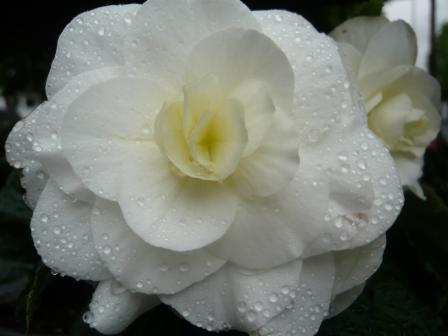
  • Droplets of water on flowers may improve and freshen up the image. Spray drops of glycerine if you are very keen.
  • I need to practice what I preach by keeping a record of what, where and when an image was taken and published.


National Garden Scheme Raises £2.7m

National Garden Scheme Raises £2.7m

In 2016 the National Garden scheme donated £2.7 million to a range of cancer and other charities. This furthers the charitable objectives of the society ‘supporting charities, in their work in the provision of nursing and caring, and

  • the relief of sickness and the preservation and promotion of health;
  • supporting the queen’s nursing institute in its work.
  • assisting such charities or charitable purposes as the trustees shall think fit;’

Looking at the Yorkshire programme for 2017 I forecast an increase in these donations despite the economy and dare I say it the weather.

These Iris were in fine fettle at Creskeld Hall in Wharfedale at the end of May for their open day in aid of NGS. Renown for the Rhododendrons and Azaleas the 3½ acre garden did not disappoint.

Get your local Yellow Book the guide to open gardens and visit some open gardens and help this charity help so many other worthwhile charities.
Artistic Gardeners Meadow Vista

Artistic Gardeners Meadow Vista

fritilliaria

Fritillary, Buttercups, Bluebells, Tulips and Narcissus all in the same shot, what more could you ask.

Well the star of this show is probably the grass. The grass is understated and not throttling the flowers. The sunshine is highlighting a grassy area near where the photographer has chosen to stand. The grass stops the mixture of colours and shapes from fighting one another bringing some harmony.

Artistic Comment

The photographer has found  a relatively low position to capture the flowers at the front of the photo. The dark trees provide a suitable back drop and contrast. Overall the composition works despite the complexity and variety of the flora. The depth of field allows enough focus highlighting the tulips. The eye of the curious looker is drawn around the image.

The garden designer has composed the image mixing blues, yellows and purples with the spring-fresh greens.The maintenance gardener has enabled the themes to work.

Not quite a meadow more a wild patch created with tlc.