Browsed by
Category: Articles

Gardening articles that may not include tips

Mahonias make me Prickly

Mahonias make me Prickly

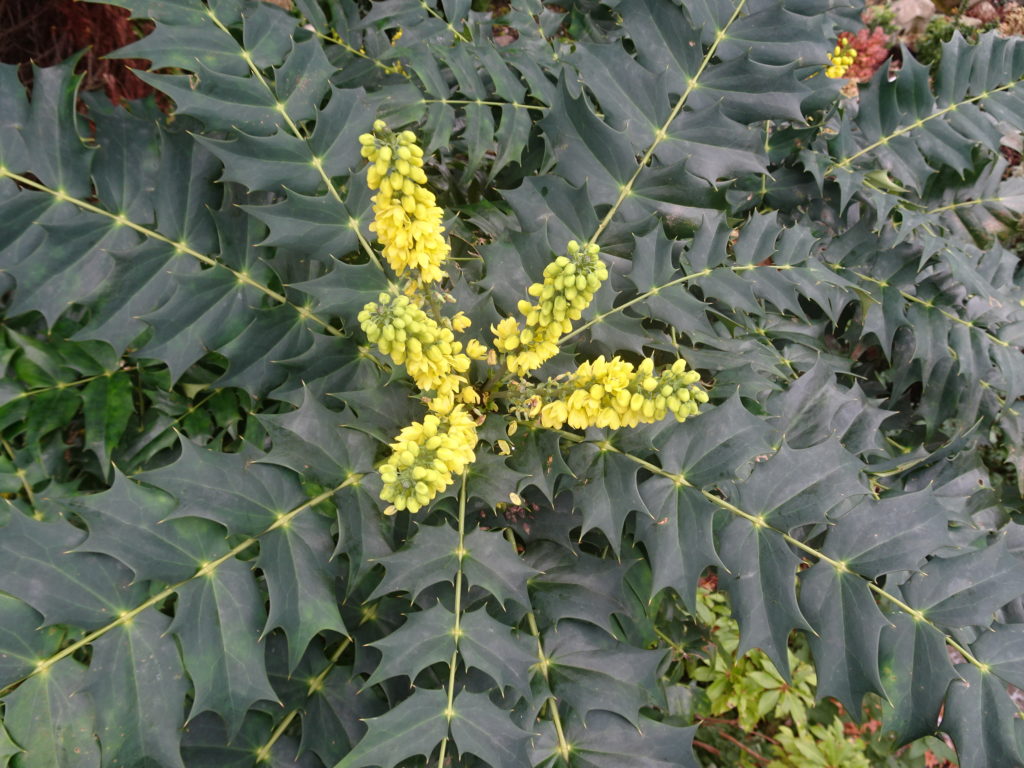
Every winter I am on the Oregon trail for garden scent. My best hope is the Mahonia (aka Oregon grape) which grows very well in various shady parts of my garden and flowers profusely in winter. Regrettably I find the much acclaimed scent is hard to detect but smell is not the only thing that gets up my nose! The rigid leaves have several vicious points on  the arrayed leaves and catch me out many times a year. This is partly due to a 6 foot shrub near my Japanese garden path. I don’t know what made me think Mahonia was suitable in a Japanese garden but there you go. As a deterrent to uninvited visitors the prickles make it as good as Holly and a close second to Berberis.

The stems or branches are an interesting yellow colour but only get seen when pruning.  I prune or trim regularly which aims to keep older plants in shape. Other maintenance is minimal as no critters would make a meal of the leathery, spiked leaves.

Mahonia Oregan Grape

Berries that give Mahonia the Oregon Grape name

What the Experts Say

M. japonica is an erect medium-sized evergreen shrub with large, spined, leathery pinnate leaves and small, fragrant light yellow flowers in spreading or drooping sprays from late autumn to early spring, followed by blue-black berries ‘RHS’

These woodlanders will appreciate a mulch in early spring and a tidy up underneath the main stem.

Selected by the Sunday gardener from over 50 species Mahonia popular cultivars  include

  1. Mahonia x media  ‘Charity’,   ‘Winter sun’ and ‘Lionel Fortescue’  These have large upright yellow, scented flowers. ‘Charity’ can be grown in a north facing spot which makes it a good shrub for a difficult growing area.
  2. Mahonia fortunei smaller 1.2m high 1 m wide which flowers in the autumn
  3. Mahonia aquifolium  known as the Oregon Grape is very hardy   flowering in March and April followed by blue black berries.
  4.  Mahonia  x media Underway AGM a tall grower reaching up to 3m with large erect spikes of fragrant yellow flowers in the winter.
  5. Mahonia japonica a mid sized shrub growing up to 2m.
  6. One to look out for is a new red flowering Mahonia called Mahonia nitens ‘Cabaret’ .
  7. Gardeners Tips    Berry Bearing Bushes for Birds
  8. G Tips  Mahonia  Attractive Spiky shrubs

Uses for Mahonia Oregon Grape

  • The small purplish-black fruits, which are quite tart and contain large seeds can be eaten in small quantities.
  • The fruit are sometimes used to make jelly or mixed with berries from Gaultheria.
  • Oregon-grape juice can be fermented to make wine
  • The inner bark and larger stems and roots of Oregon-grape yields a yellow dye.
  • The berries can produce a purple dye.
  • The foliage is sometimes used by florists for greenery which functions like holly as the leaves remain rigid.
  • If consumed in large quantities berries can cause vomiting, lowered blood pressure, lethargy, and other ill effects. Consumption is not recommended but tinctures and essences are available on the internet.
Lifting Your Tree & Shrubs Crown

Lifting Your Tree & Shrubs Crown

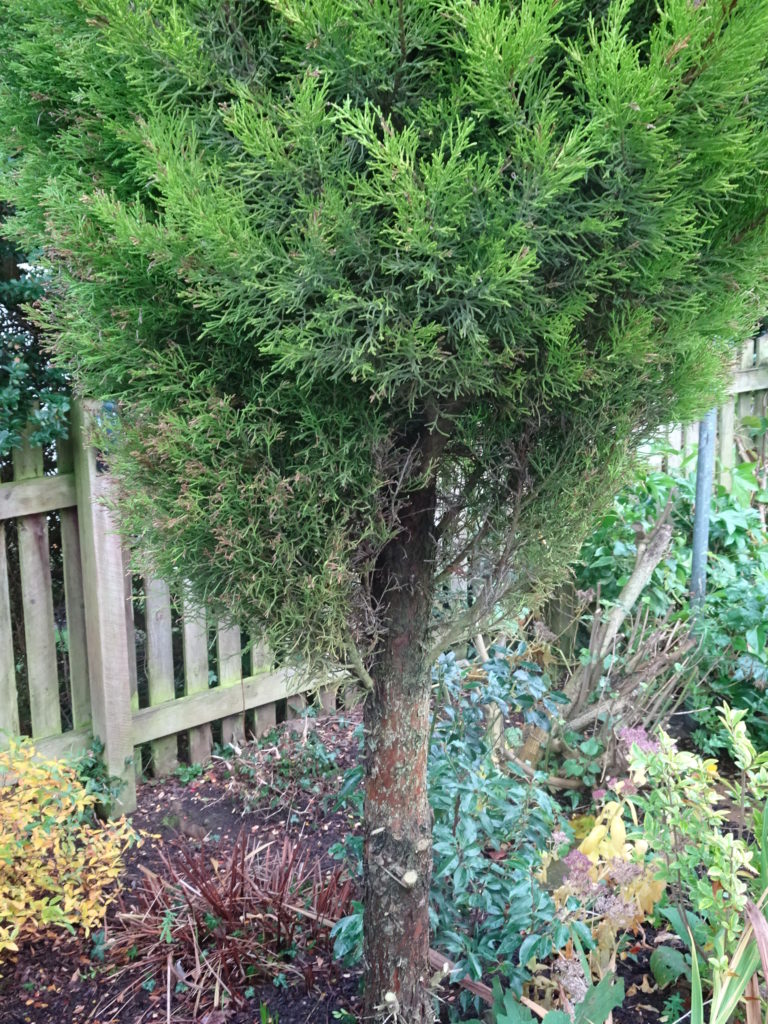
Giving trees what I call the ‘Royal Chop’ is not as drastic as it sounds. It is one way of controlling the low growing branches that restrict light, create unwanted shade  and generally get in the way. The technical term may be to ‘Lift the Crown’ which has the result of leaving the lower trunk clear of branches and letting the growth starting at an acceptable height.

My problems  started when I couldn’t reach the upper part of the conifer to keep it in trim. The same energy is going into the trees growth without an outlet at the lower end so it gets a bit wider and a lot taller. I pruned out the lower branches leaving about one third of the trunk height bare.

Had I taken out the growing point at the top of the tree the spread of lower branches would have been far wider and been the opposite of what I wanted. Conifers trimmed in spring were not the best subject to learn, on broad-leafed trees trimmed in autumn or winter may have worked better.

What the Experts Say

‘Crown lifting is the removal of the lowest branches to a specified height and where possible should be achieved by removal of smaller branches so to minimise stress to the tree. The crown of the tree should not be lifted to a point which is more than 1/3 of the overall tree height (i.e. leaving 2/3 of the trees height as crown).’ Crown thinning and crown reduction are variations that are also  designed to change the extent of the canopy.  Nick Organ Tree maintenance

‘Crown lifting on older, mature trees should be restricted to secondary branches to minimise stress and reduce recovery time. It is possible to crown lift a tree too much. Chaffin Tree Surgery

Shrubs Suitable for Crown Lifting
Acer palmatum and Acer japonica
Bamboos, such as Phyllostachys
Conifers, such as Chamaecyparis, Juniper, Pine and Yew
Cotoneaster
Euonymus japonica
Ligustrum (Privet)
Pittosporum tenuifolium
Prunus laurocerasus (Cherry laurel)
Rhododendron and azalea

http://www.amateurgardening.com 2012

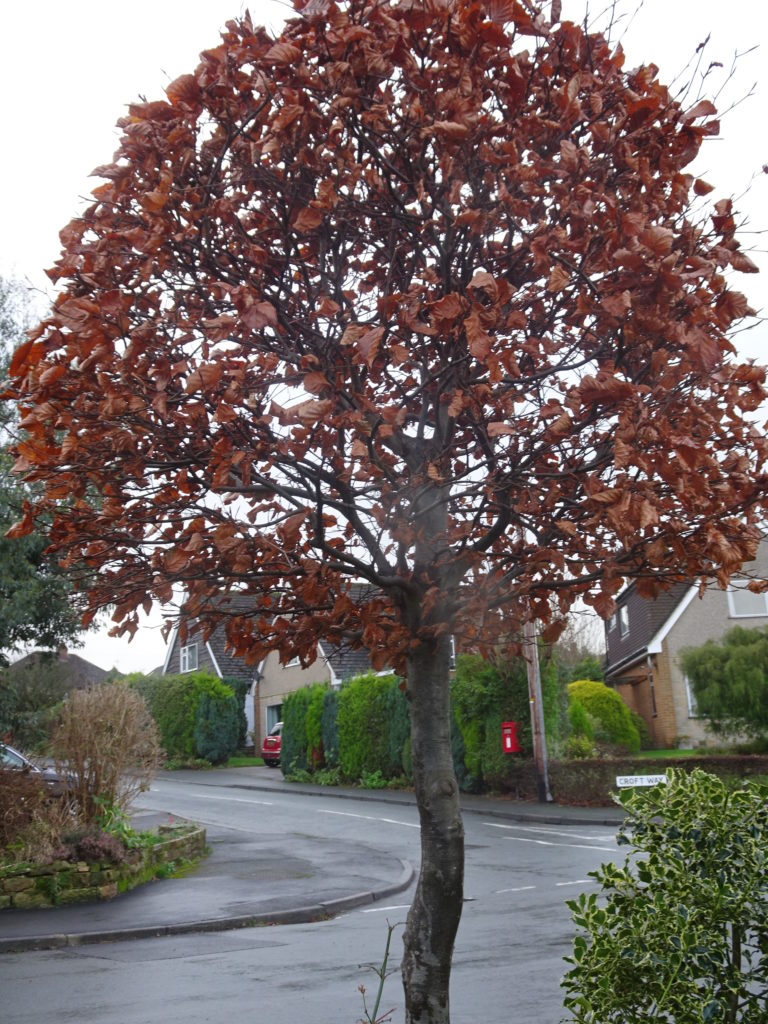
This is my Copper Beech that has been lollipoped over a few years, in fact it is regularly licked into shape.

The North of England Horticultural Society.

The North of England Horticultural Society.

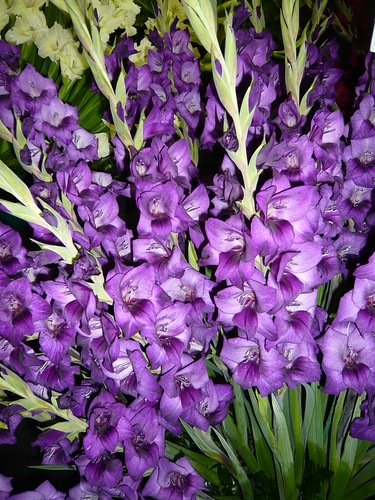
Gladioli

The North of England Horticultural Society (NEHS) is over 106 year old and has been the premier gardening and horticultural charity supporting the north of England through out that time. It is independent of the RHS! The NEHS is not to be confused with Northern Horticultural society 1963-1988 or The Northern Horticultural society 1988 – 2009 which were subsumed along with Harlow Carr gardens by the RHS. Their magazine ‘Northern Gardener’ was replace by RHS publication The Garden.

Every spring and autumn the NEHS organise the Harrogate Flower Shows, widely regarded as the biggest and most prestigious independent shows in the gardening year. In autumn there are ‘shows within a show’ featuring displays by  20 different specialist groups. The autumn veg are fantastic, spring flowers are fine and the shows feature many retail opportunities to help with the charities funding.


Odd Facts about The North of England Horticultural Society

  • The Prince of Wales is the Patron and Jonathan Moseley is the current President 
  • Profits from the Harrogate Flower Shows Ltd are handed back to the NEHS, to enable the charity to continue its important work in promoting horticulture.
  • The NEHS   grant programme is aimed at community societies, friends groups and organisations committed to improving their local landscape. They also support those seeking to build a career in gardening and encouraging schools and colleges to become involved with horticulture through hands-on activity and development.
  • Over the years the Yorkshire thrift has seen an accumulation of  over £1m in investments with £1.3m reserves at the end on 2016.
  • The 2018 show is open 26th to 29th April from 9.30am to 5.30pm Thursday, Friday & Saturday; 4.30pm Sunday.
Floral Language

Floral Language

This curious 19th century craze which engaged the hearts and fancies of the Victorians had no historical or mythological basis but became the fertile sand on which a folklore was built. Using images from the Lindley Library this intriguing display tells the story of popular 19th century code used by lovers to exchange messages.The snowdrop signified friendship and forget-me-nots meant true love, but a gift of a pumpkin or a gourd was considered the height of bad manners – find out why … and discover much more by visiting the display at RHS Harlow Carr Library

‘The Artistic Language of Flowers’, 1880, published by Meissner & Buch, Leipzig © RHS Library Collections Digitised version from Amazon

Roses are Red and Charitable Too

Roses are Red and Charitable Too

I am miffed  that the Royal National Rose Society has gone into administration (May 2017). Originally formed in 1876 it owns land in St Albans but finds annual running costs onerous. As small compensation here are details about a couple of charitable red roses.

The Prince’s Trust  Climber Rose
  • This rose was bred in 2000 by Harkness roses and named to help raise awareness and funds for the The Prince’s Trust.
  • The clusters of slightly fragrant, pure scarlet or blood red blooms are produced repeatedly throughout the summer into the autumn.
  • The green, glossy foliage provides an attractive backdrop to the blooms.
  • Normally a 10’  climber it can  grow up to 15 feet even on a north facing wall.
National Trust – Hybrid Tea Rose
  • A medium sized 3 foot high flowering Hybrid Tea rose.
  • Spiraling petals of  vivid red make florist quality, long stemmed blooms produced throughout the summer and autumn.
  • Young foliage is coppery red foliage maturing to a glossy, dark green.
  • Different suppliers make differing claims about the scent ranging from undetectable to sweet or strong. I think it is very light compared to most roses.
  • The eagle eyed may see some black spot but it is a hardy disease resistant rose that will tolerate poorer conditions than other rosa varieties.

At least the two beneficiaries The Prince’s Trust and the National Trust are still operating as charities even if our Royal National Rose Society is becoming defunct.


Garden Advice to a Daughter

Garden Advice to a Daughter

These notes are designed as advice to a daughter who has just moved into a 1920’s house with a long, narrow back garden and a postage stamp sized front grass patch.

Current Layout and Issues

  • The front is open to cats and the quiet road with a footpath at one side leading to the door, edged by a rough hedge.
  • The other side of the front is partnered to a well kept neighbors garden fence and a motley collection of shrubs. Under the bay window is ruble trouble.
  • The extended kitchen at the rear provides a small sit’out’ery  and place for pot plants.
  • A high trellis fence along the length of the garden displays nothing much and there is only a pencil strip of soil at its base.
  • I don’t expect the garden to look like this next time I visit but annuals and begonias can add a splash of colour

Quick Fixes

  • Cut and edge the grass at the front even though the ground is very uneven. Don’t worry about the weeds in the grass until you can call it a lawn.
  • Lower the 6 foot high privet hedge to say 3 feet and make it narrower at the top than the bottom. An ‘A’ shaped hedge is easier to maintain. Privet, Yew and mixed hedges will regrow, only looking rough until next summer.
  • Get the neighbors to cut down the overgrown inappropriate sized tree that is over-shadowing your garden. At best a good trim of over hanging branches would be a start.
  • Get a new lockable garden hut.
  • Clear up old attempts at compost heaps by spreading or burying. I would go for a themo plastic box composter.

Read More Read More

Photographs from Our 2000 Posts

Photographs from Our 2000 Posts

This is Gardeners Tips 2,000 extant post since April 2008. I have lost count how many photographs and images have been included but here are just a few repeats.

fritilliaria

In addition to our own images we would like to thank creative commons and other organisations that helped with contributions as we were starting out.
Around 100 books have been recommended to highlight a subject such as The Garden Photography Workshop by Andrea Jones below.

Book CoverWe would also like to thank the million plus visitors to our website and hope the tips and humour demonstrate how gardening can have a lighter side.

Minimum Cultivation- No Dig

Minimum Cultivation- No Dig

What is ‘No Dig’

  • ‘No Dig’ gardening or not turning over your soil is  growing in popularity with organic farmers and some gardeners. It is a term used for clearing the ground and establishing a minimum cultivation area without digging.
  • The substitute for digging is mulching.  The garden may be covered with paper or cardboard and topped with a deep layer of compost. Worms will help drag the organic matter down into the soil.
  • Plastic sheeting is a poor substitute as it brings nothing to the party but stifles weeds.
  • Alternate layers of manure and straw can help build up the quality of ‘no dig’ soil.
  • Water well avoid walking on the plot and plan to plant through the mulches with minimum disturbance.

Benefits of Minimum Cultivation

  • This form of gardening is less labour intensive compared to dig a spit deep or heaven forbid, double digging.
  • Using a good layer of straw or compost improves soil structure and builds up over the years.
  • The soil remains in good heart and there should be less soil erosion and runoff
  •  Beneficial invertebrates, fungi and earthworms will enjoy the lack of disturbance and repay the no dig gardener with increase fertility.
  • Minimum cultivation reduces the loss of nitrates and reduces leaching.
  • Less wear and tear on the gardeners back.
  • The texture of the soil will become darker and crumbly with a good tilth.
  • Digging can bring up perennial weed seeds that are best left deeper in the soil where light can’t set them into germination.

Book Cover


New Design Ideas to Green Grey Britain

New Design Ideas to Green Grey Britain

Where to Get New Garden Ideas

  • Your own imagination is the prime source of ideas for your own personal garden.
  •  If you can’t get to Chelsea there are other horticultural and flower shows and many  open gardens.
  • Magazines, newspapers and books can spark off a new thought or provide a combination of ideas.
  • Just walking around looking over walls and fences may give you an idea. I saw some very useful use of trellising offering privacy on a street-side garden without dark dense hedges.
  • Trial and error has been my fall back design method but it is a slow process and after 60 years It is still to produce the goods!

Greening Grey Britain

  • The RHS advocates gardens to help preventing flooding, ease stress and encourage exercise, support wildlife, and be ‘the equivalent of an air conditioning system for our cities’.
  • Decking, block paving and parking spaces have taken over from front lawns and small gardens to the detriment of the environment. Turning grey areas green with new design ideas and plantings can help rectify the damage caused by urbanisation.
  • I had three garages and drives for access but one was a lean too that served no real purpose. I knocked it down and have a pond, some maturing trees and a Japanese area that is  a pride and joy. It’s awkward tarmaced drive was too hard to remove so it was covered in a large mound of soil that became a quick draining alpine zone.